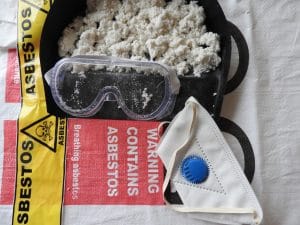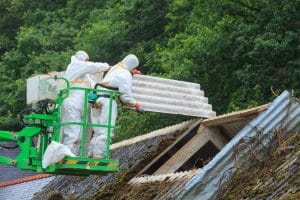
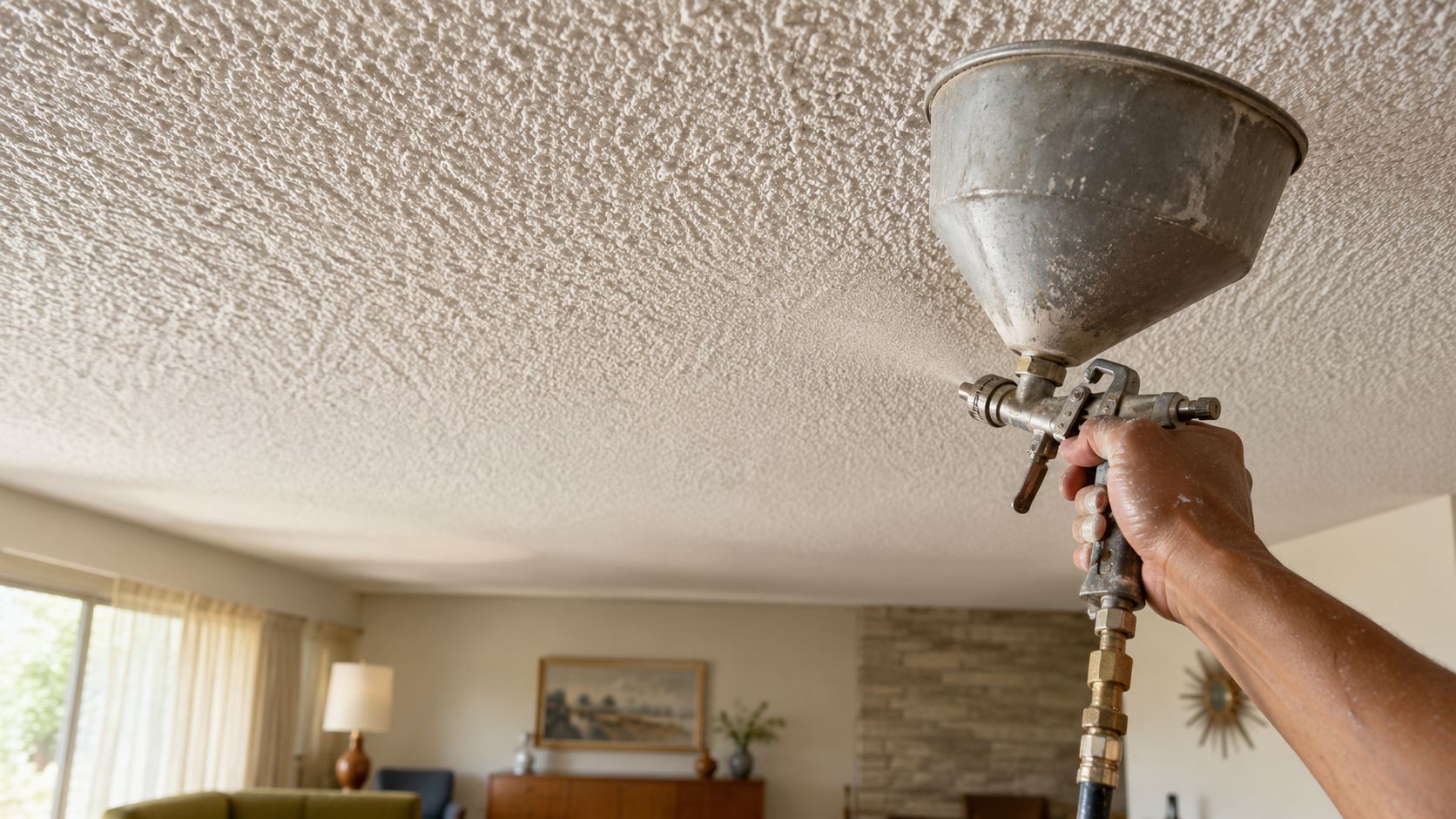
Popcorn ceilings existed because spray-on texture was the cheapest way to finish a drywall ceiling while hiding flaws, dampening sound, and supporting fire-performance goals during the postwar housing boom. Builders adopted the finish widely from the 1950s through the 1980s, and some older products contained asbestos.
You may be looking at one right now after removing a light fixture, inspecting a water stain, or planning a remodel in a Los Angeles home. The surface looks like small white bumps scattered across the ceiling, but its appearance doesn't explain why builders used it so extensively, or what you should do before touching it.
The short answer to why do popcorn ceilings exist is practical rather than artistic. A sprayed coating let construction crews finish ceilings faster, conceal imperfect drywall seams, soften sound, and, in some assemblies, contribute to fire resistance. That combination made the texture useful in homes and commercial buildings produced during a period of rapid construction.
The history also creates a present-day testing question. If the ceiling is old, you can't determine its asbestos content by looking at it. Before sanding, scraping, drilling, cutting, renovation, or demolition, arrange professional sampling and laboratory analysis.
Table of Contents
- A Textured Ceiling and a Simple Question
- The Postwar Housing Boom That Made Sprayed Ceilings Standard
- Four Jobs the Texture Did at the Same Time
- Why Asbestos Ended Up in the Spray Mix
- The Bans That Reshaped an Industry
- What Older Los Angeles Homes Inherited
- When an Intact Ceiling Still Needs Testing
- A Clear Next Step for Property Owners
A Textured Ceiling and a Simple Question
A homeowner in a 1960s ranch-style house in Los Angeles might notice the ceiling most clearly after pulling down a light fixture. The opening exposes the flat drywall beneath, while the surrounding surface remains covered with a rough, stippled coating. It can look like dried cottage cheese or small clusters of popcorn.
That finish wasn't primarily chosen to make the room look luxurious. Builders used it because it allowed them to finish a ceiling without spending the same time correcting every tape ridge, screw depression, or uneven drywall joint. Spray-on texture covered minor imperfections that would have been obvious beneath a smooth coat of paint.
Practical rule: The ceiling's appearance can explain its construction history, but it can't identify what the coating contains.
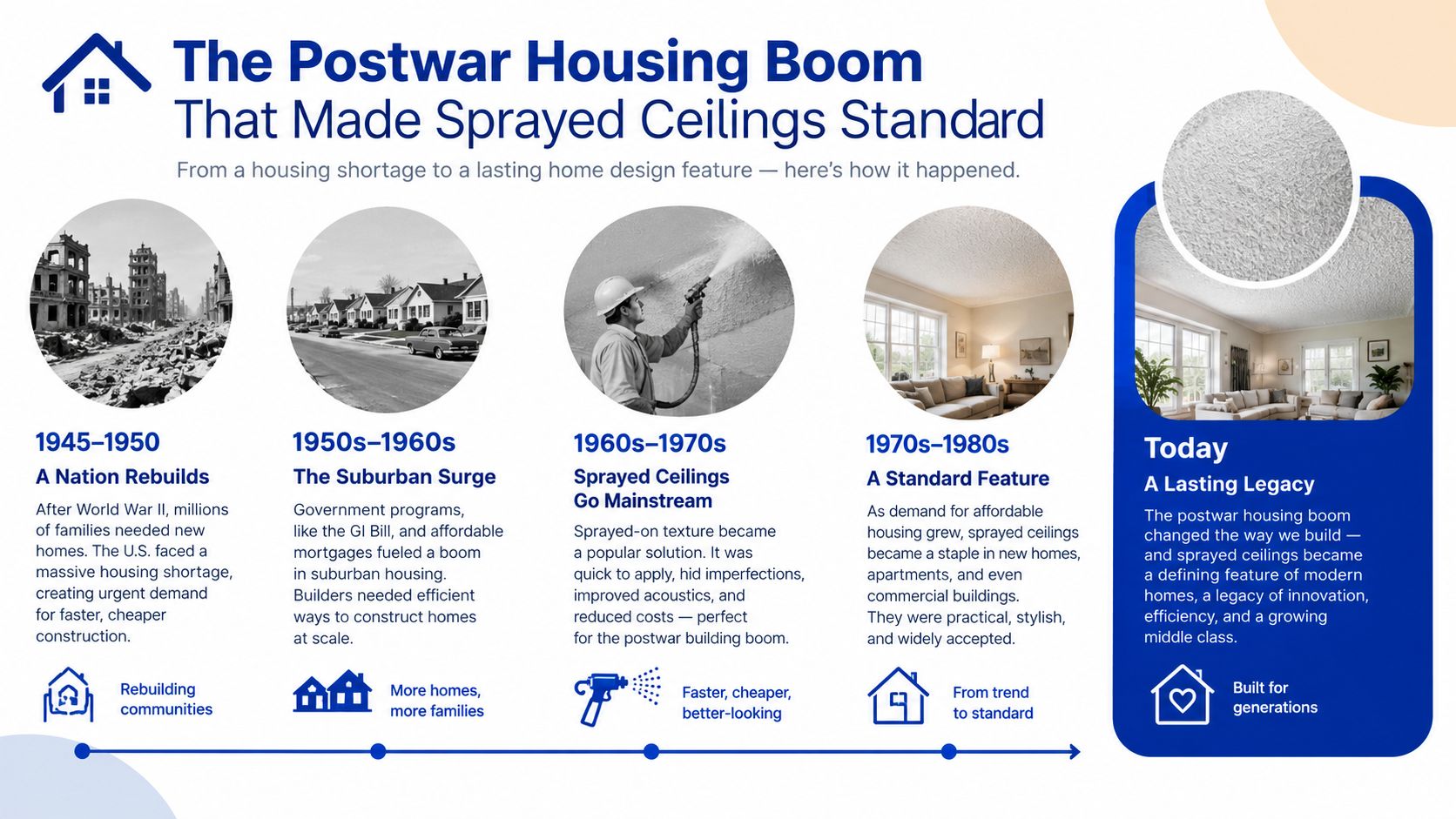
The technique became widespread in the United States during the postwar housing boom. Historical accounts describe popcorn ceilings as a standard finish from the 1950s through the 1980s, with especially strong popularity in the 1950s and 1960s, when suburban homebuilding accelerated. Spray application reduced labor demands, and the rough surface also provided modest sound dampening and helped support certain fire-performance objectives. Aztec Testing's history of popcorn ceilings describes how the finish appealed to builders producing homes at scale.
For a homeowner, the important connection is simple. A bumpy ceiling may be ordinary historic construction, but an older coating may also contain asbestos. If you plan to renovate or demolish part of the ceiling in Los Angeles County, keep the material undisturbed and arrange accredited asbestos inspection and sampling before work begins.
The Postwar Housing Boom That Made Sprayed Ceilings Standard
After the Second World War, returning veterans and growing families needed housing, and suburban development expanded quickly. Builders developed repeatable construction methods for large communities, including slab foundations, standardized floor plans, and interior finishes that could be applied consistently across many homes.
Smooth plaster ceilings demanded patient, skilled finishing. Drywall made installation faster, but its joints still required taping, coating, sanding, and careful correction before a smooth painted surface looked uniform. A sprayed texture changed that calculation. Crews could apply a forgiving coating over the board and move on without treating every small imperfection as a reason for additional finishing work.
The same logic helped explain the appeal to large builders such as Levitt & Sons. A repeated tract-home design rewarded any process that reduced labor and rework across many nearly identical interiors. The texture also borrowed from earlier decorative acoustic treatments, which gave the finish a recognizable appearance while preserving its practical construction advantages.
From houses to larger buildings
Once contractors understood that a sprayed coating could hide uneven work, the method spread beyond suburban houses. Apartment buildings, schools, offices, and other commercial interiors also benefited from a finish that could be applied quickly and that didn't require every ceiling to receive a high-end smooth treatment.
The result was a familiar visual language across many building types. A textured ceiling didn't necessarily indicate poor design or careless workmanship. It often reflected a deliberate decision to balance appearance, labor, acoustics, and performance in a period of mass construction.
That historical context matters during an asbestos survey. A Los Angeles property may have changed owners, been repainted, or received several remodels, yet the original ceiling texture may remain above newer finishes. Construction records can help, but they don't replace representative sampling from the actual material proposed for disturbance.
Four Jobs the Texture Did at the Same Time
Popcorn texture solved several construction problems in one application. Its value came from how those benefits worked together, not from any single feature.
Concealing drywall defects
A smooth ceiling exposes surface irregularities. Tape ridges, screw pops, small patches, and uneven seams can catch light and become visible from across a room. The irregular bumps interrupted those reflections and disguised minor finishing defects, allowing builders to avoid some skim-coating and rework.
For a tract home, that forgiveness had direct economic value. A crew could apply texture over a prepared drywall surface instead of waiting for a finisher to create a perfectly smooth plane.
Softening sound
The raised surface increased the ceiling's texture and changed how sound interacted with it. Rather than reflecting every sound wave from a broad flat plane in the same way, the uneven coating scattered sound and provided modest acoustic dampening.
That didn't turn a bedroom or office into a soundproof room. It made the ceiling useful beyond appearance, especially in homes, apartments, classrooms, and offices where reducing a hard, echoing quality was desirable.
Supporting fire performance
Some textured ceiling systems formed part of broader fire-rated ceiling assemblies. Industry specifications document assemblies achieving 1.5-hour and 2-hour fire-resistance ratings in certain designs, as described in the National Gypsum textured-ceiling guide specifications. The rating belonged to the tested assembly, not automatically to every popcorn ceiling.
The distinction matters. A homeowner shouldn't assume that a rough coating alone provides a particular level of fire protection. Its historical use shows that texture could participate in a performance-oriented ceiling system.
Reducing skilled labor
Spraying also reduced the amount of high-finish labor required. The builder avoided paying for every ceiling to be skimmed, sanded, inspected, and corrected to the same visual standard as a smooth surface.
Those savings compounded across large developments. Once a finish hid defects, scattered sound, supported certain assembly goals, and shortened the finishing process, standardizing it across a project became an easy decision. That helps explain why the style continued in buildings long after homeowners began to view it as dated.
Why Asbestos Ended Up in the Spray Mix
Not every popcorn ceiling contains asbestos, and manufacturers didn't add it because the surface was textured. Older spray-applied products sometimes used asbestos fibers as a reinforcing additive. The fibers could improve cohesion, heat resistance, and durability while remaining compatible with a low-cost sprayed coating.
Historical sources commonly place asbestos content in many spray-applied ceiling products at about 1% to 10%, although some laboratory-identified samples reached 30% to 45% chrysotile in certain products. Those figures describe historical products, not a prediction for an individual ceiling. Only sampling and laboratory analysis can establish whether the material at your property contains asbestos. Mesothelioma.com's overview of asbestos popcorn ceilings explains the historical use of asbestos for strength and heat resistance.
What the fibers changed
Asbestos offered properties that fit the building market's priorities. It could help bind the coating, increase resistance to heat, and support the durability of a sprayed layer. Those characteristics complemented the texture's existing ability to hide defects and provide acoustic scattering.
The concern begins when the coating is disturbed. An intact, firmly bonded surface can hold material in place, but sanding, scraping, drilling, cutting, or demolition may break the coating and release dust. Water damage, previous repairs, and repeated alterations can also change the condition of the material.
For a plain-language explanation of the health concern, see why asbestos is dangerous. A visual inspection can't reliably distinguish asbestos-containing texture from a similar-looking product made without asbestos. Don't collect a ceiling sample casually or create a test area with a screwdriver. A qualified inspector should select representative locations and use appropriate sampling methods so the laboratory result applies to the material planned for disturbance.
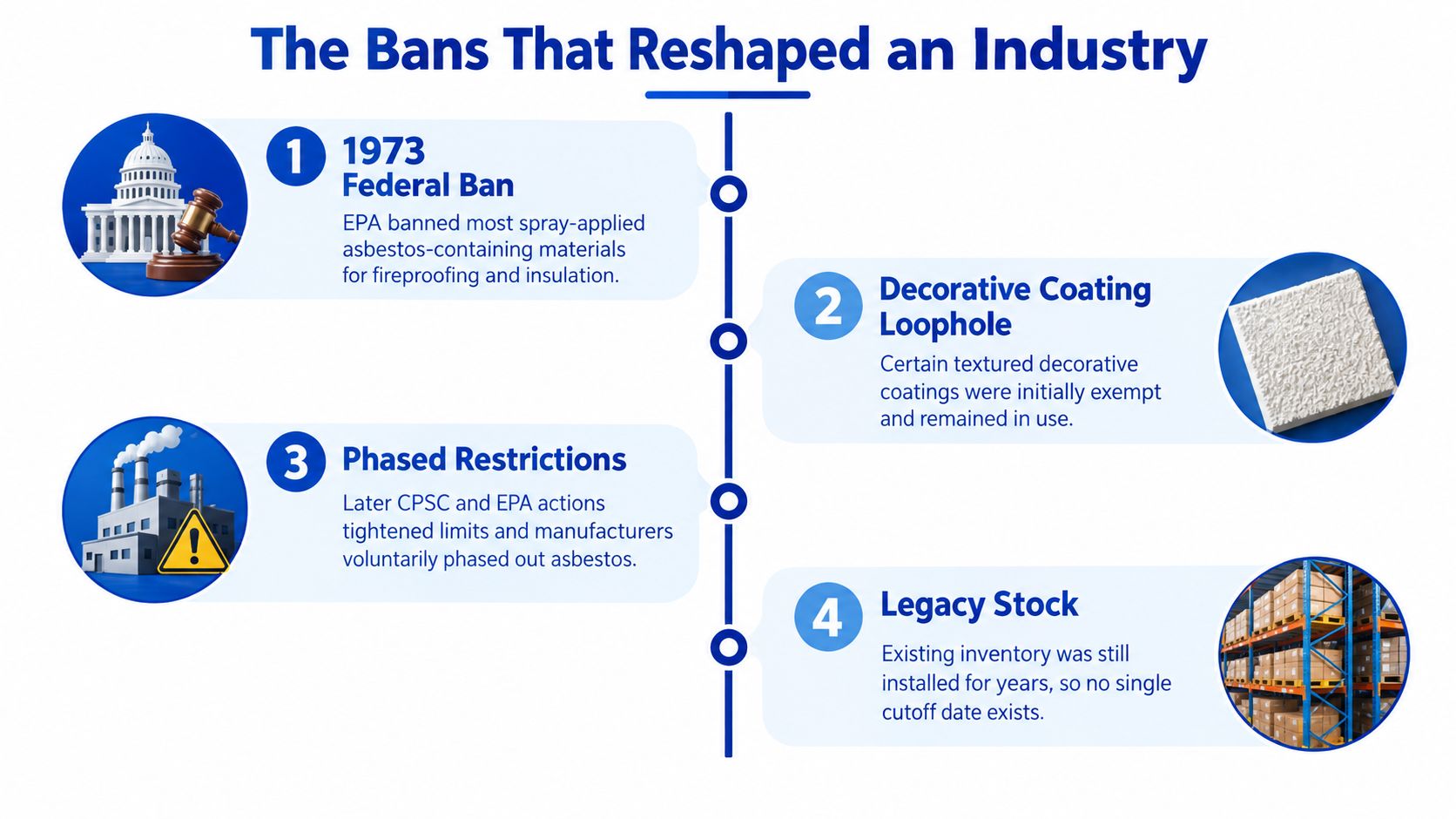
The Bans That Reshaped an Industry
The regulatory history doesn't create a single date that proves a ceiling is asbestos-free. The major federal milestone came in 1973, when the EPA restricted spray-applied asbestos for fireproofing and insulation. That action changed the market, but it didn't instantly remove older products from circulation.
Certain decorative textured coatings fell within a loophole that remained open after the initial restriction. The loophole closed in 1978, as further federal action restricted asbestos use in those decorative applications. Even then, manufacturers, distributors, and builders could have existing inventory, and construction projects could use materials produced before restrictions took effect.
Why the calendar isn't enough
A property built after a regulatory milestone may still contain older material if a renovation used stock that had already been manufactured or distributed. Regional supply chains, delayed projects, and undocumented repairs make a visual or date-based conclusion unreliable. Historical accounts therefore note that asbestos-containing texture could remain in use into the early 1980s in some markets, even after restrictions had reshaped manufacturing.
A building date is useful background for an environmental consultant. It helps determine whether testing belongs in the project plan, but it doesn't replace laboratory analysis. The same principle applies to a ceiling that has been painted. A new paint layer may cover the original texture, but it doesn't erase the composition of the underlying material.
For planned renovation or demolition, the responsible sequence is to define the work area, identify all surfaces that workers may disturb, collect representative samples through a qualified inspection, and review the laboratory report before work starts. The result may support different next steps depending on the material, its condition, and the scope of work. A positive result does not by itself dictate one universal response, but it does provide information needed for compliant project planning.
What Older Los Angeles Homes Inherited
Southern California's housing stock includes many homes and multifamily properties built during the decades when textured ceiling products were common. A mid-century bungalow, a 1960s ranch in the San Fernando Valley, or an apartment building in Los Angeles may have original ceiling texture, patched sections, or layers added during later remodeling.
That history becomes especially important under South Coast AQMD Rule 1403, which applies work-practice controls to renovation and demolition activities that may disturb asbestos-containing materials. For demolition work in the South Coast AQMD basin, the owner must arrange a thorough asbestos survey by a Cal/OSHA Certified Asbestos Consultant. The survey must address the facility and its components, including foundations, underground utilities, and potentially hidden or inaccessible materials. A limited survey isn't sufficient for demolition, as explained in the South Coast AQMD survey requirements.
A practical project sequence
Keep the surface intact. Don't scrape a test patch, sand a repair, or drill through the coating before the inspection plan is established.
Define the work. Tell the inspector whether the project involves a light fixture, ceiling fan, recessed lighting, HVAC work, a kitchen remodel, a bathroom demolition, or removal of the entire structure.
Arrange representative sampling. Samples should come from the ceiling material that workers may disturb, including areas affected by repairs or different texture applications.
Review the report before scheduling work. The laboratory findings help determine which controls, notifications, and qualified contractors may be required.
For renovation and demolition activities, contractors must have an asbestos survey performed and submit the required asbestos notification before starting work in the South Coast basin, according to Rule 1403 contractor guidance. Procedure 5 plans are submitted through the Rule 1403 Asbestos Notifications Web Application with the survey, notification, and other required documents. Procedure 5 is therefore a documented compliance package, not a standalone test result. AQMD's Procedure 5 guideline describes that submission process.

When an Intact Ceiling Still Needs Testing
An intact popcorn ceiling can remain undisturbed without creating the same situation as an active demolition project. That doesn't mean its composition is known, or that it can be disturbed safely without evaluation.
Professional sampling becomes appropriate whenever planned work may break, penetrate, scrape, or remove the texture. Common triggers include:
- New fixtures: Installing a ceiling fan, light box, speaker, or recessed fixture can require drilling and cutting.
- Renovation work: A kitchen remodel may affect the ceiling even when the main work appears limited to cabinets and wiring.
- Water damage: A leak can weaken the coating and change how easily it breaks away.
- Adjacent demolition: Removing walls, ductwork, or partitions may disturb ceiling edges or hidden layers.
- Full demolition: A pre-demolition asbestos survey must account for the building and its components, not just the visible ceiling.
Consider a 1965 ranch in Los Angeles with an apparently clean bedroom ceiling. If an electrician plans to install a new fan, the relevant question isn't whether the bumps look dusty. It's whether the material around the planned penetration has been identified before the work begins. A similar issue arises in a tract home from the early 1970s during a bathroom gut renovation, where demolition can affect overhead surfaces and connected building components.
A ceiling doesn't need to look damaged to require testing before disturbance.
Age is a meaningful reason to investigate, but it isn't a laboratory result. Color, texture, thickness, paint coverage, and patch history can't confirm or rule out asbestos. Inspectors may collect material from the actual ceiling and send it for microscopy-based analysis, including polarized light microscopy, so the report addresses the material selected for the project.
The guide to testing asbestos in a popcorn ceiling can help homeowners understand the difference between visual inspection, physical sampling, and laboratory analysis. DIY kits may not provide the project-specific survey, sampling documentation, or regulatory review required for renovation and demolition planning. A professional assessment also creates a record that contractors, property managers, insurers, and real estate participants can use when deciding what happens next.
A Clear Next Step for Property Owners
The original reason for installing popcorn texture and its present-day project implications are separate questions. Builders wanted a fast, forgiving finish during a period of rapid construction. Today, an owner needs documented information before deciding how to repair, cover, alter, or remove that finish.
For a Los Angeles or Southern California property, use this decision sequence:
Identify the ceiling's history. Check construction records, prior renovation documents, and areas where different textures or patches appear. Treat the information as context, not proof.
Describe the planned disturbance. Include electrical work, plumbing access, HVAC changes, fixture installation, painting that involves scraping, renovation, and demolition.
Schedule the appropriate survey and sampling. A pre-renovation survey may focus on planned work areas, while a pre-demolition survey must be thorough under applicable requirements.
Obtain laboratory analysis and a written report. The report should identify sampled materials and explain the findings in a form the project team can use.
Address compliance before work starts. Where Rule 1403 applies, review survey, notification, Procedure 5, and work-practice requirements with qualified professionals. The AQMD FAQ identifies a narrow exemption for a legal owner-resident of a single-unit family dwelling who personally performs renovation without a contractor, laborer, or help from others. It also states that owners of condominiums, townhouses, and apartments don't receive that exemption. The AQMD Rule 1403 FAQ explains the distinction.
Sensitive Environmental provides asbestos inspections, sampling, laboratory coordination, surveys, and documentation for renovation and demolition projects. Its guidance on what to do when asbestos is found during a real estate inspection can help owners and project teams interpret results without assuming that a positive finding automatically determines the final response.
The bumpy surface was once a sensible building-economics solution. Its current significance depends on composition, condition, and the work you plan to perform. Documented testing is the reliable starting point.
If you're planning to drill, remodel, repair, or demolish a popcorn ceiling in Los Angeles or Southern California, contact Sensitive Environmental to discuss a pre-renovation or pre-demolition asbestos survey, representative sampling, laboratory analysis, and applicable SCAQMD Rule 1403 documentation. Arrange the assessment before workers disturb the surface so your project team can make informed, compliant decisions.