You're ready to remove a wall, replace old flooring, or scrape a textured ceiling, but you're not sure whether the material contains asbestos. That uncertainty is common in Los Angeles homes, condos, and apartment buildings. The safest decision usually isn't based on appearance alone. It depends on whether the material could be disturbed, what the project involves, and whether local requirements call for a documented survey.
Residential asbestos testing gives you information before construction begins. A professional inspector evaluates suspect materials, collects representative samples, coordinates laboratory analysis, and explains what the results mean for your renovation or demolition plan. For homeowners in Los Angeles County and Southern California, that process can also support compliance with South Coast Air Quality Management District requirements.
Table of Contents
- Why Asbestos Testing Matters for Your SoCal Home
- Deciding When You Need an Asbestos Test
- What to Expect During the On-Site Inspection and Sampling
- Understanding Your Asbestos Lab Report
- Asbestos Testing and Los Angeles Regulations
- Your Next Steps for a Safe Home Project
Why Asbestos Testing Matters for Your SoCal Home
A homeowner in Pasadena might be planning a kitchen remodel in a bungalow, while a Sherman Oaks condo owner might be preparing to remove a popcorn ceiling. In both situations, the material may look ordinary. Texture, flooring, insulation, drywall components, and other building materials can't be reliably cleared through visual inspection alone.
Asbestos is not automatically dangerous just by being present. The concern increases when suspect material is cut, sanded, drilled, scraped, broken, or otherwise disturbed. Those activities can change a stable building material into a source of airborne fibers, which is why pre-renovation asbestos testing focuses on the areas affected by the planned work.

Housing has always been part of the asbestos conversation
The issue isn't limited to factories or industrial facilities. An EPA survey conducted in 1984 represented about 3.6 million buildings and identified roughly 733,000 buildings with asbestos-containing friable material. The survey estimated that approximately 20% of all buildings had some asbestos-containing friable material, including a substantial residential category. Among apartment buildings with 10 or more units, about 208,000 contained friable asbestos-containing material, representing roughly 59% of that building type, according to the EPA asbestos survey record.
Those historical findings help explain why housing remains relevant to asbestos surveys today. Older construction practices placed asbestos-containing materials in many parts of residential buildings, so a renovation plan should identify what workers may disturb before work starts.
Practical rule: The presence of a suspect material calls for a decision, not panic. Testing helps replace guesswork with project-specific information.
Homeowners can also review why asbestos can be dangerous when they want a plain-language explanation of the hazard. The important point is that a qualified inspection gives your family, contractor, and property manager a clearer basis for planning.
Deciding When You Need an Asbestos Test
The simplest decision rule is this: if a suspect material is intact and won't be disturbed, testing may not be necessary. If planned work could affect it, professional sampling becomes the more sensible choice. EPA guidance ties the need for testing to disturbance rather than automatically requiring every older home to undergo testing, as explained in its asbestos homeowner FAQ.
Consider the actual work, not just the size of the project. A small repair can still involve drilling into a wall, removing old vinyl flooring, opening a ceiling, cutting insulation, scraping texture, or pulling cabinetry from a wall surface. “It's just one wall” doesn't answer whether the work will disturb a suspect component.
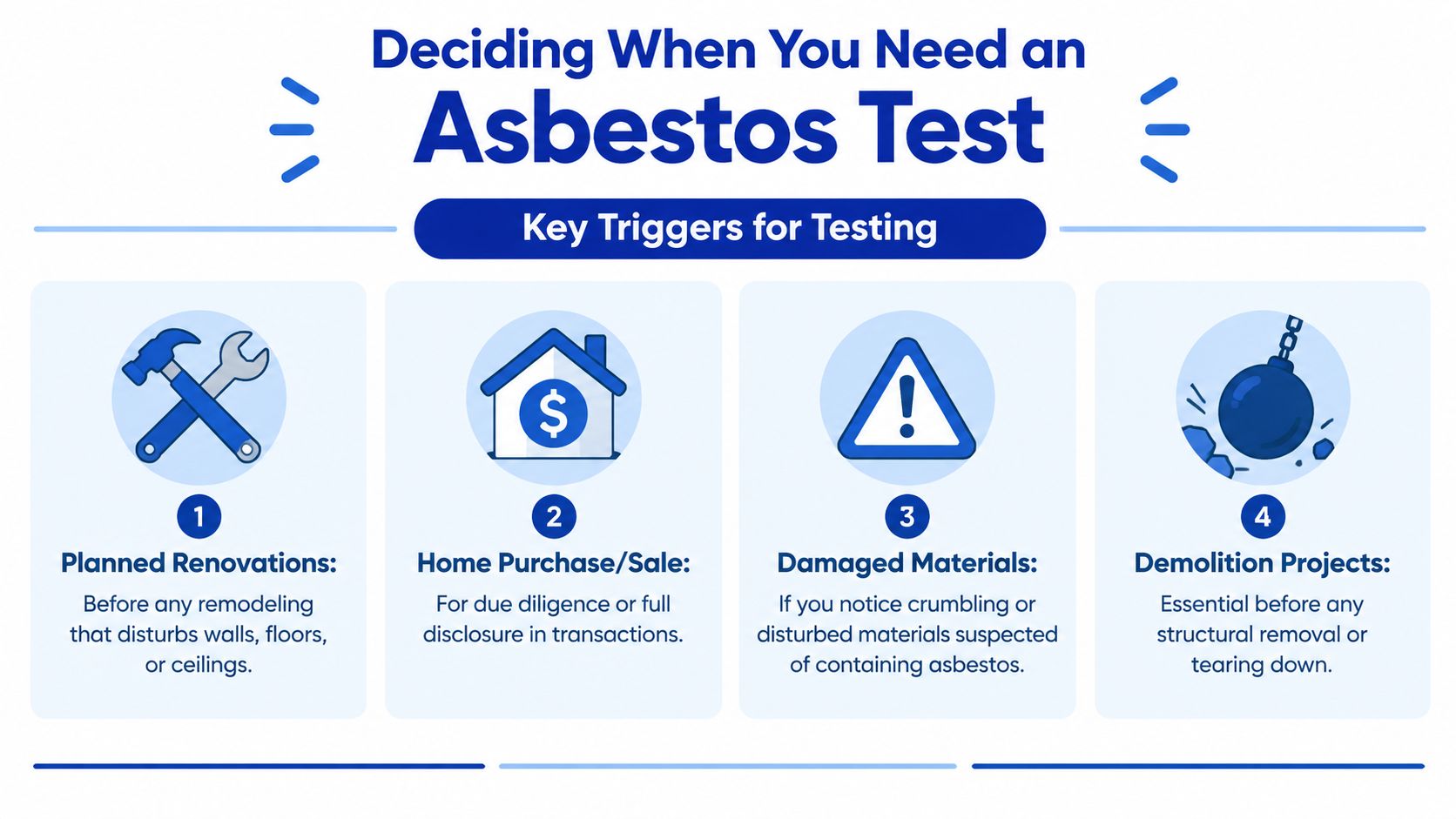
Four practical triggers
- Planned renovations: Schedule testing before remodeling that affects walls, floors, ceilings, insulation, or textured finishes.
- Property transactions: An asbestos survey can support due diligence, documentation, and informed communication during a purchase or sale.
- Damaged materials: Crumbling, torn, water-damaged, or visibly disturbed suspect materials deserve professional evaluation, even if no renovation is planned.
- Demolition: Structural removal should follow a documented asbestos survey before work begins.
Los Angeles-area projects also have a regulatory reason to take this step early. Before demolition or renovation activity within the South Coast AQMD jurisdiction, the affected facility or components must be thoroughly surveyed for asbestos, including physical sampling of suspect materials, as described in the Los Angeles planning documentation on asbestos surveys.
Testing isn't a substitute for a work plan, and a positive result doesn't automatically dictate one universal response. It gives the property owner and qualified project professionals information about the material, its location, and the work that may affect it.
What to Expect During the On-Site Inspection and Sampling
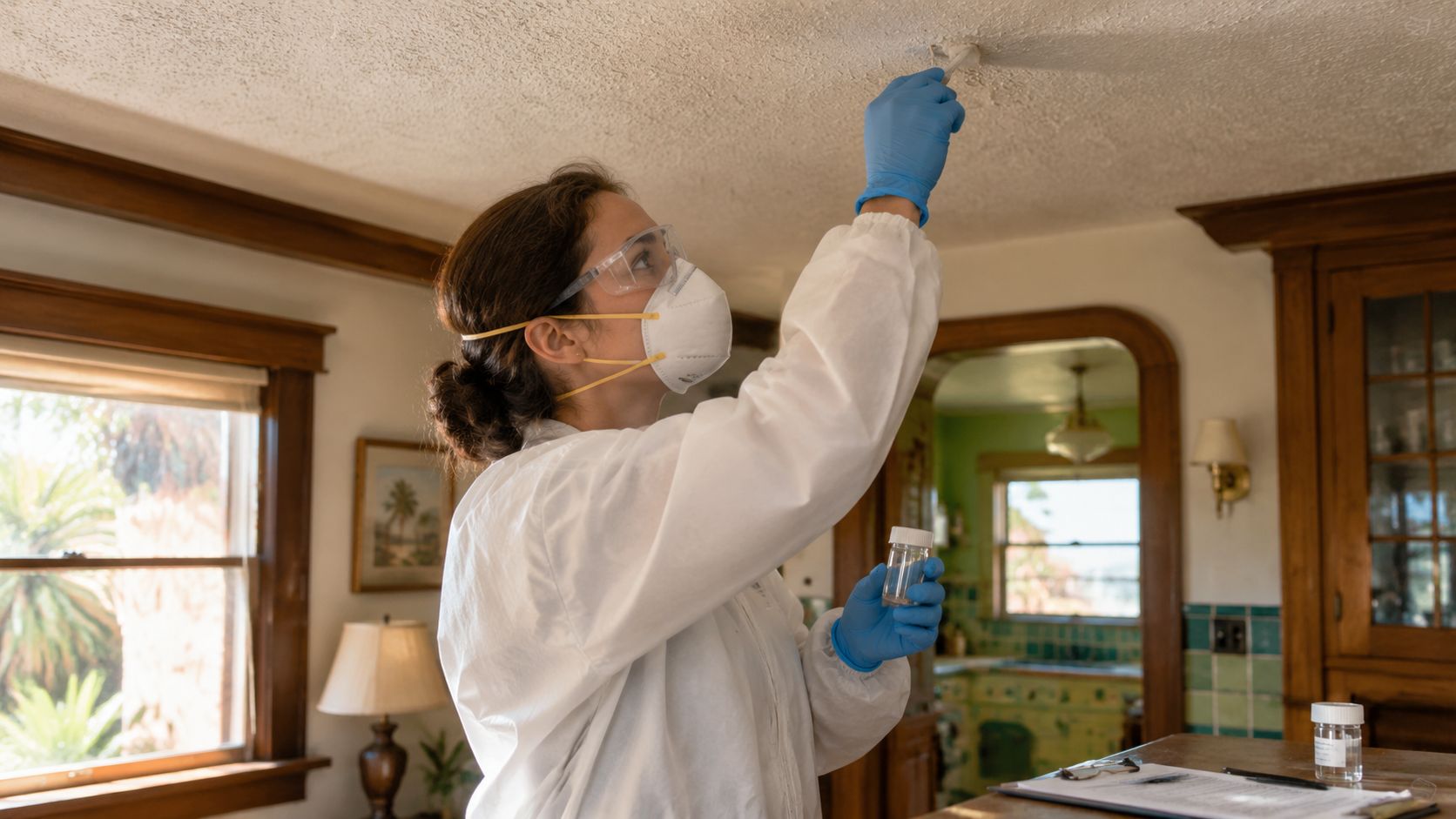
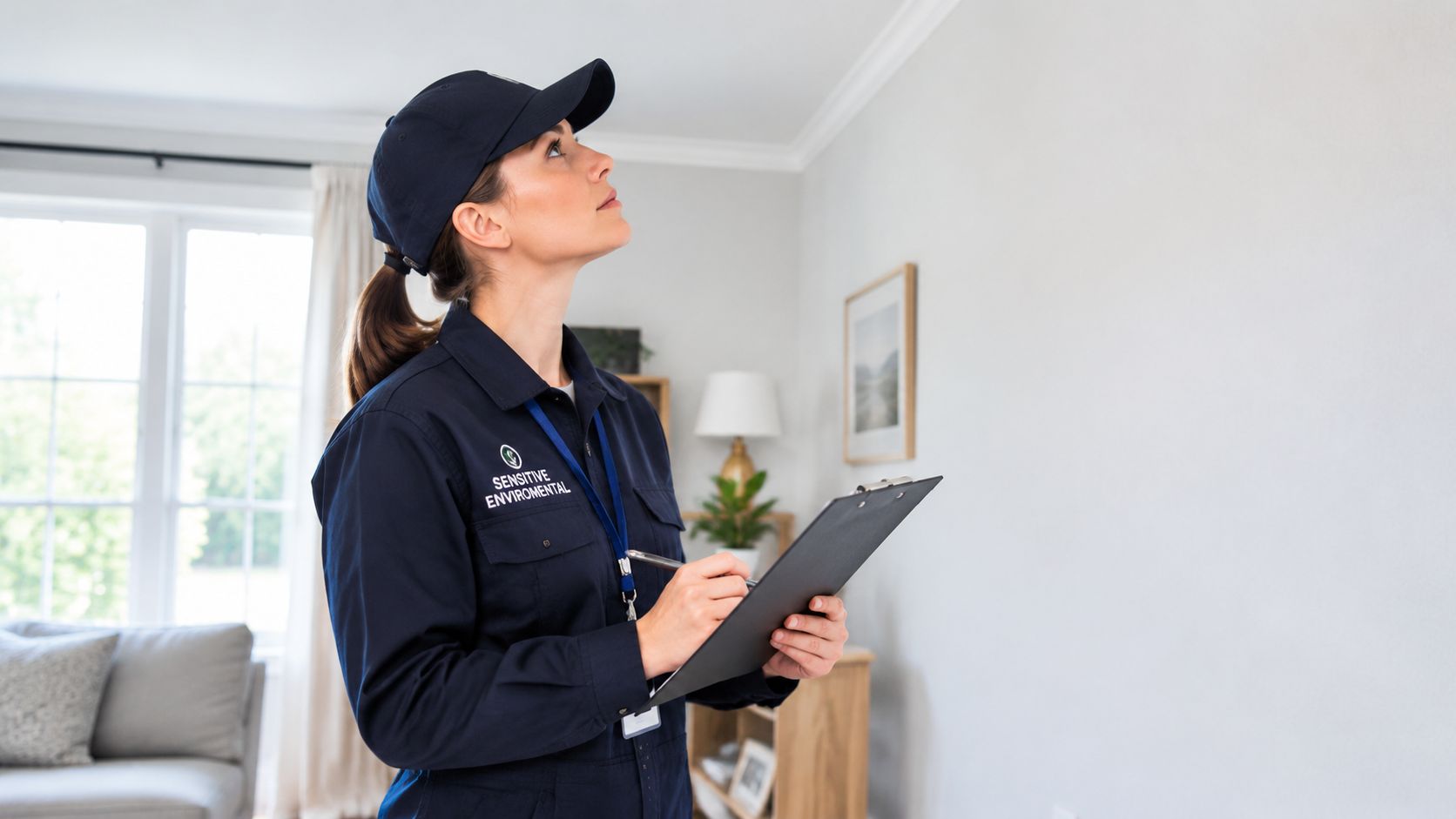
A residential asbestos inspection usually begins with conversation. The inspector asks what you plan to renovate, which rooms are included, whether previous repairs are documented, and whether any materials are damaged. That scope discussion matters because sampling should reflect the materials and locations your project may disturb.
The inspector then performs a room-by-room visual inspection. Suspect materials might include ceiling texture, flooring, adhesives, insulation, pipe coverings, cement products, wall components, or layered materials. The goal isn't to label every old-looking surface as asbestos. It's to identify homogeneous materials, document their locations, and select samples that represent the components affected by the work.
How sample collection works
For a suspect material, professional sampling generally involves a representative piece about 3–5 cm², collected through the material's full depth. That can include backing paper where present. A shallow surface shaving may not represent the layers below, particularly when a product is heterogeneous, damaged, painted, or installed over another component. The HSE asbestos survey guidance describes the importance of representative sampling and contamination control.
Sampling techniques vary by material. A friable sprayed coating or pipe lagging may require a sample extending through the full thickness. A non-friable fiber-cement product may be sampled at a corner, crack, or existing opening to limit disturbance. Inspectors may use controlled methods, including localized wetting where appropriate, to reduce dust during collection.
Each sample is sealed separately, labeled with the exact location and date, and tracked with documentation for the laboratory. Inspectors clean tools between samples to reduce cross-contamination. That chain of custody helps the final report connect each result to the correct room and material.
A good sample answers a specific question: what is this material, in this location, within the area planned for work?
The process resembles other property investigations in one important way, careful observation comes before conclusions. If your broader inspection involves hidden plumbing conditions, a resource explaining how sewer camera inspection works can help illustrate why trained professionals use targeted tools rather than assumptions. For a ceiling-texture concern, homeowners can also review how to test for asbestos in a popcorn ceiling.
Understanding Your Asbestos Lab Report
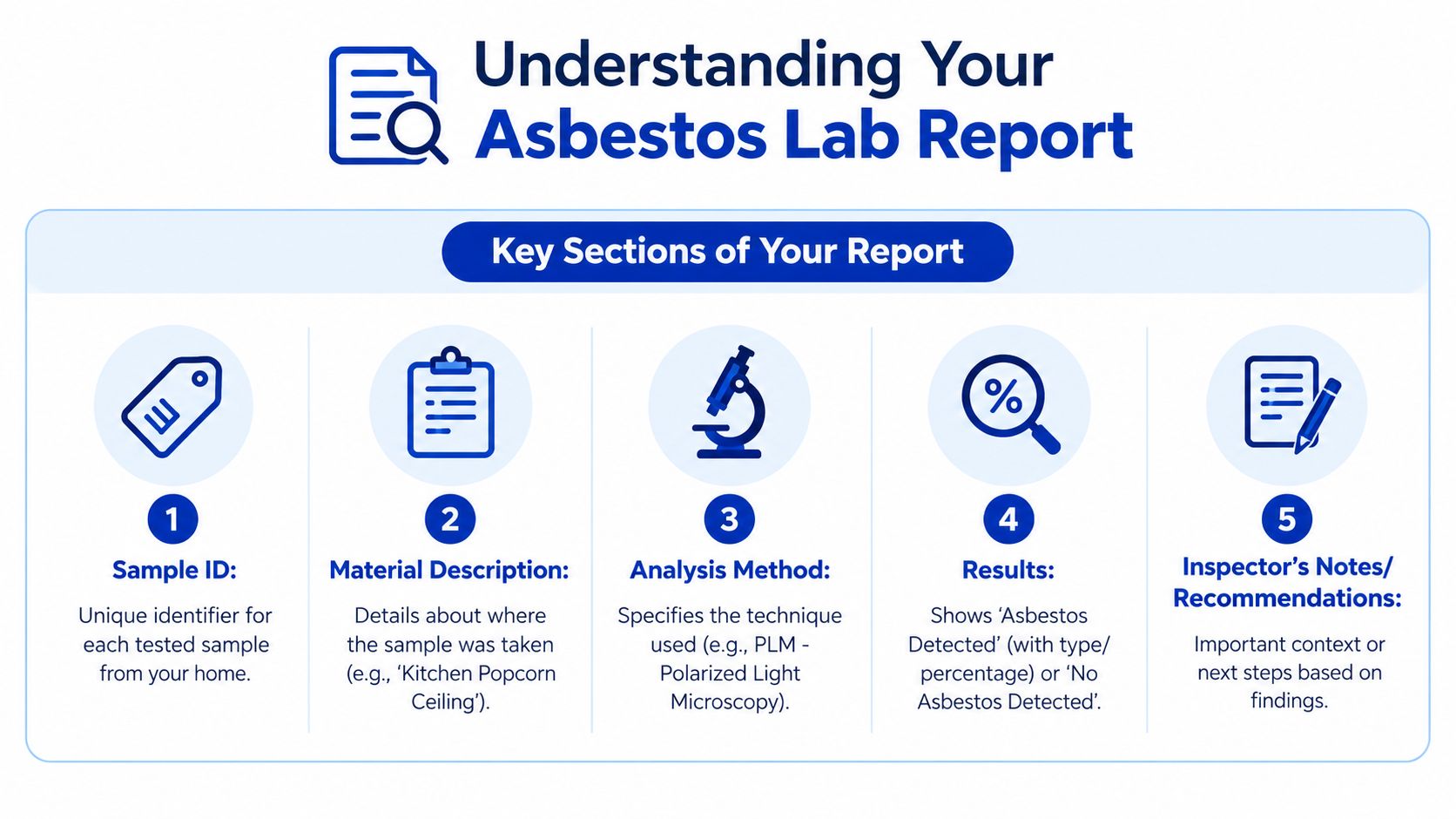
The laboratory report turns field observations into material-specific results. It should identify the sample, describe where it came from, state the analytical method, and report whether asbestos was detected. Read the report by location and material, not as a broad verdict about the entire house.
A result applies to the sample and the material it represents. One ceiling sample may provide information about a consistent ceiling texture in a defined area, but it shouldn't automatically be treated as proof about flooring, drywall joint compound, insulation, or another visually different component. The inspector's scope and sample map provide the context.
The terms that cause the most confusion
- Sample identification: A unique label connects the laboratory result to a room and collection point.
- Material description: The report may identify a surface as a kitchen ceiling texture, floor tile, pipe insulation, or another component.
- Analytical method: Bulk asbestos analysis commonly uses polarized light microscopy, often abbreviated as PLM. NIOSH Method 9002 describes PLM for bulk samples and specifies placing 1 to 10 grams of material into a sample container for analysis, as documented by the laboratory method reference.
- Asbestos type: Terms such as chrysotile or amosite identify the asbestos variety reported by the laboratory.
- Result and percentage: A result such as 3% Chrysotile in a popcorn ceiling sample confirms asbestos in that tested material. “No asbestos detected” means the tested sample did not show asbestos under the stated analytical conditions. It doesn't mean every untested material in the home has been cleared.
The words friable and non-friable describe how readily a material can be crumbled or released through handling. The report may also include notes about condition, layers, locations, and project implications. Those observations help qualified professionals determine appropriate next steps.
A positive result is information, not an automatic command to remove material. The project team may need to adjust work methods, avoid disturbance, obtain additional documentation, or consult qualified professionals about regulatory requirements. If suspect materials are undamaged and won't be disturbed, EPA homeowner guidance indicates that testing may not be necessary. The decision should reflect the planned work and the material's condition.
Asbestos Testing and Los Angeles Regulations
Los Angeles projects can involve more than a laboratory result. In much of the region, the South Coast Air Quality Management District regulates asbestos-related construction activities through requirements associated with Rule 1403. The practical homeowner takeaway is to identify suspect materials and complete the necessary survey before renovation or demolition affects them.
Your contractor, architect, building manager, or permitting team may ask for documentation showing that affected components were surveyed. A professional asbestos survey can identify suspect materials, describe quantities and locations, and provide laboratory results for sampled components. That documentation supports planning and helps avoid decisions based only on age, appearance, or assumptions.
When Procedure 5 becomes relevant
Fire, major structural damage, and demolition can create a different inspection situation. For asbestos found during demolition or cleanup of a damaged structure, South Coast AQMD states that a Procedure 5 Approved Alternative cleanup plan must be prepared by a Certified Asbestos Consultant and approved by the Air District before related renovation or demolition work begins, as described in its asbestos demolition and removal compliance information.
A Notice to Comply also changes the priority. It signals that an agency has identified a compliance concern and that the property owner or responsible project party needs qualified assistance with the requested testing, inspection, or documentation. The exact response depends on the notice, property conditions, and planned work.
For real estate professionals and sellers, California asbestos real estate disclosure information can provide useful transaction context. Sensitive Environmental also performs related environmental testing, including lead inspections, mold sampling, indoor air quality testing, and fire-residue assessments involving ash, soot, char, smoke residue, and heavy metals when those conditions affect a property evaluation.
Your Next Steps for a Safe Home Project
Start with your scope of work. Write down the rooms, surfaces, and materials your contractor expects to disturb, including small tasks such as drilling, flooring removal, ceiling scraping, or opening walls. This list gives an environmental inspector a practical basis for planning the visual survey and selecting representative samples.
Next, ask for documentation that connects each laboratory result to a specific location. A useful report should make it possible for a homeowner, contractor, property manager, or regulator to understand what was inspected, what was sampled, what the laboratory found, and which areas remain outside the survey scope.
Before work begins: Pause construction where suspect material may be disturbed until the testing and project review are complete.
A positive result doesn't automatically mean the same action is required in every home. Results help qualified professionals determine how the project should proceed, whether additional sampling is appropriate, and what compliance steps may apply. The same information can also support communication with contractors, insurers, buyers, sellers, HOAs, and building managers.
Contractors coordinating several trades may also benefit from practical estimating resources, such as Exayard HVAC estimating software, when environmental testing needs to be coordinated with broader project planning. The environmental decision itself should still come from the inspection findings, laboratory report, and applicable local requirements.
For homeowners and property professionals in Los Angeles, Pasadena, Sherman Oaks, Long Beach, Glendale, and surrounding Southern California communities, professional residential asbestos testing is a focused way to reduce uncertainty before construction changes the property. It supports informed decisions without treating every older material as automatically hazardous or every positive result as an automatic remediation order.
Sensitive Environmental provides asbestos inspections, pre-renovation and pre-demolition surveys, professional sampling, laboratory analysis, and compliance documentation for homes and properties throughout Los Angeles and Southern California. Visit Sensitive Environmental to discuss your project and schedule an asbestos survey before renovation, repair, demolition, or property transfer.