You're in the middle of a renovation, demolition, or property sale, and a dusty ceiling, old pipe wrap, or brittle floor tile has already raised the obvious question, is this asbestos. In Los Angeles and across Southern California, that question matters before anyone tears into walls, moves HVAC components, or signs off on a demo schedule, because the wrong assumption can turn a normal project into a compliance problem.
The tricky part is that regulations for asbestos aren't one rule. They're a stack of rules from the federal level, the worker-safety level, and the local air-district level, and each one can apply at the same time. A homeowner in Silver Lake, a contractor in Vernon, and a property manager in Westchester all need a clear plan before work starts, especially when a building was put up before modern materials and disclosure habits changed.
The reason these rules still exist is simple. Asbestos was used widely in older buildings, and disturbance during ordinary construction is one of the most common ways fibers can be released. Federal and local agencies still treat pre-renovation inspection and documentation as the starting point, not the paperwork afterthought, and that's why professional testing and surveying remain central to compliance in Los Angeles.
For a useful construction-safety perspective, KODOBI's overview of health and safety in construction is a helpful companion read for understanding why jobsite controls, training, and pre-work planning matter.
Sensitive Environmental also has a straightforward overview of California asbestos real estate disclosure for owners and agents who need to understand how testing, surveys, and disclosure often overlap before a transaction or project begins.
Table of Contents
- Why Asbestos Regulation Still Matters for Property Owners and Contractors
- How Federal, State, and Local Asbestos Authorities Divide Responsibility
- Understanding the Core Federal Rules That Trigger Compliance
- How SCAQMD Rule 1403 Shapes Southern California Projects
- Walking Through a Real Pre-Demolition Compliance Workflow
- Common Misconceptions About What Asbestos Rules Require
- Where Asbestos Regulation Is Heading Next
- Starting With the Right Testing Before Any Work Begins
Why Asbestos Regulation Still Matters for Property Owners and Contractors
A common Los Angeles scenario goes like this. A contractor opens up a 1960s Echo Park triplex for a remodel, or a Silver Lake homeowner starts removing an aging ceiling texture, and the crew finds crumbly insulation or discolored tile backing. At that point, the job stops being a basic renovation and becomes a question of material identification, exposure control, and regulatory notice.
The rules exist because the exposure is real
The point of asbestos regulation is not theory. It's fiber control during real-world disturbance, including renovation, demolition, and maintenance work that looks ordinary until material starts breaking apart. EPA's asbestos overview explains that federal regulation focuses on preventing exposure when asbestos-containing material is disturbed, and OSHA's worker standards exist because crews can be exposed during the work itself EPA asbestos laws and regulations.
In practical terms, the risks are tied to age, condition, and disturbance, not to how harmless a material looks from the doorway. That's why a floor tile, pipe wrap, or patching compound can't be treated as ordinary debris until it's been identified and documented properly.
Practical rule: If you don't know what a material is, don't let the crew assume it's benign just because it's intact today.
Older housing stock across Southern California still contains these materials in kitchens, utility rooms, ceilings, and mechanical spaces. That's why the first safe move is usually a survey, not demolition.
Compliance starts before the first swing of a hammer
The main mistake property owners make is waiting until construction is underway. By then, the most important decisions, sampling, notices, and access planning are already harder. A good inspection plan tells you what's present, where it is, and whether local notice or project controls will apply before the disturbance begins.
That's also why asbestos work is often discussed alongside broader construction safety planning. If you manage crews or tenants, the survey becomes part of the project file, not just a lab result in isolation. It's the document that helps you decide whether the job needs a different sequence, a different contractor, or a different start date.
How Federal, State, and Local Asbestos Authorities Divide Responsibility
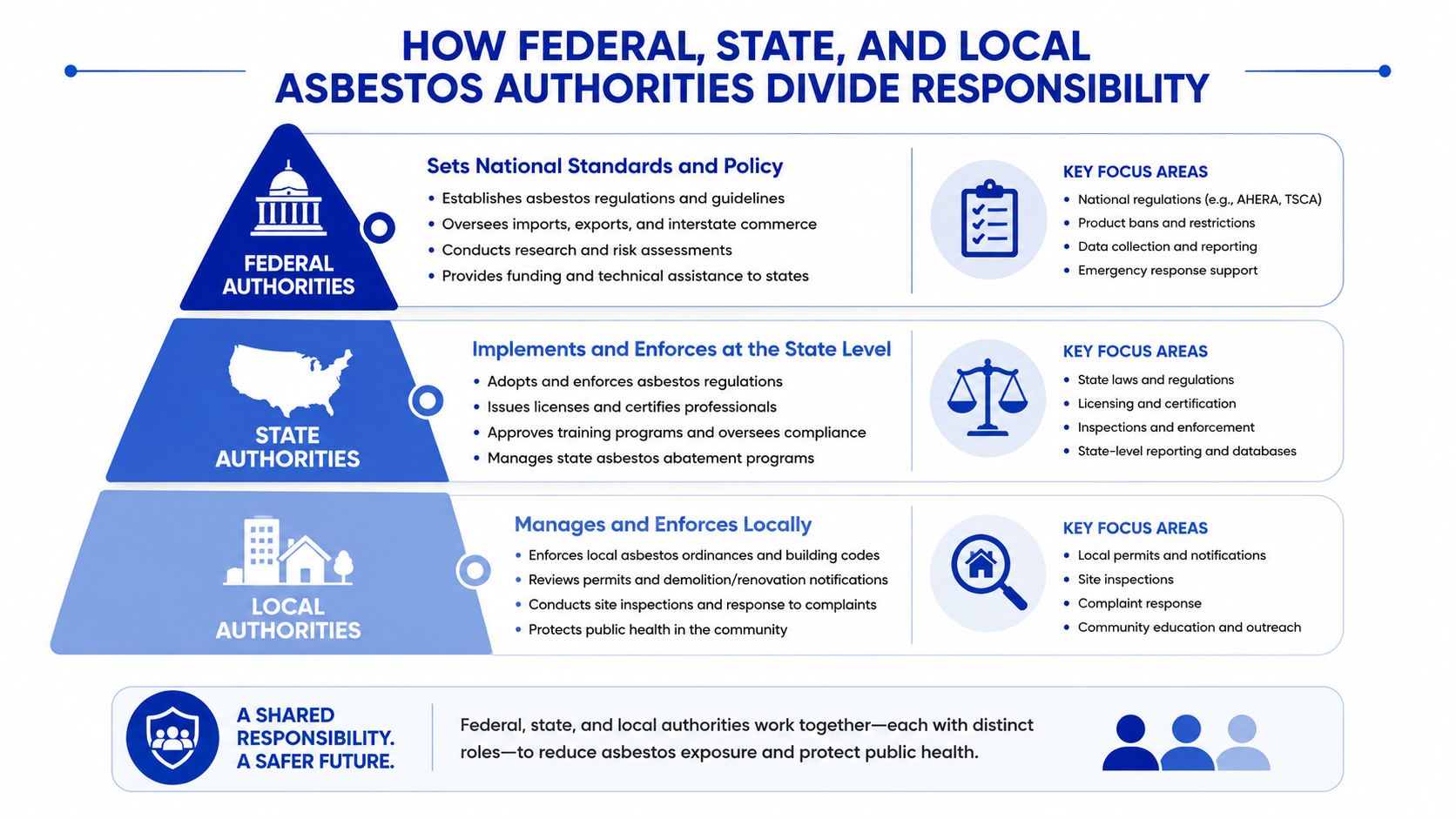
A Los Angeles apartment demolition may answer to several authorities at once. Federal agencies establish the baseline, California adds worker and waste requirements, and the local air district applies project controls that may be stricter. Compliance works like a set of overlapping maps. The project must satisfy each map, not just the federal one.
Federal rules establish the baseline
EPA's NESHAP framework addresses asbestos emissions from demolition and renovation. OSHA addresses worker exposure, training, and protective practices. EPA also uses a more than 1% asbestos threshold for regulated asbestos-containing material and distinguishes friable from nonfriable material because friability affects the chance that fibers become airborne EPA asbestos laws and regulations.
OSHA's construction standard sets an 8-hour time-weighted average of 0.1 fibers per cubic centimeter and a 30-minute excursion limit of 1.0 fibers per cubic centimeter for airborne exposure. It also includes annual training obligations for exposed workers and competent persons. These limits give contractors measurable exposure targets instead of leaving “safe handling” as a vague instruction.
California and SCAQMD add local project controls
California agencies address worker safety, asbestos waste, and air-quality oversight. For projects in Los Angeles, Orange, Riverside, and San Bernardino counties, the South Coast Air Quality Management District applies requirements through SCAQMD Rule 1403. Its procedures can affect the survey, work practices, notifications, postings, recordkeeping, and clearance process.
That local layer connects broad federal rules to the actual jobsite. For example, a Los Angeles contractor planning interior demolition may need to complete an asbestos survey, determine whether the materials will be disturbed, follow Procedure 5, and submit the required Notice to Comply steps before work begins. The exact obligations depend on the material and scope, so the project team must match the notification and controls to the planned disturbance.
Contractors cannot select one agency and disregard the others. The survey, worker-protection plan, waste arrangements, and local notification path must work together.
Bottom line: Meeting one layer of asbestos oversight does not prove compliance with the others. Project records must describe the work accurately and support every applicable federal, state, and local requirement.
Understanding the Core Federal Rules That Trigger Compliance
The federal rules don't just describe asbestos, they define the moment a material becomes a compliance issue. That's what makes the 1% threshold, the friability classification, and the OSHA exposure limit so important on renovation and demolition jobs.
The threshold tells you when the rules turn on
EPA treats material with more than 1% asbestos as regulated asbestos-containing material, which means the question is no longer whether the material feels old or damaged. The question becomes how it's classified, where it's located, and whether the planned work will disturb it EPA asbestos laws and regulations.
Friable material is especially important because it can be crumbled or reduced to powder by hand pressure when dry. That characteristic makes it much more likely to release fibers during handling, so it usually drives stricter control decisions.
Category I nonfriable material includes items such as resilient floor covering, asphalt roofing products, gaskets, and packings. Category II nonfriable material is still regulated if it contains more than 1% asbestos, but it can't be crumbled or reduced to powder by hand pressure when dry EPA guide to normal demolition practices under asbestos NESHAP.
OSHA focuses on the worker, not just the building
OSHA's construction standard is about exposure in the work zone. The 0.1 fibers per cubic centimeter 8-hour limit and the 1.0 fibers per cubic centimeter 30-minute excursion limit are the clearest numbers on the jobsite, because they shape wet methods, containment, training, and how supervisors assign work EPA asbestos laws and regulations.
That's why a pipe chase, boiler room, or floor tile demo can't be judged by age alone. A material's category and condition determine whether the crew can handle it under ordinary methods or whether the project needs formal asbestos controls.
| Trigger | EPA NESHAP | OSHA 1926.1101 |
|---|---|---|
| More than 1% asbestos | Regulated asbestos-containing material | Exposure controls apply if workers may disturb it |
| Friable material | Higher release risk, stricter demolition and renovation controls | Higher likelihood of worker exposure controls |
| Demolition or renovation disturbance | Notification and inspection requirements can apply | Work-practice controls and training apply |
| Airborne exposure concern | Emission control focus | 0.1 fibers per cubic centimeter 8-hour limit and 1.0 fibers per cubic centimeter 30-minute excursion limit |
How SCAQMD Rule 1403 Shapes Southern California Projects
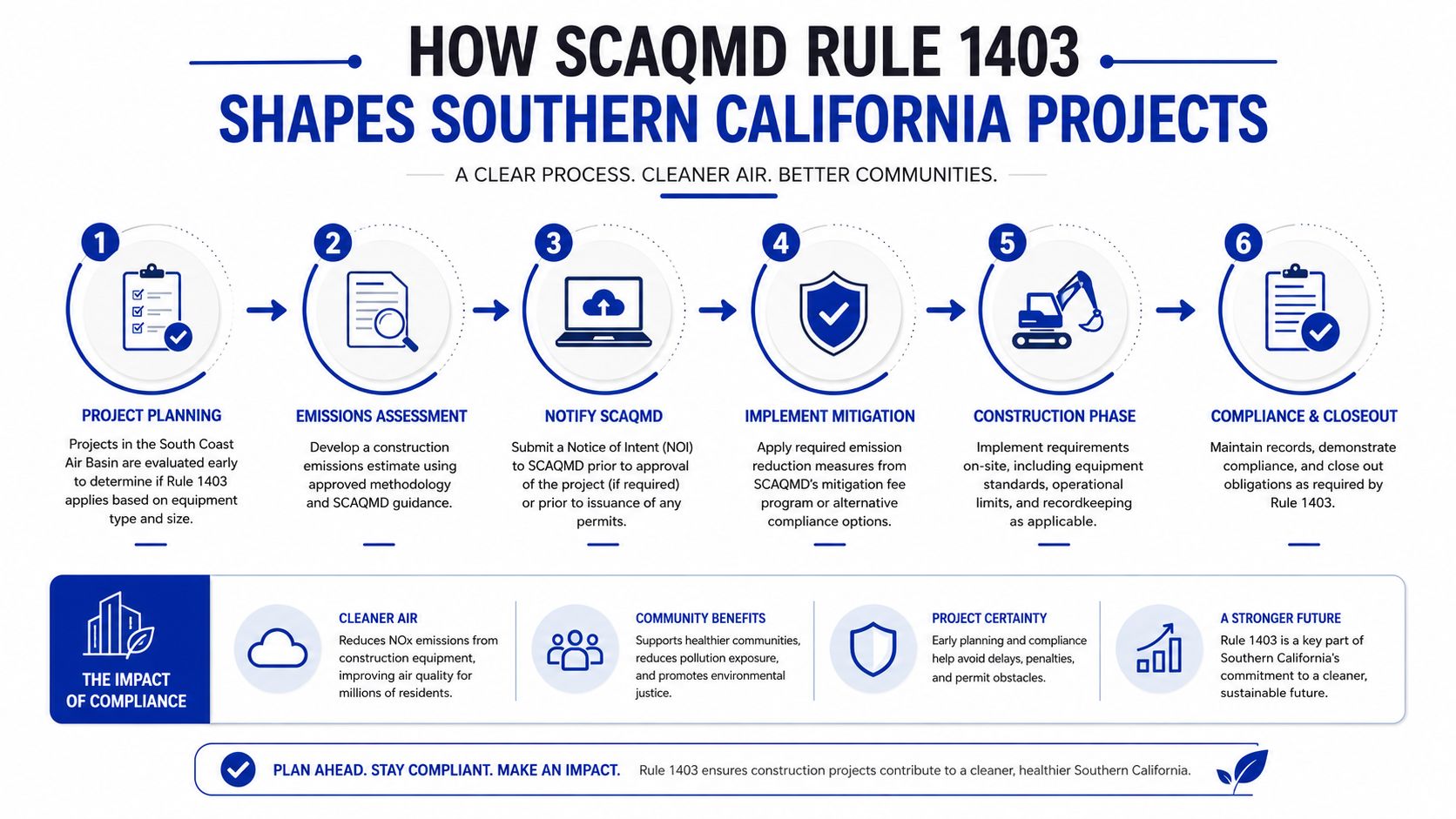
Rule 1403 is where many Southern California projects get very specific. Federal rules may tell you that asbestos disturbance must be controlled, but SCAQMD tells you what has to happen before the work starts, what has to be submitted, and what has to be documented in the local file.
The local clock starts before demolition or renovation
SCAQMD Rule 1403 requires an affected facility or facility component to be thoroughly surveyed before demolition or renovation begins, including inspection, identification, quantification, and physical sampling of friable asbestos-containing material plus Class I and Class II nonfriable material SCAQMD Rule 1403. That survey is not optional paperwork. It is the basis for deciding whether the job can proceed as planned.
The rule also requires 10 working days' notice before certain demolition or renovation work that disturbs more than 100 square feet of regulated asbestos-containing material, which is why local project planning has to start early. A contractor in Vernon or a property manager in Santa Monica can't wait until mobilization day to sort this out.
Procedure 5 adds a second layer for higher-risk work
For damaged or disturbed ACM, SCAQMD says a Procedure 5 cleanup plan must be submitted regardless of project size, and the work may not begin until SCAQMD staff approves it in writing SCAQMD compliance advisory. The plan submittal includes the notification, site survey report, cleanup plan, chain of custody, and lab analysis report Procedure 5 guideline.
That sequence matters because it ties the survey to the work plan. The project file has to show what was sampled, how it was analyzed, and how the cleanup approach was documented before disturbance continues.
Sensitive Environmental's overview of asbestos management in Los Angeles commercial buildings is useful for property teams that need to understand why this local sequence often controls the project schedule.
The project sequence has to stay in order
- Survey first: Identify suspect materials before work begins.
- Notice next: File the local notification when the rule requires it.
- Post on site: Make sure the required information is visible.
- Use the right contractor: Let trained professionals handle regulated disturbance.
- Monitor and inspect: Verify controls during and after work.
- Close the file: Keep the survey, notifications, and clearance records together.
Walking Through a Real Pre-Demolition Compliance Workflow
A 1960s warehouse in Vernon is a good example because the project looks straightforward until the hidden materials are documented. The owner wants demolition, the general contractor wants a clean start date, and the city wants the paperwork in order before heavy equipment arrives.
The survey drives everything else
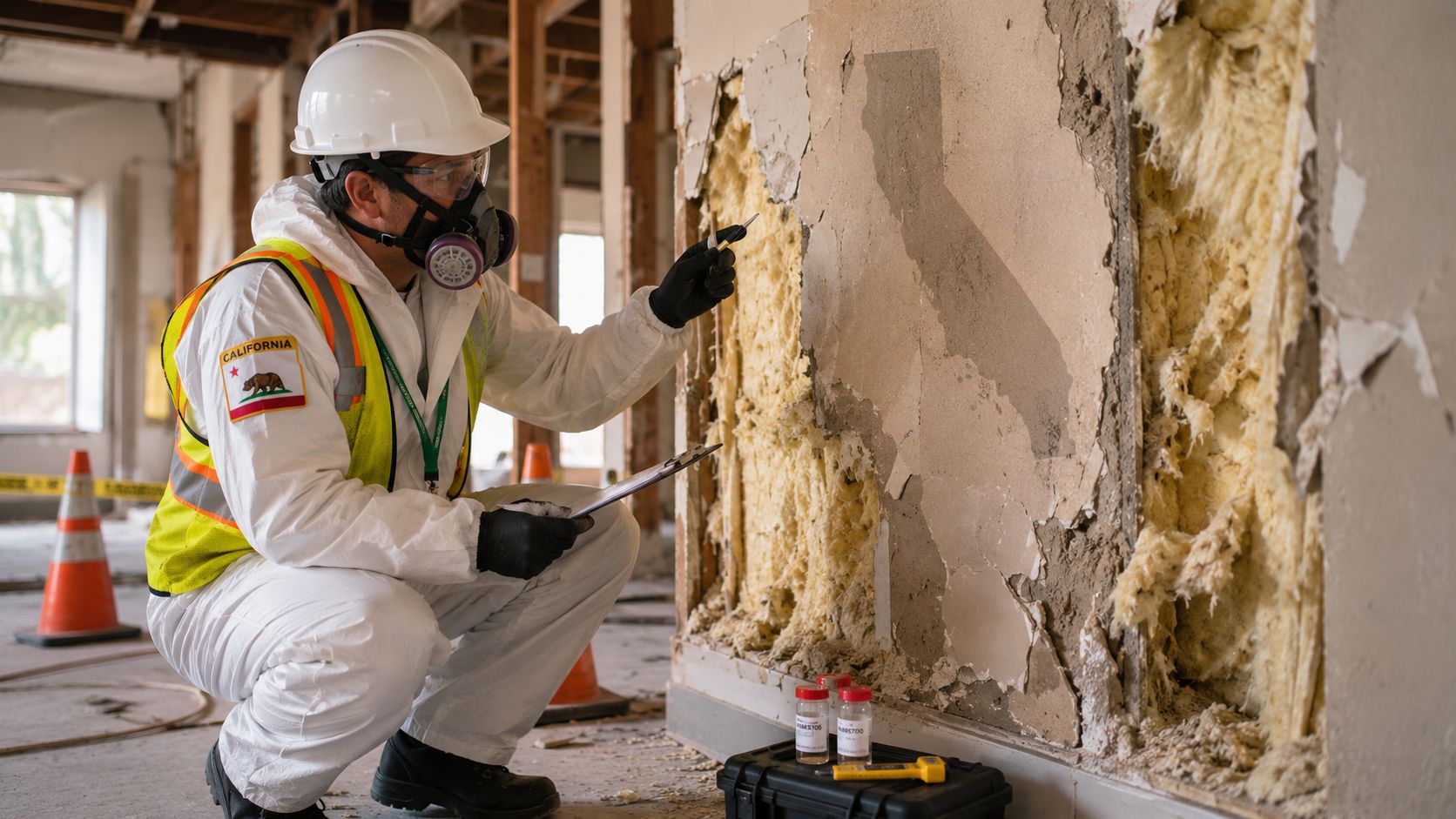
The first step is a site walkthrough by an accredited inspector who looks for suspect materials in pipe insulation, flooring, ceiling texture, roofing, and mechanical components. Suspect materials are then sampled and sent to a laboratory for polarized light microscopy, with the chain of custody preserved so the sample history stays intact.
That lab result determines whether the material is regulated and where it sits in the demolition plan. If the survey confirms asbestos, the project file has to reflect the findings before the notification goes in.
For a project manager trying to understand lien timing, access issues, and schedule pressure, this Tanner Law overview of a mechanics lien on property is a useful reminder that environmental delays often affect more than just the demo date.
The paperwork and the field controls have to match
Once the survey is complete, the Rule 1403 notification goes to SCAQMD, and the contractor selection has to reflect the scope of asbestos work. The field setup usually includes containment, wet methods, and a negative-pressure enclosure where required, followed by air monitoring and final visual inspection before re-occupancy or final turnover.
The documentation trail is what closes the compliance loop. A solid project file includes:
- Inspection report: What was sampled and where.
- Notification record: When the local notice was submitted.
- Waste documentation: Where regulated material went.
- Clearance record: The written evidence that the project met the required end point.
That file matters long after the equipment leaves the site. It's the record that shows the owner and contractor followed the legal sequence, not just the construction sequence.
Common Misconceptions About What Asbestos Rules Require
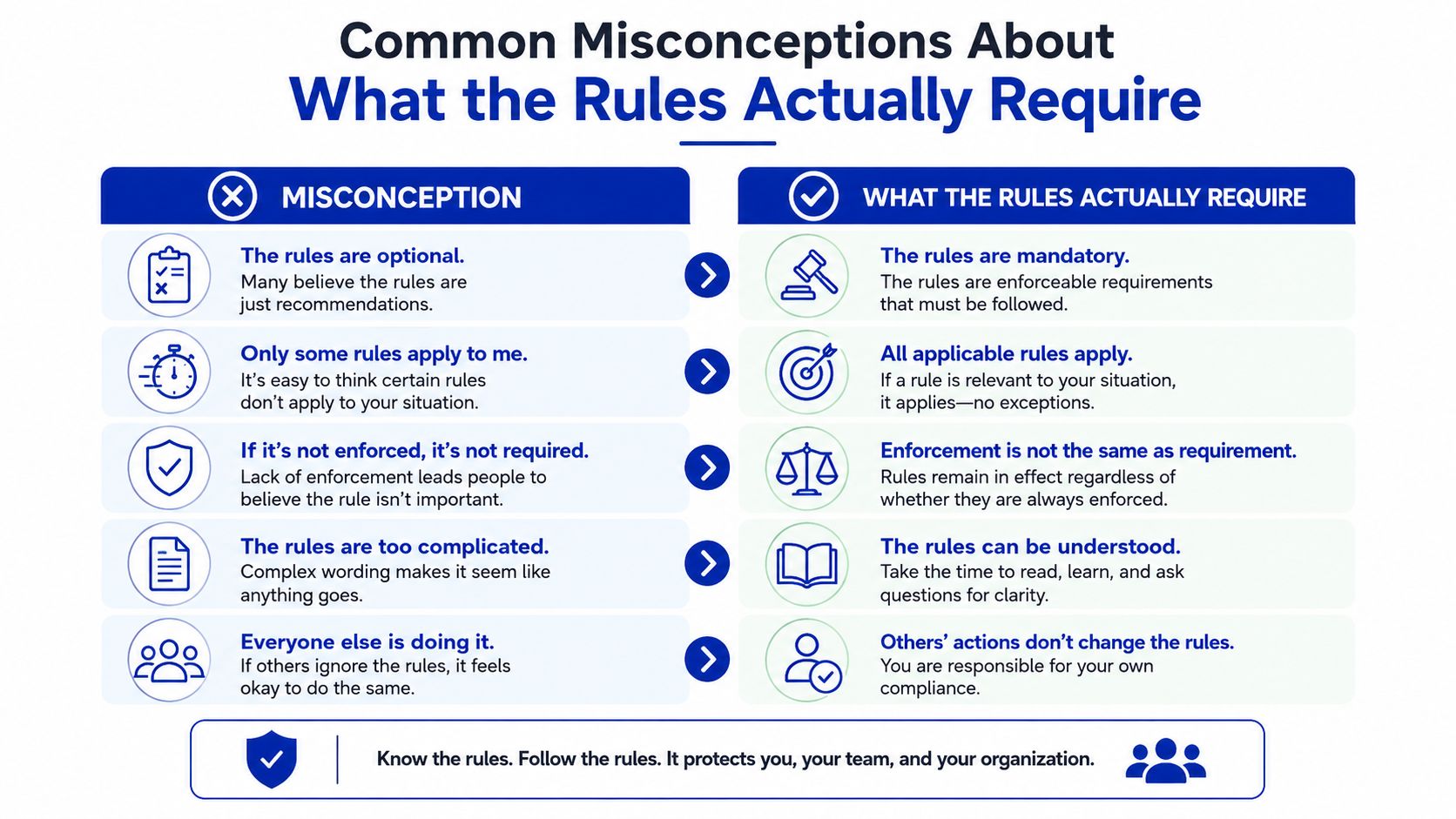
Three myths cause a lot of avoidable trouble on Southern California jobs. They sound reasonable at first, then they create delays when the survey, notification, and field work do not line up.
Myth one, nonfriable means exempt
That is not how the rules work. EPA still regulates Category I and Category II nonfriable materials if they contain more than 1% asbestos, and Category II can become a bigger issue once demolition or renovation changes the material's condition EPA guide to normal demolition practices under asbestos NESHAP. A material may look stable until a saw, drill, or tear-out makes it friable.
Myth two, testing means automatic abatement
Testing does not force one outcome. It documents what is present so the owner, contractor, or manager can decide the next step with real information instead of guesswork.
On a Los Angeles tenant-improvement job, that means the sample report can point to a simple repair, a limited removal, or a larger abatement scope. The survey is the map. The removal decision is the route you choose after reading it.
Myth three, older rules do not matter anymore
They do. EPA's asbestos framework is still active, OSHA's 0.1 fibers per cubic centimeter standard still governs worker exposure, and SCAQMD Rule 1403 still shapes local projects. Procedure 5 and Notice to Comply steps are part of that local path, so a project in Southern California still has to satisfy both federal and air district requirements.
The practical lesson is simple. An older rule does not stop applying just because the building is old too.
Where Asbestos Regulation Is Heading Next
The direction of travel is clear. Agencies are pushing toward earlier identification, tighter documentation, and more defensible pre-work planning, not looser oversight. For owners and contractors, that means the survey file is becoming more important, not less.
Documentation is becoming the real compliance test
Ireland's 2025 amendments show where some regulators are heading, with a lower occupational exposure limit of 0.01 fibres/cm³ beginning 21 December 2025, a permit requirement for work that could expose workers to asbestos dust, expanded training and medical monitoring, and a stated move toward electron microscopy by 2029 for thin-fibre detection HSA latest news. That's not a California rule, but it's a useful signal.
The practical takeaway for Southern California is that project documentation, lab methods, and inspection detail are likely to keep mattering more. Owners who build a strong pre-demolition file now are less likely to scramble later when agencies ask for proof.
Emerging trends affecting local projects
| Regulatory Trend | Source | Practical Impact on Southern California Projects |
|---|---|---|
| Lower exposure limits | Ireland 2025 amendments | Reinforces the move toward stricter worker protection and documentation |
| Permit requirements before exposure work | Ireland 2025 amendments | Mirrors the broader shift toward pre-work approval systems |
| More advanced analytical methods | Ireland 2025 amendments | Supports better thin-fiber detection and more defensible sampling |
| Tighter local notice and survey expectations | SCAQMD Rule 1403 | Increases the need for complete pre-demolition and pre-renovation files |
Starting With the Right Testing Before Any Work Begins
Every rule in this guide starts with the same upstream step, a qualified asbestos survey. Without that, there's no reliable way to know whether a material is regulated, whether local notice applies, or how the job should be sequenced.
The survey should be site-specific and documented
A proper inspection usually begins with a licensed Southern California consulting firm sending a qualified inspector to sample suspect materials and document the findings. Lab analysis, often including PLM and, where appropriate, TEM, turns those samples into written results that owners and contractors can use.
Sensitive Environmental provides asbestos testing and abatement-related documentation support focused on testing, inspections, surveys, sampling, and the records that help projects move through renovation and demolition planning. For many clients, the most useful deliverable is a clear written report that identifies what's present before any disturbance begins.
A good asbestos report doesn't just name a material. It tells you what can happen next in the project timeline.
The first action item is simple
Before demolition, before tenant improvements, and before any wall or ceiling tear-out, request a site-specific survey with chain-of-custody documentation and lab analysis. If the work is in Los Angeles or anywhere in Southern California, that report can become the basis for Notice to Comply, demolition notification, and the contractor's work plan.
If you need asbestos testing, a pre-renovation survey, or SCAQMD Rule 1403 documentation in Los Angeles County or the surrounding region, contact Sensitive Environmental and schedule an inspection before the work starts. A clear report now is much easier to work with than a delayed project later. Visit Sensitive Environmental to request professional asbestos testing and surveying support for your property or jobsite.