A ceiling stain has appeared after a bathroom leak in a Studio City rental. The surface feels dry, the tenant wants reassurance, and a handheld meter shows a high number near the wall. In Silver Lake, a contractor may face the opposite problem, a meter appears normal just before a kitchen demolition, but the wall cavity has a history of water intrusion.
Neither situation can be resolved by one reading. A moisture meter can help locate an abnormal condition, but it can't identify hidden mold, prove that an assembly is dry, or replace laboratory analysis and regulated sampling. In Southern California, dry weather can make a surface look reassuring while moisture remains deeper inside layered construction.
Table of Contents
- Why a Moisture Meter Reading Is Not the Same as a Diagnosis
- How to Take a Reliable Reading in Wood, Drywall, and Concrete
- Common Reading Ranges and What They Mean for Each Substrate
- Mapping a Property Instead of Trusting a Single Number
- False Positives, False Reassurance, and Field Traps
- When Readings Should Trigger Professional Testing
- A Practical Field Protocol and When to Call Sensitive Environmental
Why a Moisture Meter Reading Is Not the Same as a Diagnosis
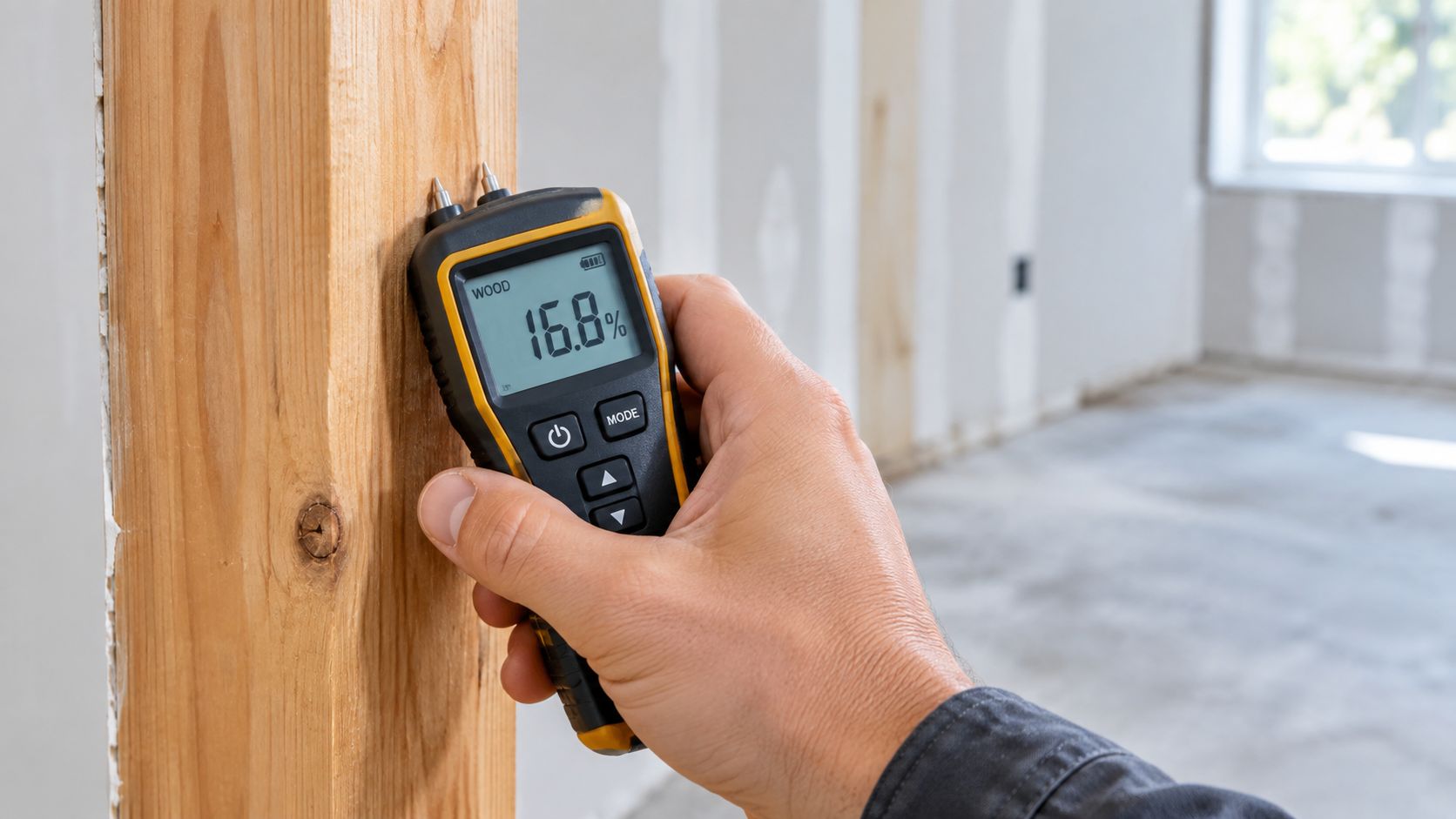
A property manager sees a high reading beside a patched wall in a Los Angeles rental. The number deserves attention, but it does not identify the source, depth, or consequence of the moisture. A meter records a physical response from a specific material and location. Pin-type instruments estimate moisture through electrical resistance between inserted electrodes. Pinless instruments scan a broader area with an electromagnetic or capacitive field. The display converts that response into an estimate or relative scale, depending on the instrument and material.
The measurement describes the instrument's response, not the entire building condition. A pin reading represents the material between the electrodes at that spot. A pinless reading represents the scan field beneath the pad. Neither can establish microbial growth, framing deterioration, or an indoor-air-quality impact without inspection and, where appropriate, environmental sampling.
Practical rule: Treat a meter result as evidence that helps direct an investigation, not as a verdict about the property.
Electrical readings are inferential. Species, temperature, geometry, probe circuitry, and surrounding conditions can change how the instrument converts an electrical response into an estimated moisture content. ASTM guidance on wood moisture measurements supports corrected, repeatable measurements and cautions against treating an unqualified display value as exact.
What the number can tell you
A reading has field value when it answers a specific question:
- Does one section of framing respond differently from nearby, unaffected framing made of the same material?
- Does an area that is raised follow a plumbing wall, window opening, roof transition, or another plausible moisture pathway?
- Does the result remain consistent when the technician repeats the measurement?
- Does a pinless scan identify a zone that merits closer inspection, verification, or environmental sampling?
Comparisons become unreliable across different materials. A drywall reading cannot be interpreted like a wood reading, and a wood scale does not make a concrete result meaningful. A high display value also does not represent the same condition in every assembly.
Investigators should pair the reading with wetting history, material type, temperature, visible damage, odors, and nearby plumbing or exterior penetrations. A recent plumbing failure, recurring condensation, roof leak, irrigation intrusion, or fire-suppression event changes the questions that follow.
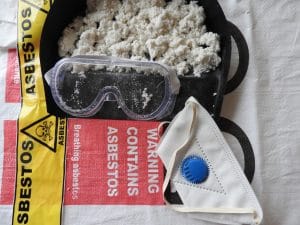
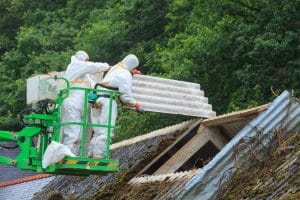
In Southern California, a low surface reading can coexist with concealed damage, particularly where layered construction or an enclosed cavity limits drying. Persistent elevations, staining, odor, repeated leaks, or planned demolition should prompt professional assessment. Mold or indoor-air-quality testing may be appropriate when occupants report symptoms or conditions suggest concealed impact. If renovation could disturb suspect materials, asbestos evaluation and required documentation under AQMD Rule 1403 may apply. A meter cannot establish that materials are safe to cut, sand, drill, or demolish.
How to Take a Reliable Reading in Wood, Drywall, and Concrete
A reliable reading depends on the setup as much as the number on the screen. Let the meter and material adjust to the room conditions, then check the instrument's self-test, calibration, or reference response. A cold meter moved into a warm interior can produce confusing results, particularly where condensation or temperature differences affect the surface.
Use the right setting and orientation
For wood, identify the species before selecting the meter setting. Douglas fir and oak can produce different electrical responses, so the wrong correction can make two locations appear more or less comparable than they are. The USDA Forest Service moisture-meter guidance addresses calibration, species and temperature adjustments, electrode contact, measurement depth, and consistent orientation.
With a resistance meter:
- Check the instrument. Complete the meter's self-check or use an appropriate reference check before recording field data.
- Identify the wood. Record the species, or the best-supported classification, and apply the matching setting.
- Insert the pins properly. Place resistance-meter pins at least 6 millimeters, or 1/4 inch, into the wood, keep them parallel to the grain, and avoid end grain.
- Repeat at multiple locations. Pins measure the condition between their electrodes, not the entire joist, stud, or subfloor.
- Record the context. Note temperature, species, location, probe orientation, instrument mode, and corrected value.
Drywall and finished surfaces need a different approach. Many meters provide a relative response on drywall rather than a calibrated moisture-content percentage. Scan a consistent grid, lift the pad fully between readings, and compare the suspected area with unaffected drywall in the same building and construction type. Metal studs, conduit, fasteners, foil-faced insulation, and dense backing can distort a pinless field. If a scan suggests water is accumulating inside the wall itself, review this guidance on what to do if water is accumulating in your walls before opening the assembly.
Concrete requires material-specific interpretation. Surface response does not establish deeper slab conditions. Compare the suspected location with an unaffected area of the same slab, record whether the instrument assesses the surface or a deeper condition, and avoid treating the display as a universal pass or fail threshold.
Preserve the conditions in the field report. Include the material, location, temperature, orientation, instrument mode, comparison area, and any visible or site-related context. A repeatable pattern is evidence for the investigation. It is not, by itself, a mold, asbestos, or indoor-air-quality diagnosis. In Southern California, persistent anomalies near planned demolition should be escalated to appropriate professional testing, with AQMD Rule 1403 documentation considered when renovation may disturb suspect materials.
Common Reading Ranges and What They Mean for Each Substrate
A homeowner may see a high percentage and assume the material needs removal. That conclusion is premature. The number is evidence within a building investigation, and its meaning depends on the substrate, instrument, conditions, and question being tested. Wood meters can estimate moisture content when properly selected and corrected. Drywall and many other building materials are usually interpreted through comparison. Concrete requires material-specific review rather than one universal pass or fail threshold.
A comparison table for field interpretation
| Substrate | Dry reading | Above-baseline reading | Warrant concern | Field caveat |
|---|---|---|---|---|
| Wood framing | A repeatable baseline from unaffected wood of the same species and temperature | A sustained, repeatable increase from that baseline | A pattern near a leak, penetration, transition, or concealed cavity | Correct for species and temperature. Do not rely on one location |
| Drywall | A consistent response from known-dry drywall in the same assembly | A localized or directional change from the dry reference | A persistent anomaly supported by staining, odor, swelling, or water history | Relative readings are more useful than treating the display as a calibrated percentage |
| Concrete slab | A comparable response in an unaffected section of the same slab | A meaningful deviation from the unaffected comparison area | A persistent pattern associated with vapor, plumbing, or water intrusion concerns | Surface response does not necessarily represent deeper slab conditions |
For wood, commonly available commercial meters have dependable operating ranges of roughly 4–30% for dielectric instruments and 6–30% for resistance instruments, according to USDA guidance summarized in the ASTM-linked moisture measurement reference. Readings above approximately 30% moisture content should be treated as qualitative rather than precise. Accuracy declines near the limits of the instrument's range.
A very high display can support a wet-condition hypothesis, but it does not quantify the condition with the same confidence as a reading within the dependable range. Species, temperature, chemical treatment, moisture distribution, probe geometry, and operator technique can all affect the result. Confirm the pattern, inspect for a plausible source, and document the material and instrument settings before recommending invasive work.
Los Angeles properties add another comparison problem. A reading from a cool Venice Beach interior is not automatically comparable with one from a dry Pasadena room. Material, temperature, assembly, and building history may differ. Use an unaffected reference from the same material and construction context whenever possible.
For drywall and concrete, report the change from the reference area, the anomaly's location, and whether the result repeated. A professional assessment should state what the readings support and what they do not establish. Persistent moisture near planned demolition can require escalation to mold or indoor-air-quality testing. Suspect materials may also require asbestos evaluation and AQMD Rule 1403 documentation before renovation disturbs them. A meter helps define that decision. It does not make the diagnosis.
Mapping a Property Instead of Trusting a Single Number
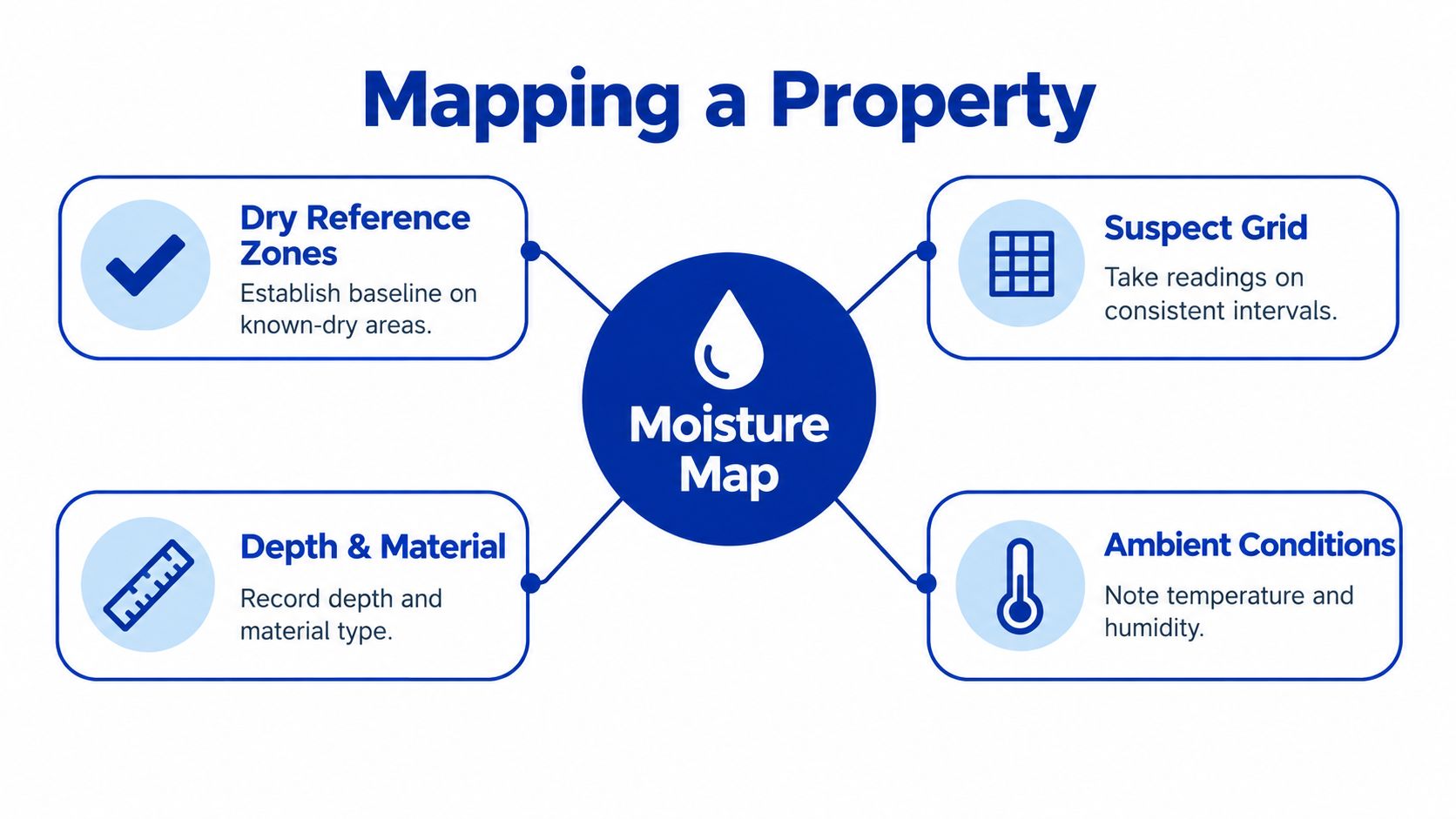
The most useful moisture investigation is a map, not a hunt for the largest number. Start with known-dry reference areas on each relevant floor or in comparable rooms. Then collect readings across the suspected area using consistent spacing, material selection, depth, and instrument handling.
A mapped series can reveal a directional trend from a bathroom, window, roof edge, supply line, or exterior wall. It can also show that a supposed wet spot is merely a narrow response over a fastener or conduit. The pattern often tells you more than the peak value.
A defensible mapping sequence
- Establish the baseline. Record several unaffected points made from the same material.
- Lay out the suspect grid. Mark readings on a floor plan, wall elevation, or photographs.
- Record conditions. Include material type, temperature, relative humidity when available, instrument mode, and probe depth.
- Repeat anomalies. Recheck any unexpected spike after the meter and material have equilibrated.
- Compare patterns. Review the distribution by room, wall, floor, and suspected source rather than reacting to one point.

The highest reading deserves verification before it drives a costly decision. A technician may repeat it with the same instrument, use the other meter type as a screening comparison, insert pins at a consistent deeper position where appropriate, or investigate the assembly directly if the location is consequential.
Per-room averages and variation can help describe whether a condition is broad or localized, but summary statistics never replace field judgment. A single dry surface can coexist with hidden moisture elsewhere, and a single high point can result from a conductive component rather than water.
Field observation: A gradual increase that follows a likely water path deserves more attention than a sharp spike that appears only over a fastener and disappears immediately beside it.
Timing also matters. A recently dried surface may not represent the condition inside a layered wall, and intermittent leaks may not be active during the inspection. Research on building moisture assessment warns that location and timing can cause investigators to miss localized or changing moisture conditions, as described in the research on moisture measurement limitations in buildings. Repeat measurements after conditions change can be more informative than a single visit.
False Positives, False Reassurance, and Field Traps
Moisture meters respond to electrical and electromagnetic conditions. Water is only one factor that can alter that response. Alkaline salts, preservatives, adhesives, metal fasteners, foil, tile backer, and other conductive materials can raise the signal without proving that the assembly is wet.
Common field traps
| Field trap | How it skews the reading | Verification step |
|---|---|---|
| Metal fasteners or conduit | Produces a sharp localized response in a pinless scan or affects pin placement | Move the meter slightly and compare the pattern around the suspected metal |
| Salts from prior water intrusion | Conductivity can remain elevated after visible surfaces dry | Compare with unaffected material and consider targeted inspection or sampling |
| Adhesives and composite materials | Changes the electrical response of drywall, flooring, or wall coverings | Identify the assembly before interpreting the display |
| Surface condensation | Can affect the outer surface without representing deeper moisture | Record temperature and inspect the material at consistent depth |
| Reading only the drywall skin | Misses moisture deeper in a wall or behind a finish | Use a mapped scan, appropriate pin verification, or another diagnostic method |
| Wrong species setting | Converts the response using an unsuitable correction | Identify the lumber and repeat with the correct setting |
| Dry Santa Ana conditions | Creates a dry surface while concealed moisture may remain inside layered construction | Check history, transitions, cavities, and repeat under different conditions |
A pinless meter is valuable for covering large areas without damage, but it doesn't confirm moisture content on its own. A pin meter can provide more targeted information, yet it also samples only the material between its electrodes. A thermal camera can show temperature patterns, and a humidity probe can help characterize an environment, but those tools have their own limits and don't replace laboratory testing.
What a low result cannot prove
A low reading doesn't prove that mold is absent. It doesn't prove that a wall cavity is dry, and it doesn't establish that a building has acceptable indoor air quality. Moisture may vary by depth, location, or time, especially near plumbing chases, exterior penetrations, floor transitions, and enclosed assemblies.
DIY users should also be cautious about treating a consumer kit as a complete investigation. For context on the limitations of household screening products, see whether home mold test kits are reliable. A professional assessment connects the meter map with visual inspection, material history, targeted sampling, and laboratory analysis when the decision requires documented evidence.
When Readings Should Trigger Professional Testing
Escalation makes sense when moisture findings persist, affect concealed materials, coincide with visible damage, or intersect with planned construction. A meter can help identify where to focus, but formal mold, indoor air quality, asbestos, lead, or fire-residue testing answers different questions.
Water damage and mold investigation
Consistent high readings in drywall, framing, flooring, or a wall cavity support a closer environmental assessment, particularly when there is staining, odor, swelling, repeated leakage, or a history of wetting. Mold sampling may help characterize airborne or surface conditions when the inspection question calls for it. It doesn't automatically determine that remediation is required, and a negative sample doesn't erase an unresolved moisture source.
An investigation may include moisture mapping, visual inspection, targeted surface or bulk sampling, air sampling when appropriate, and laboratory analysis. The sampling plan should reflect the suspected source and the decision the owner needs to make. The professional mold inspection and testing resource for Los Angeles properties provides useful context for that process.
A slab or wall concern may also lead to vapor or indoor air quality follow-up. For building-envelope decisions, owners can review this practical homeowner vapor barrier field guide to understand why moisture movement through assemblies needs more than a surface reading.
Renovation and demolition in Los Angeles County
Moisture testing doesn't substitute for asbestos testing. South Coast AQMD Rule 1403 requires an affected facility and its components to be thoroughly surveyed for asbestos before renovation or demolition work begins. The survey includes onsite inspection, identification, quantification, and physical sampling of friable asbestos-containing material and relevant Class I and Class II non-friable material, including flooring layers down to the joists and materials inside wall or ceiling cavities when necessary for identification and sampling. See the South Coast AQMD Rule 1403 requirements.
The survey report must identify suspect materials that will be disturbed, document their condition, address friability, and be prepared by an appropriately qualified inspector. South Coast AQMD describes the documentation expectations in its Rule 1403 compliance advisory.
Sampling must represent the material and homogeneous area. For example, the agency's sampling provisions specify minimum sample counts for certain friable surfacing areas and non-friable materials based on material type and area size, as shown in the South Coast AQMD sampling presentation. A moisture meter can't establish whether suspect material contains asbestos. Under Rule 1403, a homogeneous material area is treated as asbestos-containing when at least one sample shows a concentration greater than 1.0%, and construction age alone doesn't create a survey exemption, according to the Rule 1403 change summary.
A Practical Field Protocol and When to Call Sensitive Environmental
A good field protocol turns an uncertain display into documented evidence. The owner, manager, contractor, or inspector should be able to explain where the reading came from, how the instrument was configured, what it was compared with, and why the result supports the next investigative step.
A concise on-site checklist
- Verify the instrument. Complete a self-check or reference check and record the meter type and mode.
- Confirm the material. Use the correct wood species setting and don't compare different substrates as if they share one scale.
- Control the conditions. Allow the meter and material to equilibrate, then record temperature and relevant ambient conditions.
- Map the property. Establish dry reference zones, mark suspect areas, and collect repeatable readings across the suspected moisture path.
- Document depth and orientation. For pin readings, record insertion depth and parallel-to-grain placement.
- Flag the limits. Treat readings above the dependable range as qualitative, and investigate anomalous low readings when the building history suggests concealed moisture.
- Verify before acting. Repeat unusual results and correlate them with visual conditions, construction details, and the suspected source.
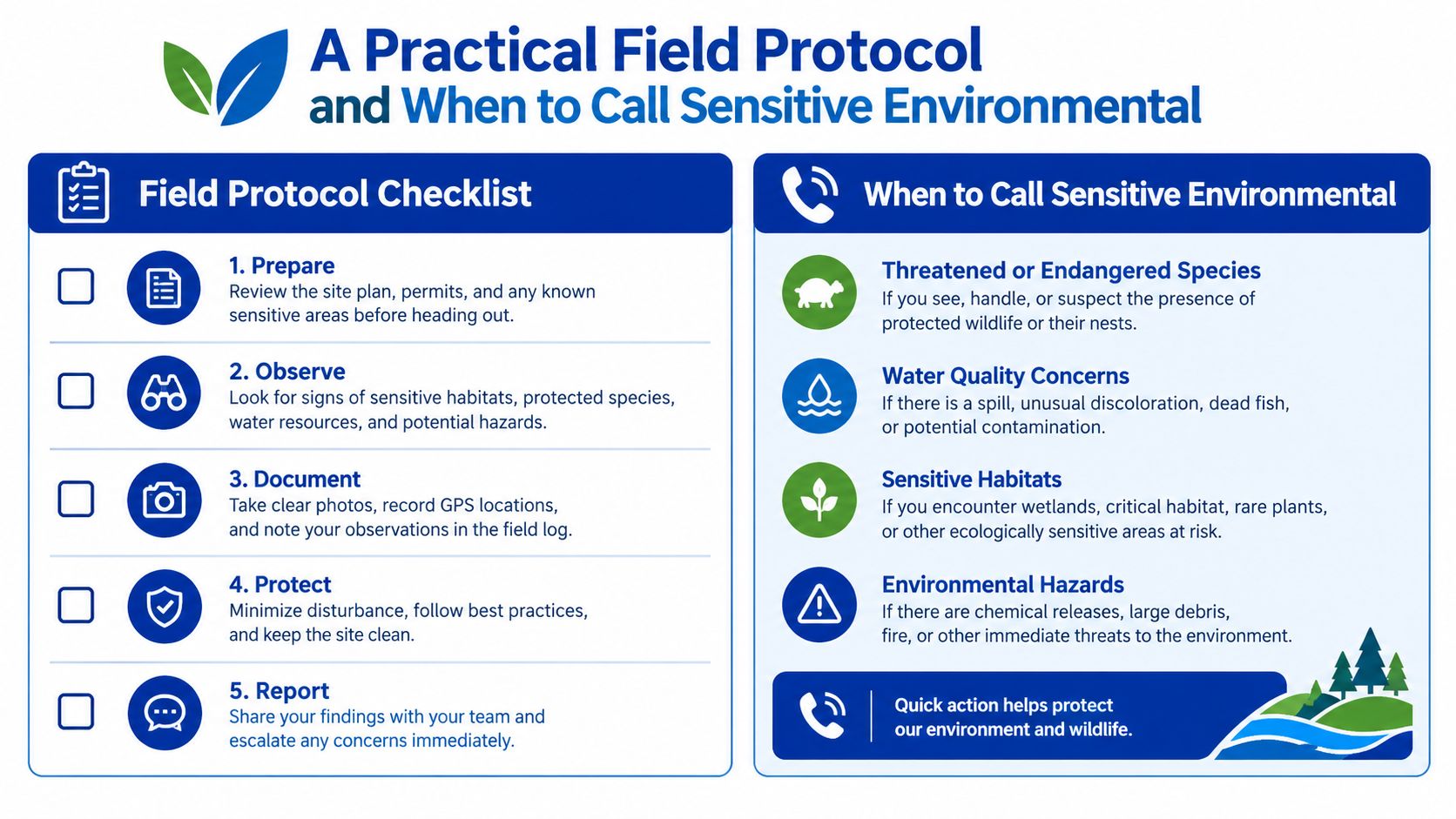
Professional testing becomes appropriate when elevated moisture persists, when readings occur inside wall or floor cavities, when a water event raises concern about hidden microbial growth, or when a renovation or demolition project may disturb suspect materials. A documented environmental assessment can also address indoor air quality, VOCs, airborne contaminants, lead, or fire-related ash, soot, char, smoke residue, and heavy metals when the property history points in those directions.
For commercial buildings, schools, healthcare facilities, multifamily properties, and industrial settings, the same evidence-based approach supports industrial hygiene testing, environmental assessments, and project documentation. The meter is often the first screening tool, not the final service.
If a Los Angeles or Southern California property has persistent moisture readings, suspected hidden water damage, or renovation plans that may disturb building materials, Sensitive Environmental provides moisture-informed mold inspections, environmental sampling, laboratory analysis, and coordinated asbestos testing documentation. Contact the team to discuss on-site moisture mapping and the appropriate next environmental testing step for your property.