You're standing beside an older Los Angeles home while a contractor points to brittle gray siding and discusses a window replacement. The panels look ordinary, but the work may involve drilling, cutting, or removing them. Before anyone disturbs the surface, you need to know whether the siding contains asbestos and whether a simple product test will answer the project's compliance questions.
That distinction matters. Asbestos siding testing can identify the composition of a submitted material, while a project-specific asbestos survey evaluates every suspect material the planned renovation or demolition could disturb. A homeowner, property manager, contractor, developer, or insurance professional may need the second document even after receiving a laboratory result from one siding chip.
Table of Contents
- Why Homeowners Even Ask About Asbestos Siding Testing
- Clues That Suggest Your Siding May Contain Asbestos
- What an Asbestos Siding Survey Actually Covers
- How Samples Are Collected and Analyzed in the Lab
- When You Can Sample a Piece Yourself and When to Call a Pro
- SCAQMD Rule 1403 and What It Means for Renovation Work
- Reading Your Results and Choosing the Next Steps
Why Homeowners Even Ask About Asbestos Siding Testing
Asbestos-cement siding remains a relevant testing concern in older Southern California housing. The Agency for Toxic Substances and Disease Registry asbestos fact sheet identifies housing built during the 1950s through the 1970s as a period when asbestos-containing materials may be encountered, and it lists cement among product categories that can contain asbestos.
The question often arises at an inconvenient moment. A homeowner wants to replace windows, a contractor is preparing an exterior remodel, or a property manager is coordinating storm-damage repairs. The siding may still be intact, yet the proposed work could release fibers if workers cut, drill, sand, crush, or break the panels.
A visual inspection can't establish the material's composition. A gray, textured panel may resemble asbestos-cement siding, but similar-looking products can have different formulations. Testing replaces appearance-based assumptions with a documented result from representative bulk samples analyzed by a qualified laboratory.
Practical rule: Treat old siding as a material to verify before disturbance, not as a product you can identify confidently from the street.
The people who need clear answers
For a homeowner, testing can help define the work method and give a contractor information before bidding. For a general contractor or developer, a survey can support project planning and help identify materials that need evaluation before permits, notifications, or demolition activities.
Commercial property owners, facility managers, HOAs, real estate professionals, and insurance teams may also need records that show what was inspected, where samples came from, which laboratory method was used, and what the findings apply to. That's why the useful question isn't only, “Does this siding contain asbestos?” It's, “What exactly does this result cover, and is that scope adequate for the work?”
Clues That Suggest Your Siding May Contain Asbestos
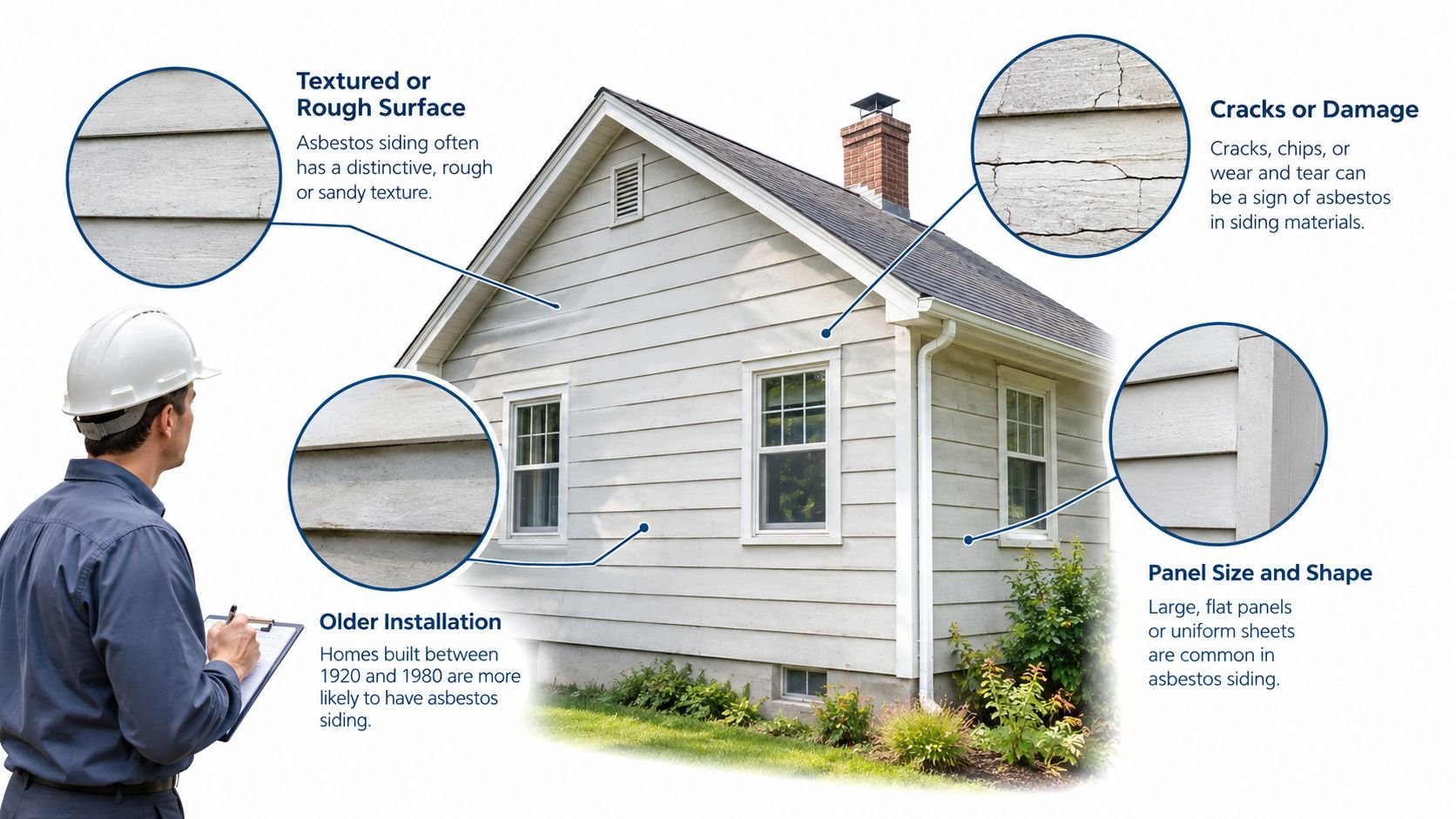
Older construction records can raise suspicion before sampling begins. Homes built during the period identified by ATSDR, particularly those with original cement-based exterior panels, deserve closer attention before renovation. Small shingle-like panels, a cementitious texture, weathered edges, and brittle areas may be consistent with older asbestos-cement products, but none of those characteristics proves asbestos content.
Look for changes across the building rather than focusing on one attractive elevation. An addition may have newer siding, while the original section retains older panels. A repair area may include a different product, coating, adhesive, caulk, or backing material. Those changes create separate sampling questions because a negative result from one material doesn't automatically apply to another.
Records help, but they don't replace sampling
Permits, construction dates, remodeling invoices, manufacturer information, inspection reports, and seller disclosures can show when siding or additions were installed. They may also reveal whether panels were replaced after fire, water damage, or a previous remodel.
Use those records to map the property, not to declare it asbestos-free. Documents may describe “cement siding” without identifying its fiber content, and records may not cover later repairs or concealed layers. A professional inspection compares the paperwork with visible conditions and the planned scope of work.
Condition and composition are different questions
Intact siding may present less immediate exposure concern than siding that has been crushed or mechanically disturbed. That doesn't answer whether it contains asbestos. Damaged panels, storm debris, drilled openings, and cut edges increase the importance of verifying composition before workers continue.
If the project includes cutting, drilling, sanding, demolition, or storm-damage repair, schedule professional evaluation before those activities begin. A cautious visual assessment can identify suspicious areas, but only representative sampling and laboratory analysis can address the material question.
What an Asbestos Siding Survey Actually Covers
A single-product test answers a narrow question. A project-specific asbestos survey asks which suspect materials throughout the affected work area could be disturbed and what documentation the project requires.
The first organizing concept is the homogeneous sampling area. Inspectors group materials that appear uniform in composition, installation history, and surface condition. One consistent siding product across an elevation may be treated as one area, while a replacement section, trim piece, coating, caulk, mastic, backing board, or concealed layer may require separate evaluation.
A representative sampling plan also considers location. One established procedure recommends dividing a uniform area into 9 equally sized subareas and, when practical, collecting 9 samples, one from each subarea. When site conditions or cost limit sampling, the minimum sample count depends on the area's size, as described in the Bay Area Air Quality Management District asbestos procedures.
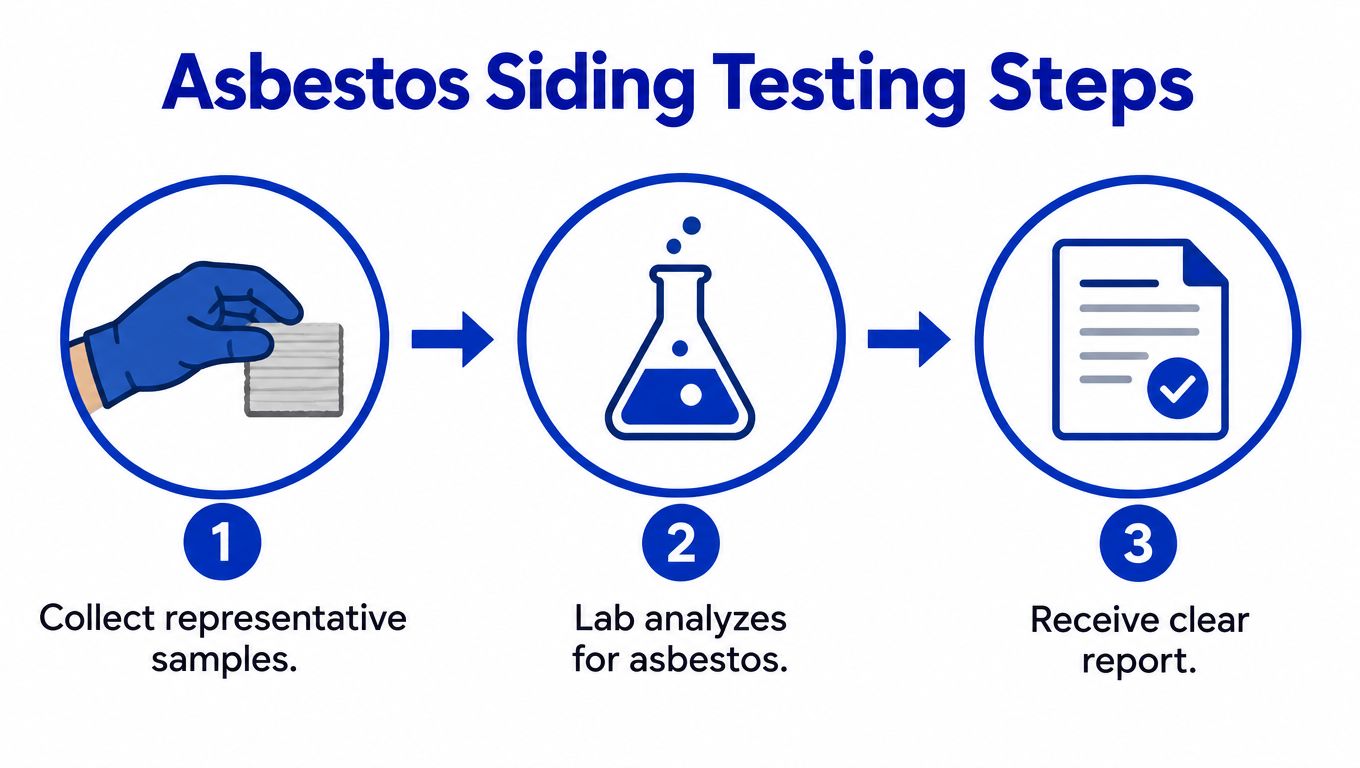
A screening result versus a regulatory survey
A homeowner may submit one visually representative chip and receive a laboratory report. That can be useful for an initial decision, but the result applies to the material submitted. It doesn't automatically cover an addition, another elevation, a different product generation, or material behind the siding.
For renovation or demolition planning, the survey should identify affected materials, describe their condition, note accessibility limitations, document sample locations, and connect findings to the scope of work. In Los Angeles County, that distinction matters because South Coast Air Quality Management District requirements can extend beyond the visible siding to associated layers and concealed materials that the project may disturb.
A useful report generally records:
- Homogeneous areas: Which siding products, repairs, coatings, backing, and adjacent materials were grouped or separated.
- Sample locations: Where each specimen came from and why that location represents the area.
- Chain of custody: How samples were labeled, sealed, transferred, and tracked.
- Laboratory method: Whether polarized light microscopy and any supplemental analysis were used.
- Condition observations: Whether material is intact, damaged, friable, or likely to be affected by the planned work.
- Scope limitations: Which inaccessible, concealed, or uninspected materials remain outside the conclusion.
The EPA guidance on asbestos in homes recommends that suspect materials be sampled by a trained, accredited asbestos professional and analyzed by a qualified laboratory. A report designed for a project should match the project, rather than merely document the easiest piece to collect.
How Samples Are Collected and Analyzed in the Lab
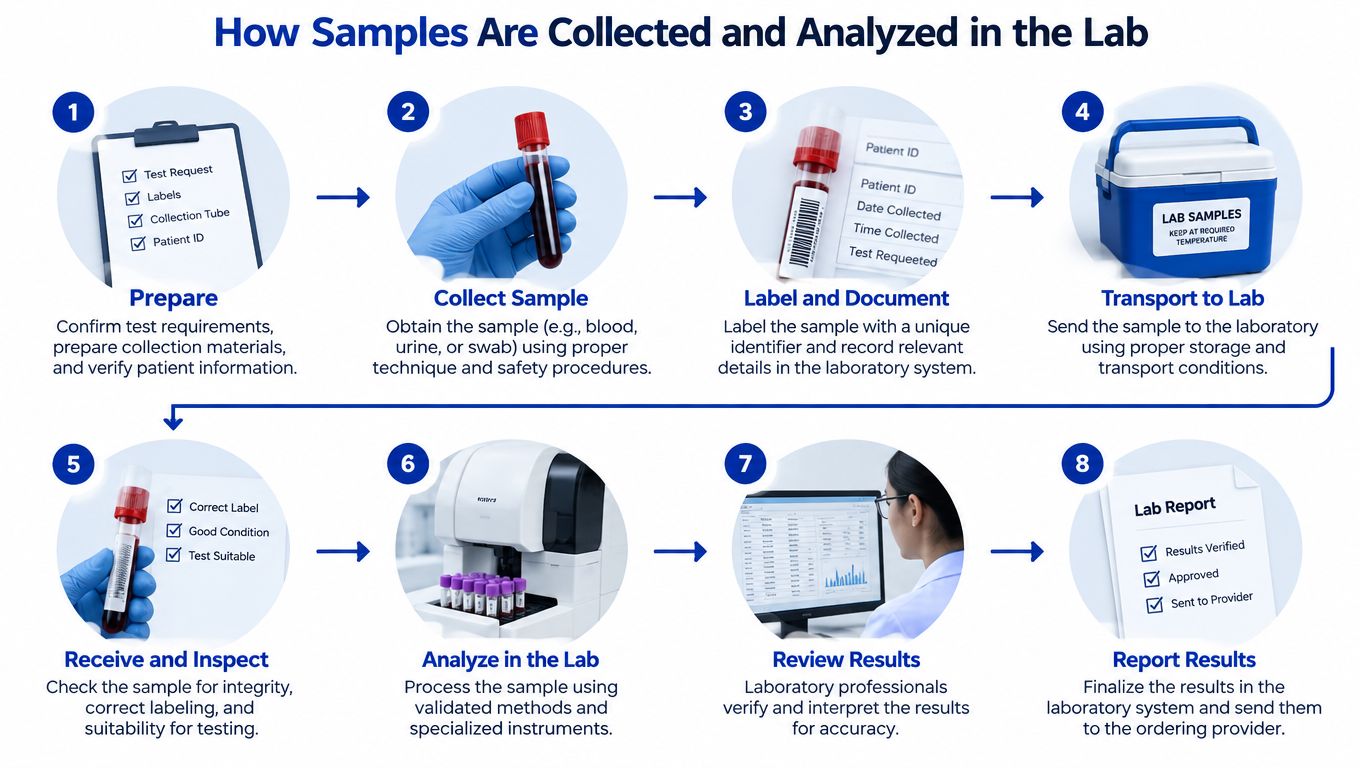
Before a siding sample reaches the laboratory, the inspector must decide what it represents. A painted surface may be a coating rather than the panel beneath it. An intact panel may also differ from a patched, weathered, or later-installed section. That is why one product test rarely answers every question about a renovation project.
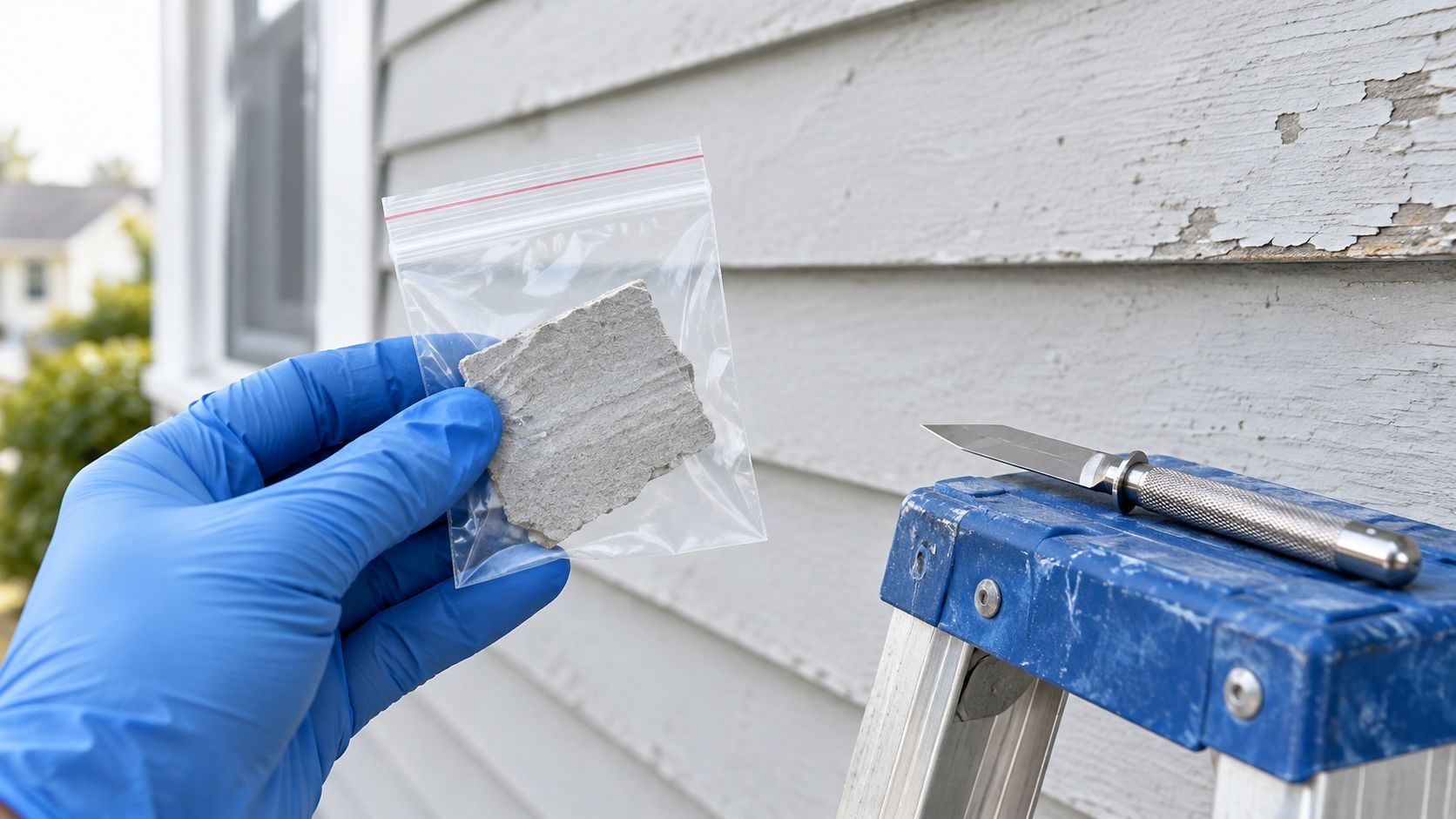
Sampling targets an inconspicuous location and uses low-dust methods. The goal is to collect enough representative material without unnecessary sawing, drilling, grinding, or breaking. A typical bulk sample contains approximately 1–10 grams. The inspector seals and labels it, then records the precise location and material description.
Chain-of-custody records follow the container from the property to the laboratory. They connect the result to the correct elevation, panel, repair, or layer. Without that connection, an accurate laboratory finding may still be difficult to apply to contractor planning, permitting, or SCAQMD notifications.
What PLM can show
Laboratories often begin with stereomicroscopic screening, followed by polarized light microscopy, or PLM. Analysts identify fibers through optical properties such as birefringence, extinction, and refractive index. PLM provides qualitative identification and a semiquantitative estimate. Point counting can provide a more quantitative result when the material or project requires it.
Under the federal framework summarized in EPA compliance guidance, a material reported above the federal asbestos classification threshold by PLM is treated as asbestos-containing material. This classification applies to the material analyzed. It is not an airborne exposure limit and does not replace air-monitoring requirements.
Why laboratory accreditation matters
For Los Angeles-area renovation or demolition work, results used for SCAQMD Rule 1403 compliance must follow the applicable district method or 40 CFR Part 763 PLM procedures. The analysis should be performed by an NVLAP-accredited laboratory, consistent with EPA laboratory and sampling guidance.
A negative result applies only to the submitted material and documented sample location. It does not clear visually similar siding, repairs, coatings, or concealed layers elsewhere. If the siding matrix interferes with PLM, or fibers are difficult to identify, the laboratory should record that limitation and consider an appropriate supplemental method rather than imply certainty the evidence cannot support.
When You Can Sample a Piece Yourself and When to Call a Pro
A homeowner may be curious about one loose fragment found on the ground. That situation is different from planning a renovation, demolition, window replacement, or storm repair. A casual sample can provide limited information, but it won't necessarily produce the written survey, location mapping, condition assessment, or project coverage that a contractor or regulator needs.
The federal recommendation is to use a trained, accredited asbestos professional for suspect-material sampling and a qualified laboratory for analysis. That approach becomes especially important when workers will disturb the siding, when several products or additions are present, or when the result will support permitting, notification, contractor due diligence, insurance documentation, or a commercial property file.
Consider the purpose before deciding:
- Curiosity: A single loose piece may answer a narrow product question, but it won't establish conditions across the building.
- Renovation planning: A professional survey should address every material the work may disturb, including associated or concealed layers.
- Multi-unit or commercial property: Shared walls, repeated product types, tenant areas, and project documentation increase the need for a defensible inspection record.
- Regulatory use: A laboratory report without field observations and scope documentation may not satisfy the project's survey requirements.
- Damaged siding: Crumbling, storm-damaged, or disturbed material calls for controlled professional evaluation rather than improvised handling.
If you do submit a sample, don't saw, sand, grind, or deliberately pulverize the panel. Keep the material contained and provide the laboratory with accurate information, but understand that a DIY result is not automatically a regulatory survey. The practical limits of home collection are discussed in whether asbestos can be tested at home.
SCAQMD Rule 1403 and What It Means for Renovation Work
For projects in the South Coast Air Quality Management District, Rule 1403 requires a thorough asbestos survey before renovation or demolition. The survey must identify and quantify friable asbestos-containing material and Class I and Class II non-friable asbestos-containing material, using physical sampling where necessary. It can also need to address materials beyond the visible siding, including backing, coatings, interior wall or ceiling cavities, and other layers affected by the work.
The rule affects the project file as much as the field inspection. A written survey should identify every asbestos-containing material that could be disturbed and describe its condition, including whether it is damaged or disturbed. SCAQMD Rule 1403 provides the governing requirements for affected facilities and components.
Notifications and the single-family exception
SCAQMD compliance guidance requires online notification before work begins for renovations that impact asbestos-containing material, renovations involving cleanup of damaged or disturbed material, and all demolitions. The listed renovation exception applies when the total asbestos-containing surface area involved is less than 100 square feet, and the district also identifies a specific documentation exception for single-family residences.
Those exceptions shouldn't be treated as a general exemption from careful assessment. A project can involve several materials, concealed layers, or work methods that change the regulatory analysis. Contractors and owners should compare the actual scope with current district requirements and preserve the inspection and laboratory records supporting their decisions.
Emergency damage doesn't erase the survey question
Fire, earthquake, and other sudden events can damage siding and expose debris, but the event doesn't eliminate the prior survey requirement. SCAQMD emergency asbestos guidance states that owners or operators must still perform a prior asbestos survey and submit emergency renovation or demolition notifications as soon as possible.
When safety concerns prevent a complete survey, or asbestos-containing materials can't be removed before work proceeds, a Procedure 5 cleanup plan is required for cleanup of disturbed asbestos-containing materials. Sensitive Environmental provides testing and documentation for asbestos surveys, Rule 1403 projects, Notices to Comply, and Procedure 5-related assessments. Its role is environmental inspection, sampling, laboratory coordination, and reporting, not asbestos removal or abatement.
For broader commercial work, property teams can also review asbestos testing before commercial renovation in Los Angeles when planning documentation and contractor coordination.
Reading Your Results and Choosing the Next Steps
A lab result answers one narrow question: whether the submitted sample contains asbestos. It does not, by itself, describe every siding product, concealed layer, or task involved in a renovation. Read the finding alongside the material's condition, location, and planned work method.
As covered in the laboratory-analysis section, material above the 1% PLM threshold is classified as asbestos-containing. The next question is how the work may change the material. Intact asbestos-cement siding is generally treated as Category II nonfriable material, but cutting, crushing, pulverizing, or reducing it to powder can change the regulatory handling requirements.
The EPA compliance reference on asbestos-cement siding uses wrecking-ball demolition as a clear example. That method can pulverize asbestos-cement siding, so the siding must be removed before demolition. “Nonfriable” therefore describes the material's condition, not permission to use any removal method.

Three findings, three different interpretations
A negative result supports planning for the tested homogeneous area. It does not automatically clear additions, replacement panels, trim, caulk, backing, or concealed materials. Check the report's sample locations and scope before treating the result as applicable to the whole exterior.
A result below the classification threshold should still be read with the laboratory method, limitations, and sampling plan. Similar-looking siding may have different installation dates, layers, or formulations, much like paint colors that look alike but come from different cans.
A result above the threshold identifies asbestos-containing material in the submitted area. It does not select one universal response. The owner and contractor must consider the material's condition, the planned disturbance, SCAQMD Rule 1403 requirements, notifications, and the project schedule.
The report is a decision document, not a demolition instruction. Its value comes from connecting the laboratory finding to the exact material, location, condition, and planned activity.
A project-focused field workflow
Before work begins, review:
- Property history: construction dates, permits, disclosures, additions, repairs, and earlier reports.
- Project limits: elevations, trim, patches, coatings, backing, and concealed areas the work may affect.
- Homogeneous areas: separate products that differ by layer, installation period, appearance, or use.
- Representative samples: include visibly different products and damaged zones, using low-dust collection methods.
- Laboratory records: verify sample identifiers, analytical method, results, limitations, and laboratory accreditation.
- Regulatory requirements: compare the actual renovation or demolition method with federal NESHAP and local air-district rules.
This distinction matters in Los Angeles. A single-product siding test may provide a useful lab result, while a project-specific asbestos survey gives the owner and contractor a map of materials that the planned work could disturb. Permitting, SCAQMD notifications, and contractor planning may require that broader scope.
Fire-damaged siding or debris may also require fire and environmental testing for ash, soot, char, smoke residue, combustion byproducts, or heavy metals. Water intrusion may justify mold testing, and older painted components may call for lead testing.
Arrange the survey before siding is cut or removed. Sensitive Environmental provides asbestos siding testing, pre-renovation and pre-demolition surveys, Rule 1403 documentation, laboratory coordination, and related environmental inspections throughout Los Angeles and Southern California. Visit Sensitive Environmental to schedule an assessment matched to the materials and work your project may disturb.