A site walkthrough can feel complete until a contractor, lender, insurer, or regulator asks for proof. This environmental site inspection checklist turns a visual visit into documented evidence, moving from asbestos and lead questions that shape renovation and sale timelines to mold, indoor air, and fire-residue testing after water or smoke damage. It also covers regulatory asbestos documentation and commercial environmental due diligence.
Each checkpoint explains what professionals inspect, how sampling and laboratory analysis generally work, and what results can and can't tell you. Testing informs next steps. By itself, it can't certify that a property is safe or decide whether remediation is necessary. The right value of testing is more practical: it connects a building condition to a defensible report that owners, contractors, property managers, lenders, insurers, and agencies can evaluate.
Table of Contents
- 1. Asbestos Sampling and Laboratory Analysis for Pre-Renovation and Pre-Demolition Projects
- 2. Lead-Based Paint Inspection and Risk Assessment for Residential Properties
- 3. Mold Testing and Moisture Assessment Following Water Damage
- 4. Indoor Air Quality Testing for VOCs, Combustion Byproducts, and Airborne Contaminants
- 5. Combustion Byproduct Testing for Fire and Wildfire Residue, Ash, Soot, and Heavy Metals
- 6. Procedure 5 Asbestos Surveys and Pre-Demolition Compliance Testing
- 7. Notice to Comply Asbestos Testing and Regulatory Response Documentation
- 8. Environmental Site Assessment Sampling and Phase I and Phase II Testing for Commercial Properties and Real Estate Transactions
- 8-Point Environmental Site Inspection Comparison
- From Checklist to Confident Next Steps
1. Asbestos Sampling and Laboratory Analysis for Pre-Renovation and Pre-Demolition Projects
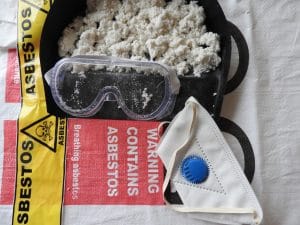
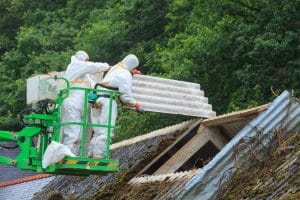
Renovation plans often begin with drawings and contractor bids, but suspect building materials can change both. A professional asbestos survey starts with a walkthrough of accessible areas and identifies materials that may be disturbed by the planned work. Sampling may include insulation, floor tile, roofing, siding, drywall joint compound, pipe wrapping, HVAC components, adhesives, and other suspect materials.
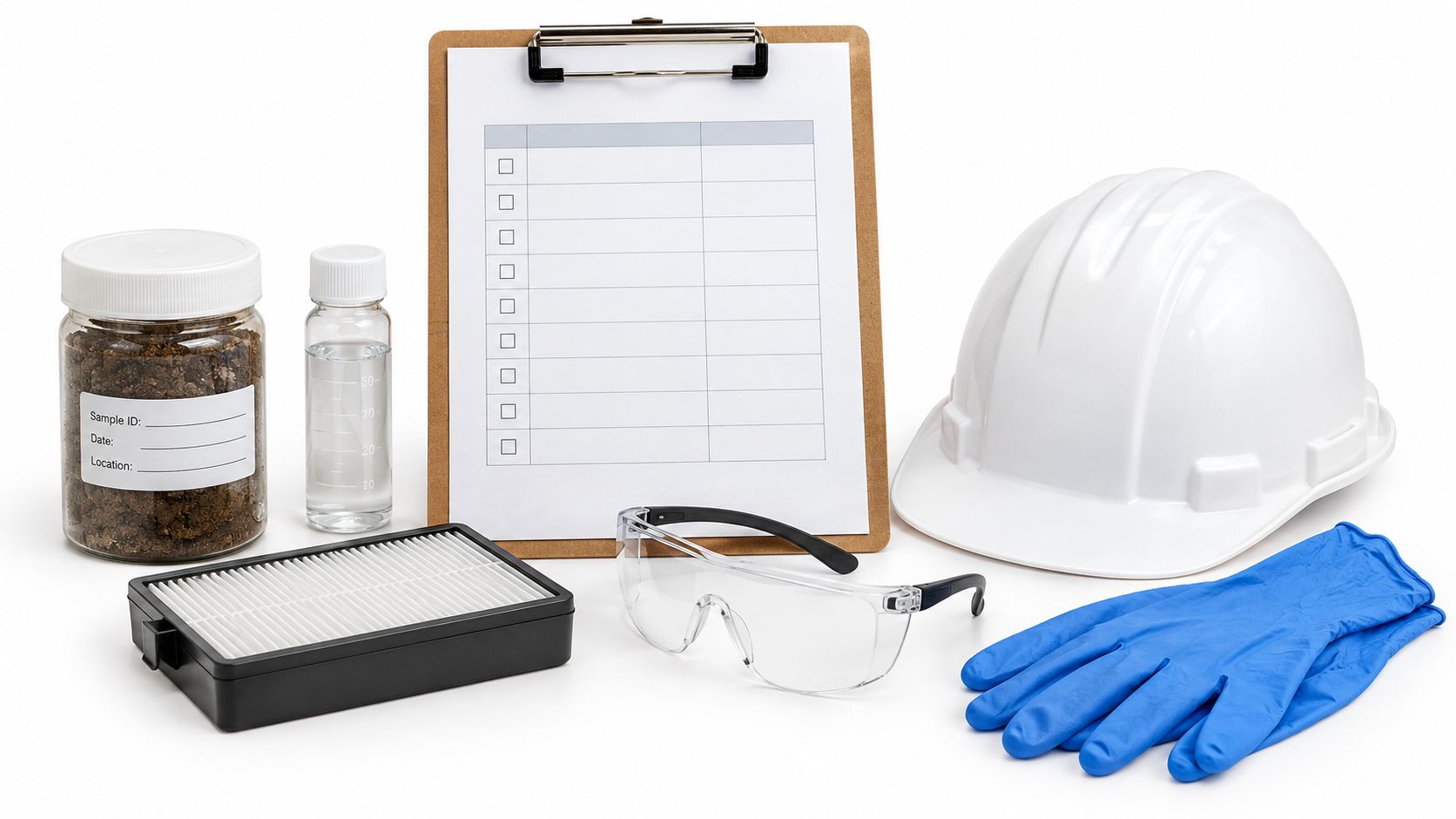
The inspector collects representative bulk samples using controlled procedures, documents the exact location, and sends them to a qualified laboratory for polarized light microscopy analysis. A report should connect every result to a material description, room or exterior location, sample identifier, and laboratory finding. A clean-looking surface doesn't prove that the material is asbestos-free.
Practical rule: Schedule asbestos testing before design finalization and contractor bidding whenever possible. Results are more useful when the project team can plan around them instead of discovering suspect materials after work starts.
What the report should document
For a Los Angeles office renovation, the relevant sample set may include ceiling tiles, vinyl flooring, floor adhesive, pipe insulation, and mechanical-room materials. A pre-demolition survey for an older industrial warehouse may need to address roofing, thermal insulation, surfacing materials, and equipment components. Access matters, so the inspector should be able to examine attics, crawl spaces, basements, roofs, and mechanical rooms where they're part of the work area.
SCAQMD Rule 1403 requires an onsite ACM survey before renovation, subject to a narrow exemption for certain single-unit residential work involving less than 100 square feet of ACM. Demolition projects have no exemption, and the survey must be performed by an appropriately certified asbestos inspector or, where allowed, qualified facility personnel with an unexpired AHERA Building Inspector certificate. The written report must identify ACM that could be disturbed, describe its condition, and determine whether it's friable. SCAQMD's Rule 1403 compliance advisory explains these documentation requirements.
A positive result doesn't automatically decide what happens next. It gives the owner and qualified project professionals information needed to evaluate work methods, notifications, sequencing, and regulatory obligations.
2. Lead-Based Paint Inspection and Risk Assessment for Residential Properties
Lead testing belongs near the beginning of an inspection sequence for older housing, especially when a buyer is considering a purchase or a contractor plans to disturb painted surfaces. The inspection may combine visual review, X-ray fluorescence testing of painted components, and dust sampling from floors, windowsills, and other collection points. Paint testing identifies lead in specific coatings, while dust testing helps document whether settled dust contains lead.
Homes built before 1978 create a clear screening trigger. EPA states that remodeling contractors working on these homes should use only lead-safe certified renovators, as explained in its guidance on remodeling and indoor air quality. That requirement makes pre-work documentation useful for owners, landlords, contractors, and real estate professionals.
Paint results and dust results answer different questions
A paint component can contain lead without showing visible deterioration. Conversely, deteriorating paint, friction from windows and doors, or renovation activity can create dust that needs separate evaluation. A strong report identifies the tested component, its location, the method used, the result, and any limitations on access.
For a Los Angeles County pre-purchase inspection, an owner may want documentation for interior walls, windows, exterior trim, doors, and common areas. A rental property assessment may need to distinguish units from shared spaces. A window replacement project may justify focused testing around the windows and adjacent painted surfaces, while a larger remodel calls for broader access.
- Confirm building age: Establish whether the property was built before 1978 and document the basis for the inspection scope.
- Test painted components directly: Record rooms, surfaces, layers where applicable, and inaccessible areas rather than relying on a general statement.
- Consider dust sampling: Add floor and windowsill samples when renovation, deteriorating paint, or occupancy concerns make settled dust relevant.
- Preserve the report: Keep laboratory results and inspection records with transaction, maintenance, and project files.
Lead results don't automatically require a particular response. They help the owner and qualified professionals determine whether lead-safe work practices, additional assessment, disclosure, or other controls should be considered.
3. Mold Testing and Moisture Assessment Following Water Damage
A water event creates two separate questions. Where did moisture enter, and do current conditions support mold growth or other indoor environmental concerns? A useful mold inspection answers the first question with visual review and moisture measurements before relying on laboratory samples to answer the second.
Inspectors may use moisture meters, inspect affected finishes and building cavities where accessible, collect air samples, and take surface samples from visible growth. Laboratory analysis can identify the types of mold detected and the measured concentrations in the submitted samples. Interpretation also depends on the sampling locations, outdoor baseline conditions, building history, and whether the moisture source remains active.
A leaking pipe in a Los Angeles home, HVAC condensation in a commercial office, flooding in Orange County, and moisture intrusion in a school classroom all require different scopes. The same air sample strategy won't fit every property. Crawl spaces, attics, wall cavities, mechanical rooms, and concealed areas may need attention when access and project conditions allow it.
Moisture evidence is as important as mold evidence
An air report can describe what was captured at a specific time and location, but it can't explain a roof leak or prove that a hidden cavity is dry. The inspector should record visible conditions, moisture readings, affected materials, sampling points, photographs, and limitations. Surface samples can help characterize visible growth, while air samples may support a broader indoor assessment.
For a practical explanation of the field questions that follow a leak, see how to check for mold after water damage. The central point is simple: testing should support a decision about moisture control, further investigation, occupancy, or post-work verification. A positive mold result doesn't automatically mean remediation is required, and a non-detect result doesn't eliminate the need to address an ongoing water source.
4. Indoor Air Quality Testing for VOCs, Combustion Byproducts, and Airborne Contaminants
Indoor air quality testing works best when it starts with a specific question. A newly renovated office may need VOC sampling because new materials are off-gassing. A fire-affected home may need particulate and combustion byproduct testing. A warehouse or manufacturing facility may require industrial hygiene air sampling related to workplace processes.
Depending on the concern, an assessment may address VOCs, formaldehyde, carbon monoxide, nitrogen dioxide, particulate matter, biological contaminants, or other airborne substances. The sampling plan should state which contaminants are relevant, where samples will be collected, how long sampling will run, and what comparison or reference information will be used.
Air quality is a condition measured at particular locations and times, not a permanent label attached to the building.
Match the method to the decision
Testing one room may be appropriate for a focused complaint, but it may not represent an entire commercial building with multiple HVAC zones. Indoor and outdoor comparisons can help identify whether a detected condition appears building-related, although interpretation requires professional judgment. Sampling during active fire smoke intrusion, heavy construction, or ongoing off-gassing may document a real condition, but it may not represent conditions after the source changes.
A facility manager should keep the field record with the laboratory report. That record can include room identifiers, HVAC status, occupancy, weather, collection times, equipment information, and observations about odors, dust, or combustion sources. For fire-affected properties, EPA explains that outdoor smoke and particle pollution can infiltrate buildings and increase indoor particulate matter, and it recommends added caution in homes containing lead or asbestos when managing indoor dust. EPA's indoor particulate matter guidance provides useful context.
Results can support ventilation review, HVAC evaluation, source control, additional sampling, or occupancy decisions. They don't establish that a property is universally safe, and they shouldn't be interpreted without considering the building's use and occupants.
5. Combustion Byproduct Testing for Fire and Wildfire Residue, Ash, Soot, and Heavy Metals
Visible soot is only one part of a fire investigation. Smoke can enter through windows, doors, HVAC systems, and other openings, while ash and fine residue can settle in areas that appear relatively clean. Wildfire smoke can also affect indoor particulate conditions without producing an obvious layer of residue.
CBP testing may include surface dust, ash, soot, char, and air samples. The laboratory scope can be selected to address combustion byproducts, particulate contamination, and heavy metals such as lead, cadmium, or zinc when the fire source and materials make that relevant. A post-fire assessment in Los Angeles County may need a different sampling strategy from a building directly damaged by fire, but both should document where residue was found and what conditions existed during collection.
Build the record before conditions change
Early sampling can preserve information for insurance, property management, and project planning. The report should identify each room or exterior area, sample location, material collected, photograph reference, laboratory method, and any comparison or interpretation used. Air, dust, and surface results answer different questions, so a single sample type may not characterize the entire property.
EPA notes that wildfire smoke and other outdoor particle pollution can infiltrate buildings. That supports evaluating indoor air alongside visible ash, soot, char, or smoke residue rather than treating a visual wipe-down as proof of adequate conditions.
Post-work testing can provide additional information before reoccupancy or before a property changes hands. It doesn't certify universal safety, and a detected contaminant doesn't automatically dictate a cleanup method. The value lies in giving owners, insurers, restoration companies, and qualified environmental professionals reliable evidence for deciding what should happen next. For residents dealing with persistent odor after a fire, this guide to smoke smell after fire damage explains why odor and contamination testing should be treated as related but distinct questions.
6. Procedure 5 Asbestos Surveys and Pre-Demolition Compliance Testing
Demolition requires a more complete asbestos record than a casual renovation walkthrough. A Procedure 5 survey for a Los Angeles-area project should identify suspect materials throughout the structure and document their locations, condition, and laboratory results before demolition activities proceed.
The inspector may need access to thermal system insulation, surfacing materials, roofing, floor tiles, adhesives, HVAC components, mechanical systems, and other building materials. Industrial facilities can add equipment, process areas, and specialized insulation to the scope. A multi-building campus may need a building-by-building approach so the report aligns with the demolition phases.
Treat Procedure 5 as a project control
Under SCAQMD Procedure 5, when ACM has been damaged or disturbed, written approval is required before cleanup begins, regardless of project size. The submission includes the Rule 1403 notification, a survey documenting suspect-material sampling and analysis, a cleanup plan describing the cause and extent of contamination and the consultant's findings, chain-of-custody records, and laboratory results. It also generally includes a site map showing nearby sensitive receptors and a list of permitted equipment with serial and permit numbers. SCAQMD's Procedure 5 guideline sets out the submission components.
The practical trade-off is between a narrow survey that may appear faster and a sufficiently complete survey that reduces surprises during demolition. Missing inaccessible or hidden materials can create redesign, sampling, notification, or schedule problems later. A defensible report should state areas accessed, inaccessible areas, sample identifiers, laboratory findings, photographs, and unresolved gaps.
Procedure 5 testing is documentation and compliance testing. Sensitive Environmental doesn't perform asbestos removal or demolition. Its role is to provide professional inspection, sampling, laboratory analysis, and reporting that can inform the owner's next decisions and support communication with contractors and agencies.
7. Notice to Comply Asbestos Testing and Regulatory Response Documentation
A Notice to Comply changes the inspection from general due diligence to a response with an agency-facing deadline. Owners and facility managers should first identify exactly what the notice requests, which structures or materials it covers, the response deadline, and the required form of documentation. Guessing at the scope can lead to a report that doesn't answer the agency's questions.
Testing may involve bulk sampling of flooring, adhesives, insulation, thermal systems, surfacing materials, or other suspect components. The report should identify the material, location, condition, sample number, laboratory result, and any areas that couldn't be accessed. If the notice concerns a school, healthcare facility, industrial building, or commercial property, the survey must reflect the actual building configuration rather than rely on generic assumptions.
Keep agency correspondence with the evidence
A complete response file commonly includes the notice, inspection scope, field notes, photographs, laboratory reports, chain-of-custody records, and the final compliance report. The owner should also preserve communications about access, extensions, clarifications, and submission status. If the deadline can't be met, communicate with the agency in writing rather than allowing the response to lapse.
Documentation matters: A laboratory result without a defensible location record may not answer a regulator's question. The agency needs to know what was tested, where it was found, and how the result connects to the property.
A Notice to Comply doesn't automatically determine that removal or abatement is required. It establishes a regulatory need for information or action, and professional testing helps clarify the condition. For broader context on asbestos management documentation in commercial buildings, review asbestos management and compliance risks in Los Angeles, while treating the actual notice and agency requirements as controlling for the specific property.
8. Environmental Site Assessment Sampling and Phase I and Phase II Testing for Commercial Properties and Real Estate Transactions
Commercial property decisions often start with a Phase I environmental site assessment, but a Phase I isn't a visual contamination test. It combines historical records review, regulatory database review, interviews, site inspection, and reporting to identify potential environmental concerns associated with current or historical uses. A walkthrough alone isn't enough.
The ASTM E1527 framework developed as environmental liability concerns expanded after CERCLA. ASTM's E1527 committee was established in 1990, and the first standard was published in 1993. The standard has since been revised in 1994, 1997, 2000, 2005, 2013, and 2021, reflecting changes in professional and regulatory expectations. This presentation on the ASTM Phase I standard explains why a modern assessment examines surrounding properties, historical uses, storage, waste handling, tanks, drainage, staining, odors, distressed vegetation, and evidence of releases.
Know when Phase II evidence is justified
Phase II testing may follow when the Phase I identifies a concern that requires measurement. Depending on the site history and contaminant pathway, that can involve soil, groundwater, soil gas, indoor air, or other targeted sampling. The sampling plan should explain why each location was selected, whether it represents a suspected source, migration pathway, receptor, or background condition, and how laboratory data will be interpreted.
A former industrial property in Los Angeles, a former fuel station in Orange County, or a redevelopment site with tanks and historical waste handling may require different Phase II scopes. Don't use a fixed number of borings or samples without a site-specific reason. EPA guidance emphasizes defining objectives, reviewing background files and compliance history, preparing equipment and PPE, deciding whether sampling is needed, and documenting sample location, collection date, sampler, contents, custody transfer, preservation, holding time, and quality control. EPA's inspection guidance provides the framework for these controls.
For transaction timing, specified Phase I components must be completed or updated within 180 days before acquisition or the transaction date under ASTM E1527 requirements. Those components include interviews, environmental lien searches, government-record reviews, visual inspection of the property and adjoining properties, and the environmental professional's declaration. The practical lesson is to check the report's age and scope before relying on it for a closing. For storage-related due diligence, a comparison of aboveground and underground industrial tank storage can also help frame questions about potential release pathways, although it doesn't replace an ESA.
8-Point Environmental Site Inspection Comparison
| Service / Checkpoint | Implementation complexity | Resource requirements | Expected outcomes | Ideal use cases | Key advantages |
|---|---|---|---|---|---|
| Asbestos Sampling and Laboratory Analysis for Pre-Renovation and Pre-Demolition Projects | Moderate, targeted bulk sampling with chain-of-custody | Certified inspectors, sample kits, PLM laboratory access, site access | Identification of ACM, asbestos concentration %, formal lab report | Renovation or demolition pre-checks; permit applications | Ensures regulatory compliance (SCAQMD/CA), protects workers, informs abatement planning |
| Lead-Based Paint Inspection and Risk Assessment for Residential Properties | Moderate, visual survey + XRF and dust sampling | Certified XRF device, trained inspector, lab for dust analysis | Lead presence, dust concentration, risk assessment and disclosure-ready report | Homes built before 1978, pre-purchase inspections, renovations | Non-destructive detection, protects children, required for legal disclosures |
| Mold Testing and Moisture Assessment Following Water Damage | Low–Moderate, visual, moisture mapping, air/surface sampling | Moisture meters, air samplers, surface swabs, lab culture analysis | Mold species/levels, moisture source identification, remediation need | Post-water damage, flooding, persistent moisture intrusion | Distinguishes active growth vs cosmetic issues; guides remediation and prevention |
| Indoor Air Quality (IAQ) Testing for VOCs, Combustion Byproducts, and Airborne Contaminants | Moderate–High, multi-parameter sampling and time-variable monitoring | VOC samplers, CO/CO2/PM monitors, lab chemical analysis, HVAC access | Contaminant concentrations vs standards, source indicators, ventilation recommendations | Post-fire/smoke, new renovations, occupant health complaints, commercial buildings | Diagnoses specific air issues; guides HVAC/ventilation and remediation actions |
| Combustion Byproduct (CBP) Testing for Fire and Wildfire Residue, Ash, Soot, and Heavy Metals | Moderate, surface/dust/air sampling with heavy metal analysis | Surface swabs, particulate samplers, heavy-metal lab tests, dust sampling | Levels of ash/soot, heavy metal presence (lead, cadmium, etc.), cleanup validation | Post-fire or wildfire-impacted properties, smoke/ash contamination | Quantifies fire residue and metals; verifies cleanup and informs reoccupancy |
| Procedure 5 Asbestos Surveys and Pre-Demolition Compliance Testing | High, exhaustive inspection and strict SCAQMD reporting | Certified Procedure 5 surveyors, extensive sampling, PLM labs, SCAQMD submission | SCAQMD-compliant report listing all ACM, locations, quantities for permits | Mandatory pre-demolition surveys in SCAQMD jurisdiction | Meets legal requirements, prevents penalties, comprehensive hazard documentation |
| Notice to Comply (NTC) Asbestos Testing and Regulatory Response Documentation | High, targeted, time-sensitive comprehensive testing and reporting | Rapid-response certified testers, lab analysis, regulatory correspondence prep | Compliance documentation demonstrating ACM assessment and management plan | Properties receiving regulatory NTC orders from SCAQMD or local agencies | Timely regulatory compliance, reduces enforcement risk, documents good-faith response |
| Environmental Site Assessment (ESA) Sampling and Phase I/Phase II Testing for Commercial Properties and Real Estate Transactions | High, Phase I records review plus Phase II intrusive sampling | Environmental consultants, drilling/boring, soil/groundwater labs, database searches | Identification of environmental liabilities; soil/groundwater contaminant data; remediation recommendations | Commercial acquisitions, redevelopment, lender/insurer due diligence | Quantifies liabilities for transactions, accepted by lenders/insurers, guides remediation planning |
From Checklist to Confident Next Steps
The right checklist depends on what is changing at the property. A remodel usually starts with suspect building materials and the age of the structure. A demolition project adds full asbestos documentation and agency requirements. A sale or acquisition shifts attention toward historical uses, records, recognized environmental conditions, and transaction timing. Water damage raises moisture and mold questions, while fire and wildfire impacts may require coordinated testing of indoor air, ash, soot, char, dust, and combustion byproducts.
Start with the deadline that can't move. If a contractor is preparing bids, arrange asbestos and lead testing before the scope is finalized. If a demolition permit is approaching, confirm that the survey and required agency documentation are complete. If a building has experienced water intrusion, record moisture conditions and affected areas before materials are altered. If residents or workers are returning after fire damage, evaluate both visible residue and indoor air rather than relying on appearance alone.
The strongest environmental reports preserve the connection between observation and conclusion. They identify the inspector, date, areas accessed, inaccessible areas, photographs, sample locations, laboratory methods, chain-of-custody transfers, findings, limitations, and unresolved questions. That evidence can help contractors sequence work, help property managers communicate with occupants, help insurers evaluate a claim, and help buyers and lenders understand environmental conditions during due diligence.
Sensitive Environmental serves residential and commercial properties throughout Los Angeles and Southern California with asbestos surveys, pre-renovation and pre-demolition testing, SCAQMD Rule 1403 and Procedure 5 documentation, Notice to Comply testing, lead-based paint inspections, mold and moisture testing, indoor air quality testing, CBP testing for ash and soot, industrial hygiene assessments, and ESA sampling. The company combines professional inspection, appropriate sampling, laboratory analysis, and clear reporting. Results don't make project decisions on their own, but they give owners and qualified professionals a stronger factual basis for making them.
Contact Sensitive Environmental before demolition permits are filed, before closing on a pre-1978 property, before renovation disturbs suspect materials, or before occupants return to a fire-affected building. Early testing gives the project team time to understand the evidence and choose the appropriate next step.
Sensitive Environmental provides asbestos, lead, mold, indoor air quality, combustion byproduct, industrial hygiene, and environmental site assessment testing for properties throughout Los Angeles and Southern California. To plan sampling and receive laboratory-backed reporting for a renovation, transaction, water event, fire investigation, or regulatory response, visit Sensitive Environmental.