
Lead testing cost in Los Angeles usually falls around $250 to $700, and a basic professional inspection often averages about $300. The final bill depends heavily on property size, accessibility, and how many samples or surfaces need to be checked.
A homeowner can get confused fast because the cheapest number in an ad is often just one piece of the job. A lab fee, a field inspection, and a compliance-ready report are not the same thing, the difference shows up in the quote.
Table of Contents
- The Basics of Lead Testing Cost Structures
- Key Factors That Affect Your Total Price
- Laboratory Fees and Turnaround Considerations
- DIY Kits vs Professional Lead Testing
- Real-World Cost Scenarios for Property Owners
- Strategies to Reduce Testing Expenses
The Basics of Lead Testing Cost Structures
The easiest way to decode a quote is to ask what kind of pricing model is being used. Some providers bill a flat fee for an inspection, others use an hourly structure for a risk assessment, and many charge per sample for laboratory analysis. Those are three different cost ladders, and they're not interchangeable.
Flat fee, hourly, and per-sample pricing
A flat fee usually fits a straightforward inspection, especially when the property is small and the testing scope is narrow. In contrast, an hourly or daily rate makes more sense when the assessor can't know the full scope until they're on site, such as in a larger building or a property with many painted components. Per-sample pricing is common when the main cost is the laboratory analysis itself, since every added sample creates extra handling and reporting work.
That's why one quote can look cheap at first glance and still end up more expensive once the missing items are added. A low advertised price may cover only a limited screening, not the kind of detailed sampling needed for renovation planning, tenant documentation, or a regulatory file.
Practical rule: compare quotes by scope, not by headline price.
This matters for more than lead alone. If you're comparing environmental testing services, the same logic applies to mold testing, asbestos surveys, or indoor air quality testing, because the useful question is always what the report is supposed to prove. For readers who also want to understand how water quality labs frame their own test options, guidance on choosing water filters is a useful example of how testing purpose changes the right product choice.
For a service overview, a dedicated lead testing page such as Sensitive Environmental's lead testing services is the right starting point when you need professional sampling, not just a screen.
Key Factors That Affect Your Total Price
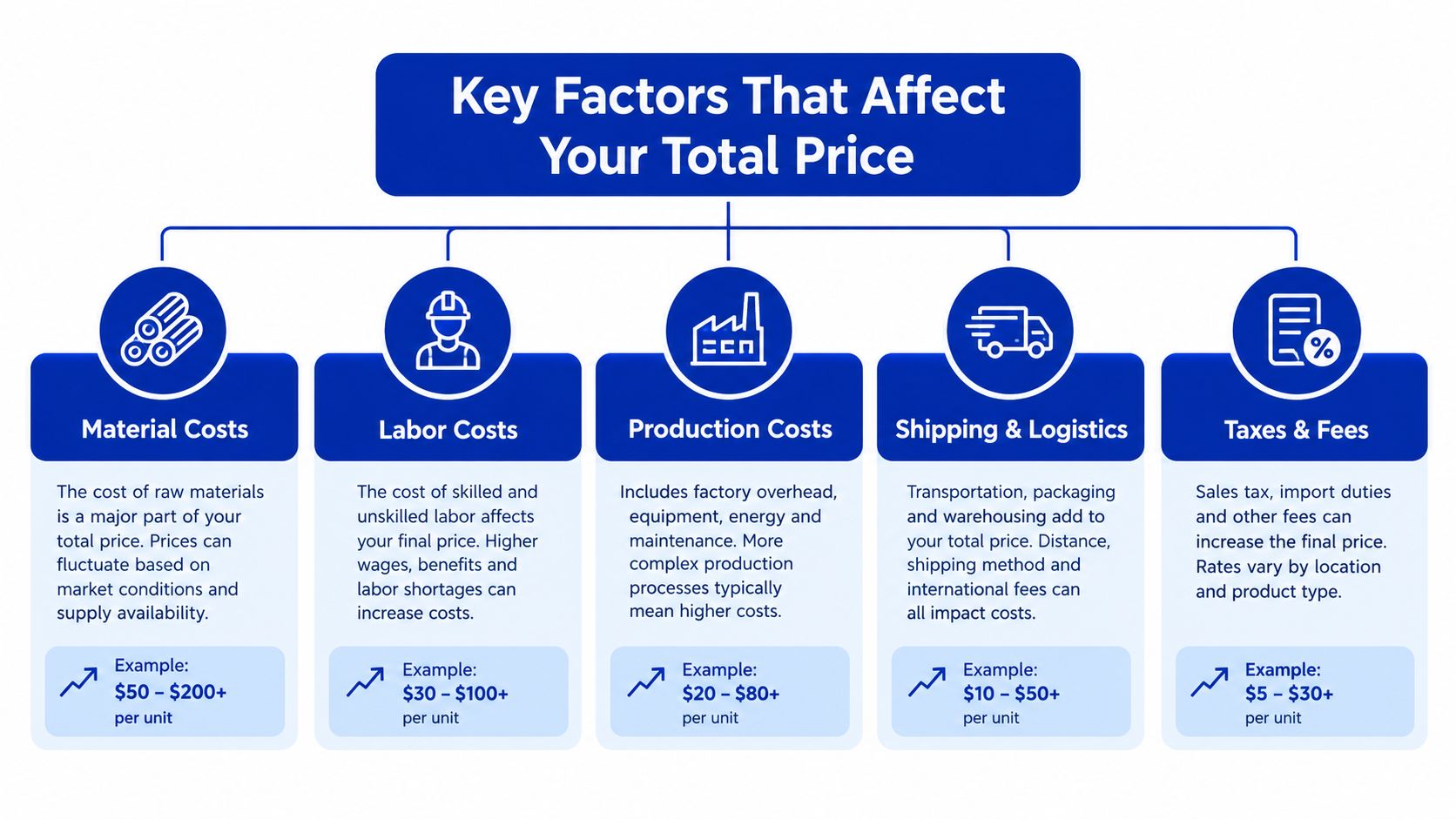
A small condo with open access and a few suspect surfaces may need limited fieldwork. A multi-unit building with older trim, layered coatings, and cramped crawl spaces requires more inspection, sampling, and documentation. The property's layout can affect the quote as much as its location.
What drives the quote up
Scope is the first major factor. HUD guidance notes that environmental-sample analysis historically accounted for about 50% of a public-housing risk assessment's cost, while visual assessment, data collection, sample collection, and report preparation made up the rest. HUD guidance on lead-based paint risk assessments shows why the laboratory fee is only one rung on the cost ladder. More painted components or suspect areas usually mean more professional time in the field.
Accessibility adds another layer. A second-story exterior, cramped utility area, or building with many units takes longer to inspect and document than an open, simple layout. USDA guidance identifies the number of buildings, painted surfaces tested, and travel distance as cost factors, with a typical inspection rate of roughly $400 to $500 per day plus travel. The USDA lead-based paint inspection cost document helps explain why a multi-unit or commercial estimate can differ sharply from a single-family quote.
XRF versus paint-chip sampling
The testing method also changes the price. XRF produces immediate field readings on painted components. Paint-chip sampling requires collection, labeling, handling, laboratory analysis, and interpretation for each submitted sample. A professional selects the method according to the project's purpose, the number of components, and the level of documentation required.
More samples usually mean more evidence, not simply a higher lab bill.
For a Los Angeles property decision, consider three connected drivers: structure size, surface type, and sample count. A larger Victorian with detailed trim and difficult access may require substantially more labor than a modern condo with fewer painted elements. That fieldwork is what turns an inexpensive test result into documentation a property owner can use for renovation planning, tenant records, or regulatory review.
Laboratory Fees and Turnaround Considerations
A homeowner may see a small laboratory charge on a lead-testing quote and assume it represents most of the expense. The lab fee is only the postage stamp on a much larger package of fieldwork, handling, interpretation, and reporting. A qualified professional still has to collect the material, label it, preserve the chain of custody, and explain what the result means for the property.
What the lab actually charges
For a basic residential investigation, the California Department of Public Health reports that an accredited laboratory typically charges about $25 to $50 for one paint-chip or soil sample, with results commonly available in 24 to 48 hours. The California Department of Public Health's lead-related certification information provides context for using qualified laboratories. That fee covers analysis of the submitted material. It does not cover the professional time required to obtain and document the sample. Dust wipes, soil, paint chips, and water may also require different preparation, reporting, and quality-control procedures.
The EPA recommends checking the lab's per-sample price, any turnaround surcharge, minimum sample quantity, accepted media, volume discounts, collection materials, and whether results are compared with applicable standards. EPA guidance on selecting a lead laboratory can help property owners compare quotes before authorizing work. A low base price can rise when rush service or special handling is added.
For a Los Angeles project, separate the fixed field cost from the variable analysis cost. Laboratory pricing works like the ingredients on a receipt. Sampling, access, travel, documentation, and reporting are the preparation and service that make the final answer usable.
Sample Analysis Costs and Turnaround
| Sample Type | Estimated Lab Fee | Turnaround Time |
|---|---|---|
| Paint chip | $25 to $50 | 24 to 48 hours |
| Soil sample | $25 to $50 | 24 to 48 hours |
| Dust wipe | Varies by scope | Depends on lab and rush needs |
| Water sample | Varies by scope | Depends on lab and rush needs |
A local provider can coordinate lead work with related services. Sensitive Environmental's environmental testing services in Los Angeles may be useful when a project also involves mold, asbestos, or indoor air quality testing.
DIY Kits vs Professional Lead Testing
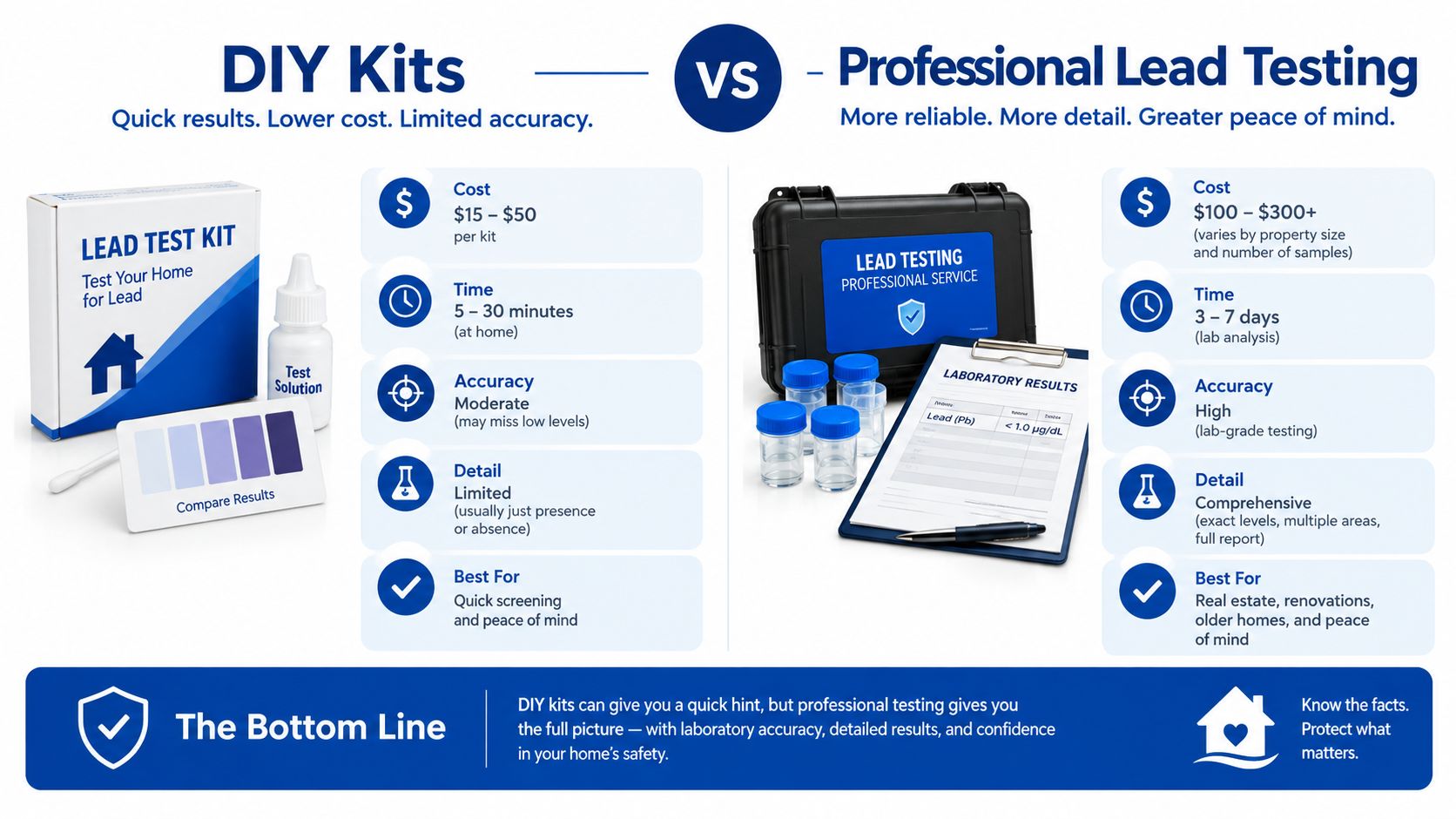
A homeowner can buy a DIY kit for around $25, and that low price is the reason those kits sell so well. But a cheap screen and a defensible environmental report are built for different purposes. One tells you whether a surface might be a problem, the other gives you documentation you can rely on for a renovation, transaction, or dispute.
A simple homeowner scenario
A landlord in a small Los Angeles duplex might use a DIY kit to screen a peeling window sill before repainting. That may be enough to flag a concern, but it won't provide the level of sampling detail or paperwork needed if a tenant, insurer, or contractor later asks for proof. A professional inspection, by contrast, can document which painted components were tested and how the result should be interpreted.
That difference becomes more obvious in larger buildings. If a property manager is preparing for turnover or renovation, the low upfront cost of a kit can turn into a bigger cost later if the initial screen doesn't answer the underlying question. The issue isn't only accuracy, it's also whether the result is documented well enough for the next step.
Why documentation matters
Professional lead testing is usually tied to representative sampling, chain-of-custody records, and laboratory quantification. DIY products rarely provide that full package, which is why they're best seen as preliminary screens, not final answers. EPA also requires NLLAP-recognized laboratories when federal lead rules call for lab analysis, so the lab credential is part of compliance, not an optional upgrade.
If you're comparing lead decisions with other property-management tasks, a rental checklist like the guide for Fresno landlords shows the same principle in a different setting, good documentation saves money later because it prevents avoidable surprises.
Real-World Cost Scenarios for Property Owners
The cost ladder makes the most sense when you see how it plays out on real projects. A quote isn't just a number, it's a reflection of how many surfaces are involved, how hard they are to reach, and how much documentation the owner needs at the end.
A single-family renovation in Los Angeles
A homeowner updating an older house may only need testing on a few painted components before demo starts. If the property has a manageable layout and the sample count stays low, the job may land near the lower end of the local range. If the project expands into more rooms, trim, or exterior features, the price climbs because the inspector has to cover more surfaces and possibly more sample types.
The practical way to control cost is to define the renovation scope before testing begins. If only one room will be disturbed, don't test the whole house without reason. If the work area will include multiple painted components, ask for a quote that lists the number of components, the sample media, and the turnaround time.
A multi-unit apartment complex assessment
A property manager or HOA board usually needs something more structured. More units mean more doors, windows, trim, common areas, and more time spent documenting access. The USDA's point about building count and travel distance is especially relevant here, because field time grows as the site gets more complex.
Ask for a separate price for extra samples when the full field scope isn't known yet.
That request helps prevent change orders later. It's also a smart way to compare vendors, because a quote that seems lower may only be assuming fewer samples than the building will really require. For commercial environmental testing, that kind of under-scoping can create delays during leasing, financing, or maintenance planning.
A post-fire contamination check
After a fire, owners often need sampling for ash, soot, char, smoke residue, or heavy metals in addition to lead. That's a different testing problem, but the budgeting logic is the same. The more areas that need access, the more samples and documentation are required, and the more time the assessor spends in the field.
Los Angeles owners can reduce costs without weakening the report by staging access ahead of time, clearing rooms, and identifying the exact areas of concern before the inspector arrives. That shortens mobilization time and helps the professional focus on the right surfaces instead of doing avoidable extra work.
Strategies to Reduce Testing Expenses
The cheapest way to lower testing cost is to avoid paying for scope you don't need. That sounds obvious, but many owners overspend by asking for a broader survey than the project requires, or by waiting until work starts and then needing a rushed repeat visit. A better quote begins with a narrower question.
How to keep the bill under control
Prepare the site before the inspector arrives. Clear access to the rooms, trim, and exterior surfaces that may be tested, because every minute spent moving obstacles is a minute that gets billed as labor. If you already know which areas will be renovated, give that list up front so the assessor can target the right components the first time.
Bundling related testing can also help. If lead testing is being done alongside mold testing, asbestos testing, or indoor air quality sampling, it may be possible to reduce repeat mobilization and reporting time. The goal isn't to stack services you don't need, it's to avoid paying for two separate site visits when one will do.
What to ask before you approve a quote
- Scope clarity: Which rooms, surfaces, or sample types are included?
- Extra-sample pricing: What happens if the field team finds more suspect areas?
- Turnaround options: Is rush analysis available, and what triggers the surcharge?
- Report format: Will the result be suitable for renovation planning or compliance paperwork?
- Lab credential: Is the laboratory appropriate for the type of test being ordered?
Those questions help you separate a screening service from a compliance-ready environmental assessment. They also make it easier to compare quotes from different firms without getting lost in wording that sounds similar but covers very different deliverables.
For property owners who are planning next steps after testing, lead abatement in Los Angeles is the right background reading for understanding how test results connect to later decisions without assuming every positive result means the same outcome.
If you need lead testing in Los Angeles or Southern California, Sensitive Environmental can help with professional inspections, sampling, laboratory analysis, and clear reporting for homes, apartments, and commercial properties. Visit Sensitive Environmental to discuss the right testing scope for your property and get documentation you can use.