A renovation crew is preparing to open walls in a Los Angeles commercial building. A tenant has complained about an unusual odor, workers have noticed visible dust, and the facility manager now needs to answer a difficult question: What are people breathing during the workday?
That question can't be answered reliably by looking at a wall, taking one room reading, or handing employees a consumer test kit. Industrial hygiene testing is an exposure-assessment process. It connects workplace conditions, employee tasks, sampling methods, laboratory analysis, and professional interpretation so owners and employers can make defensible decisions.
For Southern California workplaces, that may involve asbestos, lead, silica, mold, VOCs, combustion byproducts, wildfire residue, or other airborne contaminants. It may also involve documenting conditions before renovation, verifying that controls are working, supporting respiratory protection decisions, or deciding whether additional monitoring is needed. The central idea is simple: test the exposure pathway that matters, collect representative data, and interpret the results in context.
Table of Contents
- Introduction to Industrial Hygiene Testing in the Workplace
- What Industrial Hygiene Testing Is and How It Works
- Common Contaminants and Exposures Evaluated by Testing
- When to Consider Industrial Hygiene Testing in Southern California
- How Professional Industrial Hygiene Testing Is Performed
- Understanding Results and Deciding on Next Steps
- Next Steps for Employers and Property Owners in Los Angeles
Introduction to Industrial Hygiene Testing in the Workplace
Industrial hygiene testing becomes important when a workplace concern moves from a suspicion to a decision. A property manager may receive an odor complaint after a tenant improvement project. A general contractor may plan demolition in an older building without knowing whether suspect materials contain asbestos or lead. A facility team may wonder whether dust collection, ventilation, or smoke residue is affecting employees.
In each situation, visual inspection helps define the problem, but it doesn't measure exposure by itself. The relevant question is whether a contaminant is present, how it moves through the workplace, which employees may encounter it, and whether their actual exposure can be compared with an applicable occupational exposure limit.
Practical rule: A room can look clean while a worker's breathing-zone exposure changes sharply during a specific task.
Industrial hygiene testing developed from early efforts to measure mine air and dust. Historical milestones include an apparatus used to measure oxygen and carbon dioxide in mines in 1851, dust measurement by surface deposition around 1880, suction through a filter by 1882, battery-powered air pumps by the early 1900s, and the personal air sampler breakthrough in 1960. These developments created the technical foundation for modern worker-specific monitoring. CDC historical measurement guidance
In the United States, industrial hygiene became a formal compliance and exposure-assessment practice after OSHA began collecting workplace measurements in 1972 to verify compliance with Permissible Exposure Limits. OSHA computerized those measurements into IMIS beginning in 1979, and its public exposure dataset later grew to more than 1 million personal sample results, released in 2010. Occupational and Environmental Medicine review of OSHA exposure data
This guide focuses on how that process works in practical terms. You'll learn how professionals identify hazards, define similarly exposed groups, choose between personal and area sampling, use direct-reading instruments, work with laboratories, and interpret results without treating a single result as a complete answer.
What Industrial Hygiene Testing Is and How It Works
Industrial hygiene testing follows a chain of reasoning:
- Identify a potential hazard.
- Determine how workers could contact it.
- Measure the relevant exposure pathway.
- Compare the findings with applicable limits and workplace decisions.
A hazard is the contaminant or condition. Exposure is the contact that occurs through inhalation, skin contact, ingestion, or another route. Testing evaluates the exposure, not merely the existence of a substance somewhere in the building.
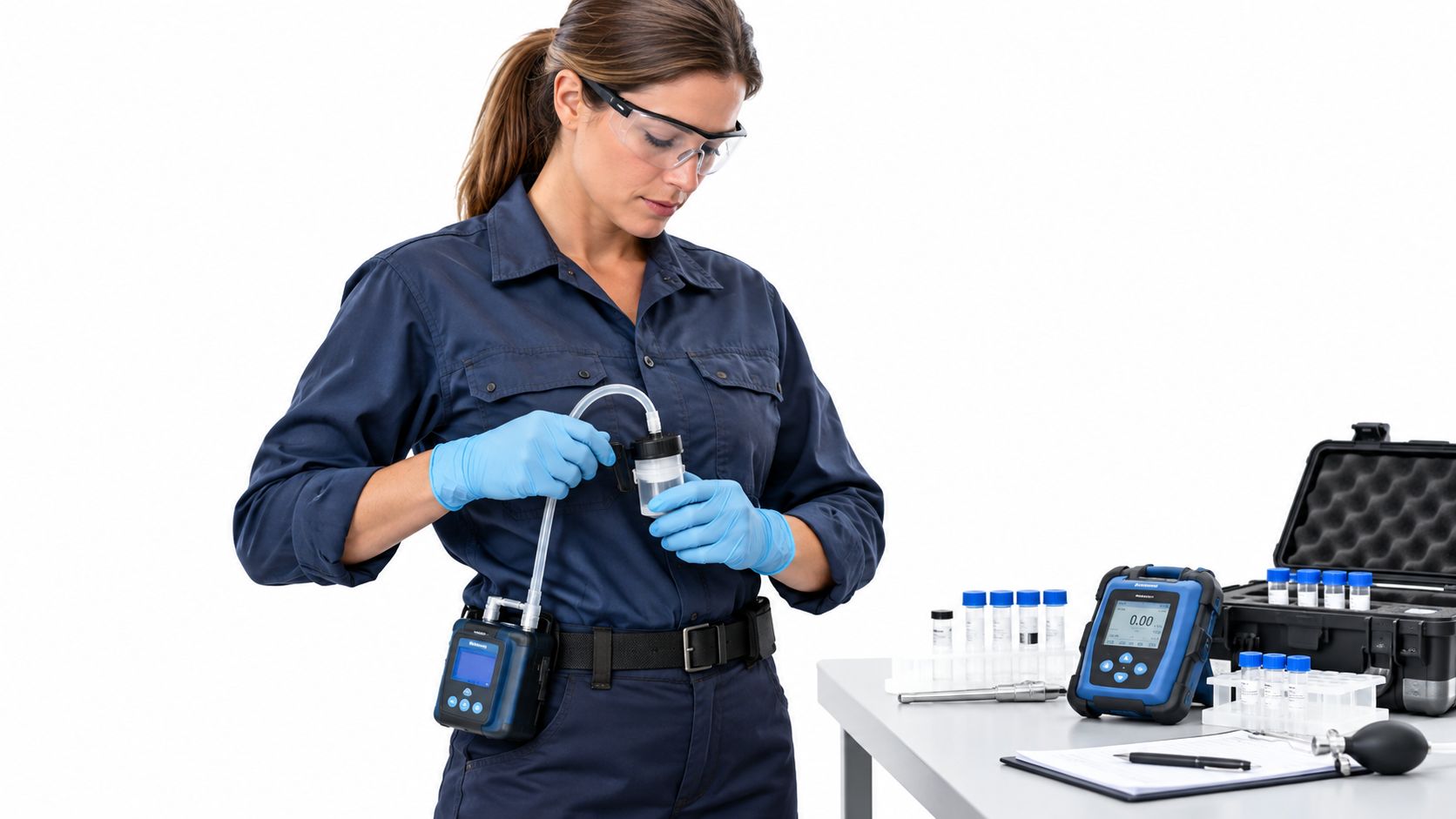
Consider the difference between a personal fitness tracker and a wall clock. A wall clock tells you the time in one location. A fitness tracker travels with you and records changing conditions during your activities. An area air sample is useful for understanding conditions at a fixed point. A personal breathing-zone sample travels with the worker and is positioned to better represent the air that worker inhales during assigned tasks.
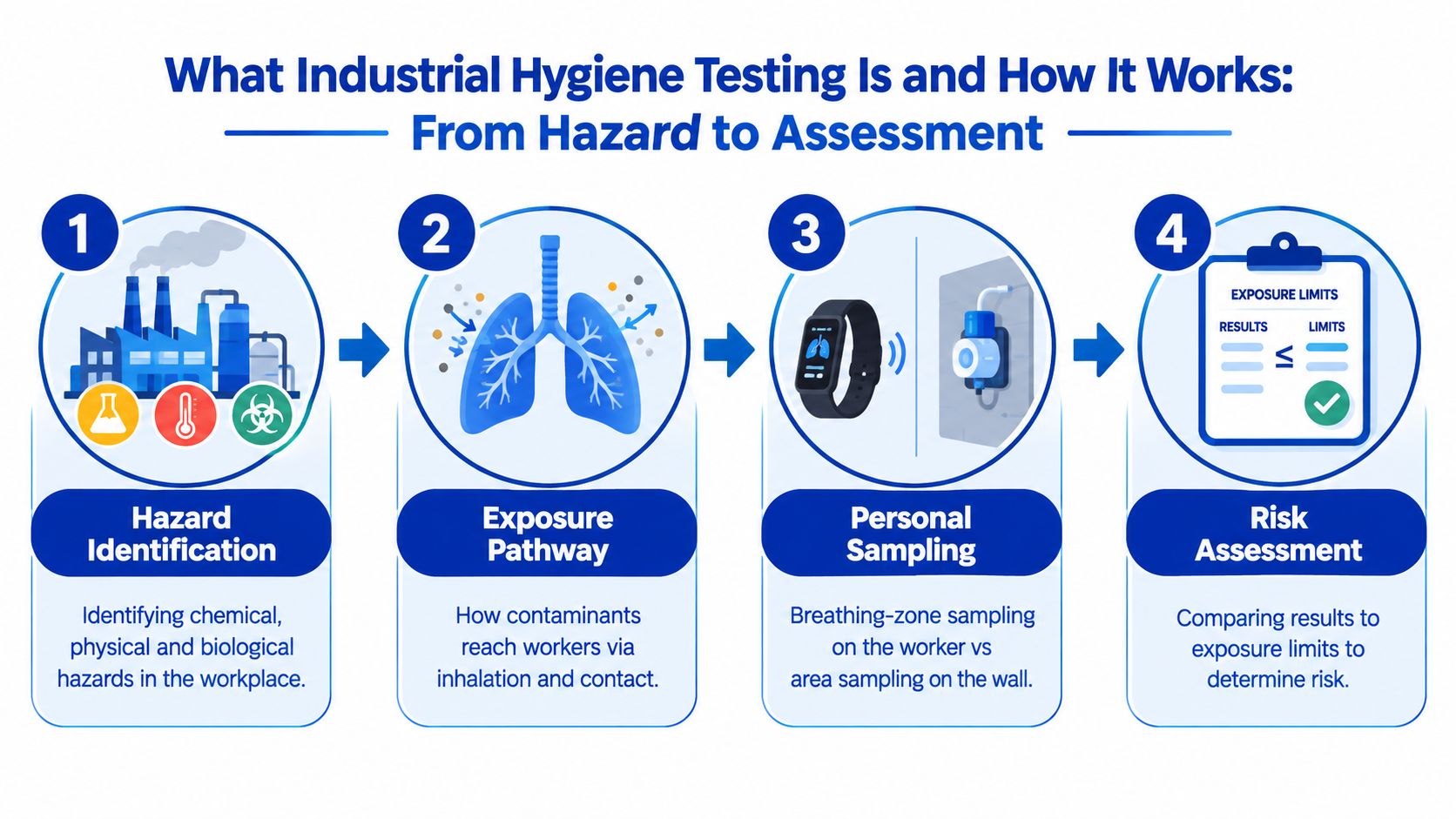
OSHA guidance emphasizes representative sampling in the employee's breathing zone. Airborne contaminants may be collected by drawing a measured volume of air through a filter, sorbent tube, impingement device, or comparable medium. The sampling plan should reflect the employee's tasks and variability, rather than relying on a fixed room location that may not match the worker's inhaled air profile. OSHA exposure sampling guidance
Why professional methods matter
A DIY kit may provide a useful screening indication, but it usually doesn't answer the full occupational question. It may not establish who was sampled, which task was underway, how equipment was calibrated, whether the sample represents a similarly exposed group, or whether the laboratory method is suitable for the decision being made.
Professional work brings those elements together:
- Inspection: The hygienist observes processes, materials, ventilation, work practices, and potential exposure routes.
- Strategy: The consultant defines the workers and tasks that need evaluation.
- Sampling: Trained personnel select media, calibrate equipment, document conditions, and preserve samples.
- Laboratory analysis: The laboratory applies an appropriate analytical method and reports findings with detection information.
- Interpretation: The results are compared with relevant limits and used to guide controls, documentation, or follow-up.
NIOSH describes an analytical framework covering air, surface, bulk, and biological samples. Methods are evaluated for fitness for purpose, accuracy, sensitivity, and specificity. NIOSH also identifies a practical balance among analytical accuracy, cost, and the optimum sample number, with method verification needed when a different laboratory performs the analysis. NIOSH analytical methods framework
For property owners who need to understand what happens after air quality tests, a separate overview of remediation after air quality tests can help explain how testing findings may inform later project decisions. Testing itself remains an assessment service. It doesn't automatically prescribe cleanup, removal, or abatement.
Common Contaminants and Exposures Evaluated by Testing
The correct test depends on the material, task, building history, and exposure pathway. Industrial hygiene testing isn't a universal panel that produces the same answer at every property in Los Angeles County. A consultant first asks what workers do, what materials they disturb, what processes generate emissions, and what event created the concern.
Dusts fibers and metals
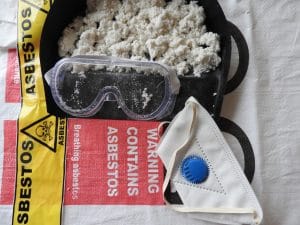
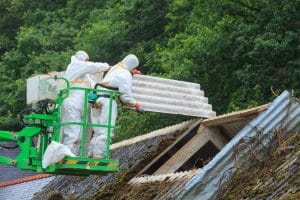
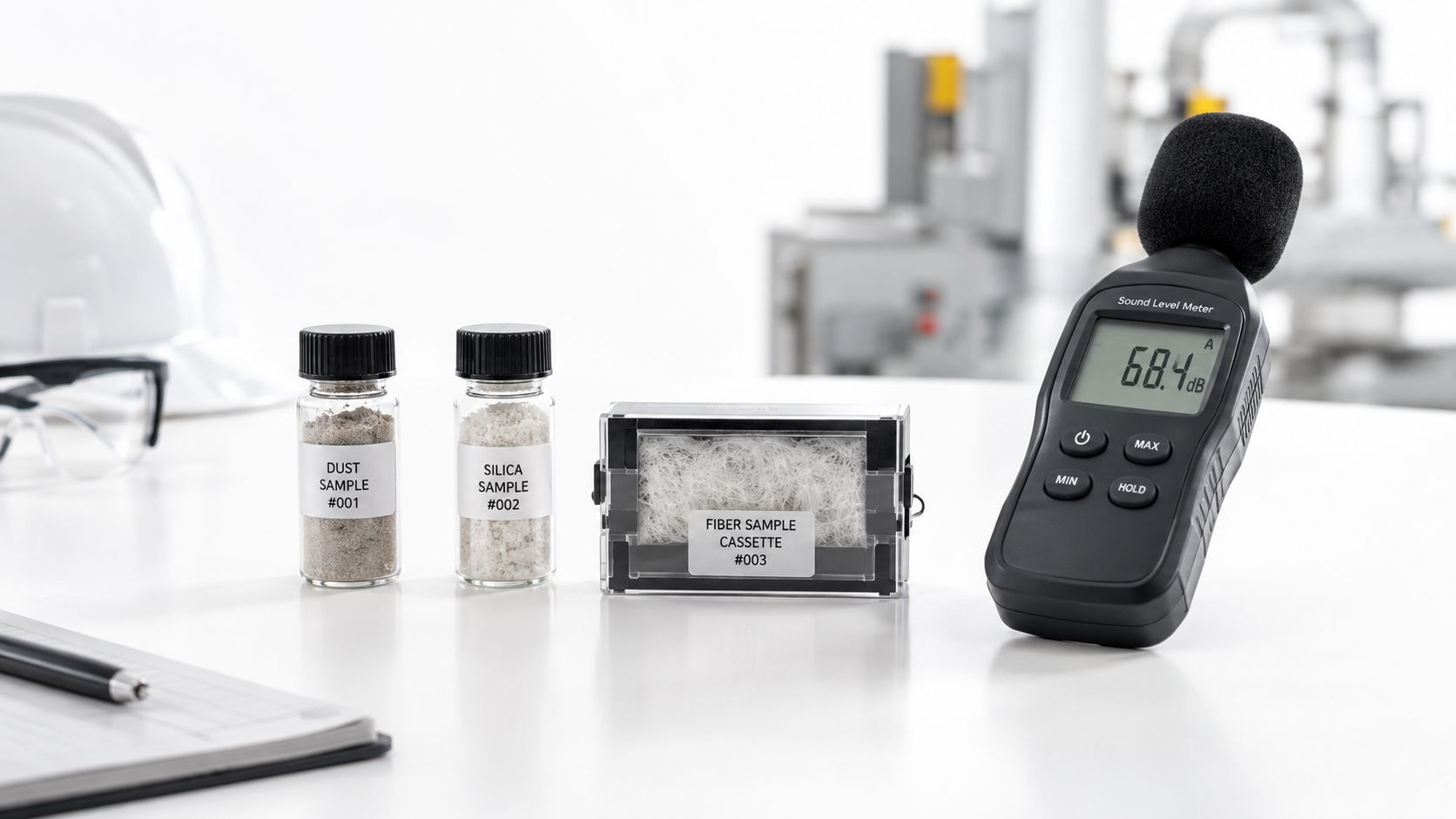
Construction, renovation, demolition, concrete cutting, surface preparation, and material handling can generate dust and fibers. Testing may focus on asbestos in suspect building materials or airborne fibers during work, lead in paint and settled dust, silica associated with mineral or concrete materials, or metals in process emissions and fire residues.
Asbestos testing Los Angeles projects often begin with a survey before renovation or demolition. Lead testing may involve paint inspections, surface sampling, or task-related air sampling, depending on the question. The laboratory result can identify the material or contaminant analyzed, but the consultant still needs to relate that finding to the planned work and people who may be exposed.
Chemical vapors and VOCs
Odors don't identify a chemical by themselves. A solvent smell, fuel odor, new-material odor, or process emission may justify an indoor air quality investigation or targeted VOC and airborne contaminant testing. Warehouses, manufacturing areas, healthcare settings, schools, laboratories, and commercial tenant spaces can each present different sources and ventilation patterns.
Sampling may use a sorbent tube or another medium selected for the suspected contaminant. The test should be designed around the source and timing. A short task that creates a peak may require a different approach from a low-level background concern that persists throughout occupancy.
Fire residue and biological contaminants
After a structure fire or wildfire smoke event, testing may evaluate ash, soot, char, smoke residue, combustion byproducts, and heavy metals. These materials can settle on surfaces, enter HVAC pathways, or remain associated with damaged building materials. Fire and wildfire contamination testing should therefore consider both visible residue and less obvious locations identified through the inspection.
Water intrusion creates a different question. Mold testing Los Angeles projects may include a moisture-focused inspection, visual assessment, air sampling, surface sampling, or comparison samples where appropriate. A mold result doesn't by itself determine the full response. It helps characterize conditions and supports decisions by the owner and qualified project professionals.
Equipment reliability also affects exposure evaluation. Facilities that operate dust collection systems may find predictive maintenance dust collection useful when planning broader control-verification work. Maintenance information doesn't replace exposure sampling, but it can help explain why conditions vary.
For commercial properties, indoor air quality testing in Los Angeles can help investigate occupant complaints, airborne contaminants, and building-related concerns through targeted inspection and sampling.
When to Consider Industrial Hygiene Testing in Southern California
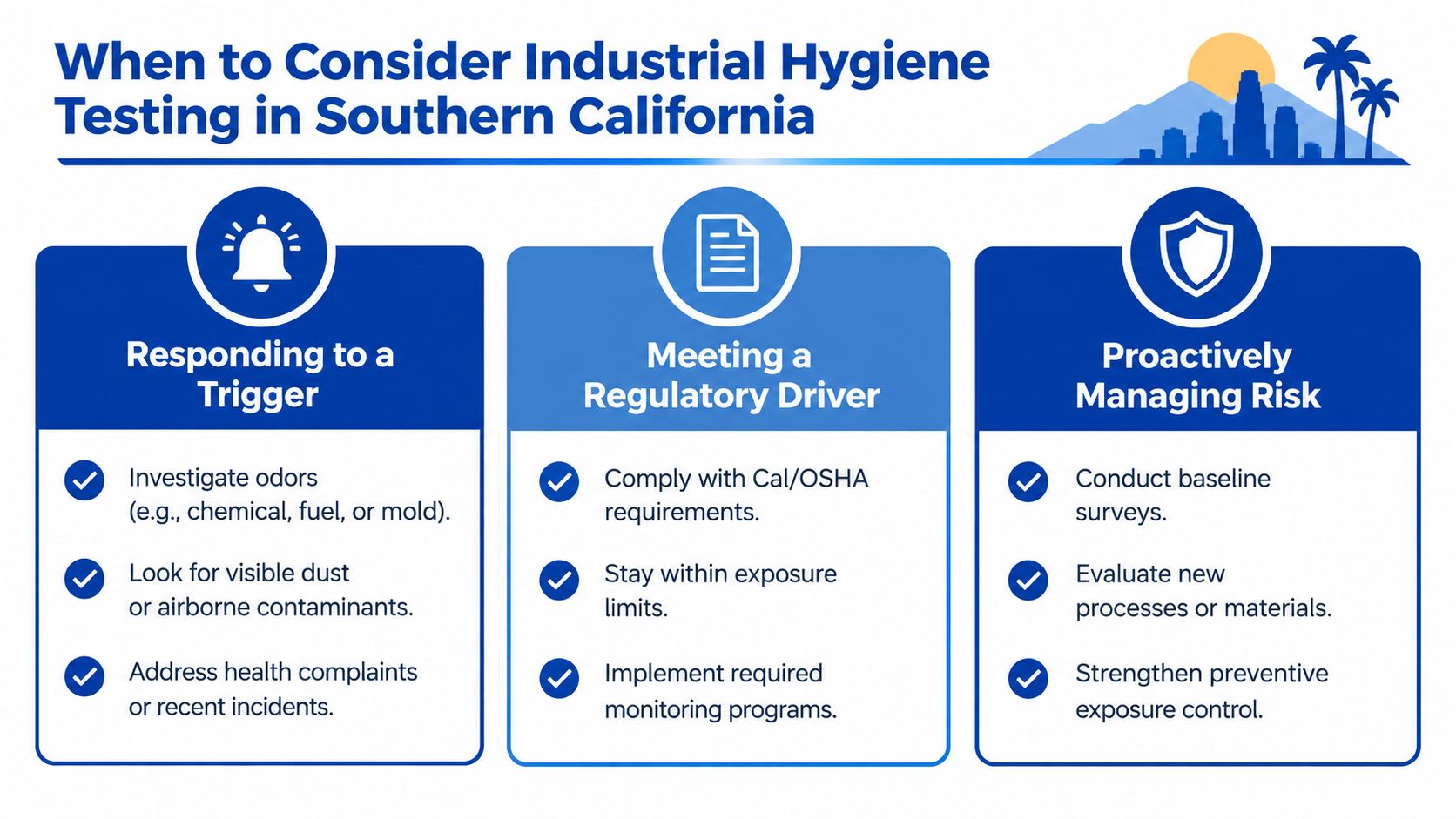
The timing of industrial hygiene testing usually falls into three categories: a trigger has occurred, a rule or project requirement applies, or the owner wants proactive information. These situations overlap, but they shouldn't be treated as interchangeable.
Responding to a trigger
A trigger may be an odor complaint, visible dust, suspected mold, water intrusion, a worker concern, a process change, or smoke entering a building after a fire. Testing is most useful when the consultant can connect the event to a defined question.
For example, “the building smells strange” is a starting observation. A stronger scope asks whether the odor is associated with VOCs, combustion residue, moisture-related conditions, or another source, and whether the concern is localized or distributed through the occupied space.
Meeting a regulatory driver
California employers may need exposure data to evaluate workplace conditions against Cal/OSHA requirements and applicable exposure limits. Renovation and demolition create a separate asbestos planning issue in the South Coast Air Quality Management District.
SCAQMD Rule 1403 requires a thorough asbestos survey before demolition or renovation, including inspection, identification, quantification, and physical sampling of friable, Class I, and Class II non-friable asbestos-containing materials. The rule provides no exception based on a facility's age or construction date. SCAQMD Rule 1403
For renovation, the survey scope relates to materials that may be disturbed. A demolition survey must be thorough and address all construction materials, including foundations, underground utilities, and potentially hidden or inaccessible materials. The written report should identify materials to be disturbed and describe condition and friability. SCAQMD survey requirements
Managing risk proactively
A proactive assessment can establish baseline conditions, evaluate a new process, support commercial due diligence, or verify whether installed controls perform as intended. Property managers, developers, schools, hospitals, and industrial facilities often benefit from defining the question before a complaint or construction deadline forces a rushed response.
South Coast AQMD guidance states that a survey is required before renovation, except for a single-unit residential structure where less than 100 square feet of asbestos-containing material is removed or stripped. The same guidance says notice for demolition or asbestos removal projects is generally due at least 14 days before work begins. SCAQMD compliance advisory
The scope should match the materials, tasks, workers, and timing involved. A pre-renovation asbestos survey, a wildfire residue assessment, and an employee breathing-zone study answer different questions and require different methods.
For commercial owners and facility teams, commercial environmental testing in Los Angeles can support project planning, documentation, and decision-making across occupied and construction environments.
How Professional Industrial Hygiene Testing Is Performed
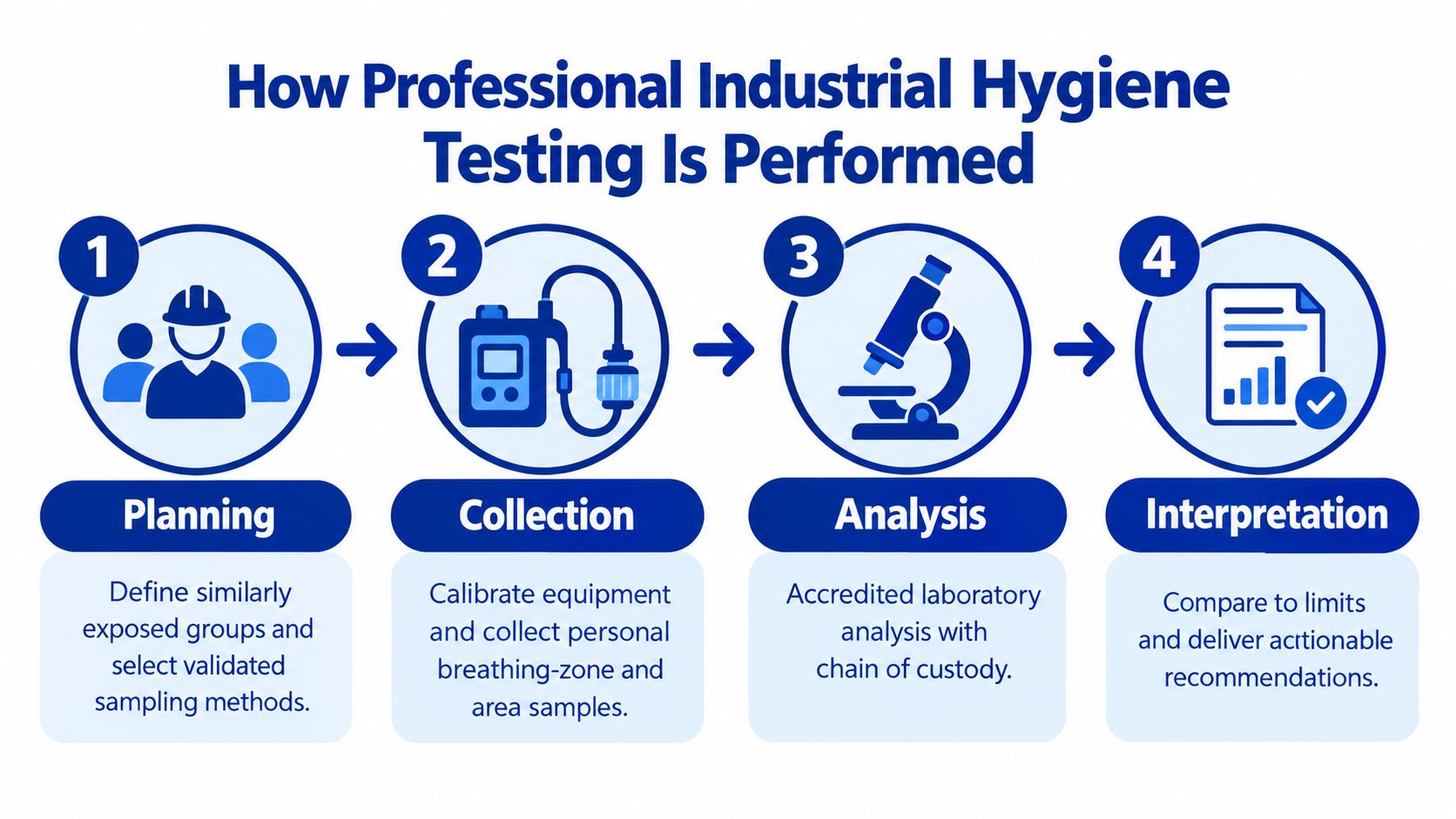
A defensible assessment begins before any pump starts. Consider a maintenance crew that usually works in a ventilated area but occasionally opens dusty equipment. A single quiet-day sample could miss the exposure that matters. The hygienist first learns how the workplace operates, identifies potential sources, and defines the decision the results must support.
Planning the exposure assessment
The first planning task is to define a similarly exposed group, or SEG. An SEG includes employees whose tasks, materials, work practices, and exposure conditions are similar enough to evaluate together. A warehouse worker loading dusty materials may belong to a different group from an operator beside the source or a maintenance employee who opens contaminated equipment.
The exposure profile should cover routine work and less frequent conditions, including maintenance, startup and shutdown, cleaning, material transfer, ventilation changes, and tasks that may create short-term peaks. This prevents sampling from capturing only the easiest or quietest portion of the workday. In Southern California workplaces, changing ventilation, outdoor air, wildfire residue, and production schedules can make that task-based review especially important.
Sampling is a program of observations, not a single number. Current exposure-assessment guidance commonly identifies 6 to 10 random samples as typically needed to characterize an SEG, while fewer than 6 leaves substantial uncertainty. Industrial hygiene exposure-assessment guidance Multiple randomly selected samples show how exposure varies among workers and workdays, giving the analyst a stronger basis for judging the group rather than relying on one possibly unusual result.
Collecting personal and area samples
Personal breathing-zone sampling answers the most direct employee question: what does this worker inhale during the task? A calibrated pump draws air through a selected medium positioned near the employee's breathing zone. Filters can collect particulate matter or fibers, while sorbent tubes can capture vapors. Impingers and other devices may suit specific contaminants.
Area samples answer different questions. They can show conditions near a source, compare boundary and background locations, and help assess how contamination moves through a space. Task-based samples can focus on concrete cutting, sanding, material handling, cleaning, fire-residue disturbance, or another activity likely to change exposure.
Direct-reading instruments provide a time-based view. They can show changing concentrations, reveal peaks, and help locate sources while work is occurring. They are useful when the question involves a short-term exposure limit or an intermittent release. They do not automatically replace laboratory samples when the decision requires contaminant identification, validated analysis, or documented compliance data.
Preserving and analyzing the evidence
Field notes should identify the worker or location, task, timing, equipment, calibration information, environmental conditions, and unusual events. Samples are labeled and transferred with chain-of-custody documentation, allowing the laboratory to track each item from collection through analysis.
The report should connect laboratory findings to the original exposure question. It may explain whether the method detected a contaminant, whether a result was below the method's reporting capability, how sample duration affects interpretation, and whether more monitoring is appropriate. Sensitive Environmental provides environmental testing, inspection, sampling, laboratory coordination, and reporting. It does not perform abatement, removal, cleanup, or remediation.
Choosing the Right Sample Type for Your Exposure Question
| Exposure Question | Best Sample Type | When It Is Most Useful |
|---|---|---|
| What does a specific worker inhale during a task? | Personal breathing-zone sample | Evaluating employee-specific exposure across a work activity |
| Where is a contaminant concentrated? | Area sample | Locating source areas, boundaries, or background conditions |
| Does a short task create a peak? | Direct-reading instrument or task-based sample | Observing changing conditions during intermittent work |
| Is a material itself contaminated? | Bulk sample | Identifying asbestos, lead, or another substance in building or process material |
| What settled on a surface? | Surface or wipe sample | Evaluating residue, contact locations, or post-event distribution |
Understanding Results and Deciding on Next Steps
A laboratory report is evidence for a decision, not the decision itself. Facility managers should read each result alongside the sampling duration, worker task, similar exposure group, analytical method, reporting limit, and applicable occupational exposure limit. Those details show what the sample can support and where uncertainty remains.
A time-weighted average describes exposure across a defined work period. It can be appropriate for a steady task, but a longer sample may smooth over a brief release. A short-term sample or direct-reading instrument can show a peak during an intermittent activity, such as opening a process vessel or disturbing fire residue. These results answer different questions and should not be treated as interchangeable.
A non-detect means the substance was not identified above the method's reporting capability for that sample. It does not prove the substance is absent throughout the workplace, nor does it evaluate exposure pathways the sampling plan did not address. The reporting limit also matters. A result below that limit may indicate limited detection capability rather than zero concentration.
Read the result with the sampling story. A number without task, duration, location, and method information can create false confidence.
Earlier planning for an SEG addressed how multiple representative samples improve confidence. Use that framework when judging whether the available dataset reflects routine work, rather than treating one result as a complete exposure profile.
Results may support several decisions:
- Control verification: Check whether ventilation, enclosure, isolation, or work practices perform as intended.
- Respiratory protection selection: Give a qualified safety program exposure information for selecting appropriate protection.
- Additional monitoring: Address task variation, limited coverage, unusual conditions, or process changes.
- Compliance documentation: Preserve the sampling plan, laboratory analysis, and interpretation.
- Exposure management: Combine personal, area, task-based, and direct-reading information instead of relying on a periodic spot check.
A positive finding does not automatically require remediation or abatement. The owner, employer, contractor, and qualified professionals must evaluate the material, exposure pathway, applicable requirements, and available controls. In a fire-damaged building, combustion byproduct testing may help distinguish ash, soot, char, smoke residue, and heavy metal concerns. The appropriate response depends on the complete assessment.
A useful report answers practical questions: What was sampled? Who or what did it represent? What did the laboratory identify? Which limits or criteria apply? How much confidence does the dataset support? What should be verified, documented, or tested next?
Next Steps for Employers and Property Owners in Los Angeles
Facility managers, contractors, developers, and property owners can scope an industrial hygiene project with a short decision checklist:
- Define the trigger: Record the complaint, task, incident, renovation, demolition, water event, or fire-related concern.
- Identify the people: List employees, contractors, tenants, students, patients, or other occupants who may encounter the condition.
- Describe the work: Note routine tasks, intermittent activities, source materials, ventilation, and expected changes.
- Choose the decision: Decide whether the data will support compliance, control verification, project planning, due diligence, or follow-up monitoring.
- Document the result: Request clear laboratory reporting, sampling details, interpretation, and recommendations for additional assessment where needed.
A representative, method-driven program is more useful than a single unplanned air sample. The same principle applies to asbestos surveys, lead inspections, mold sampling, indoor air quality testing, fire residue assessments, and broader commercial environmental testing. For renovation planning, property teams should also understand the importance of asbestos management in Los Angeles commercial buildings, especially when materials may be disturbed.
Sensitive Environmental can help Los Angeles and Los Angeles County owners, managers, contractors, and institutions plan industrial hygiene testing, asbestos surveys, lead testing, mold inspections, IAQ assessments, and commercial environmental assessments. Clear sampling and reporting give your team documented information for project planning, compliance, and informed next steps.
Sensitive Environmental provides professional industrial hygiene testing, exposure assessments, environmental inspections, sampling coordination, laboratory analysis, and clear reporting for workplaces and properties throughout Los Angeles and Southern California. Visit Sensitive Environmental to discuss your workplace concern, renovation or demolition project, fire-related assessment, or indoor air quality testing needs.