
A Los Angeles property owner gets a call from a contractor: the remodel is ready to begin, but the permit package needs environmental documentation. At the same time, a buyer wants due diligence, a property manager is investigating water damage, or an insurer needs answers after a fire. The immediate question is usually simple: what must be tested, who needs the report, and will the results delay the project?
The environmental assessment process answers those questions through a documented sequence of records review, inspection, sampling, laboratory analysis, interpretation, and compliance planning. It isn't the same as remediation, demolition, asbestos abatement, mold removal, or cleanup. Testing identifies conditions and supplies evidence so property owners, contractors, regulators, and qualified specialists can decide what happens next.
Table of Contents
- What the Environmental Assessment Process Means for Los Angeles Properties
- Starting With Due Diligence and Scoping Before Any Sampling
- How Phase II Sampling and Laboratory Analysis Actually Work
- Understanding Results Reports and What Significance Really Means
- Compliance and Next Steps for Renovation Demolition and Post Fire Projects
- Practical Tips to Keep Your Assessment On Time and On Budget
What the Environmental Assessment Process Means for Los Angeles Properties
In Los Angeles County, an assessment may begin because an older building is scheduled for renovation, a commercial property is changing hands, a tenant reports an indoor air concern, or wildfire smoke and ash reached a structure. Water intrusion can prompt mold inspection and sampling, while a fire can lead to combustion byproduct testing for soot, char, ash, smoke residue, and heavy metals. A pre-demolition project may require a detailed asbestos survey before crews disturb building materials.
The practical purpose is to identify, predict, and evaluate potential environmental effects before a decision is made. That definition reflects the structured approach used in formal environmental assessment, where teams establish existing conditions, consider possible effects, and document mitigation or control measures. Environmental assessment became a formal, widely used policy tool during the 1970s, while international environmental statistics work developed through ECE meetings in 1973 and a draft program submitted to the UN Statistical Commission in 1974, as documented by the United Nations environmental statistics history.
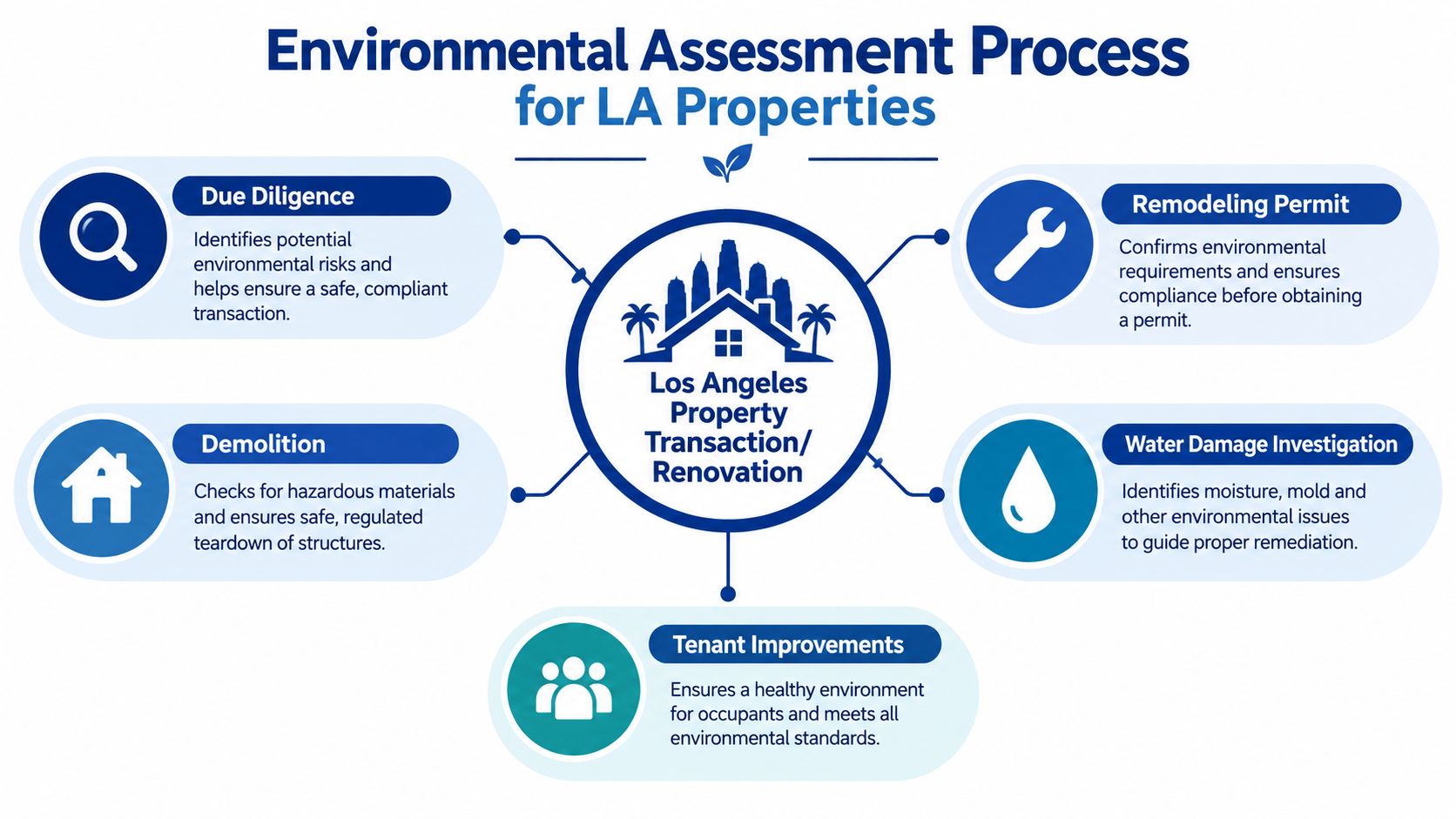
Assessment is not remediation
A professional assessment may confirm that a material contains asbestos, that lead-based paint is present, or that mold-related conditions require additional investigation. A positive result doesn't automatically dictate one particular response. Instead, the report gives the owner and appropriately qualified professionals information about the location, condition, extent, and applicable project requirements.
DIY kits can be useful for awareness, but they rarely provide the complete documentation needed for a commercial transaction, permit package, insurance file, or regulatory submittal. A professional inspection connects field observations with representative sampling, chain-of-custody records, laboratory analysis, and a clear written report.
Sensitive Environmental provides environmental testing services in Los Angeles for property owners, contractors, developers, managers, and other decision-makers who need site-specific information. The work may include asbestos, lead, mold, indoor air quality, VOCs, industrial hygiene, environmental site assessments, and fire-related contamination testing.
Why the process is stepwise
A defensible assessment starts with the property's history and planned work, then narrows the field questions. The team needs to know which materials may be disturbed, which rooms or exterior areas are accessible, whether occupants remain in place, and what documentation the project requires.
That sequence prevents two expensive mistakes. Sampling too broadly can create unnecessary work, while sampling too narrowly can leave concealed or layered materials unaddressed. For Los Angeles properties, the right scope is determined by the building, the planned activity, the suspected hazard, and the governing compliance pathway.
Starting With Due Diligence and Scoping Before Any Sampling
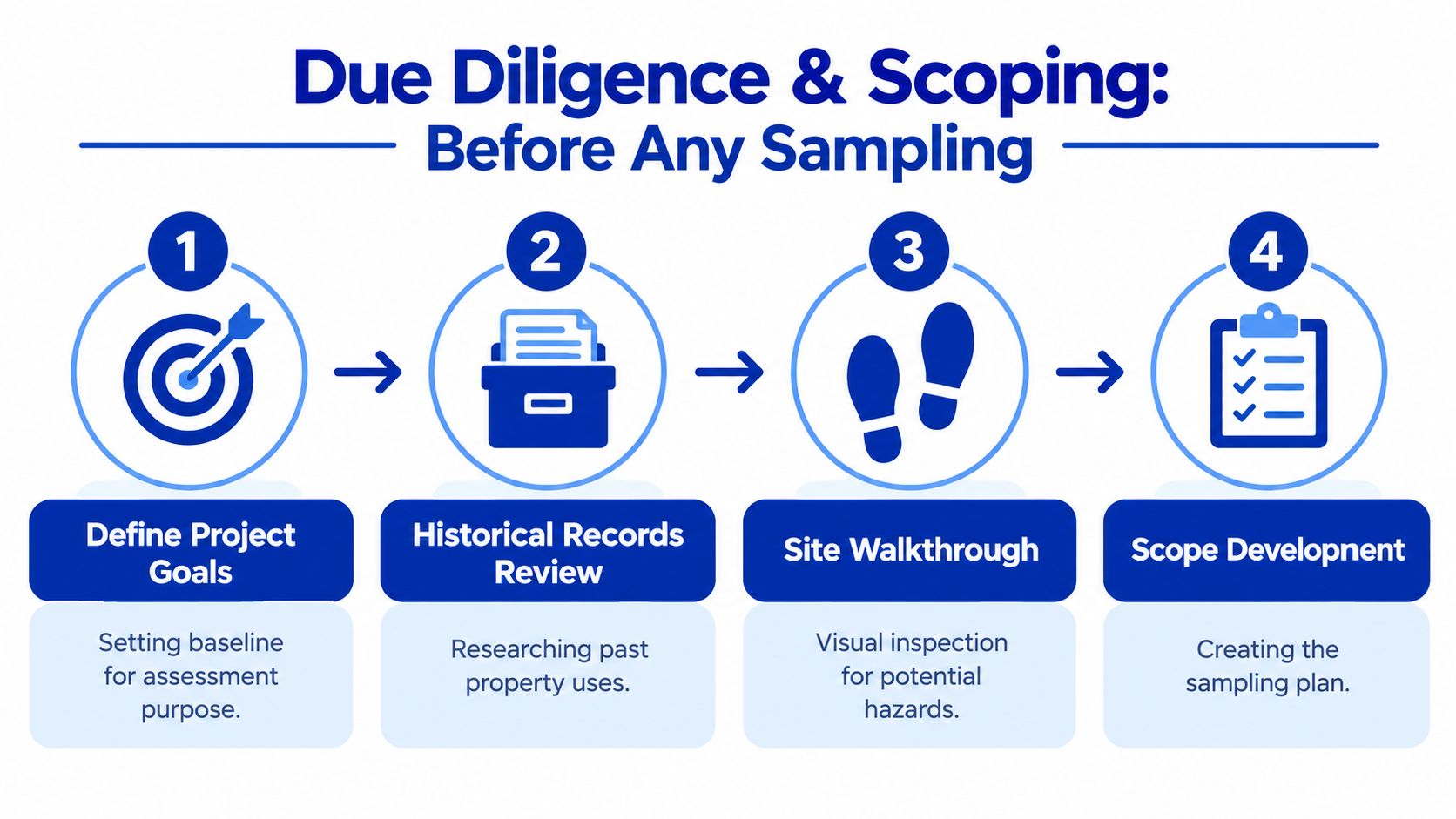
Sampling shouldn't be the first reflex. The first task is to define the decision the assessment must support. A buyer may need environmental due diligence, a general contractor may need a pre-renovation asbestos survey, and a facility manager may need indoor air quality data after an occupant complaint. Each objective changes the locations, materials, contaminants, and reporting requirements.
Define the project question
Start by documenting:
- Project purpose: Identify whether the work involves a transaction, tenant improvement, renovation, demolition, water-damage investigation, post-fire evaluation, or ongoing building management.
- Property boundaries: Establish the building areas, exterior surfaces, tenant spaces, mechanical rooms, crawl spaces, roof systems, and adjacent areas that may influence the assessment.
- Decision deadline: Record the permit milestone, closing date, bid date, insurance request, or occupancy decision that depends on the report.
- Known concerns: List visible damage, odors, previous repairs, occupant complaints, fires, floods, industrial activities, and suspect materials.
A thorough process then defines the baseline setting, historical activities, applicable management directives, and spatial and temporal boundaries before evaluating interactions and cumulative effects. That methodology is described in the environmental impact evaluation handbook.
Review history before opening walls
Historical records may reveal earlier uses, tenant improvements, roofing work, mechanical upgrades, fire events, or water intrusion. For an environmental site assessment, the review can also identify activities that may justify soil, groundwater, vapor, or building-material investigation.
The records don't replace a site walkthrough. They help the assessor decide where to look and what questions to ask. A property that appears clean today may still contain older materials beneath newer finishes, particularly where several renovation campaigns occurred.
Walk the property with the planned work in mind
The inspection should follow the proposed disturbance, not just the most visible rooms. For asbestos testing Los Angeles projects, that can mean examining flooring layers, wall and ceiling cavities, pipe insulation, roofing materials, fireproofing, textured coatings, and other components affected by renovation or demolition.
For mold testing Los Angeles properties, the walkthrough should connect moisture sources with affected materials and airflow. For commercial environmental testing, the assessor may also consider occupant density, HVAC operation, production activities, chemical storage, and building pressure relationships.
Practical rule: A sampling plan is only as good as the scope behind it. If the project footprint changes, the environmental assessment may need to change too.
Treat missing information as a schedule issue
Incomplete records, restricted access, and unclear renovation plans create data gaps. The responsible response isn't to hide those gaps inside a polished summary. It's to identify them, explain their effect on confidence, and determine whether additional inspection or sampling is warranted.
Owners preparing for an inspection can also review practical property-access and ventilation considerations in these HVAC inspection tips for Phoenix. The geographic focus differs, but the operational lesson applies broadly: access, system information, and clear records help the field team collect more useful evidence.
How Phase II Sampling and Laboratory Analysis Actually Work
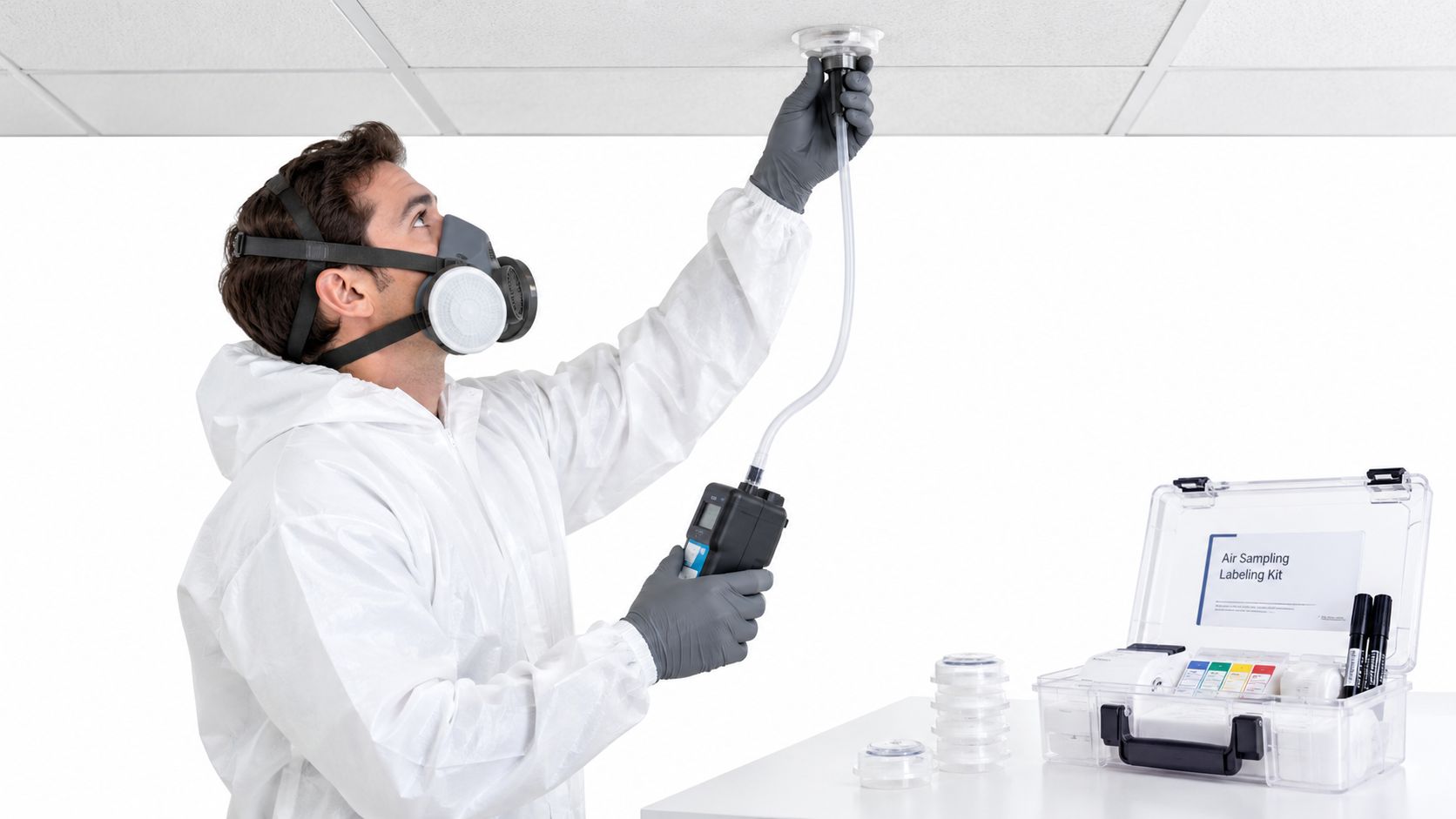
Phase II work begins when the initial review identifies a question that visual inspection and records cannot resolve. The field team selects locations, documents conditions, collects samples using an appropriate method, and preserves the sample identity through laboratory delivery. The laboratory then analyzes the material or air sample using the requested method and reports the result with its applicable units, detection information, and quality-control documentation.
Asbestos and lead sampling
A pre-renovation or pre-demolition asbestos survey generally involves identifying suspect materials, assessing their condition, and collecting representative samples for laboratory analysis. The sampling locations should correspond to materials that may be disturbed, including concealed or layered components where the project requires access.
Lead-based paint inspections use field screening, commonly with an XRF instrument, and may include laboratory analysis when needed. The federal definition recognizes lead-based paint at 1.0 mg/cm2 by XRF or 0.5 percent by weight, equal to 5,000 parts per million, as described in the lead-based paint inspection reference. Those thresholds turn an appearance-based concern into a documented compliance determination.
Mold, IAQ, and VOC investigations
Mold inspections combine moisture observations, building history, and material assessment. Sampling may involve surface, bulk, or air samples, depending on the question. A sample result should be interpreted with the inspection findings, because a laboratory result alone doesn't describe the building's moisture source or the full extent of a condition.
Indoor air quality testing may examine particulate matter, carbon dioxide, VOCs, or other airborne contaminants when the building history and complaint pattern justify it. The equipment and sampling duration should match the question. A short screening measurement and a laboratory-based air sample answer different questions, so the report should state what each result can support.
For owners and facility managers coordinating multiple disciplines, commercial environmental testing in Los Angeles can bring building inspection, industrial hygiene testing, sampling, and reporting into one documented workflow.
Fire residue and CBP testing
After a wildfire or structure fire, visible cleaning isn't proof that all combustion-derived residue has been characterized. Wildfire residue assessment can examine ash, soot, char, smoke residue, and heavy metals on building surfaces or contents. AIHA identifies wildfire residue contamination testing as a recognized assessment category involving fine carbonaceous material from incomplete combustion, as discussed in its wildfire residue contamination testing publication.
Chain-of-custody records connect the sample collected in the field to the laboratory report. The final documentation should identify the sample location, material or medium, collection date, requested analysis, laboratory, and result. That information helps contractors, insurers, property managers, and engineers determine whether more sampling or project controls are appropriate.
Understanding Results Reports and What Significance Really Means
A laboratory report is evidence, not a one-word verdict. It may show that a target analyte was detected, not detected under the method's conditions, or present at a concentration that must be compared with a regulatory, project, or screening benchmark. The meaning depends on the sample location, material, exposure pathway, building use, planned disturbance, and quality of the underlying data.
Read the report in layers
Begin with the sample map and field notes. A result from damaged pipe insulation has a different project implication than a result from an isolated, undisturbed material outside the work area. For indoor air quality, the collection conditions, HVAC status, occupancy, weather, and sampling duration can affect interpretation.
Next, review the analytical method and laboratory qualifications. Confirm that the requested analysis matches the question, that sample identifiers are consistent, and that the report includes appropriate quality-control information. If the report contains qualifiers or estimated values, ask the consultant to explain how those limitations affect the conclusion.
Don't compress uncertainty into a single score
Environmental data can be variable. Combining magnitude and importance into one summary score may create a fact/value trap, where a subjective importance judgment appears to be a measured fact. Technical guidance also warns that failing to account for uncertainty can weaken an assessment because random and changing conditions may materially influence outcomes, as explained in the environmental assessment methodology guidance.
A stronger report preserves uncertainty ranges, identifies data gaps, and uses recognized environmental quality guidelines as screening benchmarks before moving to site-specific interpretation. That approach is less dramatic than a single rating, but it gives decision-makers a more defensible basis for choosing additional sampling, design controls, monitoring, or other next steps.
Formal significance logic can also be expressed as a three-part test: whether an effect is adverse, likely, and significant. For property testing, the same discipline helps prevent overstatement. A positive detection doesn't automatically require removal, abatement, or cleanup. It means the finding must be evaluated against the material condition, work plan, applicable rule, and qualified professional judgment.
For general background on exposure concerns and legal questions, readers may find this toxic exposure guide from LA Law Group, APLC useful. Legal guidance and environmental testing serve different purposes, so a legal article shouldn't replace laboratory analysis or a site-specific inspection.
Compliance and Next Steps for Renovation Demolition and Post Fire Projects
The report becomes valuable when it supports a specific project decision. A contractor may need to revise a work plan, an owner may need additional samples, and a facility manager may need documentation for occupants or an insurer. The appropriate next step depends on the finding, its location, the planned disturbance, and the applicable rule.
Los Angeles asbestos compliance requires thorough scope
South Coast AQMD Rule 1403 requires affected facilities or facility components to be thoroughly surveyed before demolition or renovation. The survey must include inspection, identification, quantification, and physical sampling of friable asbestos-containing material plus Class I and Class II nonfriable asbestos-containing material. The rule also expects the survey to identify affected materials throughout the facility, including flooring layers down to the joist level and wall or ceiling cavities when needed for identification and sampling, as stated in SCAQMD Rule 1403.
That requirement is why a quick visual walkthrough often fails as pre-demolition asbestos testing. New finishes can conceal older materials, and a demolition plan may expose components that weren't visible during a surface-only inspection.
When damaged or disturbed asbestos-containing material is involved in SCAQMD Procedure 5 work, the agency guidance says a clean-up plan must be submitted regardless of project size. The packet includes the notification, site survey report, clean-up plan, chain-of-custody records, laboratory analysis report, site map or plot plan, photographs when available, and the signature of the California Certified Asbestos Consultant who prepared the plan. For demolition, excavation, or site grading exceeding 20,000 square feet, the packet also calls for CEQA Applicability Form 400, according to the Procedure 5 compliance advisory.
Match the finding to the next decision
| Finding | Typical Next Testing Step | Documentation and Compliance Note |
|---|---|---|
| Suspect asbestos material within the disturbance area | Collect representative samples from each relevant homogeneous material and review the work footprint | Keep the survey, sample locations, laboratory report, and project scope aligned |
| Damaged or disturbed asbestos-containing material | Confirm affected materials and prepare the required supporting documentation | Procedure 5 guidance calls for a clean-up plan packet and supporting records |
| Lead-based paint identified by field screening | Confirm locations, coating conditions, and whether laboratory analysis is needed | Use the result to inform work planning and compliance decisions |
| Moisture evidence or mold concern | Trace moisture conditions and select targeted surface, bulk, or air sampling | Interpret laboratory findings with the inspection and building history |
| Ash, soot, char, or smoke residue after fire | Collect targeted CBP samples from surfaces or contents where residue may remain | Preserve sample identity and laboratory documentation for insurance and project decisions |
| Unclear result or significant data gap | Perform focused follow-up inspection or additional sampling | State limitations rather than presenting incomplete data as a final conclusion |
Industrial hygiene testing can support worker and occupant decision-making when construction, demolition, fire damage, or building operations create airborne contaminant concerns. Commercial environmental testing also helps HOAs, schools, healthcare facilities, property managers, and contractors maintain a consistent record across multiple rooms, tenants, or structures.
Sensitive Environmental's role is testing, inspection, sampling, laboratory coordination, and reporting. Remediation or abatement decisions belong with the appropriate qualified parties after the environmental conditions and project requirements are understood. Information about related property services is available through environmental remediation services in Los Angeles, but the assessment itself should remain the evidence-gathering stage.
Practical Tips to Keep Your Assessment On Time and On Budget
The environmental assessment process is also a schedule-management problem. European EIA duration is estimated at about 20.6 months, according to a 2025 European Commission staff working document, while procedural changes in the United States during 2025 included agency revisions after the Council on Environmental Quality's rescission and a fee-based expedited review path that can shorten an environmental assessment to six months. These broader developments reinforce a practical point: timelines vary by market and rule, but incomplete information creates avoidable friction. See the European Commission environmental assessment working document.
Prepare the property and records
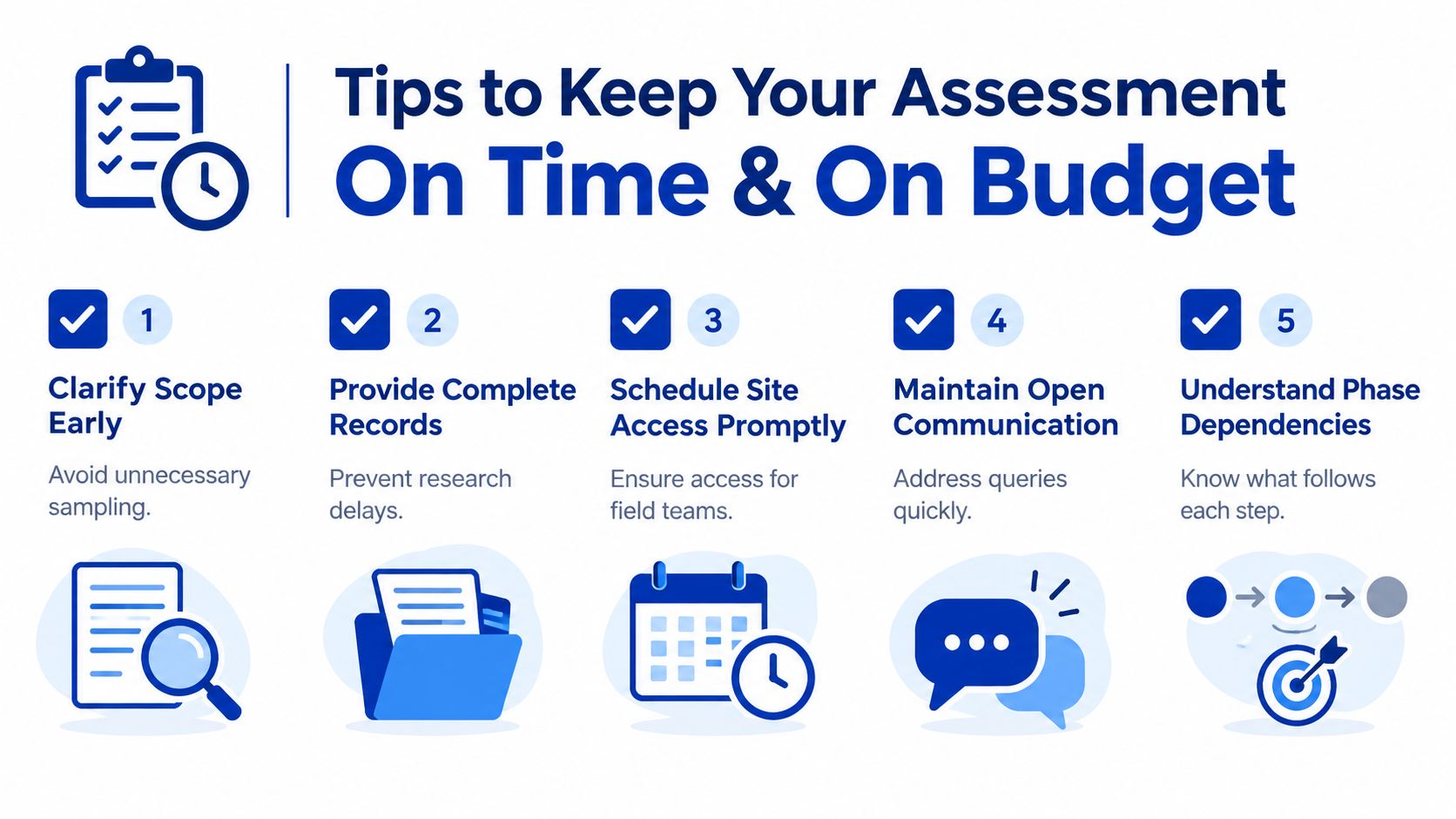
- Clarify scope early: Give the assessor current plans, demolition limits, renovation drawings, and the decision deadline.
- Provide complete records: Share prior surveys, permits, repair records, fire or water-loss documentation, and tenant improvement history.
- Schedule access promptly: Arrange keys, escorts, roof access, mechanical-room access, crawl-space entry, and tenant notifications before the field visit.
- Maintain open communication: Report newly exposed materials, odors, moisture, damage, or changes to the construction scope immediately.
- Understand phase dependencies: Confirm which decisions depend on the inspection, sampling, laboratory report, regulatory packet, or follow-up testing.
The fastest workflow isn't the one that skips scoping. It's the one that identifies the right questions before the field team arrives, collects representative samples, and preserves the documentation needed for the next decision. Better technology can make data gaps more visible rather than eliminating them, so missing information should be addressed openly at the start.
For a Los Angeles or Southern California property, contact Sensitive Environmental to schedule asbestos, lead, mold, indoor air quality, VOC, industrial hygiene, environmental site, or fire residue testing. The team can inspect the property, coordinate appropriate sampling and laboratory analysis, and prepare clear documentation for renovation, demolition, transactions, water damage, post-fire concerns, and regulatory decisions.
Contact Sensitive Environmental to arrange a professional environmental assessment, asbestos survey, mold or lead inspection, IAQ evaluation, or CBP sampling in Los Angeles and throughout Southern California. Share your property type, planned work, suspected hazard, and deadline so the testing scope and documentation can be matched to the decision you need to make.