In the United States, the EPA reported that about 25% of public schools described ventilation as unsatisfactory in 1999, while 20% described indoor air quality as unsatisfactory. The same EPA guidance notes that nearly half of schools have been reported to have IAQ problems, a clear indication that indoor air quality for schools is a long-running infrastructure and management issue, not merely a post-pandemic concern. EPA school IAQ guidance
For Los Angeles school districts, the practical question isn't whether a policy exists. It's whether facility managers have reliable, building-specific testing data that tells them what to do when classrooms are crowded, HVAC equipment underperforms, outdoor pollution enters, or wildfire smoke affects the region. A professional assessment converts broad guidance into documented conditions, defensible priorities, and event-based operating decisions.
Table of Contents
- The Hidden Infrastructure Challenge in K-12 Facilities
- Identifying Classroom Pollutants and Exposure Sources
- Bridging the Gap Between IAQ Policy and Daily Operations
- Managing Wildfire Smoke and Event-Specific Air Quality Risks
- How Professional Environmental Testing and Assessments Work
- Securing Healthier Learning Environments in Southern California
The Hidden Infrastructure Challenge in K-12 Facilities
School indoor air quality problems rarely come from one defective component. Aging air-handling equipment, neglected filters, damaged ductwork, moisture intrusion, outdoor traffic pollution, classroom occupancy, and daily activities can interact in ways that a single complaint or handheld reading won't explain. Southern California schools face an added challenge because a building may need more outdoor air during ordinary conditions, but tighter filtration and controlled air intake during smoke or combustion events.
The EPA's historical findings matter because they reframe the facility manager's job. If ventilation and IAQ concerns have persisted across decades, a district can't treat testing as a one-time response to an unusual odor. It needs a baseline, repeatable inspection procedures, records of corrective actions, and follow-up measurements that show whether building performance changed.
Operational rule: A school without baseline IAQ data is making maintenance and capital-planning decisions with incomplete information.
Why complaints aren't enough
Complaints about stale air, dust, odors, headaches, irritation, or unusual classroom discomfort can identify where to begin, but they don't identify the contaminant or its source. A room may feel stuffy because outdoor-air delivery is inadequate, while another may have acceptable carbon dioxide readings but still require investigation for mold, VOCs, particulate matter, or combustion byproducts.
That distinction is particularly important for districts managing older facilities. A visible ceiling stain may indicate a past leak, an active moisture problem, or no current environmental issue at all. Only a documented inspection and appropriate sampling can separate those possibilities. Testing may include direct-reading instruments, air samples, surface samples, moisture measurements, HVAC observations, and laboratory analysis, depending on the building history and the question being answered.
Turn policy into facility records
A district-wide IAQ program should produce records that maintenance teams, administrators, contractors, and consultants can use consistently. Those records should connect observations to rooms, equipment, occupancy patterns, weather or smoke conditions, sample identifiers, laboratory results, and recommended next steps.
The objective isn't to produce a reassuring label. Testing can't guarantee that a school is free of every possible pollutant. Its value is more practical. It identifies measurable conditions, documents uncertainty, and gives qualified decision-makers evidence for ventilation adjustments, further investigation, construction planning, or other appropriate action.
For districts explaining the value of cleaner classroom conditions to families and boards, this overview of lower absenteeism with air purification provides useful context. Facility managers should still distinguish between filtration equipment and environmental testing. An air cleaner may reduce airborne particles, but it won't determine where those particles came from or whether a different contaminant requires attention.
Identifying Classroom Pollutants and Exposure Sources
A classroom's air contains more than carbon dioxide. Students and staff can encounter particulate matter, dust, mold spores, VOCs, combustion-related residues, and outdoor pollutants that enter through doors, windows, ventilation intakes, or building leakage. The correct testing plan depends on the building, the complaint pattern, the suspected source, and whether the district needs routine performance information or documentation for a project.
A European school survey conducted in 2015 covered 114 primary schools and 5,575 students across 23 EU countries. It found that about 85% of students were exposed to PM2.5 and PM10 concentrations above WHO levels considered safe in 2005. The published school IAQ review also reports more recent U.S. monitoring across 125 school buildings, where the average school-day CO2 concentration was 841 ppm. Schools with central HVAC averaged 698 ppm, compared with 930 ppm in schools with supplemental or no mechanical ventilation.
Separate indicators from contaminants
CO2 is useful as an indicator of ventilation performance and occupancy conditions. It isn't a complete IAQ assessment, and a CO2 monitor won't identify asbestos fibers, lead dust, mold species, VOC compounds, heavy metals, or wildfire residue.
Particulate pollution requires source analysis. Research summarized in the American Chemical Society study on school particulate matter found that indoor PM2.5 and PM10 can be influenced by both outdoor infiltration and school activities. In one primary-school study involving nine schools, indoor particles rose during teaching periods, especially after recess. Outdoor pollution increased indoor PM10 by 227.9% and indoor PM2.5 by 84.3%.
The same research identified six dominant indoor PM2.5 source factors in inner-city schools:
- Calcium-rich particles: May reflect building materials, dust, or other mineral sources.
- Soil dust: Can enter on footwear, through outdoor areas, or through building openings.
- Motor vehicles: Traffic and idling near intakes or entrances can affect indoor conditions.
- Marine aerosols: Coastal Southern California locations may experience distinct outdoor particle inputs.
- Secondary pollution: Outdoor pollutants can transform in the atmosphere before entering a school.
- Biomass burning: Smoke from combustion sources can contribute fine particles and residues.
Match sampling to the decision
A low-cost monitor can show that particle levels or CO2 rise at a particular time. It won't tell a district whether the cause is outdoor traffic, resuspension after recess, a malfunctioning air handler, a nearby combustion source, or a contaminated surface. Professional sampling adds controlled collection, documented locations, chain-of-custody procedures where applicable, and laboratory analysis suited to the suspected hazard.
Mold concerns require a different approach from particulate monitoring. An inspection looks for moisture, staining, leaks, condensation, damp materials, and conditions that support fungal growth. If sampling is appropriate, an investigator chooses locations and sample types that answer a defined question. Facility managers can review the distinction between screening and a defensible investigation through this resource on professional mold inspection in Los Angeles.
Bridging the Gap Between IAQ Policy and Daily Operations
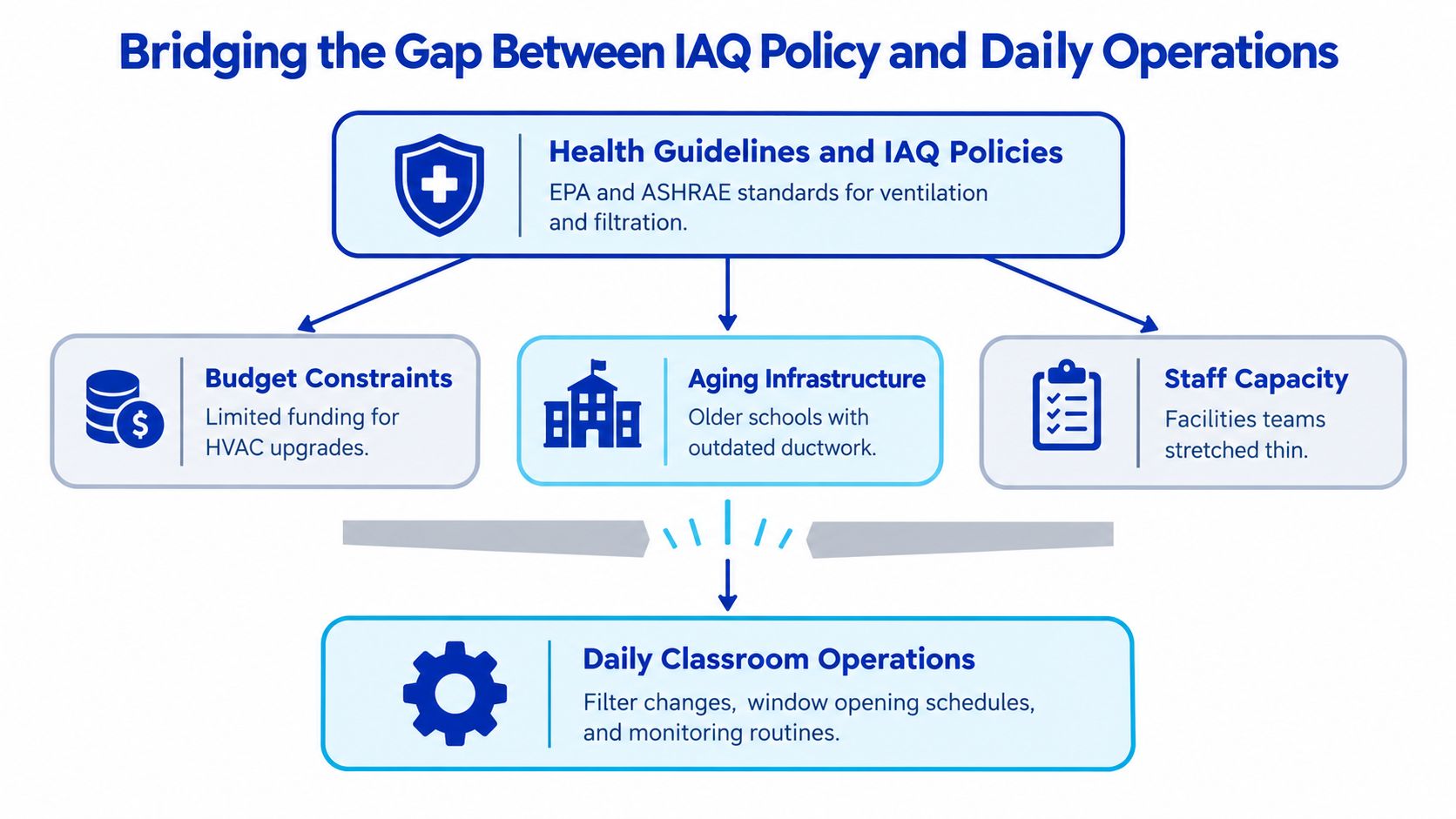
A ventilation standard is useful only when a district can verify performance in occupied spaces. EPA preventive-maintenance guidance states that, under current ASHRAE Standard 62, classrooms should receive about 15 cubic feet per minute of outdoor air per person. EPA's preventive-maintenance guidance provides that benchmark for school IAQ testing and compliance-focused assessments.
The benchmark doesn't eliminate the need for judgment. A classroom may meet a ventilation target during one visit and perform differently during another occupancy pattern, operating schedule, temperature condition, or smoke event. Testing should therefore examine how the system operates in the conditions that matter, not just whether a fan turns on during an inspection.
Policy is broad, operations are local
District policy may say that filters must be maintained, ventilation must operate, and complaints must be addressed. Daily operations require someone to know which filter serves which classroom, whether outside-air dampers are functioning, when windows should remain closed, who reviews sensor alerts, and how staff document unusual conditions.
EPA's Tools for Schools Action Kit includes 11 separate checklists for different stakeholder groups and school functions, including teachers, administrative staff, school nurses, school officials, food service, and integrated pest management. That structure reflects a critical reality. IAQ management is role-specific. A nurse may recognize a recurring complaint pattern, a teacher may notice changes after recess, and a maintenance technician may know that a particular air handler cycles off during occupied hours.
Use testing to establish accountability
A useful district process assigns each observation to an action owner. The facility manager may coordinate the assessment, maintenance staff may verify equipment operation, administrators may control room use, and contractors may provide project documentation. The environmental consultant should define the sampling strategy, interpret results, and state what the data does and doesn't establish.
This approach also helps districts prioritize limited budgets. A measured ventilation shortfall in a heavily occupied classroom may deserve attention before a speculative building-wide upgrade. A moisture finding may justify targeted follow-up rather than generalized air treatment. A pattern of outdoor particle entry may point toward intake management, filtration review, or smoke-response planning.
California compliance has specific deadlines
School districts should also identify applicable state and local requirements before scheduling work. Connecticut, for example, requires an annual IAQ inspection and evaluation in each school building and an HVAC inspection and evaluation once every five years. The annual review may use EPA Tools for Schools checklists, while the five-year HVAC inspection must be performed by a certified professional. Connecticut's school IAQ requirements illustrate how jurisdictions can convert general IAQ expectations into recurring documentation.
Los Angeles districts still need to confirm the requirements that apply to their own buildings, projects, agencies, and funding sources. Professional environmental testing provides the records needed to support that review, but it doesn't replace agency-specific legal advice or engineering design.
Managing Wildfire Smoke and Event-Specific Air Quality Risks
Southern California schools need a smoke protocol that distinguishes clean outdoor air from contaminated outdoor air. Opening windows may support ventilation when outdoor conditions are favorable, but it can increase indoor particle exposure during wildfire smoke or other combustion events. The correct decision depends on measured indoor and outdoor conditions, HVAC capabilities, filtration, occupancy, and the duration of the event.
Wildfire smoke also creates contaminants that ordinary IAQ checks may not capture. Fine particles may enter during the event, while ash, soot, char, smoke residue, and heavy metals can remain on surfaces or in building systems afterward. A post-fire environmental assessment may include combustion byproduct testing, targeted surface sampling, air sampling, material inspection, and laboratory analysis. Testing should define whether the concern is airborne exposure, settled residue, HVAC contamination, or a combination.
Build a response matrix before smoke arrives
A workable protocol gives staff actions tied to measured conditions and building capabilities. It shouldn't rely on a single universal threshold copied from another facility. A district may use continuous sensor data to identify rising indoor particles, then confirm conditions with professional instruments or laboratory sampling when the event, complaint, or building history warrants it.
A response plan should identify:
- Who reviews data: Assign responsibility to a facilities lead or designated incident team.
- Which systems operate: Document HVAC modes, filtration settings, outdoor-air controls, and portable filtration locations.
- When windows stay closed: Include smoke, ash, and other outdoor contamination events.
- How classrooms are prioritized: Give attention to rooms near loading zones, traffic, vulnerable equipment, or known leakage paths.
- When testing escalates: Define triggers for professional inspection, sampling, and laboratory analysis.
- How reopening is documented: Record observations, readings, cleaning status, and any post-event environmental assessment.
A 2025 study summarized by American School and University's wildfire smoke coverage found that in an urban California school district, each 10 µg/m3 increase in PM2.5 exposure was associated with a 5.7% increase in full-day student absences and a 28% increase in office referrals over a three-day window. Those findings don't provide a universal prediction for every school, but they show why districts should treat smoke response as an operational issue involving attendance, behavior, and classroom continuity.
Test after the visible smoke clears
A clear sky doesn't prove that a building has no remaining contamination. Ash and soot can settle in ceiling cavities, mechanical spaces, classrooms, upholstered materials, and ventilation components. Fire residue testing should be based on the suspected pathway and intended use of the space, not on appearance alone.
Districts planning fire-related inspections can review this resource on recovering from LA fires, while keeping the focus on environmental testing and documentation. A positive result doesn't automatically dictate one response. It gives property owners, school officials, engineers, and other qualified professionals information for deciding what further evaluation or work is appropriate.
How Professional Environmental Testing and Assessments Work
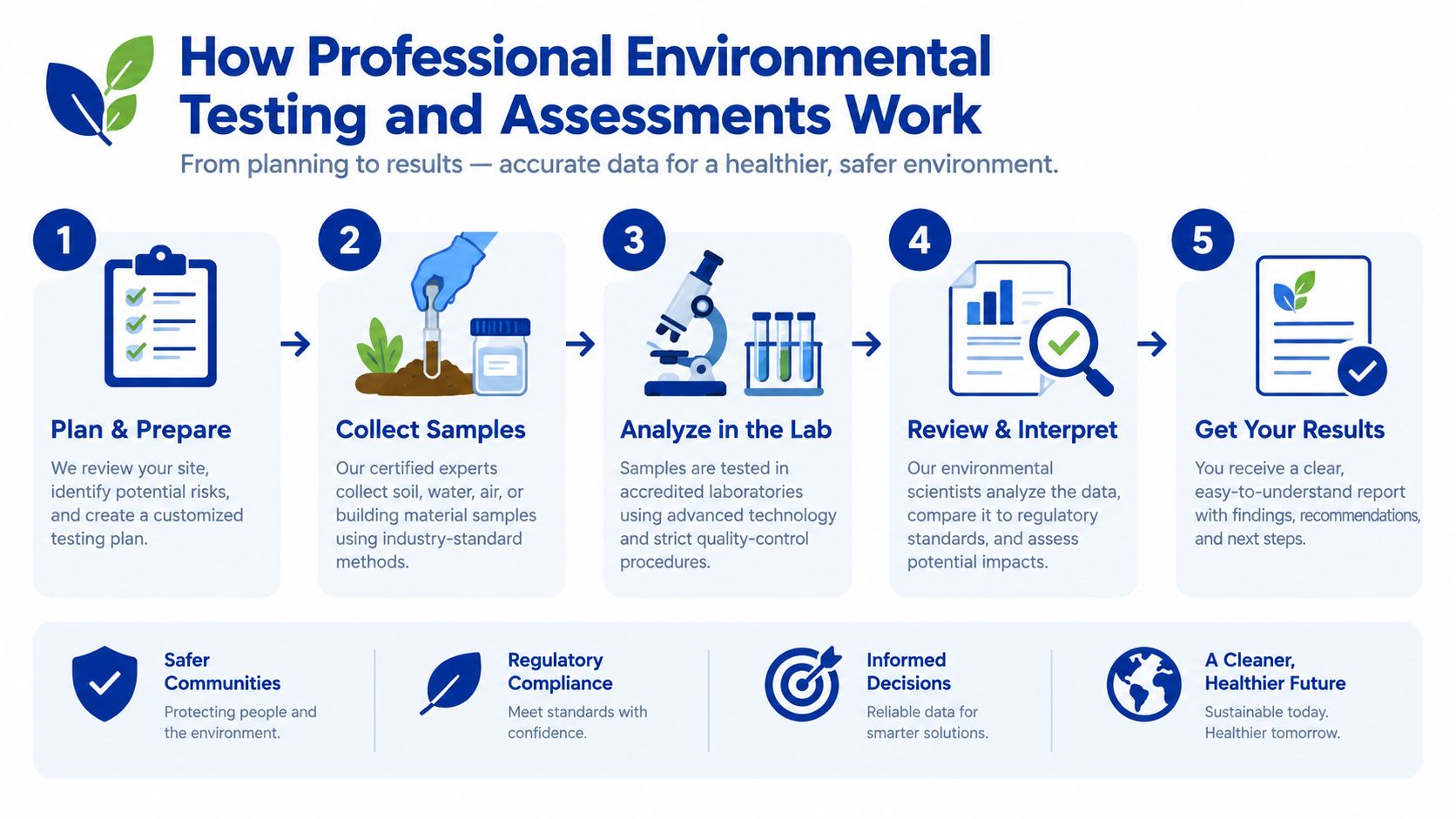
Professional IAQ testing starts with a question. “The room smells odd” isn't enough to select a laboratory method, while “determine whether moisture-related mold growth is present in the first-floor classrooms after a roof leak” gives an investigator a defined scope. The assessment should connect the complaint, building history, inspection observations, sampling locations, analytical method, and reporting objective.
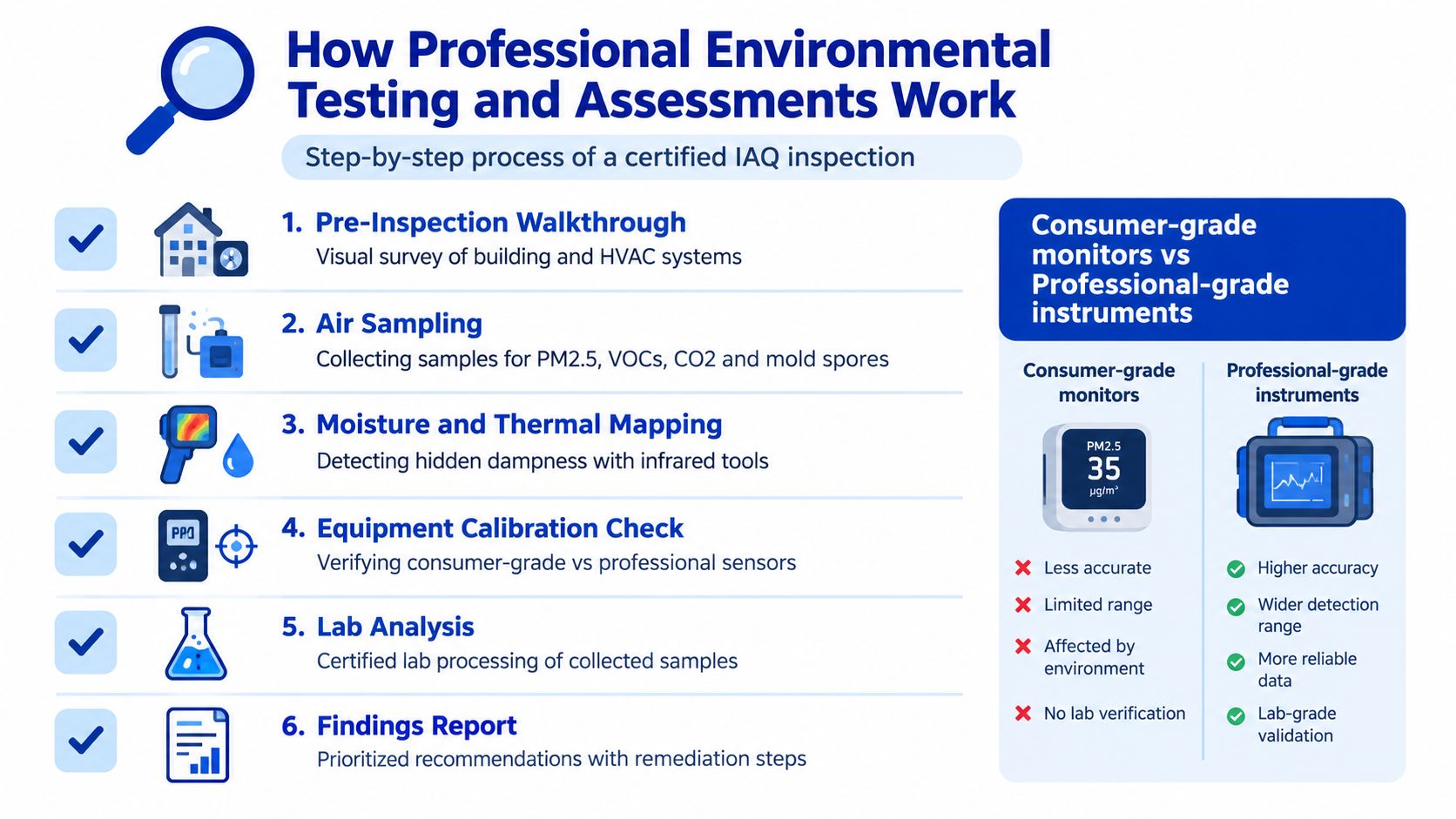
Consumer monitors have a role. They can reveal patterns in CO2, temperature, humidity, or particles and help staff identify when a room behaves differently from nearby rooms. They aren't substitutes for calibrated instruments, controlled sampling, laboratory analysis, or an inspection of the building envelope and HVAC system.
Start with records and a walkthrough
The consultant should review available floor plans, HVAC schedules, maintenance records, prior complaints, renovation history, water events, fire or smoke exposure, and occupancy information. A walkthrough then examines classrooms, mechanical rooms, exterior intakes, roofs, plumbing areas, storage spaces, and other locations relevant to the concern.
This first stage often determines whether sampling is needed and where it will be meaningful. It can also identify obvious operational problems, such as blocked returns, damaged filters, visible moisture, unusual odors near an intake, or differences between classrooms served by separate systems.
Select instruments and samples deliberately
Sampling methods should match the suspected contaminant. IAQ testing may include direct readings for CO2, temperature, humidity, and particulate matter. Depending on the concern, the scope may also include VOC testing, airborne contaminant testing, mold air or surface samples, dust sampling, or combustion byproduct testing.
A professional assessment may involve:
- Pre-inspection review: Define the question, building history, occupants, and decision needed.
- Visual and equipment inspection: Examine moisture conditions, HVAC components, ventilation pathways, and potential sources.
- Instrument measurements: Record conditions across selected rooms and relevant operating periods.
- Physical sampling: Collect air, dust, surface, or material samples using appropriate methods.
- Laboratory analysis: Send samples to a qualified laboratory for the requested analytical work.
- Interpretation and reporting: Explain results, limitations, affected locations, and recommended next steps.
Make the report usable
A laboratory result is only one part of the answer. School officials need to know which room was sampled, what method was used, whether the result relates to an applicable comparison value, and how the finding fits the inspection observations. The report should separate confirmed conditions from assumptions and identify where additional information is needed.
That documentation supports more than complaint response. Districts may use it for project planning, contractor coordination, due diligence, insurance communication, grant applications, capital improvement decisions, and compliance files. For a broader overview of the service, see indoor air quality testing in Los Angeles.
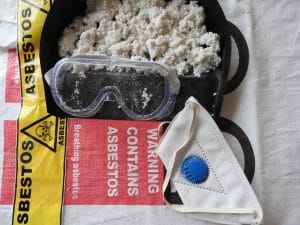
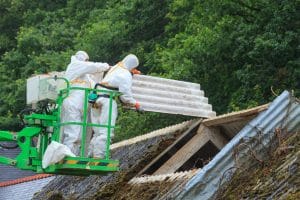
The same disciplined process applies when IAQ concerns overlap with asbestos, lead, or renovation. Pre-renovation and pre-demolition asbestos surveys, SCAQMD Rule 1403 testing, Procedure 5 surveys, Notices to Comply, lead-based paint inspections, and industrial hygiene assessments each require a scope suited to the material and regulatory question. A school shouldn't use a general air reading as a substitute for targeted asbestos or lead testing.
Securing Healthier Learning Environments in Southern California
School districts don't need another broad promise that better air matters. They need a system that tells them which rooms require attention, what evidence supports that conclusion, how conditions change during occupied hours, and what actions can be documented afterward.
The strongest program has three characteristics. It establishes a baseline through professional inspection and testing, uses sensor data to identify recurring or event-specific patterns, and creates clear escalation rules for smoke, moisture, construction, fire residue, and occupant complaints. That combination helps facility managers spend limited resources where the evidence shows a meaningful need.
Build a district testing schedule
A practical schedule should account for building age, renovation plans, known water intrusion, HVAC configuration, nearby traffic or combustion sources, prior fire or smoke exposure, and complaint history. It should also distinguish routine verification from special investigations. A classroom with stable readings and no relevant history doesn't require the same scope as a building with recurring moisture, unexplained odors, or a major renovation planned.
For Southern California districts, the schedule may include:
- Baseline IAQ assessments: Establish room-specific ventilation and environmental conditions.
- Wildfire and fire assessments: Evaluate ash, soot, char, smoke residue, heavy metals, and other combustion byproducts when exposure is suspected.
- Moisture investigations: Inspect for water damage and determine whether mold sampling is appropriate.
- Construction surveys: Complete asbestos and lead evaluations before disturbance of suspect materials.
- Industrial hygiene testing: Address airborne contaminants, dust, VOCs, or task-specific exposures tied to school operations.
- Follow-up verification: Reinspect or resample when the decision requires confirmation of changed conditions.
A documented testing program also gives boards, parents, staff, insurers, and project partners a clearer explanation of how the district manages environmental concerns. For broader context on designing a healthy learning environment for students, facility teams can consider how building conditions and operational practices work together.
The right partner should provide accurate sampling, thorough inspections, appropriate laboratory analysis, and plain-language reporting. Sensitive Environmental serves Los Angeles and Southern California with environmental testing for IAQ, mold, asbestos, lead, commercial properties, industrial hygiene, environmental assessments, fire contamination, and combustion byproducts. The firm's role is to identify and document environmental conditions, not to perform remediation, removal, cleanup, restoration, or abatement.
School districts, facility managers, and contractors can contact Sensitive Environmental to discuss professional IAQ testing, classroom inspections, wildfire smoke assessments, fire residue testing, mold sampling, or related environmental documentation in Los Angeles and Southern California. Request a building-specific scope that connects sensor data, field observations, laboratory analysis, and clear reporting to the decisions your school needs to make.