A small asbestos removal may take only days. For covered demolition or renovation in Los Angeles County, SCAQMD Rule 1403 generally requires notice at least 10 working days before work begins when the project disturbs more than 100 square feet of material containing over 1.0% asbestos. Smaller jobs may fall below those thresholds and outside that notice requirement. Containment, clearance sampling, and waste removal add time after the active work.
A job with three days of physical removal could therefore need about two additional weeks before work starts, followed by more time before the area is cleared for reoccupancy.
So, how long does asbestos abatement take? The answer depends on whether you mean the time crews spend removing material or the full schedule from the initial survey through clearance and waste removal. These are different timelines, and confusing them can lead to renovation delays.
Table of Contents
- The Short Answer and Why Timelines Vary
- Factors That Set the Length of an Abatement Project
- Regulatory Waiting Periods in Los Angeles County
- Phases of an Abatement Project from Survey to Reoccupancy
- Why Clearance Testing Can Extend the Schedule
- Scheduling Tips and Next Steps for Property Owners
The Short Answer and Why Timelines Vary
How long does asbestos abatement take? The answer depends on whether you mean the days crews spend removing material or the full project schedule. A small, accessible job may have a brief removal window, while the elapsed timeline also includes inspection, planning, required notice, containment, cleaning, clearance testing, and waste transport.
For a property manager, keep those two timelines separate. Active removal time is when workers disturb or remove asbestos-containing material. Elapsed project time starts with the survey and planning, then includes any required notice period, site work, clearance, and waste removal. In Los Angeles County, SCAQMD Rule 1403 generally requires notice at least 10 working days before covered demolition or renovation. That lead time comes before the work itself and does not include clearance or waste transport (SCAQMD Rule 1403).
The survey establishes what material is present and what the planned work could affect. Before covered renovation or demolition, the affected structure or portion must be thoroughly inspected, including relevant friable and nonfriable materials (EPA asbestos inspection guidance). A positive result does not, on its own, dictate a single response. It gives the owner and qualified professionals information to assess the material, define the work, and choose appropriate next steps.
Planning rule: Request a schedule from the initial survey through clearance and waste removal. Do not rely only on the number of days crews expect to be on site.
Survey availability, additional sample analysis, project scope, and applicable requirements can all affect the calendar. A short removal estimate covers only that work stage, so it is not a reliable reoccupancy date. Ask the contractor to identify the active removal window and the other milestones that determine when the space can be used again.
Factors That Set the Length of an Abatement Project
A contained area with known materials and straightforward access is easier to schedule than a large, occupied building with multiple work zones. The quantity and condition of asbestos-containing material matter, but so do practical details such as where it is located, how waste can leave the site, and whether people need to continue using nearby spaces.
The material's condition affects the work approach. Friable material, which can be crumbled or reduced to powder by hand pressure when dry, may require more involved controls than nonfriable material. Limited access, such as material in a mechanical space or behind building components, can also add preparation and coordination time. If the building remains occupied, managers may need to plan around tenants, school operations, patient care, or other critical activities.
| Factor | Effect on Schedule |
|---|---|
| Quantity and condition | More material, or material requiring more controlled handling, can extend active work and cleaning. |
| Access and layout | Tight, concealed, or complex work areas can require extra preparation and make removal less direct. |
| Containment needs | Larger or more complicated work areas take more planning and setup before removal starts. |
| Occupancy and operations | Phased work around tenants, students, patients, or business activity can stretch the calendar. |
| Waste volume and hauling | Packaging, transport, and disposal logistics continue after removal work in the area has stopped. |
| Weather and site conditions | Exterior work and unexpected site constraints can affect access and scheduling. |
A documented cleanup at the former Lamme Hospital site in Colorado removed more than 1,500 cubic yards of asbestos-containing material and fire-damaged debris over a three-week project (Colorado Public Radio's report on the Lamme Hospital cleanup). That example shows the scale a substantial cleanup can reach. It isn't a typical duration for every project or a reliable estimate for a different site.
A small, isolated area in a residence may need a short active work period. A school, hospital, or commercial building may require phased work, with access and operations coordinated around the project. That coordination can matter as much as the physical removal.
Regulatory Waiting Periods in Los Angeles County
For a project in the South Coast Air Quality Management District (SCAQMD) jurisdiction, what must happen before asbestos work can start? Covered demolition and renovation generally require notice at least 10 working days before work begins. Rule 1403's applicability depends on the amount of asbestos-containing material, including area, linear footage, and volume thresholds, rather than a single square-foot figure. Check the adopted rule and the applicable district requirements for the project location (SCAQMD Rule 1403).
The notice period is administrative lead time, not the active removal window. Build the project calendar around the full operation, including required notification, removal, clearance sampling, and waste removal. SCAQMD procedures also distinguish emergency work and may require annual updates for work that continues across years. The adopted Rule 1403 text for the Antelope Valley Air Quality Management District sets out that district's separate requirements (Antelope Valley Air Quality Management District's Rule 1403 document). Confirm jurisdiction before applying a notice schedule, since SCAQMD does not cover all of Los Angeles County.
In SCAQMD's jurisdiction, damaged or disturbed asbestos-containing material may require another approval step. Procedure 5 requires a cleanup plan for such material, regardless of project size. Work must wait for written approval from SCAQMD staff, and the submission includes a site survey, sampling, and laboratory documentation (SCAQMD compliance advisory on Procedure 5). Allow for lab reporting and agency review when setting the start date. A contractor's availability alone does not mean the site is ready for work.
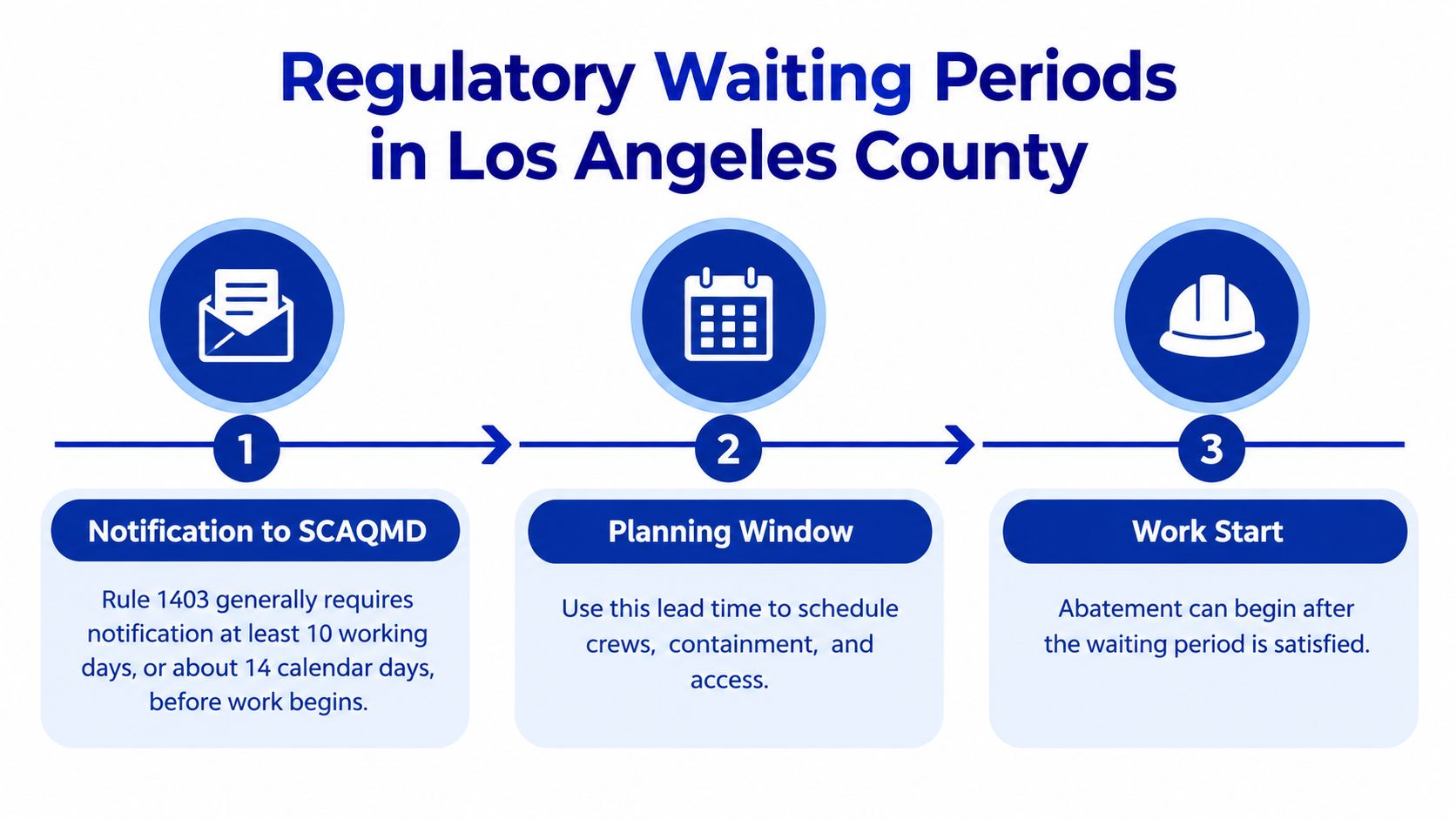
Use the waiting period to coordinate site access, crews, and containment planning. For commercial property managers, asbestos management and compliance planning for Los Angeles commercial buildings can help identify documentation and scheduling questions to resolve before mobilization.
Phases of an Abatement Project from Survey to Reoccupancy
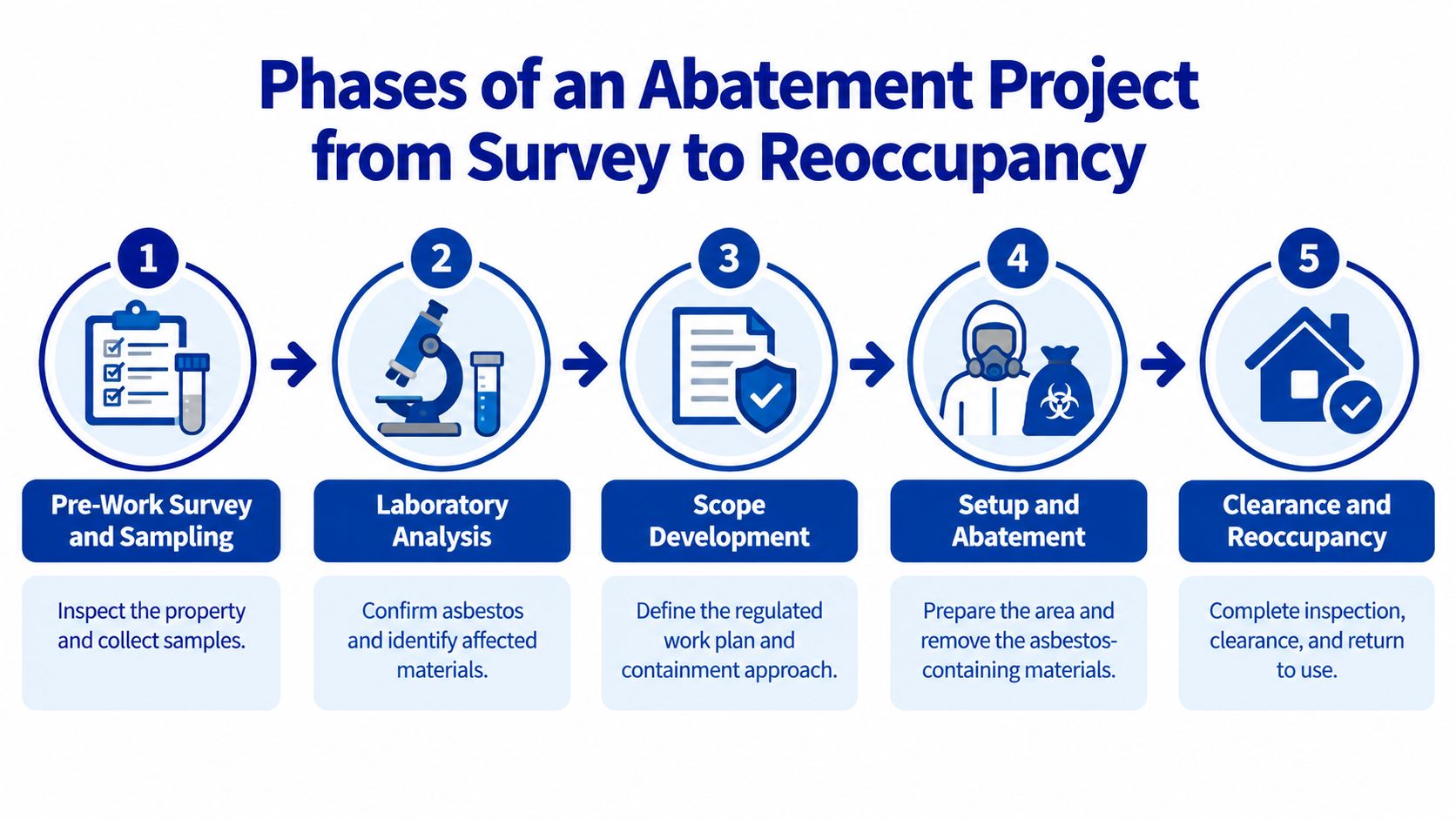
A realistic calendar separates the active removal window from the full project timeline. Survey, required notices or approvals, preparation, removal, cleaning, clearance, and waste hauling each take time. Some tasks can overlap, but work cannot start until applicable requirements are met, and the property cannot be released until clearance is complete.
For a renovation, the surveyor inspects areas affected by the planned work and collects representative samples when needed. Laboratory results help identify materials and define the work scope. Incomplete or unrepresentative sampling may require more investigation before the project proceeds. Proper collection and traceable field records support reliable decisions (EPA sampling documentation).
After the scope is established, the team coordinates required notifications and approvals. While those steps are underway, managers can arrange access and contractors can plan containment around confirmed materials. Physical disturbance must wait until applicable requirements are satisfied.
Preparing the work area
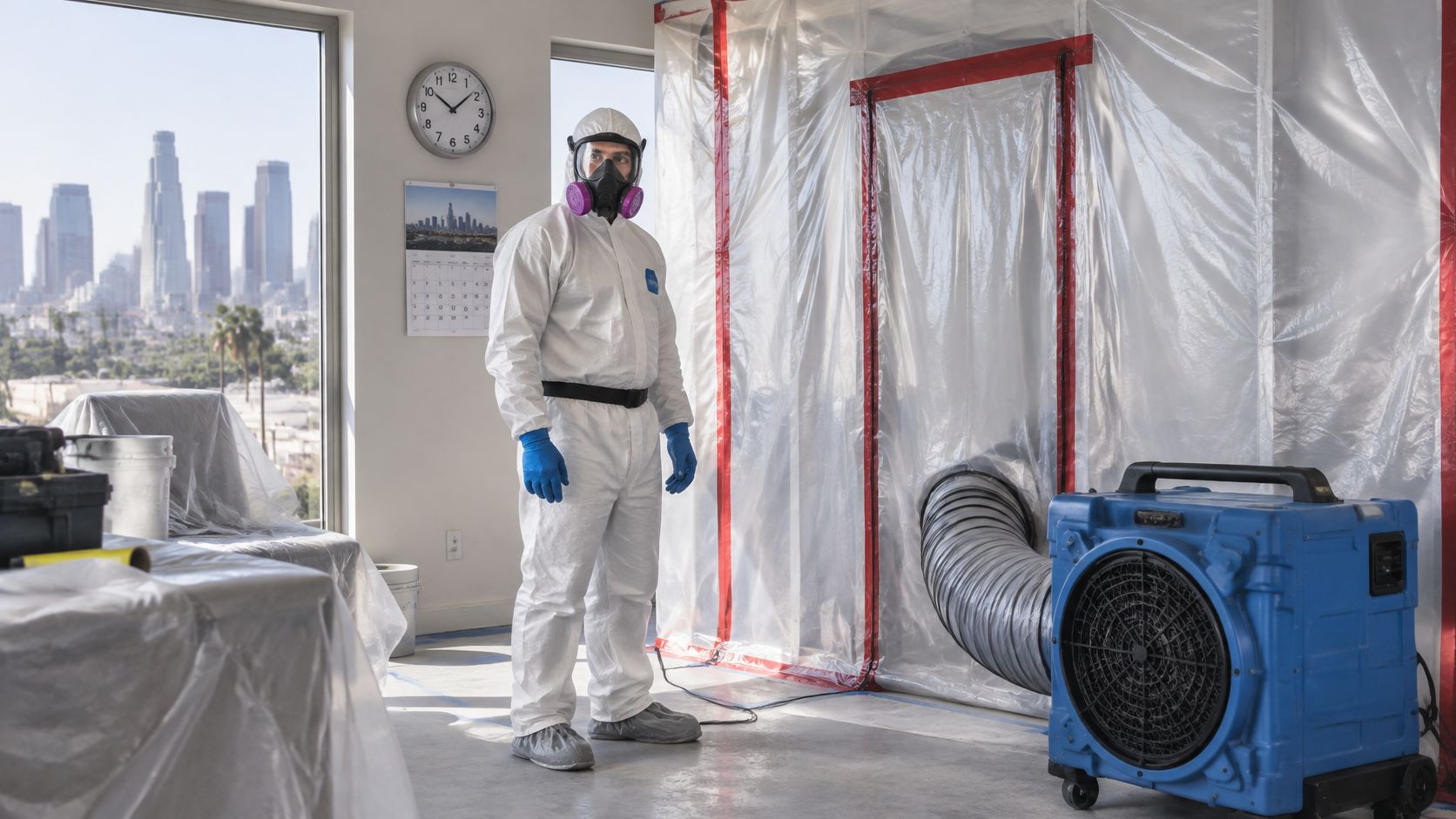
Before removal, the crew isolates the regulated area. Preparation may include sealing HVAC openings and other penetrations, installing impermeable containment, setting up decontamination units, and using HEPA-filtered negative air to limit fiber migration. EPA project documentation describes these as distinct preparation, removal, and decontamination stages. Measures include sealed openings, plastic sheeting, negative-pressure filtration, and separate facilities for personnel and waste handling (EPA asbestos project documentation).
Removal and setup are separate parts of the schedule. For a small work area, removal may take less time than preparation and closeout. The crew packages material for transport and disposal, and waste hauling should be coordinated as part of the project, not left until after the work area is finished.
Cleaning, inspection, and release
After removal, the crew cleans the area and completes a visual inspection. The area must be cleaned at least twice, pass visual inspection, and pass airborne-asbestos testing before release. Applicable EPA guidance specifies that clearance sampling begins once the site is dry, 24 hours after cleaning (EPA asbestos project documentation).
Reoccupancy therefore follows cleaning, drying, inspection, sampling, analysis, and any needed corrections. The removal window alone does not capture the elapsed project timeline. For a plain-language guide to asbestos removal and its testing requirements, see what property owners need to know about asbestos work.
Why Clearance Testing Can Extend the Schedule
A clean-looking work area still needs formal clearance before it can be released. Clearance testing uses air samples after final cleaning to assess airborne asbestos. Under the AHERA TEM protocol, crews collect at least five samples inside the abatement area and five outside. A statistical Z-test compares the results, and the site passes when the Z statistic is no greater than 1.65.
Sampling can occupy much of a working day. An EPA assessment reported sampling periods ranging from 5.1 to 18.6 hours, with an average of 9.8 hours (EPA assessment of asbestos removal air sampling). That is active sampling time, separate from the elapsed schedule for cleaning, drying, laboratory analysis, and acceptance of results. Property managers should therefore distinguish the removal window from the full time until reoccupancy.
A fast removal followed by a failed clearance result can take longer than a carefully prepared project that passes on the first sampling cycle.
A failed result means another round of cleaning and sampling, not just a short wait. Poor cleaning, sampling before the area is dry, or unsealed barriers and HVAC penetrations can delay release. The project calendar needs room for that possibility.
Visual inspection remains part of closeout, but it does not replace required air monitoring. DIY air tests also cannot substitute for a professional clearance protocol. Sample collection, site conditions, and the analytical method all affect how results should be interpreted. Professionals who assess air quality in commercial spaces use sampling to support decisions that appearance alone cannot settle.
Scheduling Tips and Next Steps for Property Owners
A realistic schedule starts with reliable information, not a removal estimate made before anyone has inspected the affected area. For renovation and demolition projects, the asbestos inspection needs to account for relevant materials that may be disturbed, not just visibly damaged surfaces. In Southern California, Rule 1403 also calls for a thorough survey of affected facility components before demolition or renovation (SCAQMD Rule 1403).
Use this checklist when setting dates with contractors and building occupants:
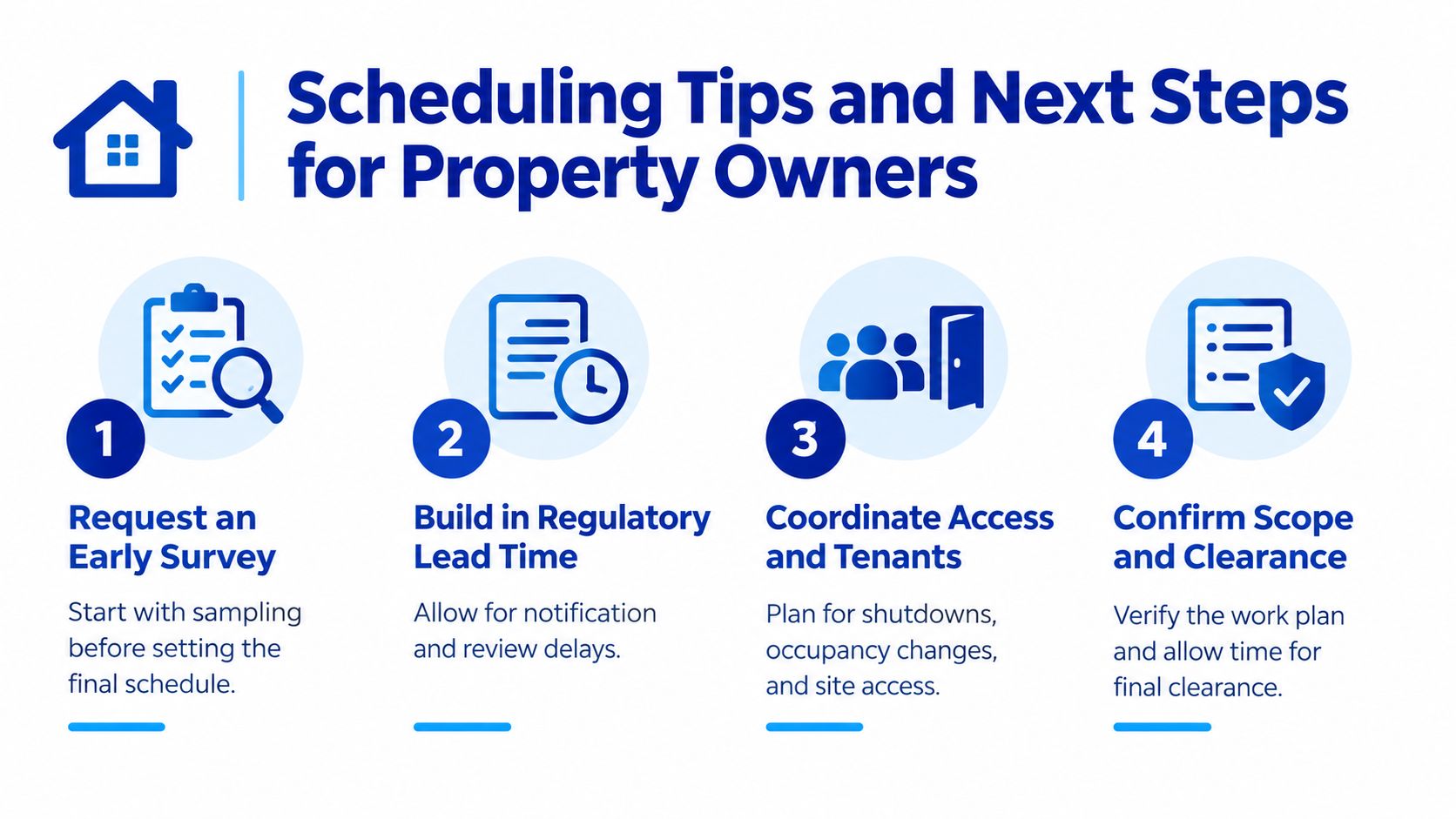
- Book the survey early. Arrange inspection and sampling before finalizing the renovation or demolition calendar.
- Allow for regulatory lead time. Build notification and any required agency review into the schedule before physical work.
- Confirm the scope before mobilization. Check that the work plan reflects the survey findings, access requirements, and affected areas.
- Reserve time for closeout. Include cleaning, drying, visual inspection, clearance sampling, laboratory analysis, and waste transport.
- Plan for changes. Keep contingency time for hidden materials, scope revisions, or a failed clearance that requires another cleaning and sampling cycle.
DIY assessment isn't a sound basis for regulated work. Property owners may notice suspect material, but professional inspection and laboratory-backed sampling provide documented information for planning and compliance. A qualified environmental testing consultant can inspect the property, collect samples using appropriate methods, coordinate laboratory analysis, and report findings clearly. Those records help owners and contractors decide what steps are appropriate, without treating a positive result as an automatic instruction to remove material.
For commercial renovation planning, this guide to asbestos testing before a Los Angeles renovation project offers useful context on why testing and documentation belong early in the schedule. Start with a survey, confirm what the results mean for the planned work, and then set dates around the actual regulatory and clearance requirements.
For a Los Angeles County or Southern California renovation or demolition project, contact Sensitive Environmental to schedule a professional pre-renovation or pre-demolition asbestos survey, sampling, and laboratory analysis. Visit Sensitive Environmental to discuss the property and build a project calendar from documented findings rather than estimates.