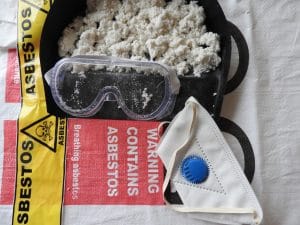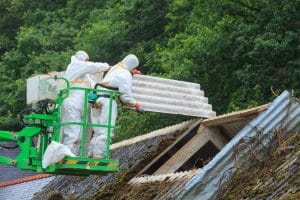

You might be dealing with a house that looked straightforward when you bought it. Then the kitchen remodel starts, a ceiling texture raises questions, or winter rain leaves a musty smell near a wall that seemed fine last month. In Los Angeles and Southern California, that's usually the moment people realize an environmental health inspection isn't one single thing. Its scope changes with the building's age, the work you're planning, and whether the property has already been through water damage, smoke exposure, or demolition prep.
That shift matters. A prewar duplex in Mid-City, a retail suite in Venice, and a post-fire hillside home near Pacific Palisades do not need the same testing plan. The right inspection is a targeted diagnostic process that helps owners, managers, contractors, and design teams understand what's present, what might be disturbed, and what kind of documentation they need before making the next decision.
Table of Contents
- What an Environmental Health Inspection Actually Covers
- The Core Purpose Behind an Environmental Health Inspection
- Common Hazards Assessed in Los Angeles Properties
- How the Inspection and Testing Process Works
- Standards and Compliance Triggers in California
- Professional Environmental Testing Versus DIY Kits
- Tailored Inspections for Homes and Commercial Properties
- Reading Your Results and Taking the Next Step
What an Environmental Health Inspection Actually Covers
A first-time homeowner often expects an environmental health inspection to work like a standard home inspection. It doesn't. A home inspector might flag stains, cracking, or damaged finishes. An environmental health inspection asks a different question: what in the air, materials, moisture path, or building condition could affect occupants or workers, and what should be tested to confirm it?
A mechanic who runs diagnostics instead of just kicking the tires. The point isn't to guess. The point is to identify likely hazard pathways, choose the right samples, and turn visible clues into documented findings through environmental testing services.
Four buckets most inspections evaluate
The scope usually falls into four practical categories:
- Indoor air conditions: This can include airborne particulates, combustion byproducts, ventilation concerns, odor sources, and in some cases VOC screening or targeted indoor air quality testing.
- Bulk materials: These are the materials that may need to be sampled directly, such as drywall, joint compound, insulation, floor tile, mastic, ceiling texture, paint, or debris left after a fire.
- Water and moisture pathways: Inspectors look for roof leaks, plumbing failures, drainage problems, condensation, crawlspace humidity, and hidden dampness that can support mold growth.
- Building condition clues: Deterioration often tells a story. Peeling paint, damaged pipe insulation, stained baseboards, warped cabinets, charred framing, and dust in supply registers can all point to what should be sampled.
An Echo Park bungalow built in the late 1940s may need lead testing, asbestos survey work before renovation, and moisture-related mold investigation after an old leak. A newer condo may have no asbestos concern at all, but could still need IAQ testing if new finishes are off-gassing or if combustion gases are entering from an attached garage.
Practical rule: The same room can trigger different inspection scopes depending on what happened there. A bathroom with a leak needs moisture and mold evaluation. That same bathroom, if it's being renovated, may also require lead or asbestos testing before materials are disturbed.
Why the scope changes so much
Three factors usually drive the testing plan:
- Property age
- Planned work
- Prior events such as water intrusion, smoke, or fire
That's why a broad phrase like “environmental inspection” can mislead people. In practice, the work often means asbestos testing Los Angeles contractors need before demolition, mold testing Los Angeles owners need after water damage, lead testing Los Angeles property managers need for older housing, or wildfire contamination testing after smoke and ash move through a structure.
The Core Purpose Behind an Environmental Health Inspection
People sometimes assume an inspection exists to “find something wrong.” A better way to view it is this: it reduces uncertainty. It gives you evidence you can use before opening walls, signing off on repairs, moving tenants back in, or closing escrow.
At the public-health level, the reason these systems exist is large. The World Health Organization reported that 13.7 million deaths in 2016, or 24% of all global deaths, were attributable to modifiable environmental risks, and 28% of deaths among children under five were linked to those risks according to the WHO environmental health framework. That doesn't mean every property issue becomes a health emergency. It does explain why inspection programs focus on air, water, sanitation, chemicals, and building conditions.
What the inspection is trying to answer
For an owner or manager, the purpose is usually more concrete:
- Health protection: Are people likely to contact, inhale, or disturb a contaminant?
- Project planning: Can renovation move forward, or do materials need to be tested first?
- Documentation: What record exists for lenders, buyers, insurers, architects, or contractors?
- Baseline or post-work verification: What was present before work, and what conditions exist after it?
Take a common Los Angeles remodel example. A homeowner wants to update a kitchen in an older house. Before the first cabinet comes off the wall, they may need answers to practical questions such as whether the ceiling texture contains asbestos, whether older painted trim contains lead, or whether an old leak behind the sink left concealed mold growth.
Inspection as a decision tool
An environmental health inspection works best when you treat it as a decision-support tool, not a verdict machine. A positive lab result doesn't automatically tell you to tear everything out. It tells you what material or condition is present so qualified professionals can determine the right next step for that specific property and project.
Good testing removes guesswork from planning. It helps owners budget, sequence trades, and avoid disturbing a hazard by accident.
That's especially useful in older Los Angeles housing stock, where one room may contain original materials, later remodel layers, and signs of past moisture events all at once.
Common Hazards Assessed in Los Angeles Properties
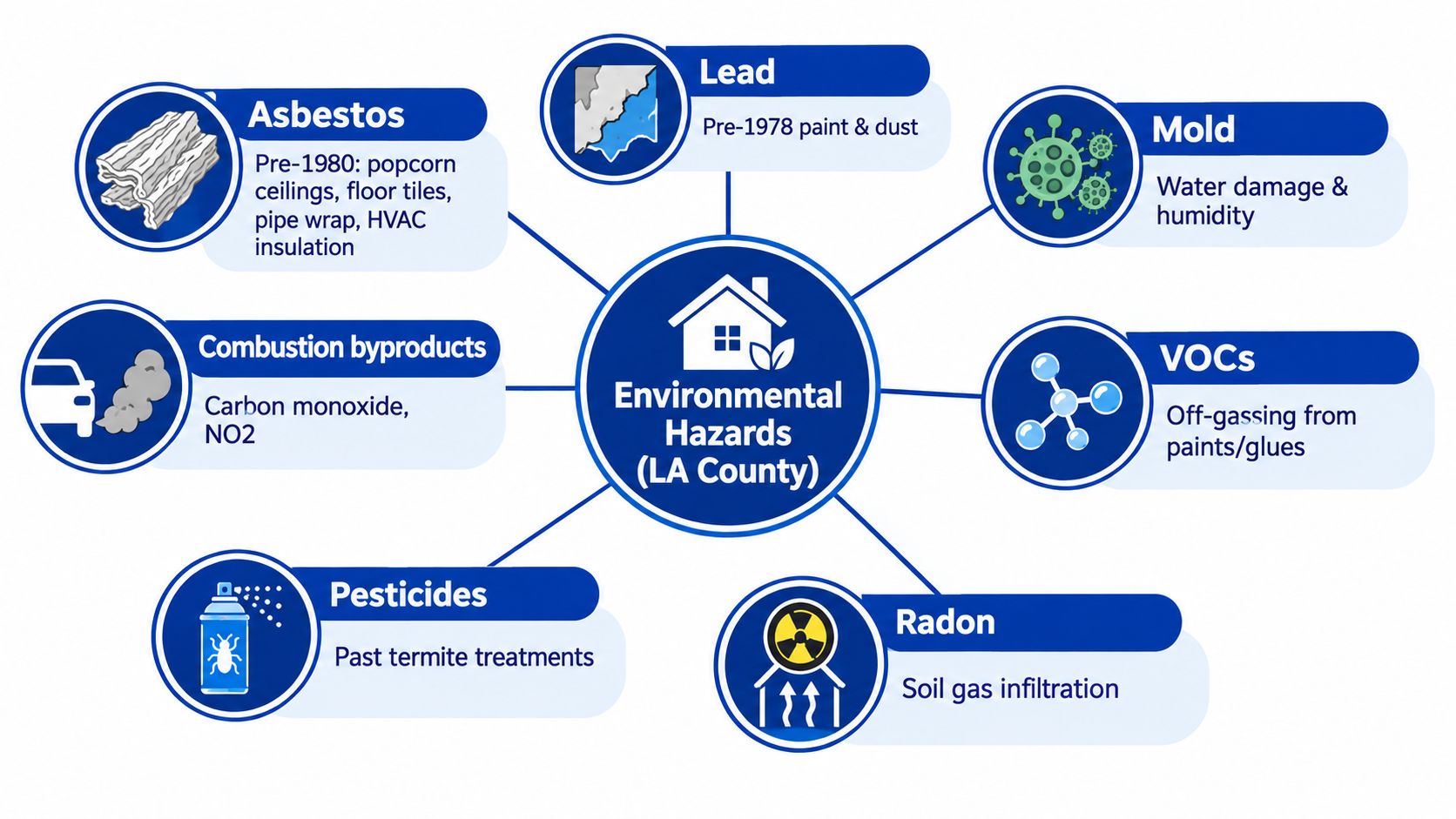
Los Angeles properties rarely present just one environmental question. Older materials, renovation cycles, wildfire exposure, dense traffic corridors, and seasonal moisture patterns create overlapping concerns.
Older building materials
A 1960s bungalow in Silver Lake often raises asbestos and lead questions before any renovation begins. Suspect asbestos-containing materials can include popcorn ceiling texture, old floor tile, mastic, pipe insulation, furnace-area materials, and some wall systems. Lead concerns commonly center on older painted windows, trim, doors, and accumulated dust created when surfaces deteriorate or are sanded during prep work.
For Los Angeles-area demolition and renovation work, South Coast AQMD Rule 1403 makes the survey step a hard trigger. The rule requires an asbestos survey before demolition or renovation, and the survey must include inspection, identification, and quantification of friable asbestos plus Class I and Class II nonfriable asbestos-containing material, with physical sampling where needed, according to the South Coast AQMD Rule 1403 FAQ.
Moisture, mold, and hidden growth
Southern California isn't humid year-round, but that doesn't prevent mold problems. Roof leaks during winter storms, slab-edge moisture, bathroom exhaust failures, plumbing leaks inside walls, and crawlspace dampness all create conditions that support growth. Coastal and marine-layer conditions can also keep affected materials from drying properly.
The confusing part is that many people expect a single “safe” mold number. The CDC says there are no health-based standards for mold or other biological agents in indoor air, so inspections focus on moisture source identification, visible damage, material condition, and whether contamination was properly removed or cleaned, as explained in the CDC mold testing and remediation guidance.
Air quality and combustion concerns
Indoor air quality testing Los Angeles owners request often goes beyond mold. Common triggers include:
- VOC concerns: New cabinets, flooring adhesives, coatings, sealants, and paints can create odors or occupant complaints.
- Combustion byproducts: Attached garages, backdrafting appliances, or poorly vented equipment can affect indoor air.
- Dust and particulates: Renovation dust, degraded HVAC systems, or post-event debris can justify targeted sampling.
Fire and wildfire-related contamination
Post-fire properties need a different lens. A Pacific Palisades home affected by wildfire smoke may require testing for ash, soot, char, smoke residue, heavy metals, and combustion byproducts across interior surfaces and HVAC pathways. Burned building materials can also reintroduce asbestos or lead concerns if damaged debris moved through the structure.
After a fire, residue isn't only what you can see on counters or floors. Fine particulate and combustion byproducts often settle inside returns, ducts, soft goods, and porous finishes.
That's why post-fire environmental assessments usually layer multiple testing questions instead of relying on one visual inspection alone.
How the Inspection and Testing Process Works
The logistics of environmental health inspection often cause more concern than the testing itself. People want to know what happens on site, what gets sampled, and what comes back in the report.
The scoping call and site walk
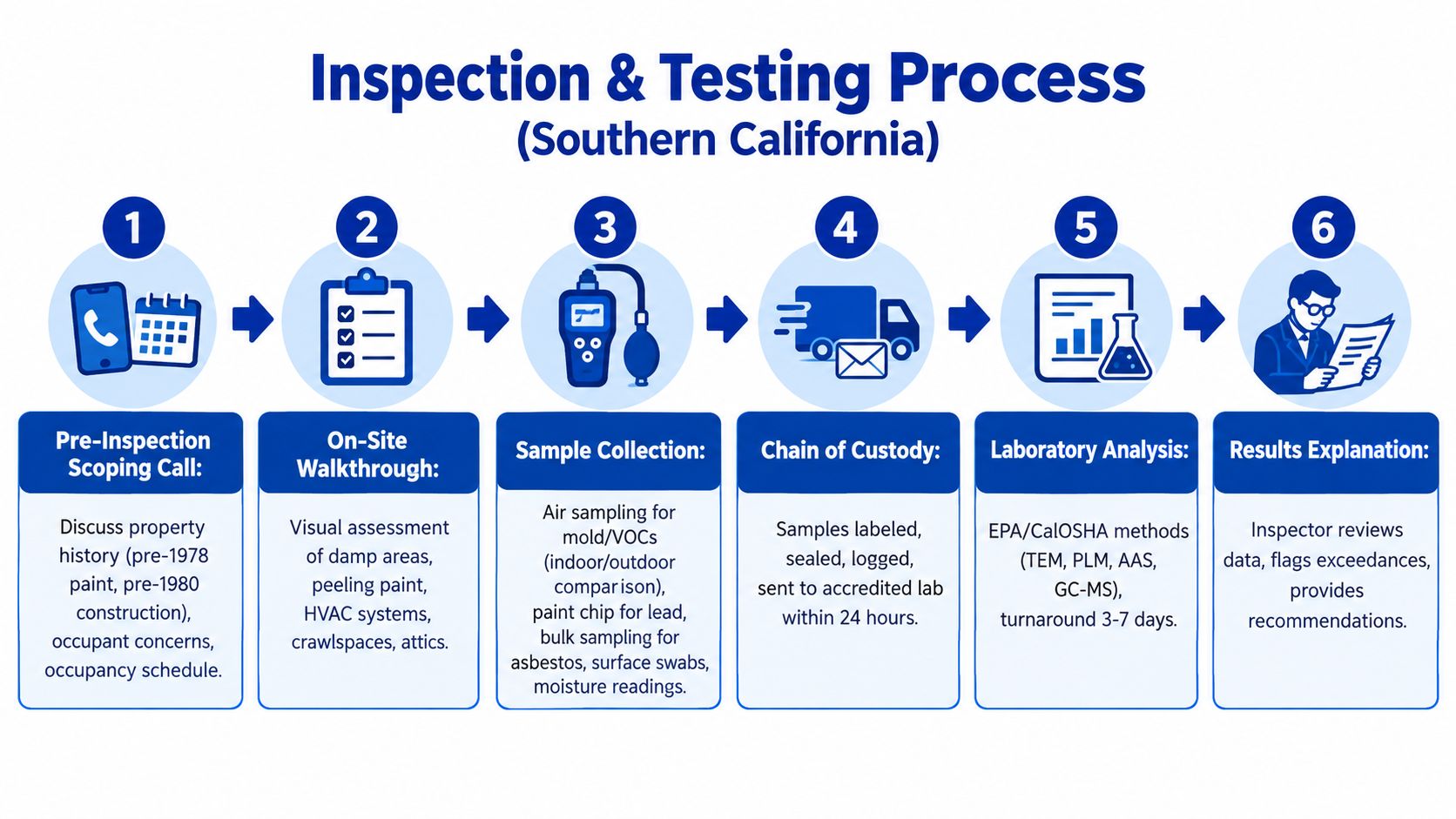
A proper inspection usually starts before anyone arrives. During the scoping call, the consultant asks about property age, planned work, leak history, odors, visible staining, prior repairs, or fire exposure. That conversation helps shape the field visit so sampling matches the actual decision you need to make.
On site, the walkthrough is part visual assessment and part investigative screening. The inspector looks for suspect materials, moisture pathways, damaged finishes, ventilation issues, and areas where occupants or workers are likely to disturb materials. In an older duplex, that might mean checking ceiling textures, flooring layers, bathroom wall assemblies, attic insulation transitions, and crawlspace conditions.
Common sampling methods
Sampling depends on the concern. A few common examples help:
- Bulk sampling: Small material samples taken from suspect asbestos materials, damaged building components, or fire residue.
- Air sampling: Used for certain asbestos clearance questions, IAQ investigations, or mold comparison work.
- Dust or wipe sampling: Often used in lead investigations and some post-fire surface assessments.
- Moisture mapping and thermal imaging: Used to locate hidden dampness behind finishes so sampling is directed, not random.
For asbestos clearance and post-abatement verification, EPA guidance requires an equal number of indoor and outdoor air samples, with a minimum of five samples inside the work area and five outside. One EPA guidance document also specifies drawing at least 3,000 liters of air per filter at 2 to 12 liters per minute, according to the EPA asbestos guidance document. That's a good example of why professional sampling design matters. The method itself affects how reliable the comparison is.
Laboratory analysis and reporting
After collection, samples are labeled, logged, and sent under chain-of-custody procedures to a laboratory. The lab identifies what is or isn't present in the submitted samples. The consultant then places those findings back into the building context.
If you want a simple consumer-facing overview of how mold investigations are generally explained, the Eagle Restoration mold guide offers a useful comparison point. For Southern California properties that need project-specific documentation, mold testing in Los Angeles usually involves a narrower question set tied to moisture origin, occupancy, and next-step decisions.
Reports commonly include photos, sample locations, lab certificates, observations, and recommendations about whether additional testing, project controls, or follow-up verification should be considered.
Standards and Compliance Triggers in California
California rules matter most when you translate them into trigger events. Owners usually don't need a legal lecture. They need to know when a rule starts applying to their building and project.
The trigger is often the work itself
In Southern California, one of the clearest examples is asbestos survey work before demolition or renovation. For Los Angeles-area asbestos compliance, AQMD says a prior asbestos survey must be performed by a Cal/OSHA Certified Asbestos Consultant for demolition, and the report must document all construction materials that may be disturbed, including foundations, underground utilities, and inaccessible or hidden materials, according to the AQMD asbestos survey requirements page. The same guidance says the report must identify ACM to be disturbed, describe condition, determine friability, and include recommendations when contamination is present.
Lead has a different trigger. EPA's lead Renovation, Repair and Painting framework says that if a home or child-occupied facility was built before 1978, affected surfaces in a covered renovation must either be tested for lead-based paint or presumed to contain it. EPA also allows a firm to avoid that assumption only if testing or determination shows coatings are free of lead at or above 1.0 mg/cm2 or 0.5% by weight, as stated in the EPA RRP framework document.
Key California Compliance Triggers for Environmental Inspections
| Regulation | Trigger Event | Applies To |
|---|---|---|
| South Coast AQMD Rule 1403 | Demolition or renovation that may disturb suspect asbestos-containing materials | Older structures and projects in the South Coast AQMD jurisdiction |
| AQMD demolition survey requirements | Demolition planning in the Los Angeles area | Owners, contractors, developers, property managers |
| EPA RRP framework | Renovation affecting painted surfaces in pre-1978 housing or child-occupied facilities | Owners, contractors, renovators, managers |
| Mold guidance and moisture investigations | Visible growth, persistent odors, leaks, or water-damage conditions | Homes, multifamily, schools, offices, healthcare spaces |
| Post-fire environmental assessment needs | Fire, smoke, or ash intrusion affecting interiors or HVAC systems | Homes, apartments, commercial and institutional buildings |
Capacity and record access can affect outcomes
There's another layer people rarely consider. Inspection quality doesn't depend only on the contaminant. It also depends on staffing, data systems, and public record access. In the United States, EPA's enforcement and compliance infrastructure provides inspection, violation, and enforcement data for more than 800,000 regulated facilities through ECHO, and the National Environmental Public Health Tracking Program, established in 2002, has informed over 500 public health actions in communities across the country, according to EPA enforcement data and results.
At the local level, access can be less straightforward. Los Angeles County's public portal says restaurant and food market inspection reports from on or after August 25, 2025 must be requested through a CPRA request, even though other inspection data remain searchable online, as noted on the Los Angeles County records policy page. For property owners, that's a reminder that documentation trails may be fragmented, delayed, or split across agencies.
Professional Environmental Testing Versus DIY Kits
DIY kits appeal to people for obvious reasons. They're easy to order, they feel fast, and they seem cheaper at the start. The problem is that most environmental questions aren't just about whether one swab or cassette picked something up. They're about whether the sample answered the right question in the first place.
What professionals add that kits don't
A consultant doesn't just collect a sample. The consultant decides where to sample, what method fits the concern, whether comparison samples are needed, and how building history changes interpretation. That matters in Los Angeles properties where old materials, renovations, and prior leaks often overlap.
A raw result without context can push people in the wrong direction. The sample location, material type, and reason for testing often matter as much as the lab finding.
Professional Testing vs DIY Kits
| Factor | Professional Testing | DIY Kits |
|---|---|---|
| Sampling design | Based on property age, work scope, moisture path, occupancy, and suspect materials | Usually limited to one surface, room, or simple mail-in sample |
| Equipment and handling | Uses field methods, documented sample locations, and chain of custody | Often relies on user collection with little control over method |
| Interpretation | Results are tied to renovation plans, disclosure needs, and next-step decisions | Results may be hard to interpret without site context |
| Documentation | Commonly suitable for contractors, managers, transactions, or compliance files | Often not enough for formal project or regulatory use |
| Multi-hazard assessment | Can evaluate asbestos, lead, mold, IAQ, and fire residue together | Usually tests only one narrow issue |
A homeowner mold kit is a good example. If you only swab a visible area, you may confirm that mold exists on that surface. You still won't know why it's there, how far moisture spread, whether hidden materials are affected, or whether the sample point represented the problem. For a deeper explanation of those limitations, this article on whether home mold test kits are reliable is worth reviewing.
Tailored Inspections for Homes and Commercial Properties
The framework stays consistent. Air, materials, moisture, and building condition. What changes is the emphasis.
Four Southern California examples
A 1920s Echo Park Craftsman often needs an inspection built around age-related materials. The main concerns may be asbestos in pipe wrap or ceiling finishes, lead-based paint on trim and windows, and concealed mold under bathrooms or near crawlspace vents.
A Koreatown duplex under renovation adds shared-wall and tenant-exposure questions. Here the consultant may focus more on pre-renovation asbestos testing, lead documentation, dust pathways, and how work in one unit could affect the adjacent side.
A Venice retail space shifts attention toward commercial environmental testing and industrial hygiene thinking. Ventilation performance, customer-facing odors, employee IAQ complaints, and documentation for landlords or build-out teams may take priority over older residential paint concerns.
A Pasadena apartment property after a fire event needs broader post-fire environmental testing. The scope may include ash and soot testing, HVAC residue assessment, combustion byproduct screening, and targeted sampling of damaged materials to determine what contaminants were distributed through occupied areas.
Inspection Scope by Property Type in Southern California
| Property Type | Primary Hazards | Sample Intensity |
|---|---|---|
| Older single-family home | Asbestos, lead, moisture-related mold | Focused room-by-room sampling tied to age and planned work |
| Multifamily building | Shared air pathways, recurring leaks, renovation dust, lead, asbestos | Broader sampling across units and common areas when conditions overlap |
| Commercial suite | IAQ complaints, VOCs, ventilation, regulated materials during tenant improvements | More documentation-driven, often tied to occupancy and project planning |
| Post-fire property | Ash, soot, char, smoke residue, heavy metals, damaged suspect materials | Layered assessment across surfaces, air pathways, and HVAC systems |
The same property can also move from one inspection type to another over time. A landlord may start with water-damage-related mold testing, then later need a pre-demolition asbestos survey before reconstruction, then post-work clearance or IAQ verification after the project closes out.
Reading Your Results and Taking the Next Step
A report is useful only if you can read it as a decision document. Start with the basics: sample IDs, locations, chain-of-custody confirmation, and what each sample type was meant to answer. Then look at the interpretation section, which should explain what the findings mean for your building use, planned work, or follow-up questions.
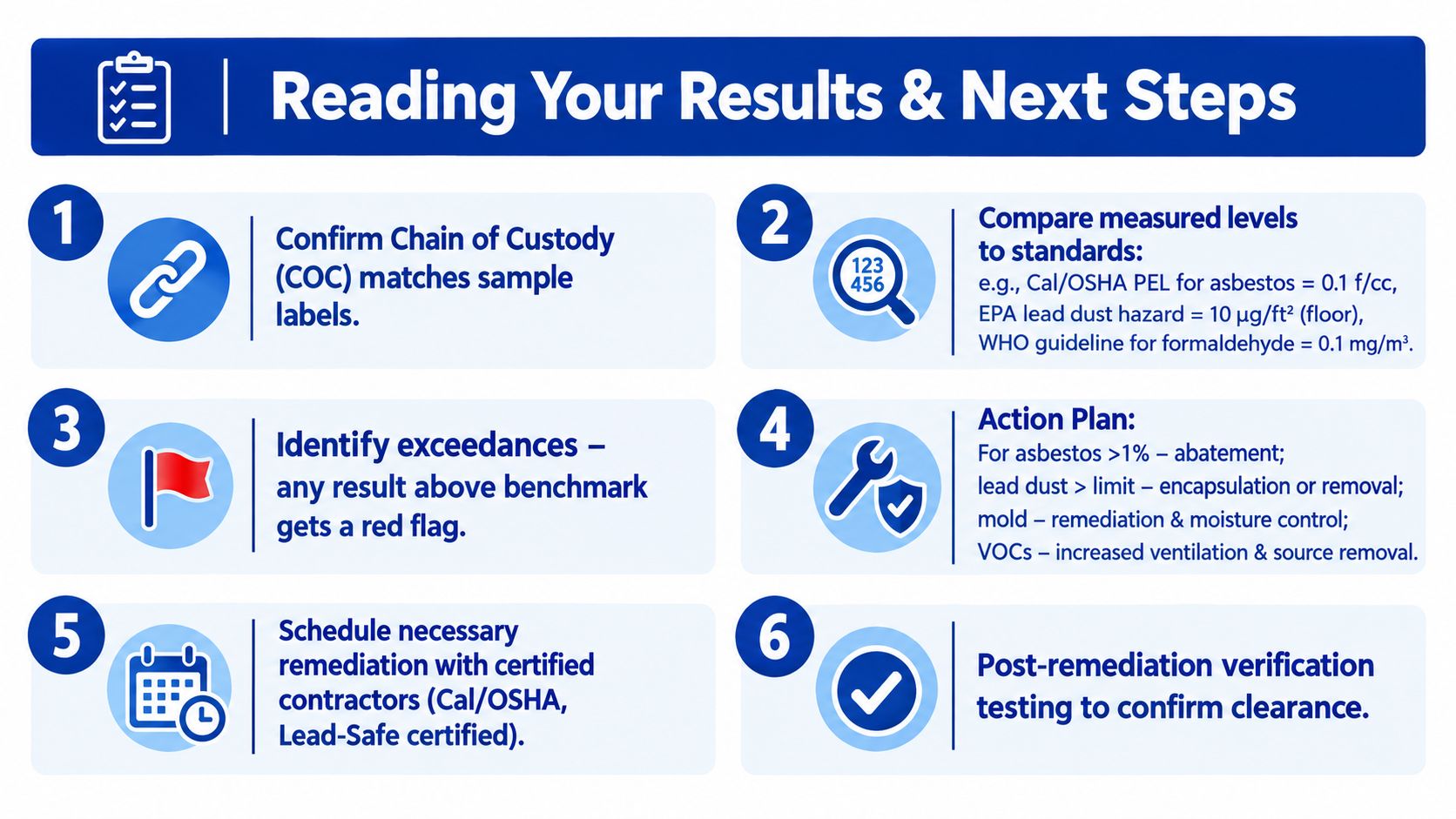
EPA also notes that if lead testing is used, a negative result from an EPA-recognized lead test kit can reliably show regulated lead-based paint is not present when used by a trained professional, and a firm may either presume lead is present and follow RRP requirements or test first and comply only if lead-based paint is found, according to the EPA lead renovation guidance. That kind of result changes workflow. It tells you whether you're on a lead-safe work path or a lead-free path for the affected components.
If you're used to reading other property-condition documents, this guide to interpreting WDI inspection reports is a helpful reminder that environmental findings, like termite findings, need context and plain-language explanation. Lab numbers alone aren't a plan. The next step might be more targeted testing, controlled work practices, follow-up verification, or documentation for escrow, insurance, or contractors.
Sensitive Environmental provides asbestos testing, asbestos surveys, lead testing, mold inspections, indoor air quality testing, post-fire residue testing, and other environmental testing services for homes and commercial properties throughout Los Angeles and Southern California. If your property's age, planned renovation, water damage, or fire exposure has changed what kind of inspection you need, contact Sensitive Environmental to discuss a testing scope that fits the actual building and decision in front of you.