Asbestos insulation removal typically costs $10 to $25 per square foot, with a national average around $2,236 and most projects ranging from $460 to $6,000, depending on scope, accessibility, and containment requirements. Those figures describe removal work, not the professional testing and survey that must establish what material is present and how the project should proceed.
You may be planning a remodel, opening a wall, or inspecting an older attic when you find insulation that looks suspicious. The instinct is usually to call a demolition contractor and ask for a price. That's the wrong first call. Before anyone disturbs suspected asbestos, a qualified environmental professional should identify the material, document its location and condition, and determine which regulatory requirements apply.
For Los Angeles County and surrounding Southern California communities, testing is the budget-control step. It gives contractors a defined scope instead of forcing them to price around unknown conditions. It also creates the documentation needed for renovation or demolition compliance.
Table of Contents
- Why Asbestos Insulation Removal Costs More Than You Expect
- Breaking Down the Cost of Removing Asbestos Insulation
- How Insulation Type and Location Drive Pricing
- Southern California Regulatory Requirements and Survey Costs
- Using Professional Testing Results to Plan Your Budget
- Next Steps for Property Owners Facing Asbestos Concerns
Why Asbestos Insulation Removal Costs More Than You Expect
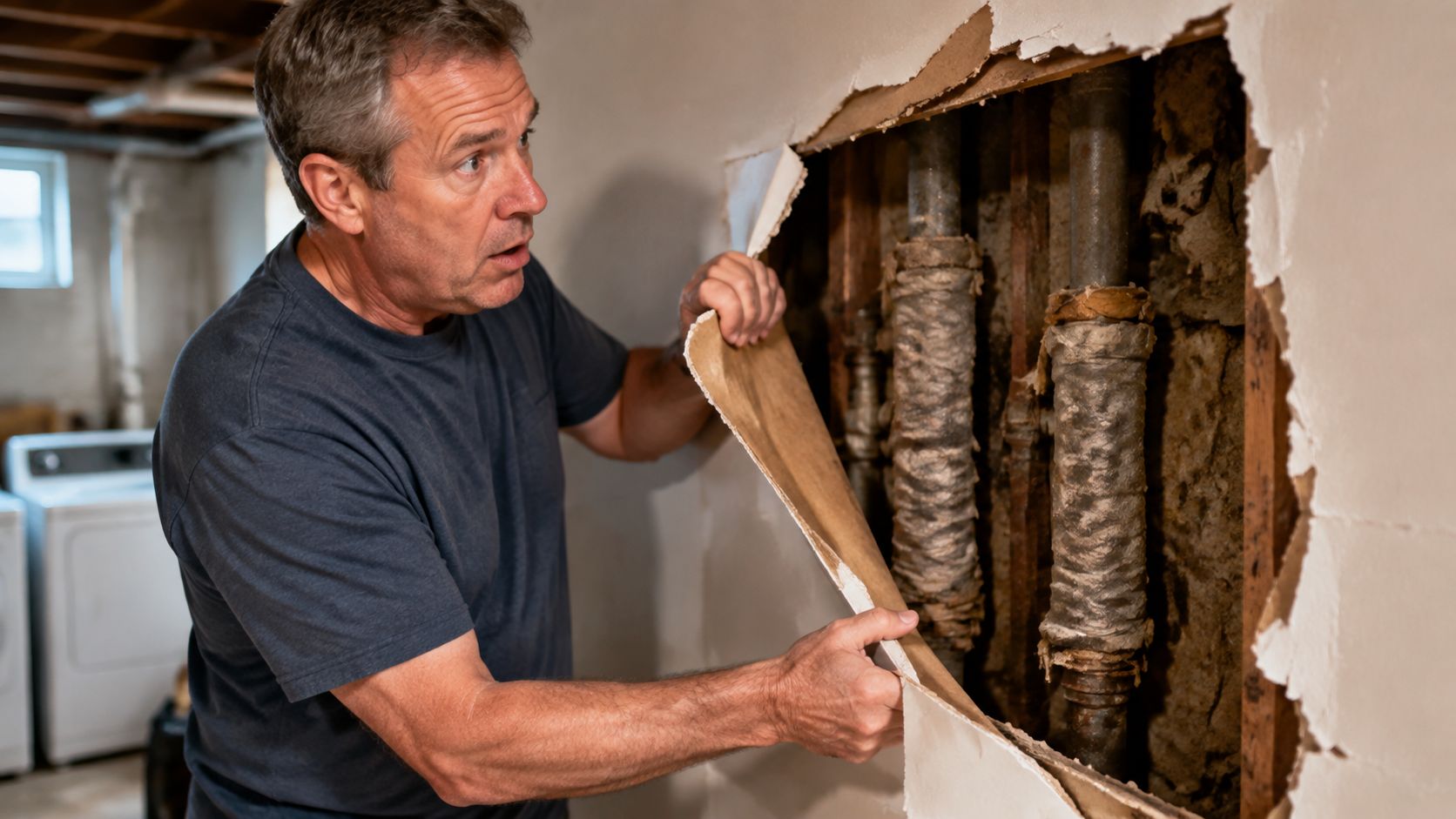
A property owner may discover old pipe insulation while repairing water damage in a basement. Another may pull back attic material during a planned addition and find loose-fill insulation that could contain asbestos. In both situations, the visible material may occupy a limited area, but the work cannot be treated like ordinary demolition.
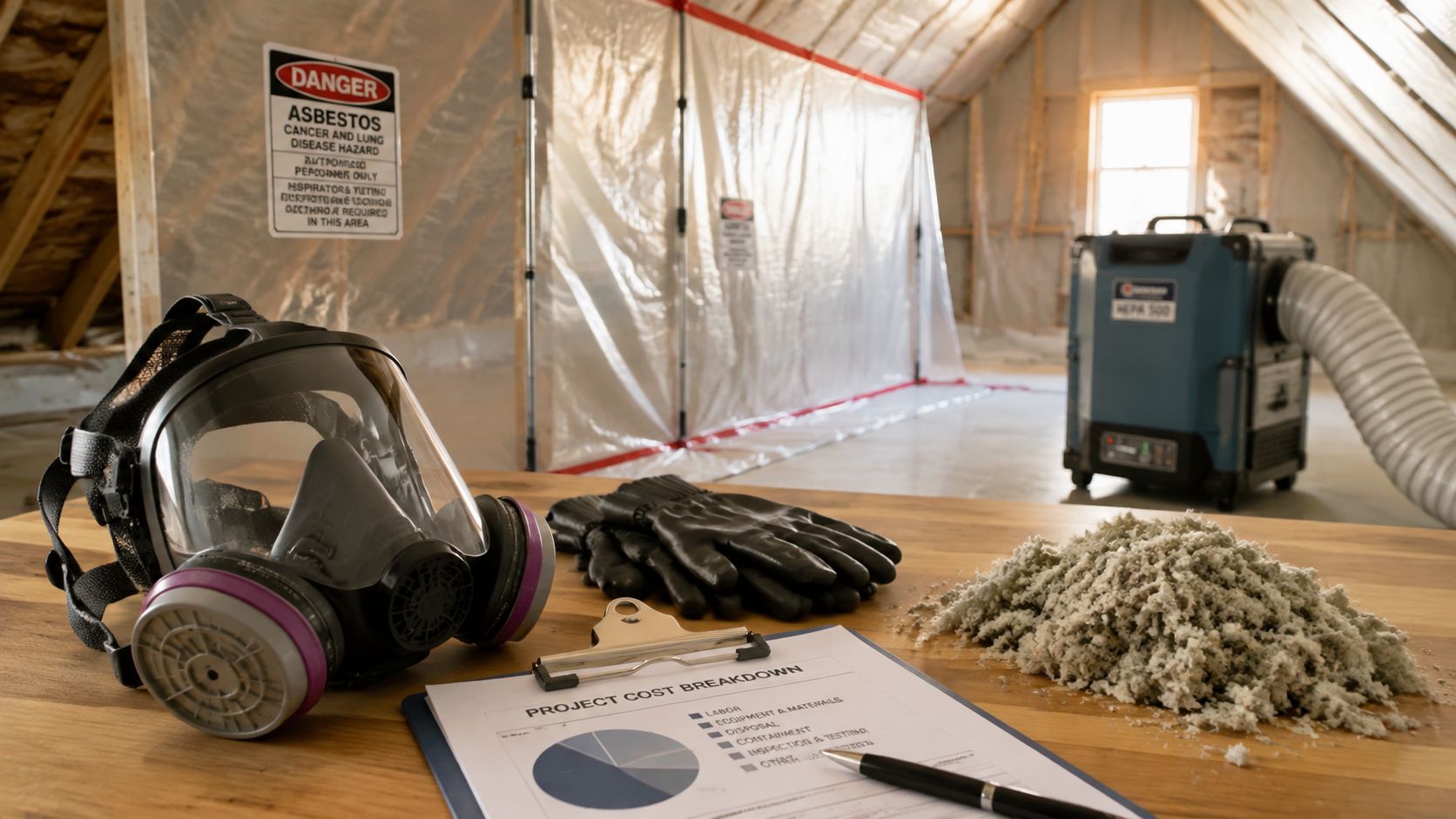
Asbestos insulation is often friable, meaning it can release fibers when crushed, scraped, or disturbed. That condition changes the work method. A qualified abatement contractor may need sealed polyethylene barriers, negative-air equipment, HEPA filtration, protective clothing, decontamination procedures, controlled waste handling, and clearance testing. Those controls cost money even when the material quantity is modest.
The cost layers behind the quote
A basic demolition estimate generally focuses on labor, equipment, hauling, and disposal. An asbestos-related scope can add several distinct layers:
- Testing and survey work: A certified inspector identifies suspect materials and collects appropriate samples for laboratory analysis.
- Containment engineering: The contractor may need to isolate the work area and maintain negative air pressure so disturbed fibers don't migrate.
- Worker protection: Respiratory protection, disposable suits, gloves, and decontamination arrangements become part of the work plan.
- Waste management: Asbestos waste requires sealed packaging, controlled transport, and disposal through an approved facility.
- Air monitoring and clearance: Post-work testing can document whether the area meets the project's clearance criteria.
A contractor also has to account for mobilization, setup, supervision, documentation, and site-specific access problems. A small pipe-insulation job can therefore carry a disproportionate fixed cost.
Practical rule: Don't ask a contractor to price unknown asbestos conditions. Pay for the survey first, then compare bids based on the same documented scope.
The age of a building matters because asbestos was widely used for decades before restrictions tightened, particularly in older insulation systems. That legacy is why renovation in an older Los Angeles property can become a hazardous-material project without any visible warning.
Professional asbestos testing in Los Angeles helps determine whether the suspected insulation contains asbestos, where it is located, and whether additional sampling is needed. A positive result doesn't automatically dictate one response. It gives the property owner and qualified project professionals the information needed to evaluate appropriate next steps.
Breaking Down the Cost of Removing Asbestos Insulation
A property owner can receive two very different asbestos-removal bids for apparently similar work. The difference usually comes from what the survey identifies, how accessible the material is, and whether the proposal includes testing, containment, disposal, repairs, and clearance. A square-foot figure alone cannot explain the final price.
Published guides place removal around $10 to $25 per square foot, with reported project averages and typical totals varying widely by material quantity, repairs, and space size (Angi's asbestos removal cost guide). Another guide reports contractor minimums around $1,500 to $3,000 and single-area projects around $1,200 to $3,300 (Environmental Education's asbestos abatement cost guide). Treat these figures as market context, not a bid. The survey determines which cost categories apply to the property.
Labor often drives the total because crews must remove suspect material under controlled conditions. Equipment, containment, regulated waste handling, transportation, documentation, and clearance testing can add substantial costs. Access restrictions and the need to divide work into phases also affect mobilization and supervision.
What each project size tends to include
Use the table as a budgeting framework. It does not replace a written scope based on professional sampling and a site inspection.
| Cost Component | Small Project, Under 100 sq ft | Medium Project, 100 to 500 sq ft | Large Project, 500+ sq ft |
|---|---|---|---|
| Survey and sampling | Often a major fixed cost | Multiple samples may be required | Broader survey and documentation |
| Mobilization | Minimum fees can dominate the budget | Spread across a larger scope | Usually distributed across the project |
| Containment | Localized enclosure | Larger enclosure and equipment | Multiple work zones may be needed |
| Labor | Careful hand removal | Extended controlled removal | Phased crew work and supervision |
| Disposal | Limited volume, fixed handling requirements | More packaging and transport | Substantial regulated waste logistics |
| Clearance testing | Required when included in the work plan | May cover more than one area | May require phased documentation |
Small mechanical-room work can carry a high unit cost. For pipe insulation, an industry guide places a 10-foot section at about $400 to $650, while minimum contractor fees can still reach $1,500 to $3,000 (This Old House's asbestos abatement cost overview). The same guide also illustrates how tight access, fittings, and containment can matter more than surface area.
Compare bids line by line. Separate testing, removal, disposal, repairs, and clearance instead of accepting one unexplained lump sum. These renovation cost estimation tips can help organize the budget, but asbestos work still requires an environmental scope and qualified contractor. Review the requirements for how to dispose of asbestos before approving waste transport or disposal arrangements.
How Insulation Type and Location Drive Pricing
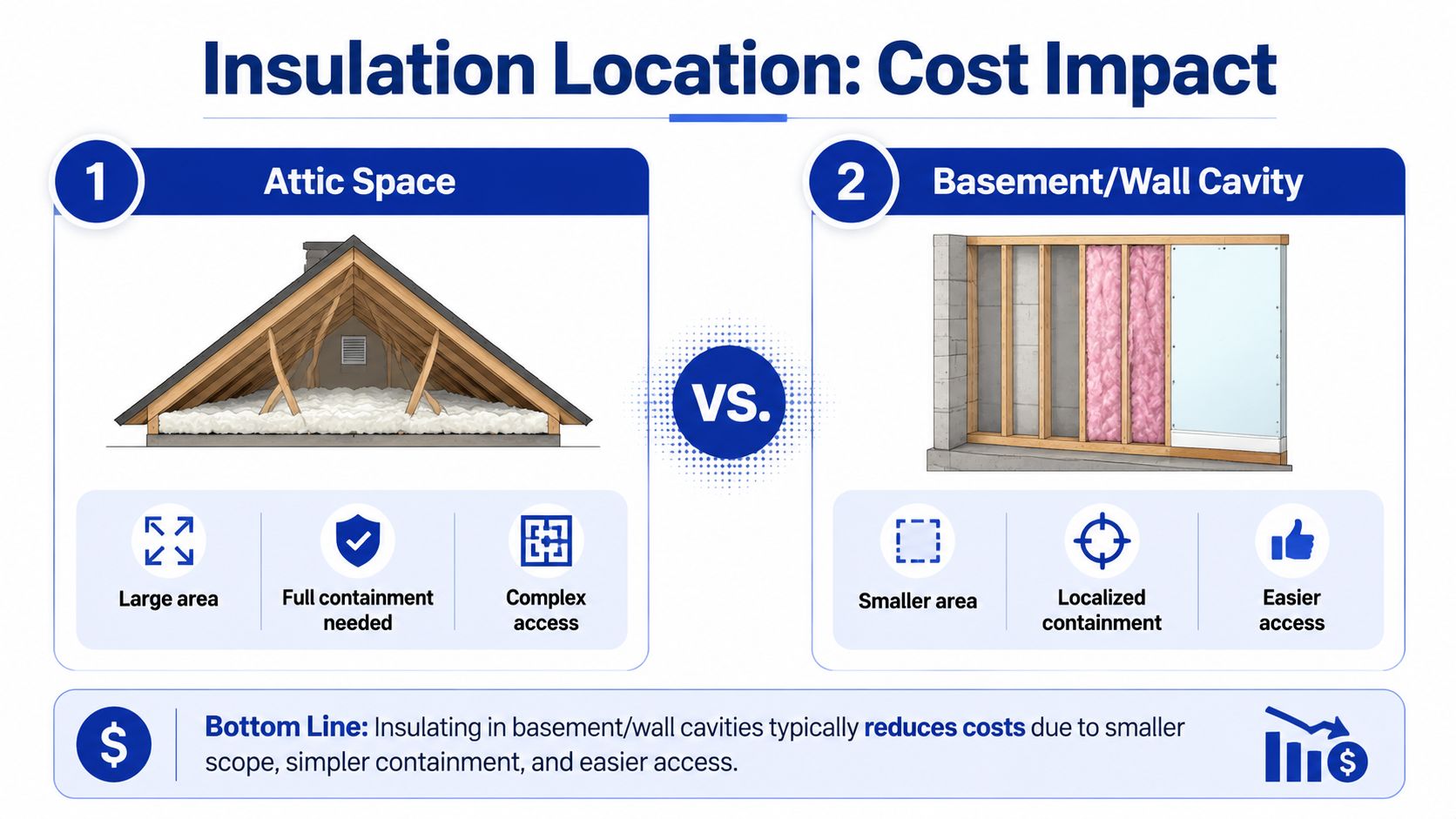
A survey can show why two similarly sized areas produce very different removal budgets. Access, material condition, containment, and the work required to reach the insulation often matter more than square footage alone.
Attic insulation commonly consists of loose-fill vermiculite or blown-in material spread across a broad, difficult-to-access surface. Crews may need to contain the entire work area, protect entry points, control movement through the building, and work around framing, ducts, wiring, and limited headroom. Use the earlier pricing breakdown as a starting point, then adjust the budget for these documented site conditions. This comparison chart showing how attic insulation costs more than basement or wall cavity insulation projects. illustrates why location changes the scope.
Pipe and boiler insulation create a different cost problem. The total surface area may be small, yet the material can be highly friable and wrapped around fittings, valves, elbows, and connections in tight mechanical rooms. Hand removal, detailed containment, and careful packaging take time. The earlier cost guidance on small mechanical-room work shows why minimum charges and access limitations can outweigh measured surface area.
Comparing common locations
Wall-cavity insulation often falls between those examples. Containment may be localized, but crews might need selective removal of drywall, plaster, or other finishes to reach the insulation. Put restoration and rebuilding in separate budget lines from testing, abatement, disposal, and clearance.
Crawl spaces, multi-story buildings, occupied properties, and active commercial facilities add planning demands. Crews may need phased work areas, added access controls, scheduling around occupants, or temporary protection for sensitive equipment. A professional survey records these constraints before bidding, giving contractors a defined scope instead of forcing them to price unknown conditions into a contingency.
For property managers: Ask whether the bid identifies measured square footage or linear footage, material condition, containment limits, access restrictions, disposal, restoration, and clearance. If those items are missing, the proposals are not genuinely comparable.
Use Edinhart Realty and Property Management insights to organize questions about scope, exclusions, change orders, and payment terms. Keep the environmental survey as the technical basis for that discussion. A clear survey does more than support compliance. It gives owners and contractors the information needed to set a defensible removal budget.
Southern California Regulatory Requirements and Survey Costs
In the South Coast Air Quality Management District, Rule 1403 requires an asbestos survey before renovation or demolition work. The survey must be performed by a Certified Asbestos Consultant, identify and quantify friable asbestos and Class I and Class II non-friable asbestos-containing material, and include physical sampling when needed (SCAQMD Rule 1403 frequently asked questions).
That requirement matters in Los Angeles and nearby Southern California jurisdictions because suspected material isn't a legal basis for starting work. The property owner needs documented information before disturbance begins. A contractor's visual opinion alone isn't a substitute for a compliant survey.
What the survey process establishes
A professional asbestos survey generally includes:
- A site inspection: The consultant reviews accessible areas, building materials, planned disturbance zones, and relevant construction information.
- Material identification: Suspect insulation and associated materials are documented by location, condition, and material type.
- Physical sampling: Samples are collected where visual inspection can't reliably determine composition.
- Laboratory analysis: An accredited laboratory analyzes samples using appropriate methods and reports whether asbestos is present.
- Written documentation: The report supports project planning, contractor bidding, notifications, and compliance records.
Rule 1403 guidance states that notification and the associated fee are due 14 calendar days before work starts (SCAQMD Rule 1403 notification guidance). That deadline can affect a renovation schedule, especially when a contractor has already booked demolition crews or deliveries.
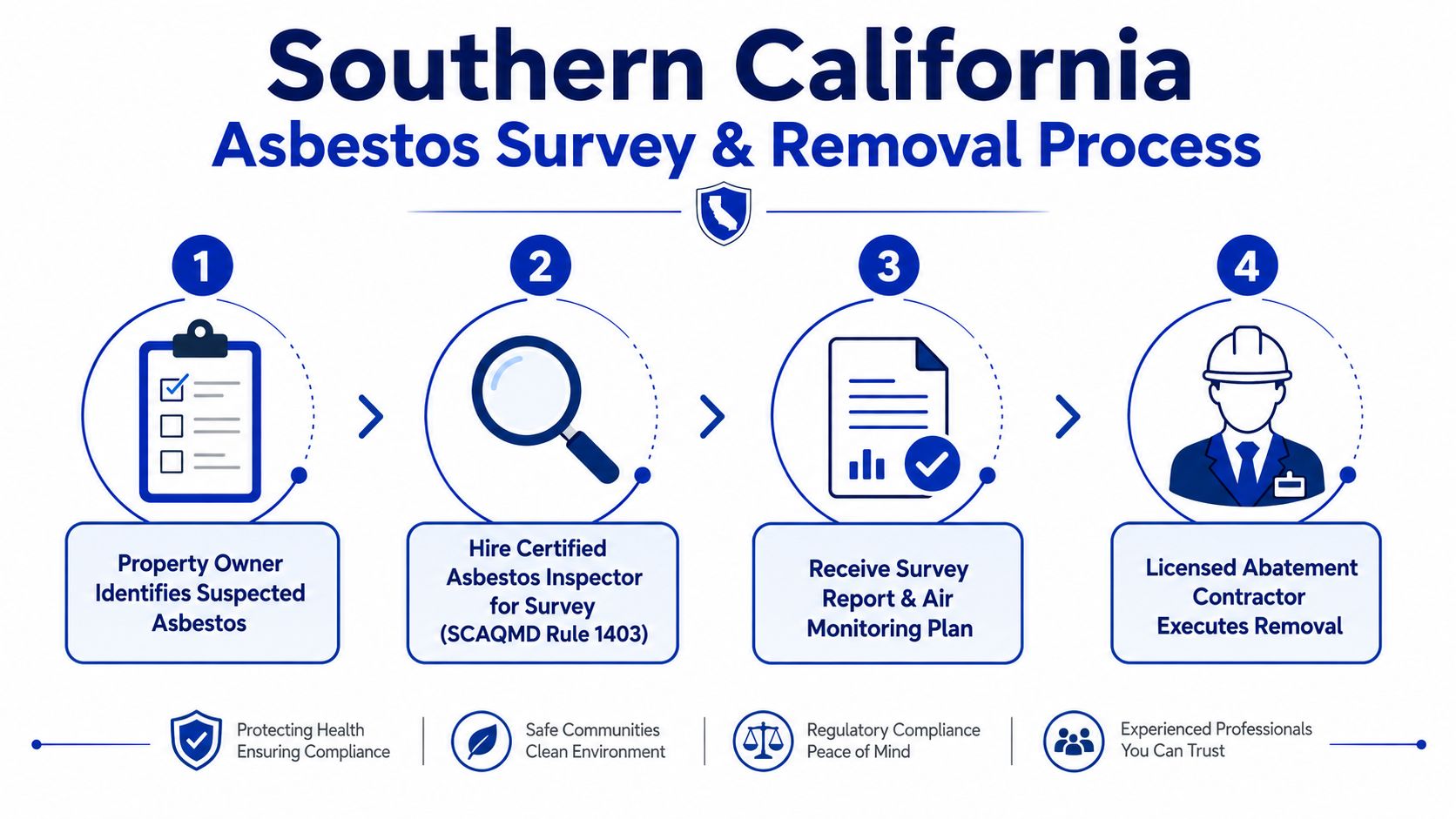
Survey pricing varies with building size, accessibility, number of suspect materials, and sampling needs. Treat the survey as a project prerequisite, not an optional inspection. It can also support real estate documentation, including California asbestos real estate disclosure information.
Southern California projects may also involve Procedure 5 requirements, Notices to Comply, and other AQMD documentation depending on the property and planned work. An environmental testing professional can identify which documentation applies. The survey doesn't perform removal, and a positive result doesn't automatically prescribe abatement. It establishes the facts needed for qualified decision-makers to choose the next step.
Using Professional Testing Results to Plan Your Budget
A professional survey turns a vague concern into a defined work map. Rather than pricing “old insulation throughout the building,” the report identifies suspected materials, locations, condition, and laboratory results. Contractors can then price the actual scope instead of adding broad allowances for unknown conditions.
Testing results also separate areas that renovation will disturb from materials that can remain in place under an appropriate management approach. For example, a project may require removal from one wall or ceiling while documented insulation elsewhere remains untouched. The property owner and qualified professionals must make that decision using the survey, project design, material condition, and applicable requirements.
How findings change the budget
| Survey finding | Budget decision |
|---|---|
| Suspect insulation is not confirmed as asbestos | Avoid asbestos-specific removal where appropriate, while retaining the survey and laboratory documentation for the project record. |
| Asbestos-containing insulation is localized and accessible | Ask contractors to price a defined containment, removal, disposal, and clearance scope rather than a building-wide allowance. |
| Friable insulation is in a confined mechanical space | Allow for tighter work controls, more labor, restricted access, waste handling, and possible coordination with other trades. |
| Material appears across multiple building systems | Divide the work by zone and sequence. Inspection, containment, scheduling, disposal, and clearance requirements may apply repeatedly. |
Use the earlier cost table as a reference for typical ranges. Do not use those figures as a substitute for project-specific pricing. The survey determines which cost drivers apply, while contractor bids should show how each driver affects the proposed work.
A bid prepared before testing creates a predictable problem. Once demolition exposes additional suspect insulation, the contractor may issue change orders, pause work, or dispute whether the original price included that material. Give every bidder the same report, drawings, disturbance limits, and access information. Comparable scopes produce more useful bids than estimates based on different assumptions.
Budgeting principle: Pay first for information that defines the work. An inexpensive estimate based on incomplete conditions can become expensive once demolition begins.
Sensitive Environmental provides professional asbestos testing in Los Angeles that includes inspections, sampling, laboratory analysis, and reporting. Use the written results to decide whether the project needs targeted removal, broader abatement planning, or documented management of material that will remain undisturbed. The same process can also address lead, mold, indoor air quality, industrial hygiene, and other environmental concerns that affect the renovation scope.
Next Steps for Property Owners Facing Asbestos Concerns
Stop disturbance when you encounter suspected asbestos insulation. Don't cut, pull, sweep, vacuum, or transport the material based on appearance alone. The first investment should be a professional asbestos survey performed before renovation, demolition, or further access work.
A practical project roadmap
- Schedule the survey: Choose an environmental testing provider with appropriate certifications and experience with residential or commercial inspections.
- Define the planned disturbance: Give the inspector renovation drawings, demolition limits, access details, and information about damaged areas.
- Review the sampling plan: A competent professional should explain which materials will be sampled and why.
- Wait for laboratory documentation: Keep the written report with the project records and provide it to contractors bidding on the work.
- Compare qualified proposals: Request detailed bids from licensed abatement contractors that reference the same survey scope. Two or three comparable proposals are more useful than several vague estimates.
- Separate related costs: Ask each bidder to identify containment, disposal, air monitoring, clearance testing, replacement insulation, and structural repairs.
- Confirm regulatory timing: In the SCAQMD area, plan around the required notification timeline rather than assuming work can begin immediately.
DIY sampling can create unnecessary exposure and produce an incomplete record, especially when insulation is hidden inside walls, around boilers, or across attic spaces. A laboratory result from one convenient fragment also may not represent every material in the building. Professional inspection and sampling provide a more defensible basis for planning, documentation, and contractor coordination.
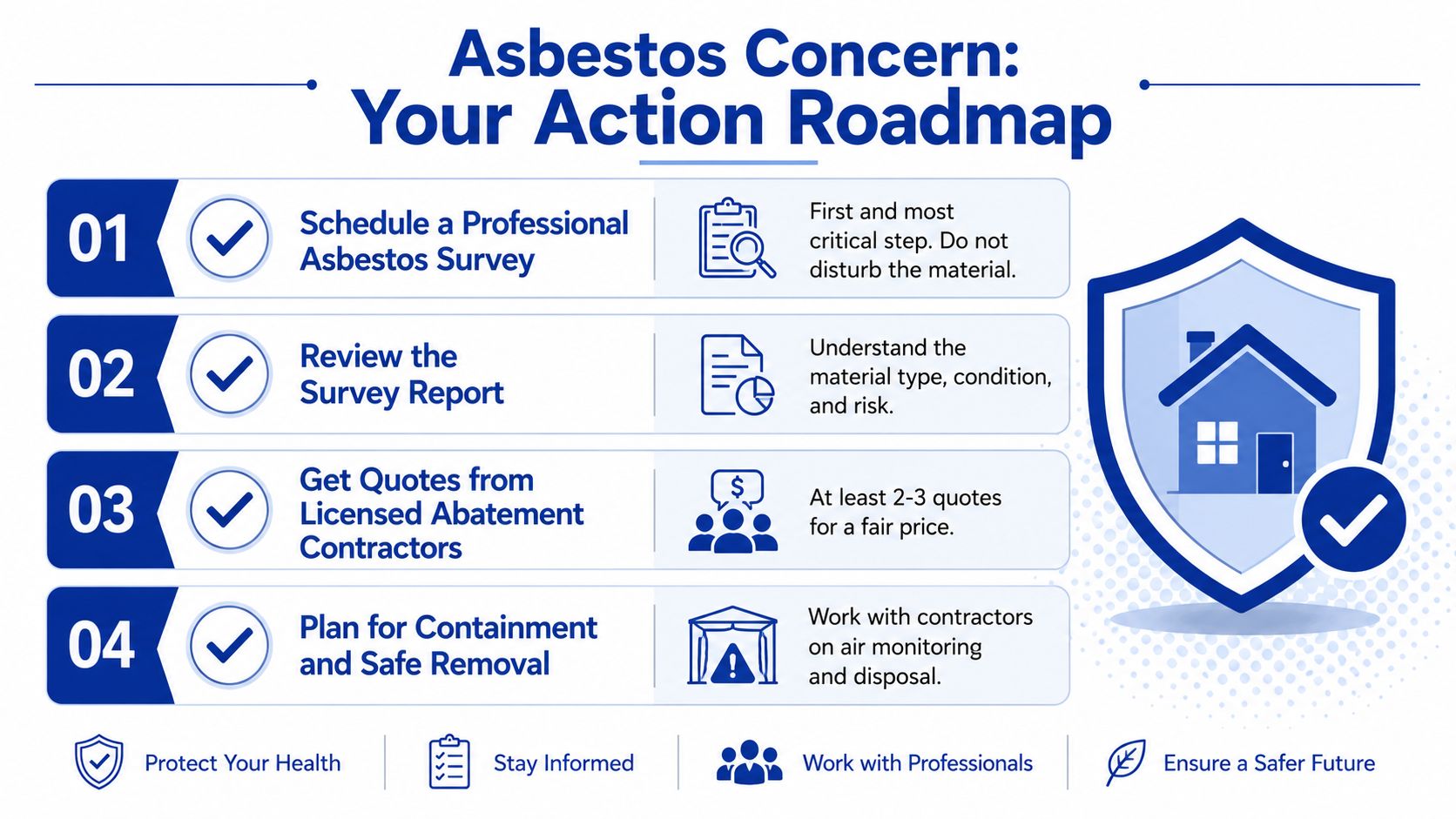
A positive test doesn't automatically mean every material must be removed. Results help property owners, designers, contractors, and regulators determine whether the appropriate response involves controlled disturbance, management in place, further assessment, or another qualified course of action. The important point is that those decisions should follow reliable testing, not guesswork.
Sensitive Environmental provides professional asbestos inspections, surveys, sampling, laboratory coordination, and compliance documentation for renovation and demolition projects in Los Angeles and throughout Southern California. Visit Sensitive Environmental to schedule an asbestos survey and establish the facts needed to plan your project budget and regulatory timeline.