The most popular advice about brown drywall asbestos is also the least reliable: if the drywall looks brown, it must contain asbestos. That shortcut confuses the color of a building material with amosite, sometimes called brown asbestos, even though color alone can't identify asbestos in a wall.
The practical question isn't whether the paper facing is brown. It's whether the wall system contains older joint compound, tape, texture, patching material, or coatings that may be asbestos-containing, and whether planned work will disturb them. Appearance can't answer that question. Only appropriate sampling and laboratory analysis can.
Table of Contents
- Why Brown Drywall Does Not Automatically Mean Asbestos
- Understanding the Drywall Wall System and Where Asbestos Hides
- Assessing Your Property Risk Based on Age and Renovation History
- Brown Paper Backing Versus Brown-Coat Plaster Versus Joint Compound
- How Professional Asbestos Testing Actually Works
- Los Angeles Regulatory Requirements for Renovation and Demolition
- When to Call a Professional and What to Do Next
Why Brown Drywall Does Not Automatically Mean Asbestos
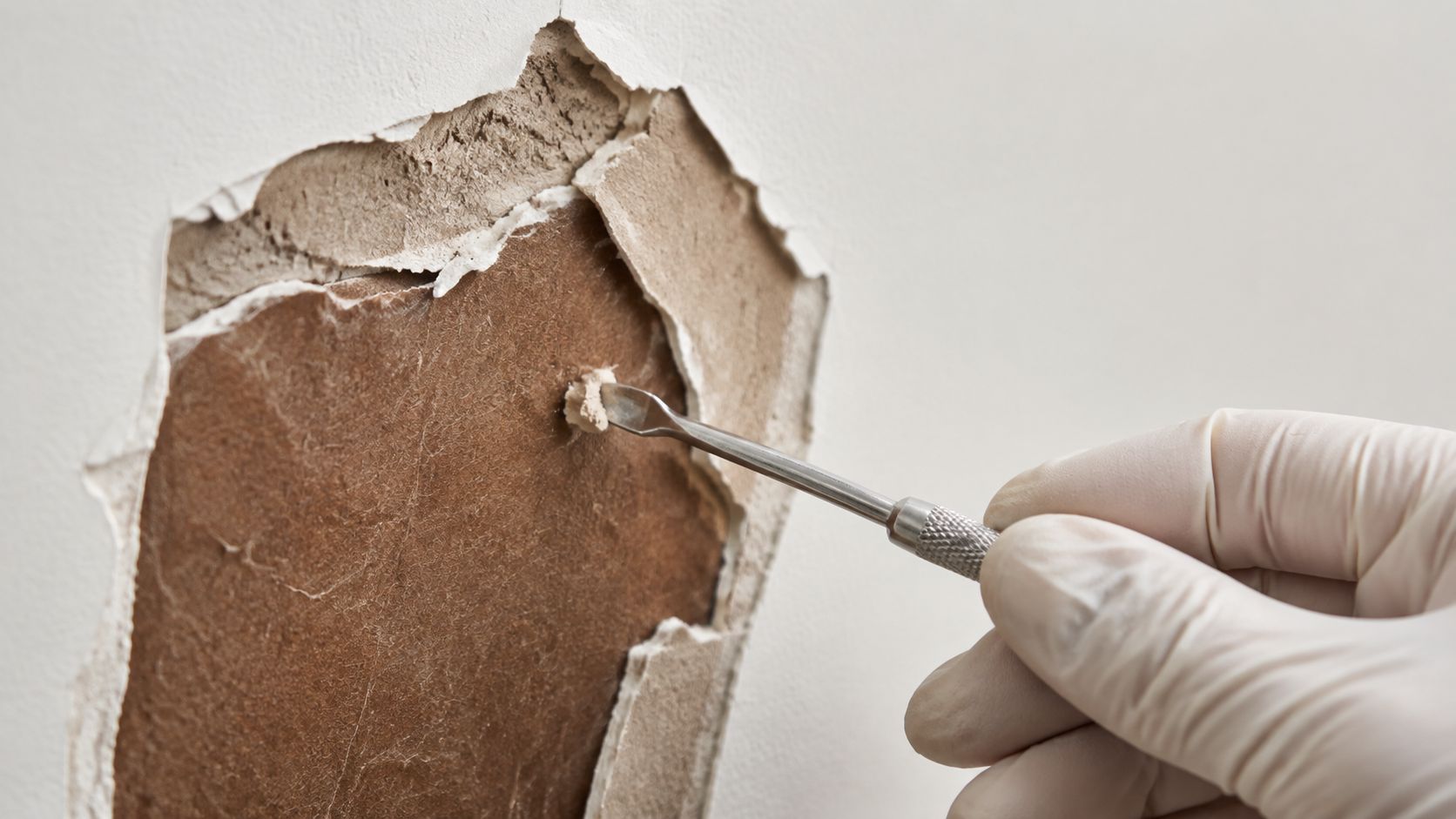
Brown drywall usually refers to the paper facing, an exposed backing, a brown-colored plaster layer, or an older finishing material. None of those descriptions proves asbestos is present. The brown appearance may reflect the material's composition, age, staining, damage, or the fact that a finished surface has been removed.
The confusion grows because amosite is commonly described as brown asbestos. That name refers to the color associated with a type of asbestos mineral, not to ordinary brown drywall paper. Amosite was more commonly used in cement sheets, pipe insulation, and thermal products than in ordinary drywall, so a brown wall surface is a weak predictor of asbestos risk. Inspectapedia's discussion of drywall finish systems also emphasizes that visual inspection can't establish whether a material contains asbestos.
What color can and cannot tell you
Color may help an inspector describe what's visible, but it doesn't identify the material's formulation. The relevant concern is usually found in:
- Joint compound: The mud applied over seams, screws, corners, and repairs.
- Drywall tape: Paper or other tape embedded in the finishing system.
- Texture and coatings: Decorative wall or ceiling finishes that may have been applied over the board.
- Patching layers: Older repairs can remain beneath newer paint or skim coats.
A brown paper facing may be present without asbestos. Conversely, a wall that looks completely ordinary may contain asbestos in an older compound beneath paint. That's why a homeowner shouldn't scrape, sand, drill, or cut a suspicious surface to inspect it more closely.
Practical rule: Treat color as a description, not a test result.
For a Los Angeles homeowner, contractor, or property manager, the sensible response is to document the visible condition, identify the building's age and renovation history, and arrange professional asbestos testing before disturbance when the wall system may be old.
Understanding the Drywall Wall System and Where Asbestos Hides
A drywall wall is more than a gypsum sheet. The visible board may have a paper facing, but the finished wall also includes joint compound over seams and fasteners, corner treatments, patches, primer, paint, texture, and sometimes concealed layers within the wall cavity.
Historically, asbestos was rarely used in the gypsum board itself. It was more commonly incorporated into drywall finishing materials, including joint compound and tape, from the 1930s through the late 1970s. The historical overview of asbestos use in drywall materials explains that the U.S. Consumer Product Safety Commission banned asbestos in joint compound in 1977, while existing stock continued to be used into the early 1980s.
The wall system matters more than one layer
The EPA treats joint compound and wallboard as a combined wall system for asbestos evaluation. Its guidance recommends composite analysis or a weighted-average approach in relevant renovation and demolition decisions, rather than assuming that each layer can always be assessed independently. A low result from one component doesn't necessarily resolve the status of the integrated system. EPA guidance on wallboard and joint compound analysis provides the technical basis for this approach.
That distinction matters during renovation. A contractor may see a gypsum sheet that appears normal, yet sanding the seam compound can disturb a different material. Removing a section of wall can also expose concealed finishes or coatings that weren't visible during a basic walkthrough.
Why historic dates remain useful
The 1977 CPSC ban reduced the use of asbestos in joint compound, but it didn't instantly remove older products from the supply chain or from buildings. The EPA's 1989 final rule banning most asbestos-containing products further reduced new asbestos use in U.S. construction materials. Even so, original materials can remain in place for decades.
If a wall system is old, treat the entire assembly as a potential sampling area. If the issue involves broader construction quality, hidden assemblies, or other property conditions, an overview of the main construction defect categories can help separate environmental testing questions from general building-defect concerns.
Assessing Your Property Risk Based on Age and Renovation History
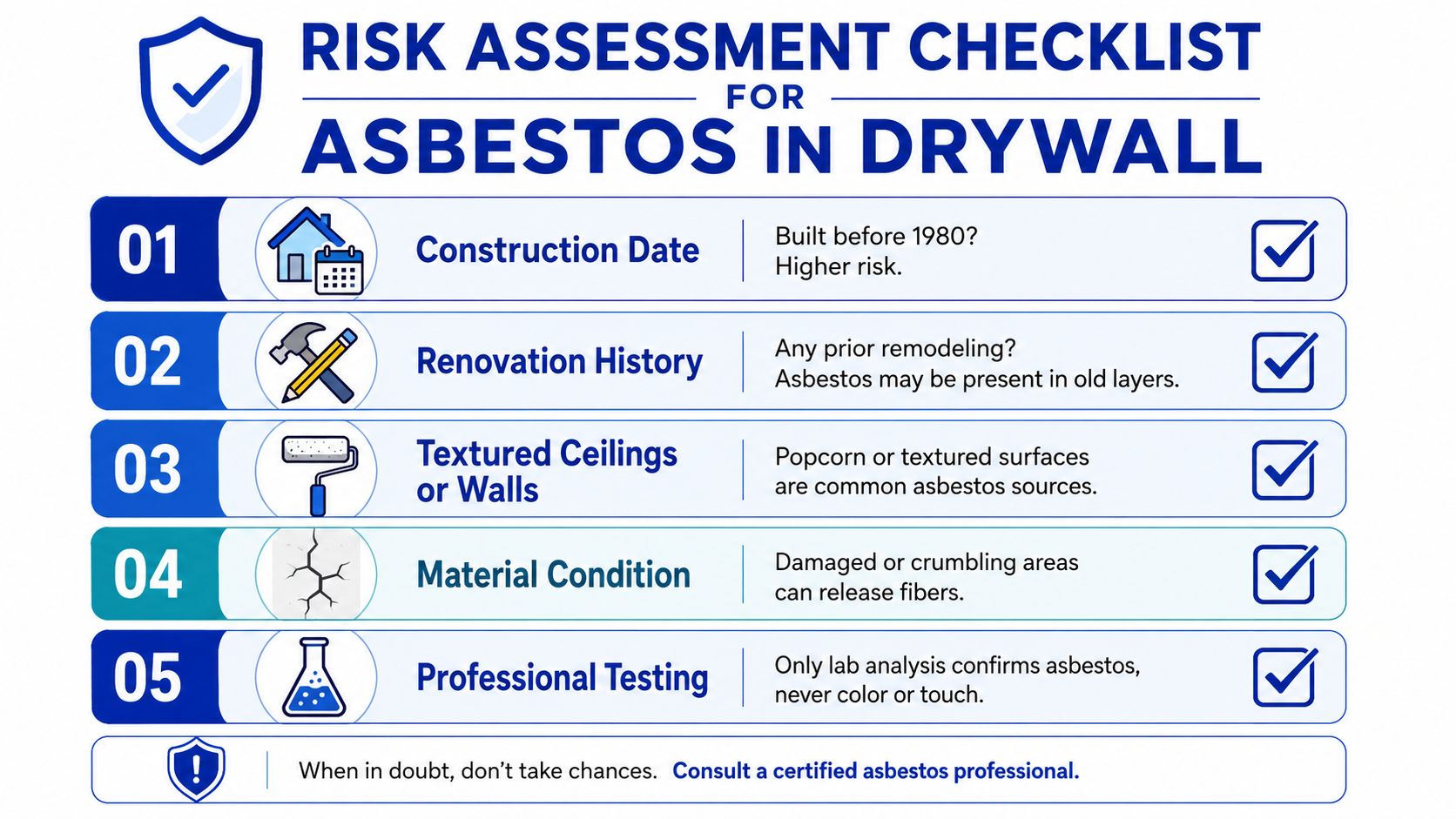
Brown color is a weak risk signal. A useful assessment starts with the building's records, age, and renovation history. Find the construction date, then determine whether the walls are original, whether previous owners added texture or skim coats, and whether repairs covered older finishing layers.
Original drywall systems installed before 1980 are commonly treated as suspect for asbestos-containing finishing materials. Some guidance uses pre-1985 construction as a broader screening window because older products could remain in inventory, and legacy materials could stay in buildings after restrictions changed. An asbestos drywall guide for older wall systems states that original pre-1980 wall finishes should be considered suspect until tested.
A practical screening sequence
Check the construction date. A pre-1980 home or commercial building warrants closer review if original walls will be disturbed.
Review renovation records. A remodel may have covered older compound with new drywall, paint, texture, or paneling instead of removing it. A newer visible surface does not prove that earlier layers are gone.
Define the planned work. Painting without disturbance presents a different question from sanding, cutting, opening walls, relocating electrical systems, or demolition. More invasive work increases the need for a pre-renovation asbestos survey.
Map connected areas. Similar wall finishes may continue into adjacent rooms, corridors, ceilings, closets, or concealed cavities. Sampling should represent the materials the project may affect, not just the most visible brown area.
Test when uncertainty remains. Touching, photographing, or comparing a sample with an online image cannot confirm asbestos. Laboratory analysis is the reliable way to identify it.
What the decision means for Los Angeles projects
For a Los Angeles property manager, landlord, general contractor, or developer, the practical question is whether planned work will disturb an older wall system. If it will, arrange qualified inspection and sampling before work begins. The guide to recognizing asbestos in a home from Sensitive Environmental provides additional background for homeowners assessing that decision. Age and renovation history provide the screening context, while testing determines what the material is.
Brown Paper Backing Versus Brown-Coat Plaster Versus Joint Compound
People use “brown drywall” to describe several different materials. Separating them helps an inspector choose representative samples and helps a contractor describe exactly what will be disturbed.
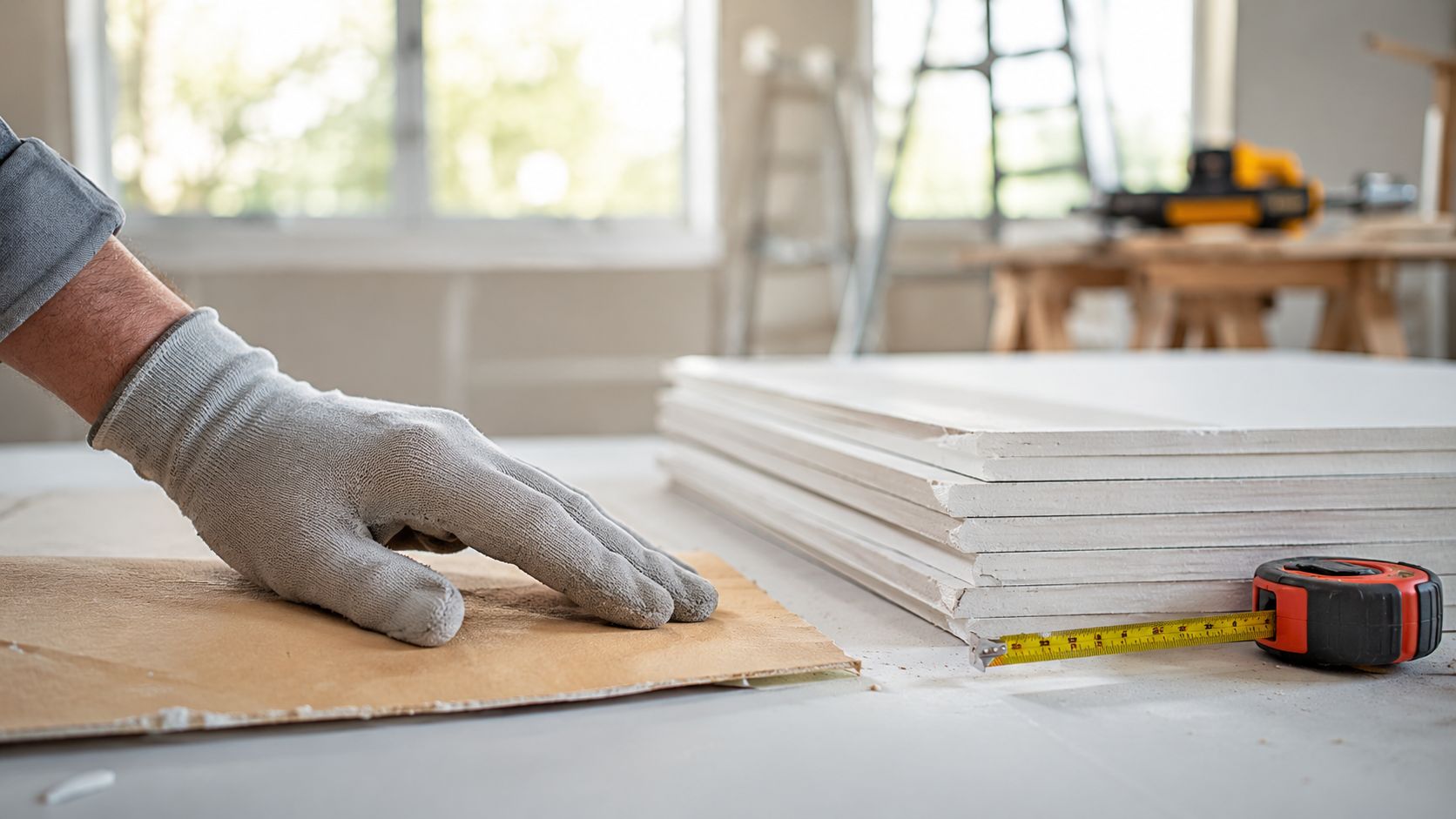
Brown paper backing is the paper facing attached to a drywall sheet. Its color may be visible where the board is unfinished or damaged, but it shouldn't be treated as proof of asbestos. The primary concern in older drywall systems is usually the finishing material applied over the sheet.
Brown-coat plaster belongs to a traditional plaster system, not a standard drywall sheet. It functions as a base or leveling coat beneath the finish coat. Because plaster formulations and building histories vary, an older brown plaster layer should be assessed as its own homogeneous material when planned work will disturb it.
Joint compound is the mud used to cover seams, fasteners, corners, and repairs. Historical formulations may have contained chrysotile, and the compound can remain under paint, texture, or later patching. Historical information about asbestos in drywall finishing materials supports treating older original finishes as suspect until laboratory analysis provides an answer.
| Material | Typical Asbestos Risk | When Testing Is Recommended |
|---|---|---|
| Brown paper backing | Color alone is not a reliable asbestos indicator. | Test the wall system if older finishing materials will be cut, sanded, or removed. |
| Brown-coat plaster | A separate older plaster layer may have a different formulation from the drywall sheet. | Sample before renovation, demolition, or repair that will disturb the plaster. |
| Joint compound | Historical drywall mud is the principal concern in many older drywall systems. | Arrange pre-renovation or pre-demolition sampling when age or records leave uncertainty. |
The same room may contain several materials with different histories. A single sample from a visible brown area may not represent the compound in a repaired section or the texture on an adjacent ceiling. Professional sampling therefore focuses on material uniformity and the scope of work, not just the most noticeable color.
How Professional Asbestos Testing Actually Works
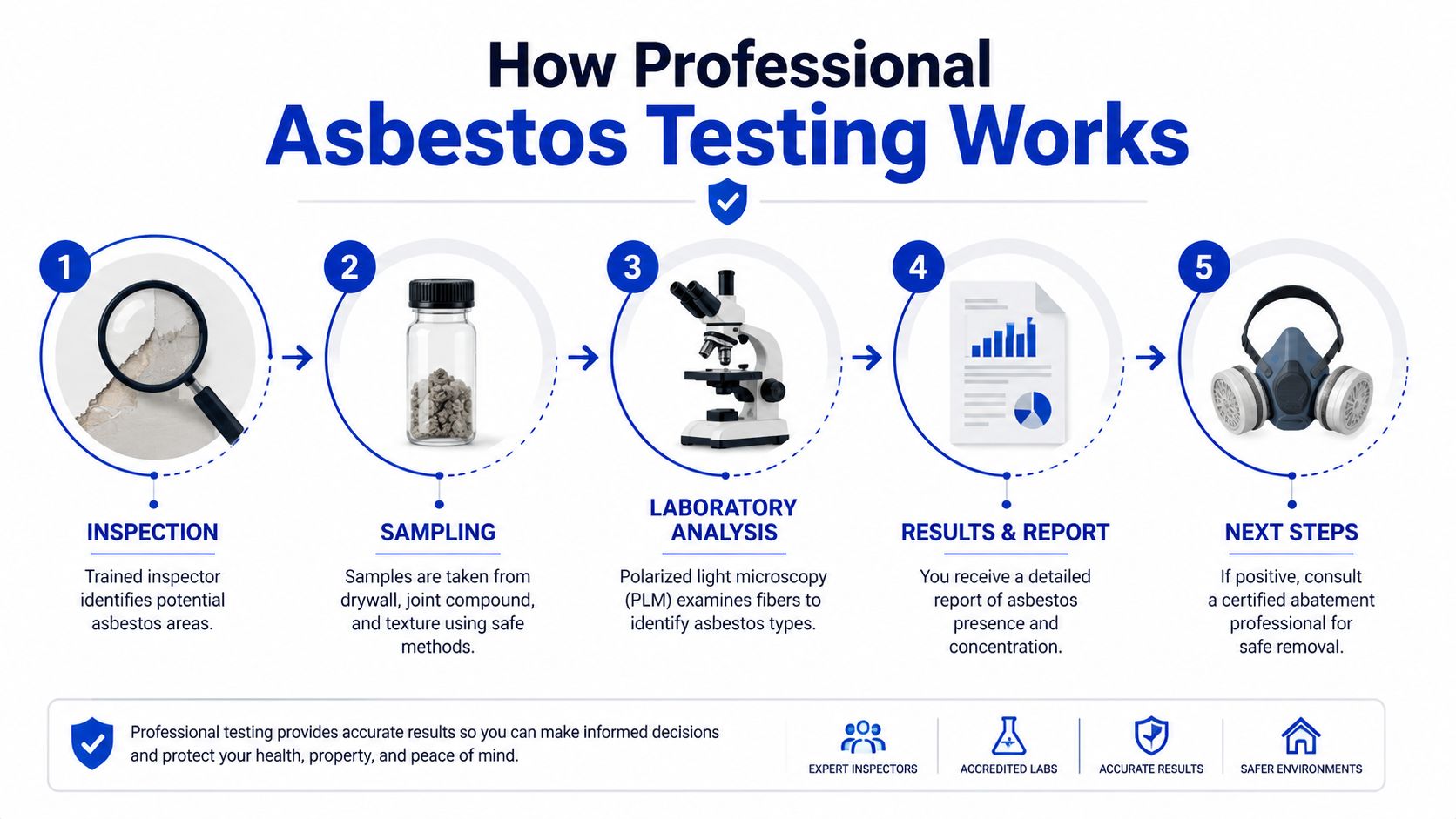
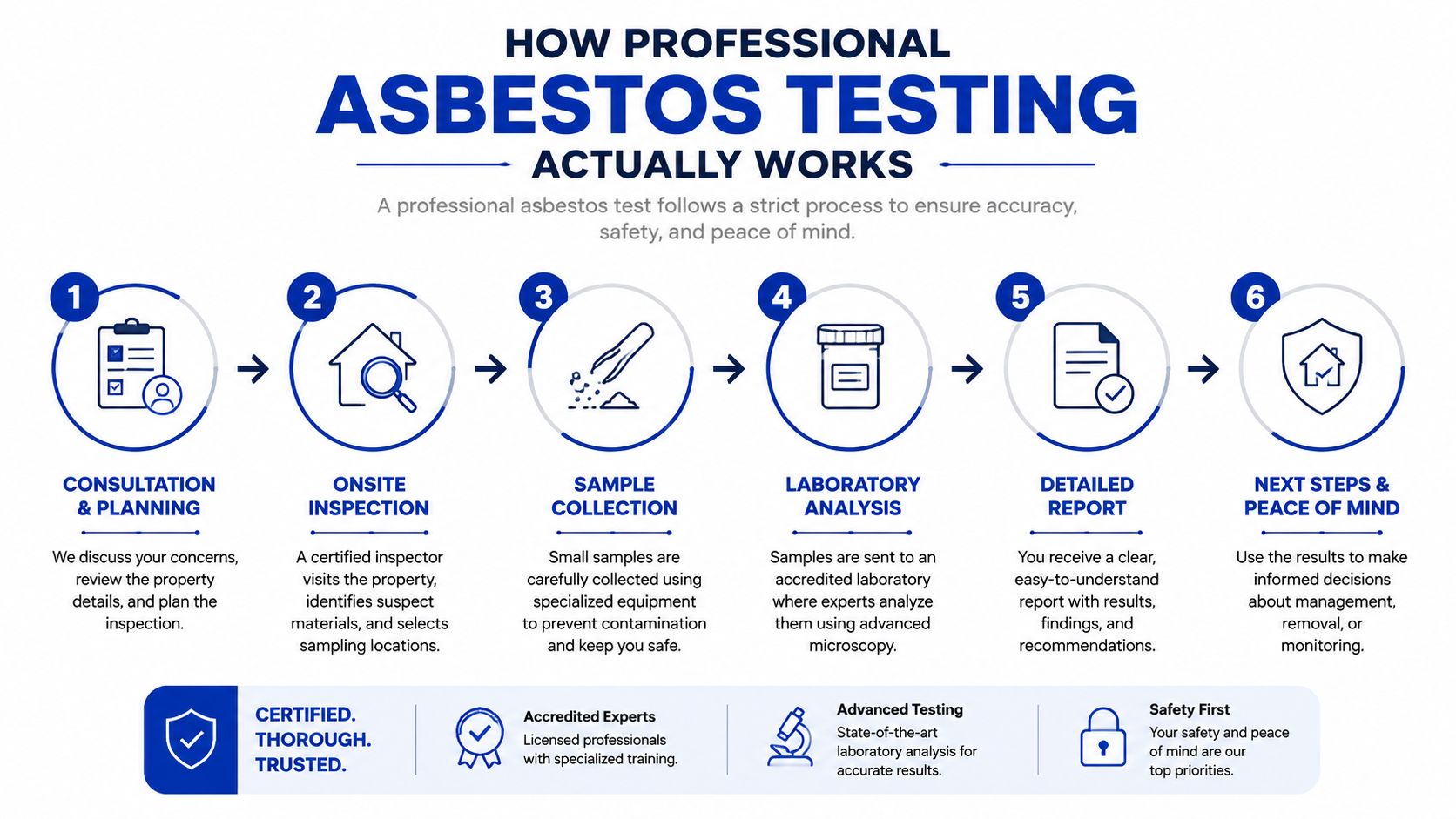
Professional asbestos testing begins with an inspection of the proposed work area and the materials that may be disturbed. The inspector reviews construction history, renovation records, visible finishes, wall and ceiling assemblies, patches, textures, and project plans. The objective is to identify materials that require sampling, not to make a visual guess about asbestos content.
Sampling is performed using methods intended to limit unnecessary disturbance and cross-contamination. Depending on the project, an inspector may collect material from joint compound, drywall, texture, plaster, tape, or another finish. The sample is labeled, documented, and submitted to a qualified laboratory for analysis.
Why DIY identification fails
A homeowner may notice brown paper, a chalky seam, or a textured surface and assume the material is either hazardous or harmless. Neither conclusion is dependable. As OSHA explains, consumer wall-patching compounds containing respirable asbestos fibers were banned in 1977, but existing stock could still be installed into the early 1980s. OSHA's interpretation on asbestos in wall-patching compounds also reinforces that age-based screening doesn't replace analysis.
The most concerning activities are those that create dust from suspect finishes, including sanding, cutting, and demolition. Documented formulations have ranged from trace amounts up to 23% and 45.2% chrysotile in specific products, as described in the OSHA material linked above. Those figures don't identify any particular wall in your property, but they show why a visual assessment can't establish a safe disturbance plan.
What the laboratory report can reveal
Laboratory analysis may identify whether asbestos is present, the type detected, and the concentration reported for the submitted material. Depending on the sample and project requirements, analysis may involve PLM, or Polarized Light Microscopy, and in some circumstances TEM, or Transmission Electron Microscopy.
A report should be read alongside the inspection notes and project scope. If you need broader professional context while coordinating a survey, this resource explains how to find a RICS asbestos surveyor, although Los Angeles projects still require attention to California and South Coast AQMD requirements. Homeowners considering at-home kits should also understand the limitations described in whether you can test for asbestos at home.
Los Angeles Regulatory Requirements for Renovation and Demolition
Los Angeles-area projects in the South Coast basin may fall under South Coast AQMD Rule 1403. The rule requires an affected facility or facility component to be thoroughly surveyed for asbestos before renovation or demolition. The survey includes inspection, identification, quantification, and physical sampling of friable asbestos-containing material, along with applicable Class I and Class II nonfriable material.
The survey isn't limited to the surface that a worker can see. Rule 1403 states that affected materials must be identified throughout the facility, including wall or ceiling cavities when needed, and that flooring layers may need to be evaluated down to the joist level. For drywall work, that means a visible gypsum sheet doesn't automatically clear the joint compound, texture, concealed finish, or other affected material.
Documentation changes the project workflow
The Rule 1403 compliance advisory states that an onsite asbestos survey must be conducted and documented before renovation, except for a limited single-unit residential situation involving less than 100 square feet of ACM surface area removed or stripped. The advisory provides no exception for demolition. It also requires written survey documentation identifying ACM that will be disturbed, describing its condition, and determining its friability. South Coast AQMD Rule 1403 and the Rule 1403 compliance advisory provide the governing details.
For contractors and owners: A survey is a project document, not merely a visual opinion about one wall.
If old drywall is unexpectedly exposed during work, pause the disturbance and keep workers and occupants away from the affected area until the material can be evaluated. The appropriate response may involve temporary controls, additional inspection, sampling, written reporting, and coordination with qualified professionals. A positive laboratory result doesn't by itself determine every next action, but proceeding without documentation can create avoidable compliance and scheduling problems.
When to Call a Professional and What to Do Next
Schedule professional asbestos testing when the property has original pre-1980 wall finishes, the construction date is uncertain, renovation records are incomplete, or planned work will sand, cut, drill, open, or demolish the wall system. Visible cracks, crumbling areas, water damage, or prior partial removal add reasons to stop relying on appearance.
If old drywall has already been disturbed, don't sweep, vacuum with ordinary equipment, or continue handling debris as though it were ordinary construction waste. Stop the activity that created the disturbance, limit access, document what happened, and arrange an inspection that can determine whether sampling is appropriate. The right workflow depends on the material, its condition, the area affected, and the project requirements.
Testing is an information service. A laboratory result helps property owners, contractors, facility managers, and qualified next-step professionals decide how to plan the work. A positive result doesn't automatically mean that a particular remediation or abatement action is required, and a negative result applies to the sampled material and the defined scope, not every material throughout a building.
Owners planning work can also review information about asbestos removal and health protection, while keeping the immediate priority on a documented inspection and appropriate sampling before further disturbance.
Sensitive Environmental provides asbestos inspections, drywall and joint-compound sampling, laboratory analysis, and pre-renovation or pre-demolition survey documentation for properties in Los Angeles and Southern California. Visit Sensitive Environmental to discuss your brown drywall concern, SCAQMD Rule 1403 testing needs, or a professional asbestos survey before work begins.