A week after a wildfire or structure fire, you may find a fine black film on a windowsill, gray powder inside a cabinet, or an oily residue on painted walls. A contractor may mention a CBP ESR test, while an insurance adjuster asks whether the property contains soot, ash, char, or other combustion-related contamination. The terminology sounds like it should produce one simple answer, but it doesn't.
The practical question is narrower and more useful: What material is present, where did it come from, and what additional testing is needed to evaluate the property? A CBP or combustion-byproduct investigation can support that decision, but it isn't a blanket declaration that a building is safe or unsafe. For Los Angeles homeowners, property managers, contractors, and facility operators, the value lies in a documented sampling plan, suitable laboratory analysis, and a report that connects findings to the property's history.
Table of Contents
- What a CBP ESR Test Answers After a Fire
- Understanding CBP and ESR in Plain Language
- Contaminants Typically Analyzed in CBP ESR Testing
- How Sampling and Laboratory Methods Work
- Quantitative Benchmarks That Inform Interpretation
- What Positive, Negative, and Ambiguous Results Really Mean
- Next Steps for Property Owners and Contractors
- Frequently Asked Questions About CBP ESR Testing
What a CBP ESR Test Answers After a Fire
A tenant comes back after a fire nearby, wipes a dark film from a countertop, and asks the question nearly everyone asks first: what is this material, and does it mean the whole property is contaminated? That is the point where a CBP ESR test helps. It is a forensic tool used to answer a defined question about combustion residue, not a blanket safety clearance for the building.
The test can help determine whether sampled material is consistent with fire-related particulate or residue, whether the debris appears carbonaceous, and whether the pattern of findings supports more targeted follow-up for metals, asbestos, PAHs, or volatile compounds. In practice, it works like sorting mixed debris after a storm. You first identify what category of material is present before deciding which specialist inspection belongs next. If the sampling question is vague, the result is often less useful. The sampling method, locations, and laboratory panel should match the suspected source and the decision the owner needs to make.
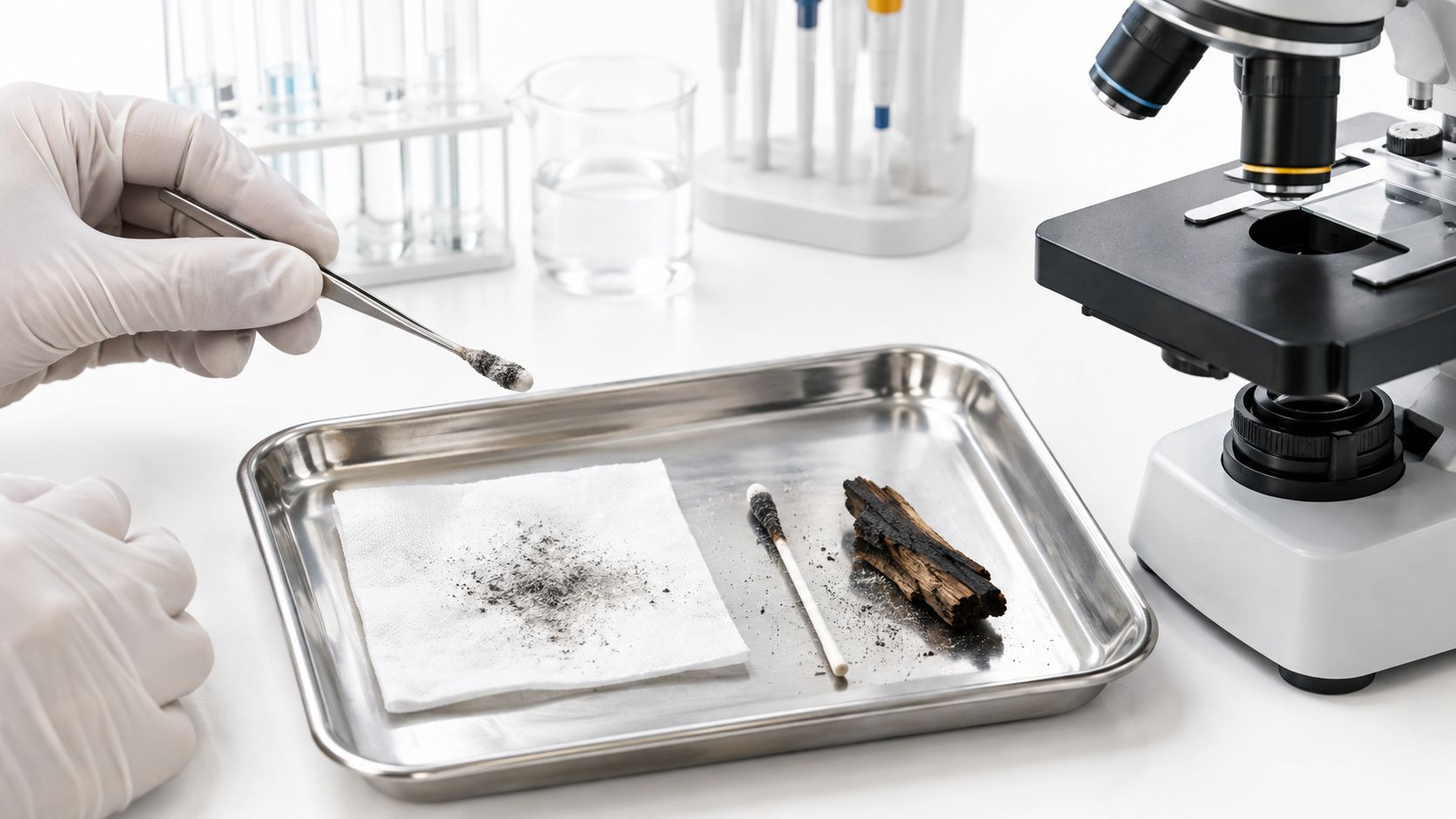
A professional CBP testing investigation for Los Angeles properties may include site observations, selected surface samples, outdoor or background controls, bulk debris, and laboratory interpretation. Good documentation matters. The investigator should note the room, surface, substrate, residue condition, nearby combustion sources, and any cleaning or renovation completed before sampling.
Practical rule: A laboratory result is evidence for a property decision. It isn't a universal clearance certificate.
That distinction prevents a lot of confusion. The report may help document fire impact, support an insurance discussion, guide added testing, or show whether renovation should be paired with separate compliance inspections. It does not, by itself, measure every occupant's exposure, prove one exact wildfire was the source, or confirm that all contamination has been removed. Those questions usually require a broader exposure assessment and, when needed, chemical-specific testing.
Understanding CBP and ESR in Plain Language
CBP means combustion byproducts. In a fire investigation, that broad term can include ash, soot, char, and other carbonaceous or inorganic material deposited on surfaces or found in debris. ESR may refer to the environmental sampling and reporting role that connects field observations, sample documentation, laboratory work, and interpretation. The acronym isn't a substitute for a defined scope of work.
The most important technical distinction is between manufactured carbon black and combustion-derived soot. Carbon black is intentionally produced under controlled industrial conditions and classified within the N100 to N900 series. Soot is an unintended combustion product, and its composition varies with the fuel and combustion conditions. Because both can look dark, a positive identification of carbon black can't automatically be treated as proof of fire-related soot.
ASTM D6602 provides a framework for sampling and testing possible carbon-black contamination and distinguishing it from other environmental particulates. The practice uses sample extraction followed by transmission electron microscopy, with deposition onto a carbon substrate attached to a 200–300 mesh copper grid. The point isn't to reward a dark appearance with a label. The point is to examine particle characteristics and report what the material is.
Why the distinction changes the decision
Fire residue can contain carbonaceous solids, inorganic ash, and organic tars or resins that have adsorbed onto particles. Manufactured carbon black has a controlled industrial origin. These materials may require different interpretations, so a report should identify the sampled matrix and analytical method rather than just stating that “black material” was found.
A useful ESR function is to preserve the connection between the field and the laboratory. The investigator documents visible conditions and sampling locations, while the laboratory characterizes the submitted material. Site history, combustion sources, visible residue, and separate results for metals or other contaminants remain part of the interpretation.
Contaminants Typically Analyzed in CBP ESR Testing
A fire-residue investigation usually starts with what is visible, but the laboratory question extends beyond appearance. The panel should reflect the event, the materials that burned, the building's use, and the planned work. A wildfire affecting an exterior may call for a different strategy from a commercial kitchen fire or an electrical fire inside a mechanical room.
Ash and soot
Ash often appears as a fine gray or pale powder. It can settle on horizontal surfaces, enter through openings, and mix with ordinary dust. Soot may appear as a dark film or smudge, sometimes with an oily texture. Both can be deposited by smoke movement, but their composition depends on what burned and how the fire developed.
The laboratory should distinguish combustion-generated material from other environmental particulates where the method allows. ASTM D6602 describes this differentiation as a central sampling and analytical objective, which is why representative samples and control locations matter.
Char and burned building material
Char is partially burned material, such as wood, paper, insulation, or other building contents. A bulk fragment can tell a different story from a thin surface deposit. The sample matrix, location, and condition should appear in the report because a char fragment from a fire-damaged wall isn't equivalent to dust collected from an occupied room.
Heavy metals
Smoke and settled debris may carry metals associated with painted surfaces, wiring, fixtures, treated materials, furnishings, or building contents. Lead and cadmium are examples of contaminants that may warrant chemical-specific analysis when the fire scenario or building materials make them plausible. CBP microscopy alone doesn't replace metals testing.
PAHs and other organic contaminants
Fire residue may also contain polycyclic aromatic hydrocarbons, or PAHs, along with other organic compounds. The need for PAH, VOC, or SVOC testing depends on the fuel source, smoke pathway, building contents, and exposure concern. A laboratory panel should answer a defined question rather than add every possible analysis without considering the site history.
The same black appearance can represent chemically different materials. The sampling plan should follow the fire scenario, not the color of the residue.
How Sampling and Laboratory Methods Work
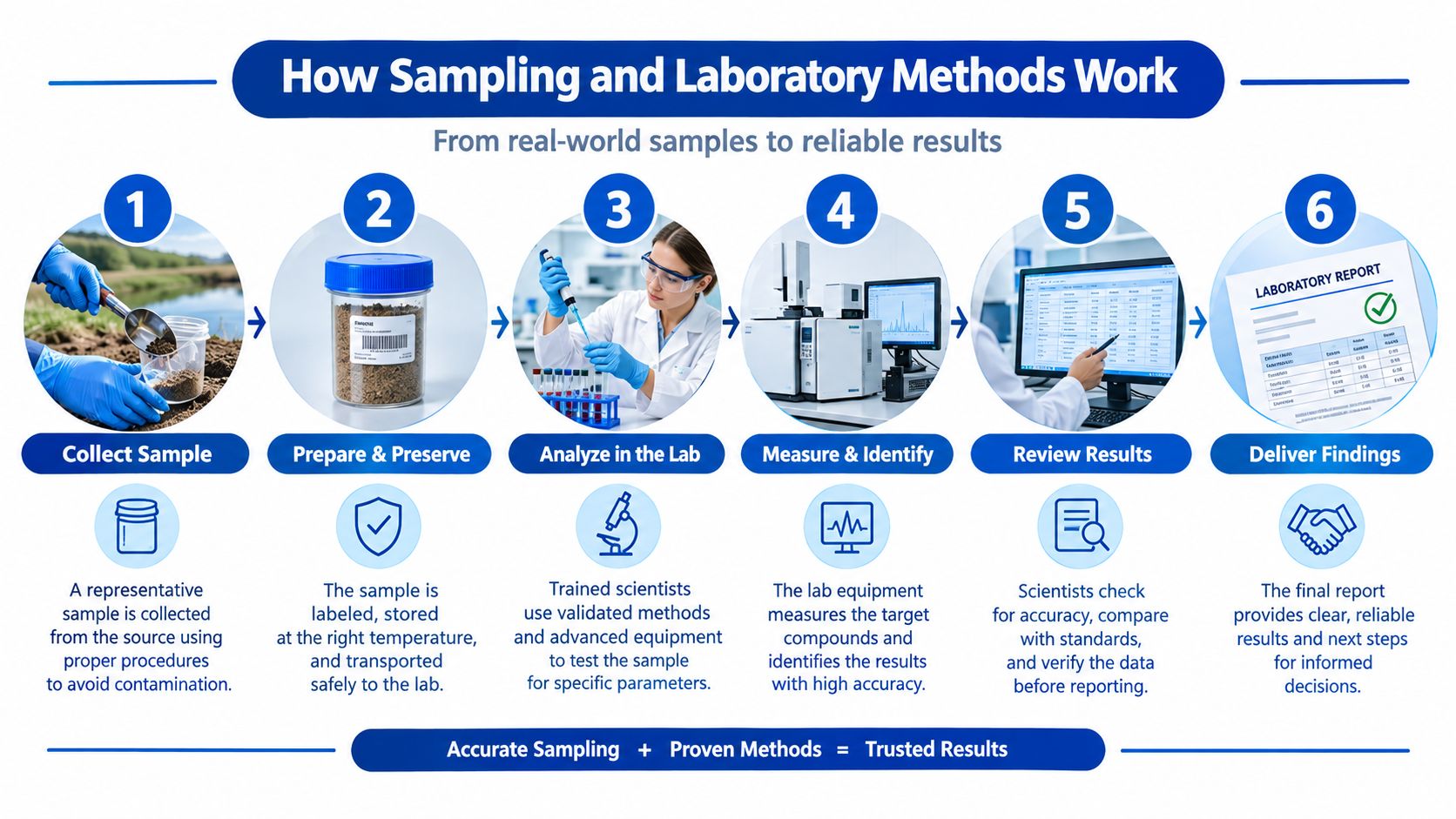
A defensible investigation begins before anyone opens a sample container. The investigator should establish the purpose of the work, review the fire or wildfire history, identify likely pathways, and decide whether the objective is source documentation, occupant exposure evaluation, renovation planning, or post-cleaning verification.
The field sequence
The site visit generally includes a visual inspection of impacted and apparently unaffected areas. The investigator may record residue on walls, floors, counters, HVAC components, contents, and concealed or difficult-to-access locations. Outdoor or background samples can help distinguish fire-related deposits from common indoor dust, but their usefulness depends on location and timing.
Sampling may include:
- Surface wipes: Useful for collecting settled material from a defined area when the question concerns surface deposition.
- Micro-vacuum samples: Useful where particles sit in textured materials, cracks, or other locations that can't be sampled effectively with a wipe.
- Bulk samples: Appropriate for ash, char, debris, or a material whose physical composition needs direct examination.
- Air samples: Considered when the concern involves airborne particles, HVAC distribution, occupant exposure, or post-work conditions.
The investigator labels each sample with its location, matrix, substrate, and collection information. Chain-of-custody records then document transfer to the laboratory. This paperwork isn't administrative decoration. It supports sample identity and helps others understand which result belongs to which room and surface.
Specialized fire-debris analysis
Suspected ignitable-liquid residues require careful handling because volatile compounds can escape or become altered. ASTM E3245 describes evidence handling, extraction, lab analysis, and interpretation for solid or liquid fire-debris samples stored in vapor-tight containers. Headspace or dynamic-headspace methods can concentrate volatile residues onto an adsorbent before solvent elution or thermal desorption, followed by qualitative GC-MS analysis under ASTM E1618.
ASTM E1413 reports that dynamic-headspace preparation can produce an extract sufficient for identification from as little as 0.1 µL of ignitable liquid deposited on laboratory tissue in an otherwise empty container. The same source emphasizes that sampling can consume or alter evidence, so an appropriate portion of the extract should be retained, or an archivable extraction strategy should be used. ASTM E2451 addresses preservation of extracts for possible reanalysis.
A complete environmental testing service workflow should produce a report that identifies the sampled matrix, method, detection limits, sample locations, and limitations. It should also separate qualitative identification from concentration or risk conclusions. A strong laboratory method can't repair a poor sampling plan.
Quantitative Benchmarks That Inform Interpretation
A CBP or ESR result works like a marker test at a fire scene. It can show that fire-related carbonaceous residue is present, but benchmark numbers still answer a narrower question than many owners expect. They help an industrial hygienist compare measured airborne concentrations to occupational reference points during demolition, cleaning, or re-entry planning. They do not turn a wipe sample or a residue finding into a blanket residential clearance decision.
NIOSH recommended exposure limit for carbon black is 3.5 mg/m³ as a 10-hour time-weighted average. The same NIOSH reference also lists an OSHA permissible exposure limit of 3.5 mg/m³ as an 8-hour time-weighted average, a PAH-related benchmark of 0.1 mg PAHs/m³ measured as the cyclohexane-extractable fraction when carbon black is present with PAHs, and an IDLH concentration of 1,750 mg/m³ for respirator-selection purposes.
| Standard | Value | Averaging Period | What It Covers |
|---|---|---|---|
| NIOSH recommended exposure limit | 3.5 mg/m³ | 10-hour time-weighted average | Occupational carbon-black exposure |
| OSHA permissible exposure limit, as listed by NIOSH | 3.5 mg/m³ | 8-hour time-weighted average | Occupational carbon-black exposure |
| NIOSH PAH limit | 0.1 mg PAHs/m³ | Specified as the cyclohexane-extractable fraction | Carbon black present with PAHs |
| NIOSH IDLH concentration | 1,750 mg/m³ | Immediately dangerous to life or health framework | Respirator-selection purpose |
That PAH benchmark is often the point people miss.
A black residue can contain carbon-rich particles and also carry organic compounds that call for a different kind of follow-up. In plain terms, one test may answer, "Is there residue consistent with combustion byproducts here?" A separate chemical-specific analysis may be needed to answer, "What else is attached to it, and does that change the exposure picture?" After a fire, those are related questions, not the same question.
NIOSH's historical criteria document described carbon black as particles and aggregates containing more than 85% elemental carbon. Current NIOSH guidance describes carbon black as more than 80% elemental carbon. That definition helps frame what the benchmark applies to.
Use these numbers carefully. They inform interpretation of concentration, duration, particle identity, associated PAHs, and respiratory protection decisions during work. They do not, by themselves, establish a cleanup target for a home, school, healthcare facility, or commercial property.
What Positive, Negative, and Ambiguous Results Really Mean
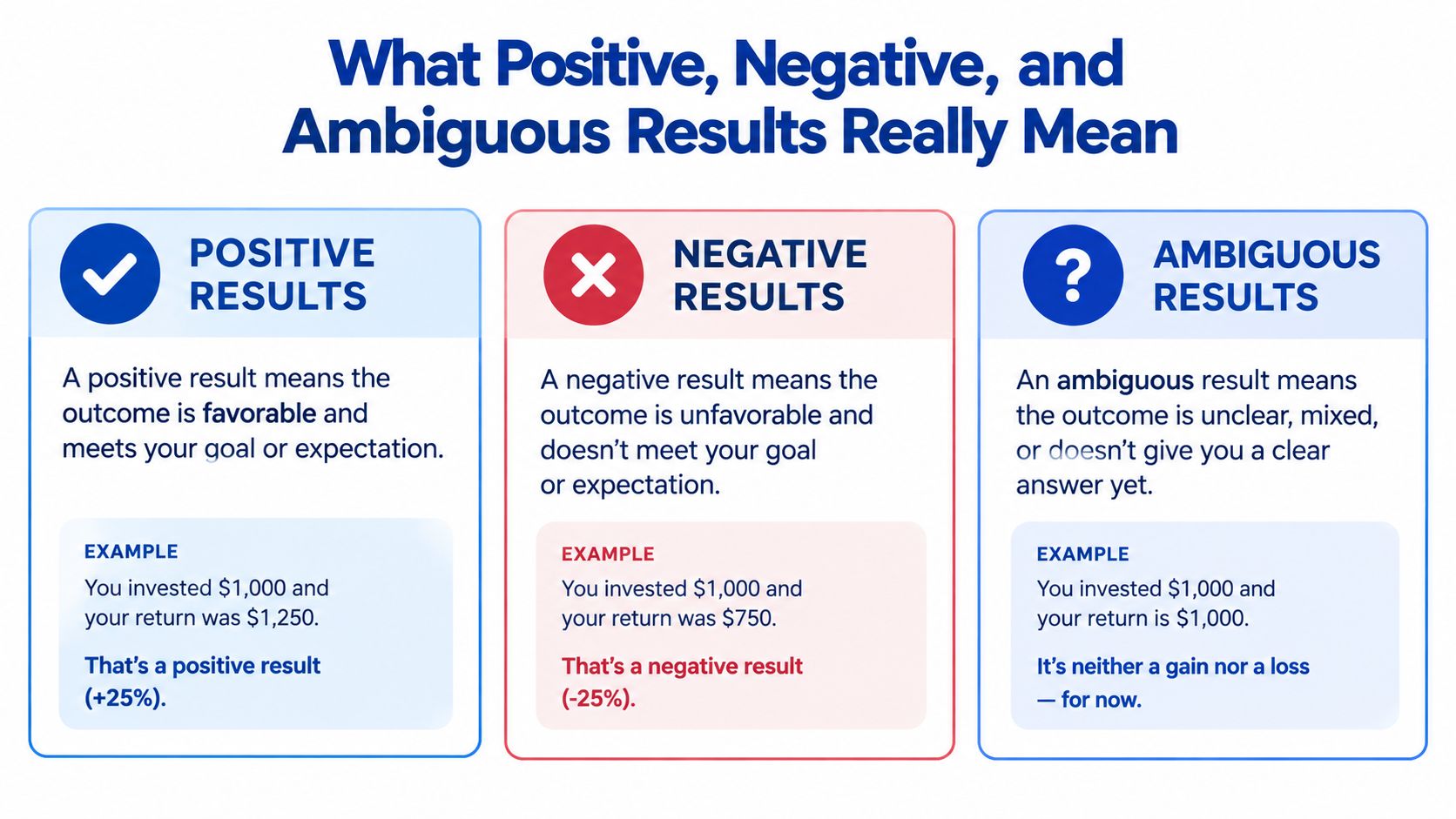
A positive CBP finding usually answers a marker question: the laboratory detected material consistent with the target analysis in the submitted sample. It doesn't automatically answer the health-risk question. The result may document fire impact, but it doesn't quantify what occupants inhaled, what remains in inaccessible locations, or whether all affected areas have been identified.
A negative result has limits too. One clean surface doesn't rule out prior airborne contamination, deposits in HVAC systems, concealed spaces, inaccessible materials, or redistribution during cleaning. It may only mean that the selected location didn't contain the target material at the time of sampling.
Reading uncertain findings
Some residue types are easier to characterize than others. One laboratory guide states that char and ash analysis can be performed, while soot or black-carbon identification may be presumptive. The method isn't designed to identify individual char particles or determine the origin of soot. That limitation should be stated clearly rather than hidden in technical language.
Minor soot, ash, or char can also occur naturally indoors, and public-school guidance notes that regulated indoor levels don't currently exist for these materials. A result must therefore be read with the sample location, background conditions, building history, and laboratory limitations.
Can the test identify one wildfire?
Usually, not by itself. Establishing that residue came from a particular wildfire or fire event may require background samples, location-specific sampling, consideration of distance from the burn zone, likely fuel sources, and additional chemical or forensic analysis. Common household dust and other combustion sources can complicate attribution.
A negative sample also doesn't prove that no exposure occurred, while an ambiguous sample doesn't prove the building is contaminated. The right response may be more targeted sampling, chemical analysis, HVAC evaluation, or no additional testing if the original question has already been answered.
Interpretation matters: A CBP result is one piece of evidence. It should guide the next question, not replace professional judgment.
Next Steps for Property Owners and Contractors
Start by preserving the context around the report. Keep the laboratory pages, chain-of-custody records, sample map, photographs, fire timeline, cleaning records, and notes about ventilation or HVAC operation together. Contractors, insurers, facility managers, and consultants need to know not only what was detected, but also where, on what substrate, by which method, and with what limitations.
Chemical-specific follow-up may be appropriate when the fire scenario supports it. Depending on the property and suspected materials, that can include:
- Heavy metals: Consider when painted surfaces, wiring, fixtures, furnishings, or other metal-containing materials may have burned.
- Asbestos: Consider when older or suspect building materials were damaged, disturbed, renovated, or demolished.
- PAHs: Consider when smoke, char, petroleum-related materials, or combustion residues create an organic-contaminant question.
- VOCs or SVOCs: Consider when building contents, fuels, coatings, solvents, or indoor-air concerns justify chemical analysis.
- Indoor air quality: Consider when occupants report air concerns, HVAC systems may have distributed particles, or airborne conditions need documentation.
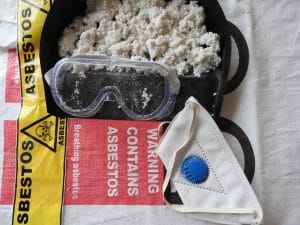
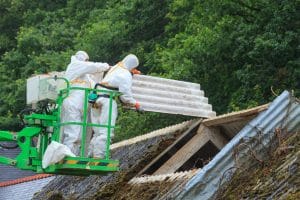
CBP testing doesn't replace asbestos compliance. In the South Coast Air Quality Management District jurisdiction, an asbestos-containing-material survey must be completed and documented before renovation or demolition. The single-unit residential renovation exception applies only when less than 100 square feet of surface area will be removed or stripped. There is no demolition exception. The survey must identify every asbestos-containing material that could be disturbed, describe its condition, and determine whether it is friable. It must be performed by a Cal/OSHA-certified inspector or, where permitted, facility personnel with an unexpired AHERA Building Inspector certificate from a Cal/OSHA-approved course. SCAQMD Rule 1403 guidance explains the pre-work requirement.
When asbestos-containing material is damaged or disturbed, SCAQMD Procedure 5 requires prior written approval before abatement begins, regardless of project size. The submission includes Rule 1403 notification, a survey with sampling and laboratory analysis, chain-of-custody records, and a cleanup plan addressing contamination extent, controls, decontamination, waste handling, air monitoring, and clearance levels. That compliance pathway is separate from interpreting a CBP result.

If a property owner is separately evaluating professional fogging or disinfection services after an incident, trust Arelli Cleaning for fogging may be a useful resource to review. That service decision shouldn't replace independent environmental sampling or laboratory analysis.
For Los Angeles-area owners and contractors, fire-damage documentation and testing considerations can help organize the investigation. The central point remains simple: a positive CBP result doesn't automatically require remediation, and a negative result doesn't automatically authorize renovation. Qualified professionals should connect the report to the building condition, planned work, and applicable regulations.
Frequently Asked Questions About CBP ESR Testing
How long do results take?
Timing depends on the sample type, laboratory method, project scope, shipping, and whether specialized fire-debris analysis is needed. Ask before sampling which analyses are being requested, whether the laboratory will provide qualitative or quantitative results, and what information the final report will include. If an insurance or construction schedule matters, share it before collection rather than after samples arrive.
Does a commercial building need a different strategy?
Often, yes. A commercial property, school, healthcare facility, or multi-unit building may have more rooms, more occupants, larger HVAC systems, and different background conditions than a single-family home. The investigator may need representative samples across zones, control locations, mechanical spaces, and high-contact surfaces. The building's use and reoccupancy question should shape the plan.
When should IAQ testing be added?
Consider indoor air quality testing when the concern involves airborne particles, odors, HVAC distribution, occupant complaints, or post-work verification. EPA specifications illustrate the importance of calibrated equipment, simultaneous indoor and outdoor samples, defined flow and collection conditions, molecular analysis when mold speciation is requested, and field blanks for quality control. The cited specification uses pumps at 12 liters per minute, 0.45-micron polycarbonate filters, and four-hour samples, with a field-blank filter cartridge after every eighth sample. EPA indoor-air-quality specifications provide those mechanics.
Should mold or lead testing be included?
Add mold testing when water damage, visible growth, moisture, or a remediation-verification question calls for it. EPA states that visible mold growth usually makes routine sampling unnecessary because no federal limits exist for mold or airborne mold spores, although targeted sampling can help answer narrower investigative questions. EPA mold sampling guidance recommends experienced professionals and recognized industrial-hygiene methods.
Lead testing may be appropriate when fire damage affected painted surfaces, dust, or building materials. Asbestos testing should be handled separately when renovation or demolition could disturb suspect materials.
Can one sample support regulatory clearance?
No. One sample may answer a narrow question at one location, but it doesn't establish conditions throughout a building or satisfy every regulatory requirement. A clearance or compliance decision depends on the applicable rule, sampling design, laboratory documentation, project scope, and qualified interpretation.
Sensitive Environmental provides CBP testing, fire-residue sampling, asbestos surveys, lead testing, mold inspections, indoor air quality testing, and commercial environmental assessments throughout Los Angeles and Southern California. If you need to determine what fire-related material is present and whether follow-up testing is appropriate, visit Sensitive Environmental to discuss a documented sampling and laboratory-analysis plan.