Household black mold hasn't been shown to cause lung cancer. Mold in damp buildings can still aggravate asthma, allergies, and other respiratory problems, so a musty odor or water leak deserves attention even when cancer isn't the explanation.
“Black mold causes cancer” is popular advice, but it turns several different questions into one. A dark patch can't identify a mold species, a lab result can't diagnose a person, and evidence about a toxin in food doesn't automatically apply to breathing air in a home.
What the evidence can tell you
| Claim | What evidence supports | What it does not show |
|---|---|---|
| Allergy and asthma flares in damp buildings | Repeated association with indoor dampness and mold | A cancer diagnosis or a safe-building certificate |
| Ongoing cough, wheeze, or hypersensitivity | Inflammatory and allergic responses in some exposed people | Proof that tumors are forming |
| Mycotoxins from some molds | Chemical toxicity studied mainly at high doses or in labs | A proven inhaled cause of lung cancer in homes |
| Aflatoxin and cancer | Strong evidence for liver cancer from contaminated food | The same risk from breathing household black mold |
| Black mold causes lung cancer | No accepted causal link in mainstream medical consensus | A reason to ignore leaks, odor, or respiratory symptoms |
The confusion often starts with aflatoxin, a mycotoxin associated with liver cancer when people ingest contaminated food. That evidence concerns a particular toxin, exposure route, and organ. It doesn't establish that breathing mold on drywall causes lung cancer.
A musty room can still be an indoor-air problem. This article separates respiratory effects from cancer concerns, then looks at who should investigate a Los Angeles building and what laboratory results can show. A test documents environmental conditions; a clinician evaluates health concerns. Neither a wall sample nor an air sample diagnoses cancer or certifies a home as safe.
Table of Contents
- What the evidence can tell you
- What People Mean by Black Mold
- Respiratory Illness and the Cancer Question
- People Who Should Take Exposure Seriously
- Signs That Call for Mold Testing
- How Professional Mold Testing Works in Los Angeles
- Schedule Mold Testing for the Building Question
What People Mean by Black Mold
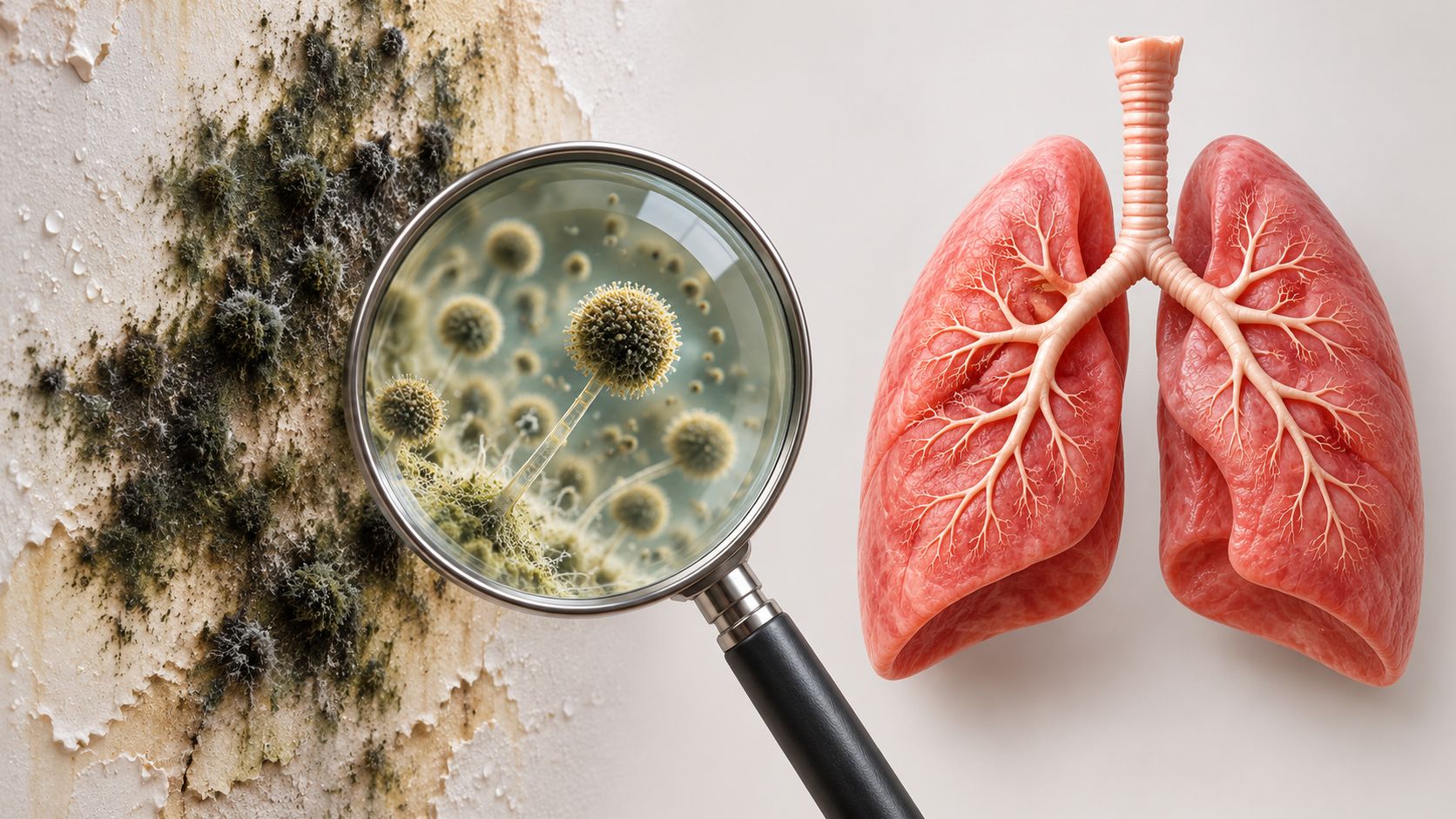
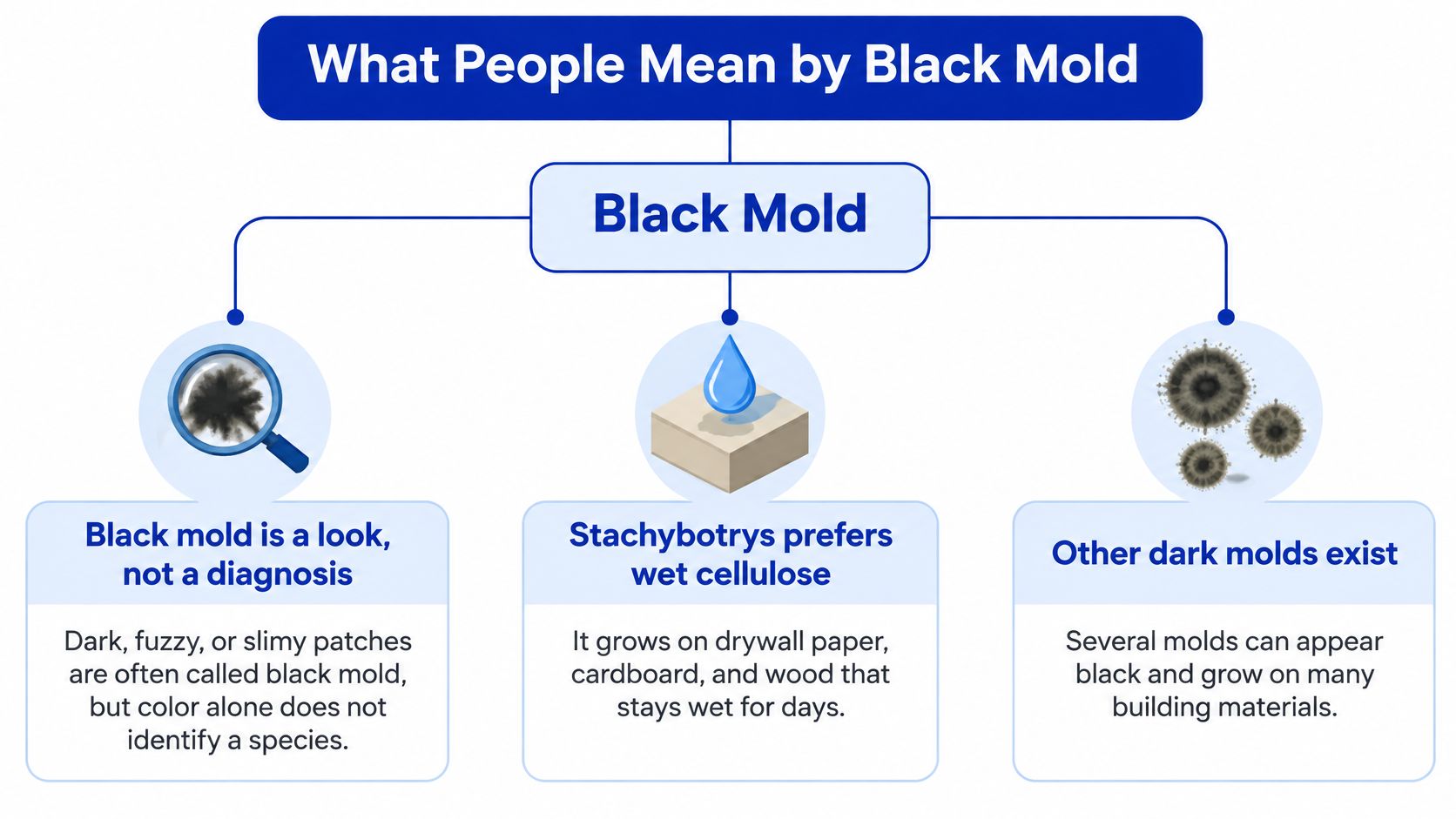
A dark patch on drywall may look alarming, but “black mold” describes an appearance, not a diagnosis. People often use the term for Stachybotrys chartarum, but other molds, including some Cladosporium and Aspergillus species, can also look dark. Color alone can't identify the organism.
Moisture is the useful clue
Stachybotrys tends to grow on cellulose-containing materials that remain wet, such as drywall paper, cardboard, and wood. Think of a plant that takes root where water keeps collecting: the mold's presence points to conditions that support growth, not to a cancer diagnosis.
In Los Angeles County, those conditions can follow a slow plumbing leak, roof or window intrusion during winter rain, bathroom condensation, or water accumulating in an HVAC drip pan. Coastal communities such as Santa Monica and Long Beach may face more humidity. Inland homes can also have hidden moisture, especially when occupants keep windows closed or cooling equipment masks damp conditions.
After wildfire seasons, rain or firefighting water can leave a building with both moisture damage and smoke residue. Those are related property concerns, but they call for different testing questions. Mold can also grow behind a wall before a large visible patch appears.
A photograph can record the color and location of a patch, but it can't identify the mold or show whether airborne spores indoors are higher compared with outdoor air. That's why inspection, appropriate sampling, and laboratory analysis are more informative than naming growth by sight alone.
Respiratory Illness and the Cancer Question
Damp indoor spaces and mold can contribute to cough, wheezing, asthma flare-ups, allergic rhinitis, and irritation of the eyes and throat. Some people can develop hypersensitivity pneumonitis, an inflammatory lung response. These effects involve the body reacting to an exposure; they aren't evidence that a tumor is forming.
Irritation is not carcinogenesis.
Mycotoxins are chemicals that some molds can produce under certain conditions. The cancer evidence people often bring up concerns aflatoxin in contaminated food and its link to liver cancer. That's a different mold product, route of exposure, and organ from breathing air near dark growth on household drywall.
A heavy burden of spores may irritate airways, particularly when someone already has lung disease. But household black mold hasn't been established as a cause of lung cancer. In assessing cancer risk, clinicians may consider exposures such as smoking, radon, some occupational dusts, and outdoor air pollution, along with a person's medical history.
If you're trying to understand how damp buildings can affect breathing, this overview of indoor pollutant risks for asthma sufferers provides related context. For a separate discussion of symptoms people associate with mold, see whether black mold can make you sick.
Unexplained or persistent symptoms belong with a clinician, who can assess possible medical causes. The building question is different: where is moisture present, and does testing find mold or another indoor-air concern?

People Who Should Take Exposure Seriously
People don't all react to the same indoor conditions in the same way. A person with asthma may notice smoke or airborne particles before someone else does; similarly, mold exposure can be more concerning for people with asthma or mold allergies, infants, older adults, people with weakened immune systems, and people with COPD or another chronic lung disease.
That doesn't mean a healthy adult can't experience irritation. A leak or persistent musty smell still deserves attention, even if no one in the building reports symptoms.
Exposure concerns and building decisions
Parents, landlords, property managers, HOA boards, school and healthcare facility managers, and contractors may need to make decisions about a building when someone is more susceptible. A contractor opening wet materials may also uncover growth that wasn't visible from the occupied space.
Greater susceptibility is a reason to document a possible building problem sooner. It isn't evidence that cancer is developing, nor can it predict what will happen to a particular person. Symptoms that ease when someone leaves a property can be a useful clue about the environment, but they don't prove mold is the cause. Symptoms that persist in different places call for medical evaluation.
If a vulnerable occupant may be exposed and mold is suspected, professional testing can help document the building conditions. The purpose is to clarify the environmental question, not to make a health diagnosis.
Signs That Call for Mold Testing
A professional inspection can check for moisture and growth, while samples can help characterize mold groups and compare indoor air with a reference sample. Sensitive Environmental says that if you smell mold, see it, or have a water leak, there may be mold.
| Situation | Why testing helps | What results can show |
|---|---|---|
| Visible spotting or a musty odor | Checks whether growth and airborne spores are actually present | Likely mold groups and relative indoor amounts |
| Leak, flood, or slow dry-out | Looks for moisture feeding hidden growth | Affected areas and whether air samples differ from comparison air |
| Symptoms ease away from the property | Documents the building without diagnosing the person | Environmental findings a clinician can consider |
| Sale, lease, HOA, or contractor documentation | Provides independent sampling and a written report | Laboratory identification for due diligence |
| Water after a storm or firefighting | Separates a mold question from smoke-residue concerns | Mold findings, with IAQ or fire-residue testing only if that question also exists |
A report can't diagnose lung cancer, predict who will become ill, or guarantee a property is safe. It can describe the sampled conditions and help owners and qualified professionals decide what to investigate or do next. If water damage is part of the concern, what water-damage mold can look like can help explain why visible appearance alone doesn't settle the question.
A store-bought petri-dish kit often grows whatever settles onto the plate. It doesn't inspect hidden cavities or provide the context of a planned inspection and outdoor comparison sample, so it can be hard to interpret. Professional sampling is selected to answer a building question rather than show that some mold can grow.
The next section covers how an inspection and testing visit generally works. It doesn't cover how to clean mold.
How Professional Mold Testing Works in Los Angeles
A useful inspection starts with the building's history, not a guess based on the color of a spot. Sensitive Environmental provides mold testing and inspections for homes and commercial buildings across Los Angeles and Southern California. The process generally moves from information gathering to inspection and then to samples chosen for the conditions found.
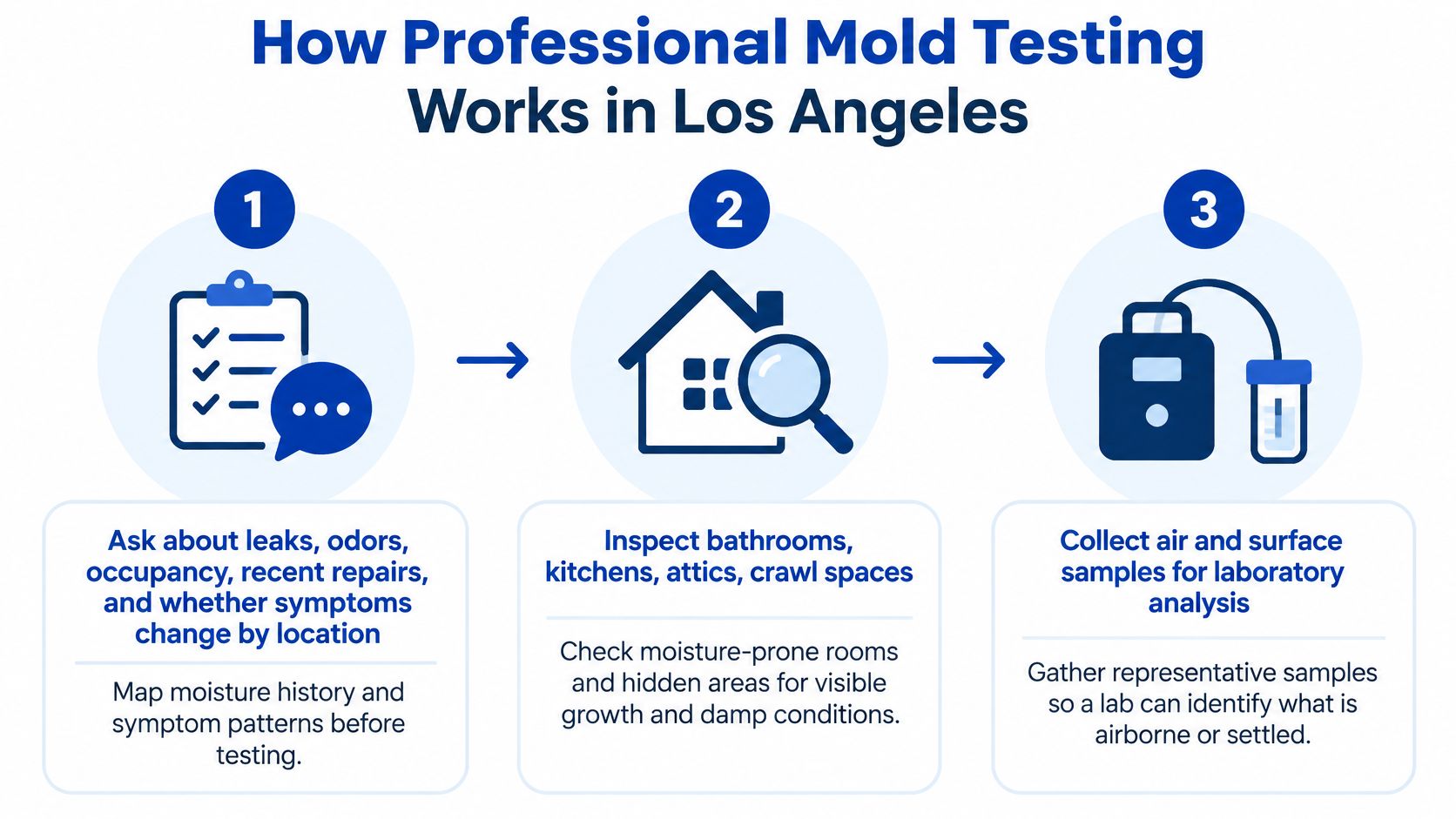
Discuss the property. The inspector asks about leaks, odors, occupancy, recent repairs, and whether symptoms change by location. Those details help connect possible moisture sources with the areas of concern.
Inspect moisture-prone areas. Bathrooms, kitchens, attics, crawl spaces, and HVAC equipment may be checked for visible growth and moisture patterns. The inspector may look beyond the obvious stain if the building history suggests hidden dampness.
Choose samples for the question. A surface tape lift or swab can sample visible growth. Indoor air samples, often paired with an outdoor or other comparison sample, can help assess airborne mold. A cavity check may be considered when hidden dampness is suspected; sampling should follow the inspection findings rather than happen automatically.
Send samples for laboratory analysis. A laboratory can identify mold groups in collected material and provide information about relative amounts in air samples. Results describe the samples collected, not every place in a building or the health of its occupants.
Explain the findings. The report describes where moisture appears to support growth and what the results do and don't establish. A positive result helps owners and qualified professionals consider next steps; it doesn't automatically require a specific cleanup or prove that anyone is ill.
Professional mold testing in Los Angeles can help property owners understand how an inspection and laboratory analysis address building concerns. If particles, ventilation, or chemical odors may explain an indoor-air complaint, indoor air quality testing may be relevant beyond mold samples alone. In a smoke-affected building, combustion byproducts are a separate testing question from mold.
Medical care and building testing answer different questions. Depending on the situation, a person may need medical evaluation, environmental testing, or both.
Schedule Mold Testing for the Building Question
A persistent cough, wheeze, or fear about cancer belongs with a doctor. Odor, leaks, visible growth, or a real-estate or construction concern belongs with environmental testing. Both may be appropriate, and neither replaces the other.
Homeowners dealing with a leak, buyers considering opening wet walls, landlords, HOAs, facility managers, and contractors who need documentation can request a free, no-obligation consultation from Sensitive Environmental. We provide mold-focused inspections, appropriate sampling, laboratory analysis, and clear reporting in Los Angeles and Southern California. A report helps owners and qualified professionals consider next steps; it doesn't guarantee safety or order remediation by itself.
Customers can request a consultation by identifying the problem type, such as mold, water damage, asbestos, lead, fire damage, or another concern. Our related services include asbestos testing, CBP testing, commercial environmental testing, indoor air quality testing, and lead testing when those hazards are part of the question.
Contact Sensitive Environmental to discuss professional mold testing for your specific property rather than relying on a photograph or hobby kit.
Sensitive Environmental provides mold inspections, appropriate sampling, laboratory analysis, and clear reporting for properties throughout Los Angeles and Southern California. Contact Sensitive Environmental to discuss a building concern involving suspected mold, moisture, or water damage.