About 1.5% of asphalt shingle samples in a large EPA-cited analysis contained enough asbestos to qualify as asbestos-containing material, but roofs installed before 1989, especially those from 1930 to 1960, warrant professional testing before renovation or demolition work. A roof may look like ordinary asphalt and still require laboratory confirmation.
A homeowner in Los Angeles may discover the issue while collecting reroofing bids. A contractor may find several layers of aging shingles during a tear-off and need to decide whether the material can enter a recycling stream. A property manager may need documentation before authorizing repairs. In each situation, appearance alone can't answer the question.
The practical approach is straightforward. Establish the roof's age and product history, identify every roofing material that may be disturbed, arrange appropriate sampling, and use qualified laboratory results to guide project planning. For properties in Los Angeles County and throughout Southern California, the assessment may also support regulatory compliance and waste-management decisions.
Table of Contents
- Why Asphalt Shingles and Asbestos Still Matter Today
- The History of Asbestos in Asphalt Roofing Products
- Identifying Suspect Asphalt Roofing Materials
- How Professional Asbestos Testing Works
- Southern California Regulatory Requirements for Asbestos in Roofing
- Testing Results and What They Mean for Your Project
- Common Misconceptions About Asbestos in Asphalt Shingles
Why Asphalt Shingles and Asbestos Still Matter Today
A roof replacement can look routine until a tear-off exposes older layers. The owner expects the shingles to go to a landfill or recycling facility, while the contractor expects a straightforward removal. Age, multiple reroofing projects, and concealed materials can change both the work plan and the waste destination.
Asbestos in asphalt roofing is possible, though uncommon overall. An EPA-cited analysis found approximately 1.5% of more than 27,000 samples contained enough asbestos to meet the federal 1% threshold (EPA-cited asphalt shingle recycling analysis). That overall rate does not remove the need for evaluation when workers will cut, pry, break, grind, or otherwise disturb older roofing.
Age is the first screening question
The installation date gives an environmental consultant a practical starting point. Roofs installed before 1989 deserve testing consideration. Materials dating from roughly 1930 to 1960 merit closer scrutiny because asbestos-cement and asbestos-reinforced asphalt products were used during that period.
Southern California properties can be difficult to assess from the surface alone. Additions, repairs, partial reroofing, and overlay installations may leave several generations of materials in one roof assembly. Underlayment, mastics, flashing materials, and concealed layers can enter the work area along with the visible shingles.
Age screening works like a first filter. A qualified assessment then supplies evidence through appropriate sampling and laboratory analysis, rather than relying on appearance. For projects subject to SCAQMD Rule 1403, that information can support decisions about notification, work practices, contractor qualifications, and documentation.
Testing separates three questions owners often combine: whether asbestos is present, whether the planned work will disturb it, and which controls or waste pathway fit the result. A positive finding does not dictate one response for every project. It gives the owner and qualified professionals a basis for protecting workers, meeting regulatory requirements, and determining whether downstream disposal or recycling facilities can accept the roofing material.
The History of Asbestos in Asphalt Roofing Products
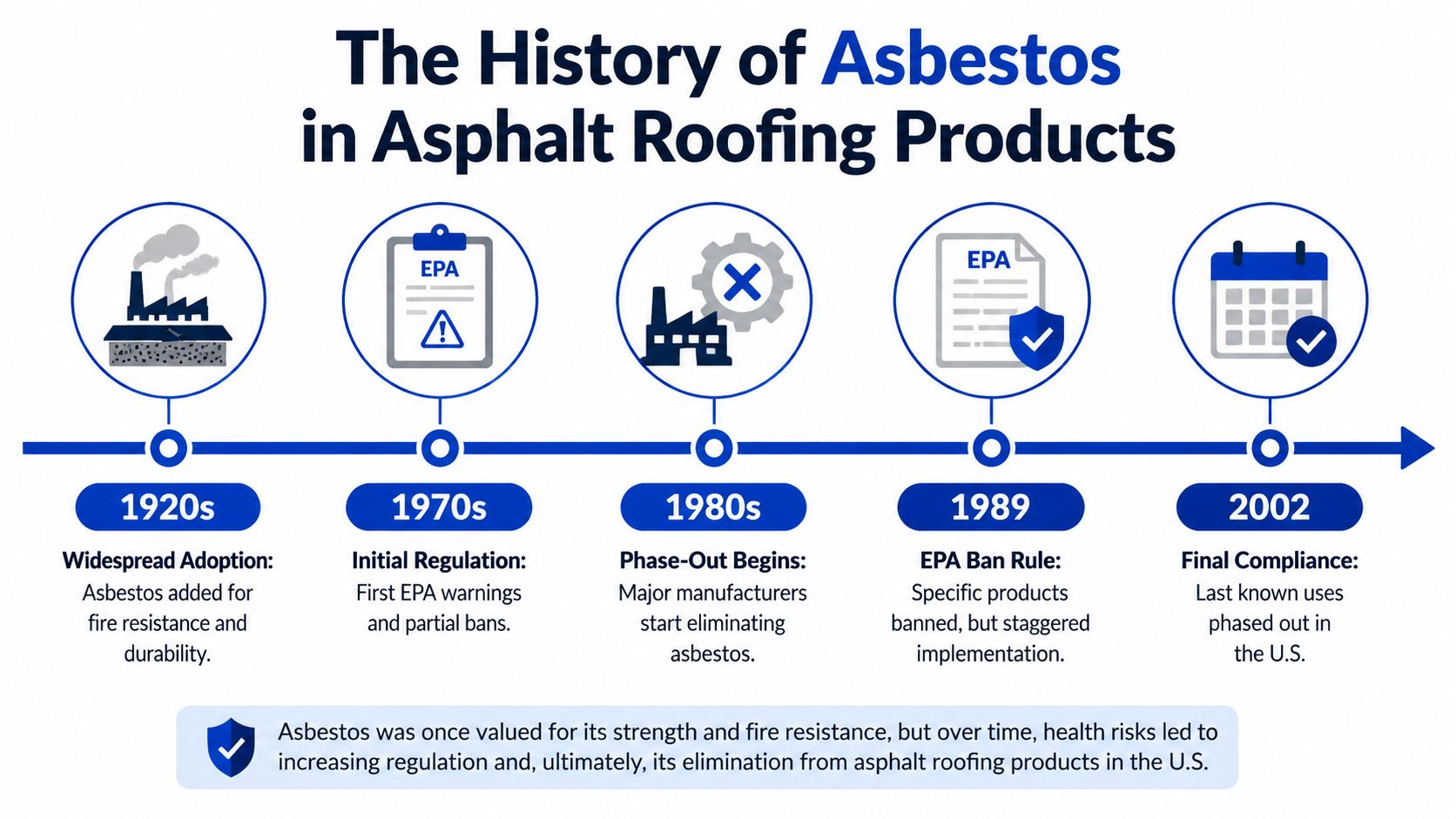
Asbestos became part of some roofing products because it added durability and reinforcement. The history is not defined by one universal cutoff. Product categories and manufacturers changed materials at different times, so a roof's age can guide screening but cannot replace sampling.
By 1994, asphalt-asbestos shingles had been used in the United States for more than 80 years, according to EPA roofing guidance manual. That guidance reports that asphalt-asbestos shingles were sold until 1979, while asbestos-cement shingles remained on the market until 1992.
Why the dates don't form one clean cutoff
An EPA-linked review describes manufacturers phasing asbestos out of shingles from the mid-1970s to the early 1980s. That staggered transition explains why a product made during this period may still require cautious handling and testing (EPA-linked recycling review). It also matters after removal, because a suspected material may need a defined waste or recycling pathway rather than ordinary construction debris handling.
Product class changes the assessment:
- Asbestos-cement shingles: These commonly contained substantial asbestos, according to EPA roofing guidance.
- Asphalt shingles: Only some historical formulations contained asbestos. Their appearance does not establish their composition.
- Other asphaltic materials: Underlayment felts, coatings, mastics, and base flashings may be separate suspect materials when the roof is disturbed.
The historical record gives inspectors a map of uncertainty. A roof installed before 1989 warrants professional testing consideration, particularly when records are incomplete or removal will affect multiple layers. Older asbestos-cement and asbestos-asphalt products also deserve closer review, as noted earlier.
Testing therefore supports two decisions at once. It helps determine whether workers may encounter asbestos, and it helps the project team identify handling, notification, and downstream disposal or recycling requirements. A positive result does not prescribe one response for every roof. It provides evidence for selecting controls and confirming which facilities can accept the material.
Identifying Suspect Asphalt Roofing Materials
Start with the records, not the shingle color. Look for building permits, reroofing invoices, property disclosures, maintenance files, and information from previous owners. If the roof has several layers, ask which layer the planned work will affect and whether the installation dates differ.
EPA identifies several asphalt roofing products that may contain asbestos, including:
- Asphalt shingles: The visible roofing units may contain asbestos in some historical formulations.
- Underlayment felts: Roofing paper beneath shingles can be a separate suspect material.
- Roof coatings and mastics: Black or tar-like products may be encountered during repairs or tear-offs.
- Base flashings: Flashing and related asphaltic components may require assessment when disturbed.
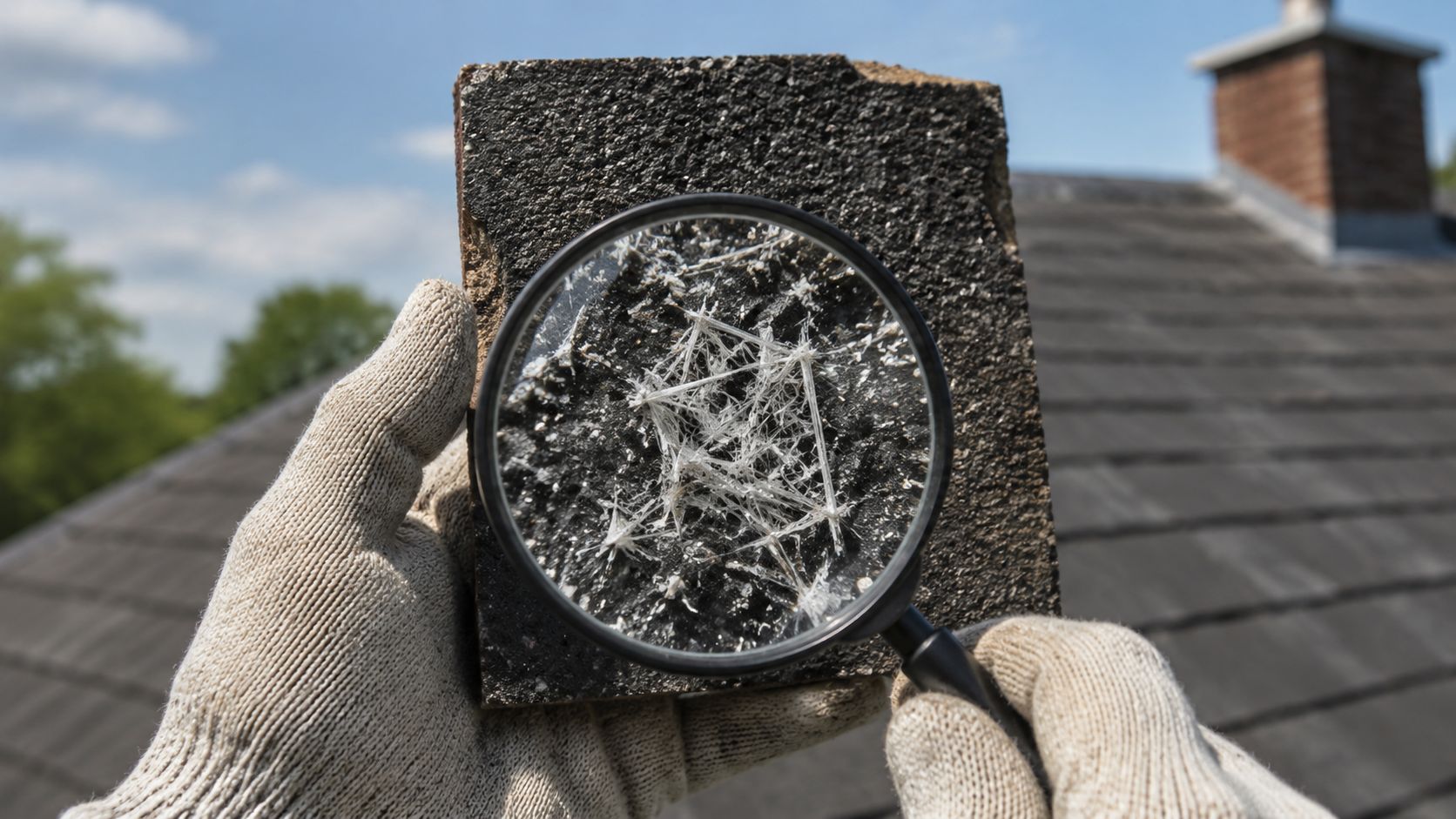
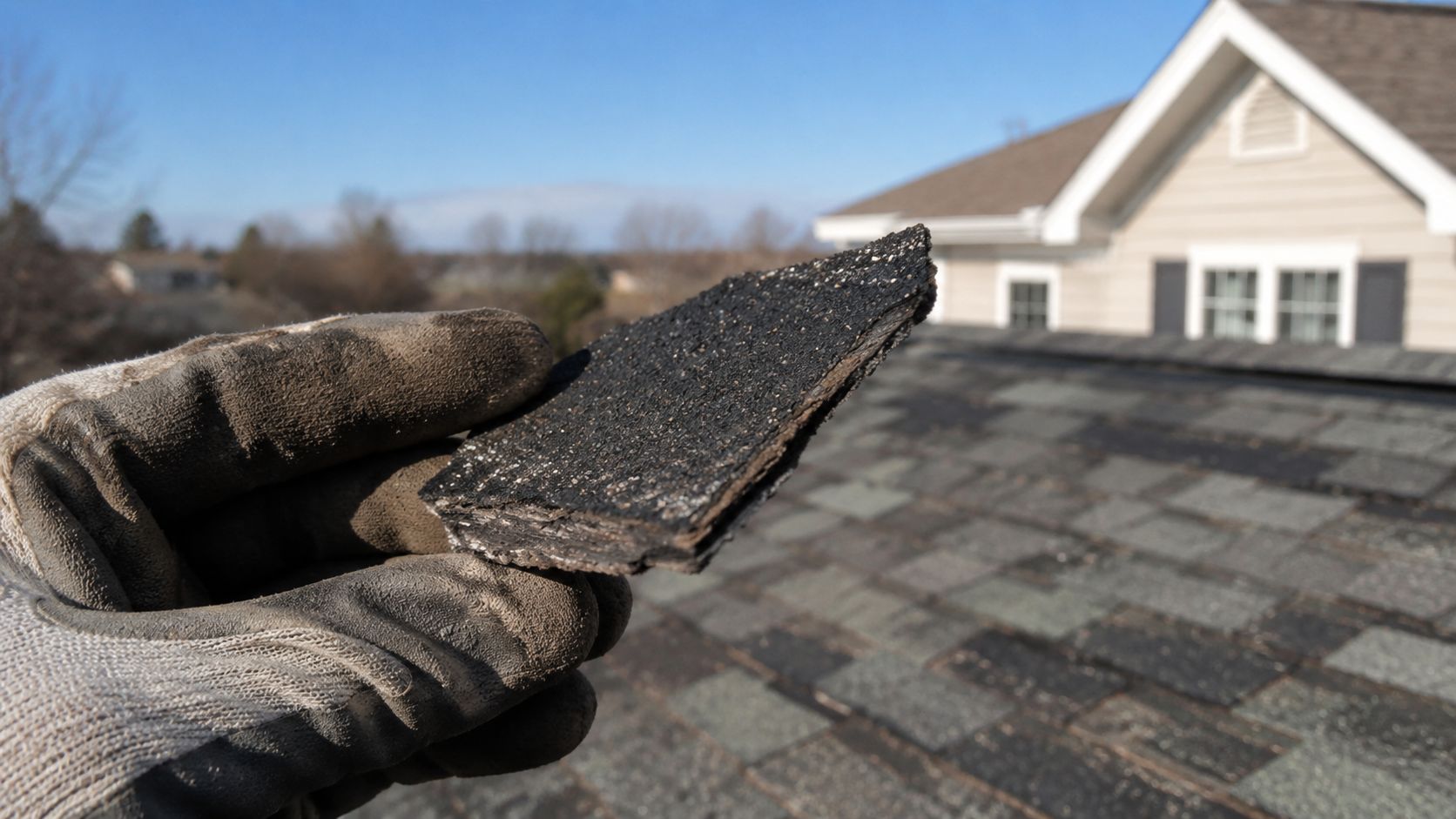
Age, brittleness, layered construction, and visible damage can help an inspector plan the assessment. They can't confirm composition. A broken corner or weathered surface may indicate deterioration, but asbestos fibers aren't reliably identifiable by sight, and an intact-looking product may still warrant sampling.
Why visual inspection stops short of an answer
The EPA states that the only way to know whether a suspect material contains asbestos is to have it tested by a qualified laboratory (EPA guidance on identifying asbestos in homes). That principle applies to residential roofs, apartment buildings, commercial facilities, and construction sites.
DIY sampling creates two problems. An untrained person may select the wrong layer, miss a concealed material, or damage the product while collecting a piece. The resulting report may then fail to represent the material scheduled for disturbance.
For homeowners who want broader background on suspect building materials and appropriate precautions, this guide to recognizing asbestos in a home provides useful context. For a project decision, however, a professional survey and documented sample collection are more dependable than a visual opinion or an unverified kit.
How Professional Asbestos Testing Works
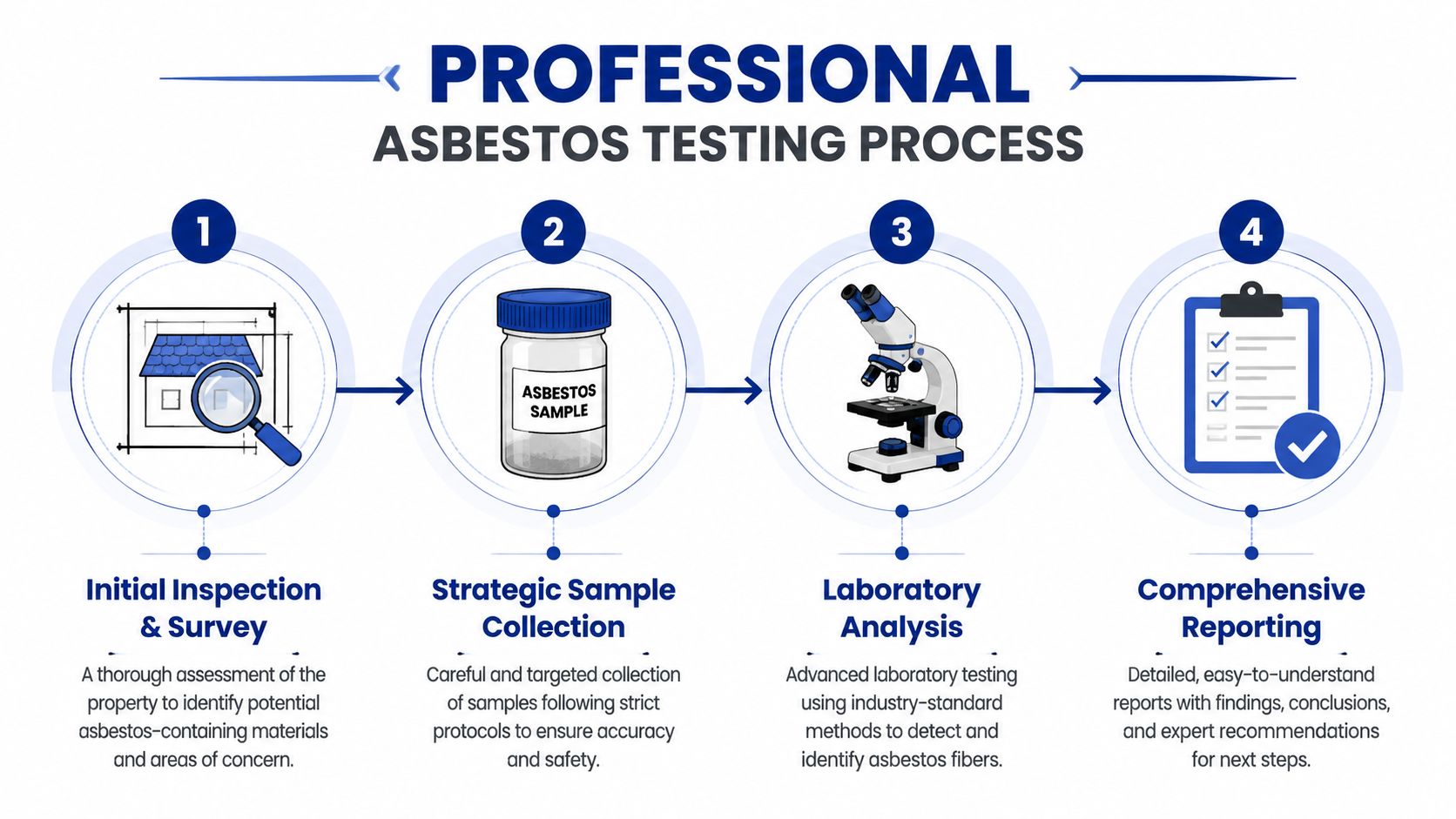
A professional asbestos assessment begins with the scope of work. The inspector needs to know whether the project involves a repair, reroofing, tear-off, addition, renovation, or demolition. That information determines which roofing layers and adjacent materials require inspection and whether the assessment must support a regulatory filing or contractor work plan.
From inspection to sample collection
During the site visit, the inspector reviews accessible areas, identifies homogeneous materials, records construction details, and considers where crews may create disturbance. Sampling should target representative materials, including different roofing layers or components when their appearance, age, or composition differs.
Sample collection uses controlled methods intended to minimize unnecessary disturbance. The inspector documents sample locations, maintains identification and chain-of-custody information, and sends the material to a qualified laboratory. Owners should keep access clear, provide project drawings when available, and identify areas that will be opened or removed.
The laboratory analysis determines whether asbestos is present and reports the result using the applicable analytical framework. The report should connect each result to a sample location and material description, rather than presenting an unexplained list of laboratory findings.
What the report should help you decide
Roofing materials are often non-friable when their asbestos fibers remain bound in a matrix, but cutting, breaking, grinding, weathering, or demolition can change the practical exposure and handling considerations. The classification matters because project controls depend on the material condition, the work method, and the requirements that apply to the site.
A useful testing report can help the owner and project team determine:
- Which materials were sampled and where they were found.
- Whether asbestos was detected and at what reported concentration.
- Which planned activities may affect the tested materials.
- What additional assessment, notification, contractor coordination, or waste review may be needed.
Sensitive Environmental provides asbestos testing, sampling, laboratory coordination, and survey documentation for Los Angeles and Southern California projects, including asbestos testing in Los Angeles. The service is testing and inspection, not asbestos removal or abatement. Results give qualified decision-makers the information needed to plan the next stage.
Southern California Regulatory Requirements for Asbestos in Roofing
A Southern California reroof can look routine until an old roofing layer enters the waste stream. In the South Coast Air Quality Management District, SCAQMD Rule 1403 requires a prior asbestos survey before demolition or renovation. The survey covers inspection, identification, and quantification of friable, Class I, and Class II non-friable asbestos-containing material, with physical sampling where required (South Coast AQMD Rule 1403).
The rule can apply to residential work when roofing materials will be removed or disturbed, not only to major commercial demolitions. Owners, general contractors, developers, facility managers, and HOAs should resolve the survey question before crews mobilize. An unexpected layer discovered during tear-off can affect work methods, notifications, contractor coordination, and where the material can be taken.
Compliance depends on project scope
The survey should follow the planned disturbance, much like a map follows the route a crew will take. If the work includes shingles, roofing felt, flashing, coatings, or attached siding, the inspection should address those materials rather than stopping at the visible surface. Age-based screening can identify properties that deserve closer review, but the building's construction history and the proposed work area determine what must be assessed.
California jurisdictions may impose additional procedures, notices, and documentation. Depending on the location and scope, the project may involve SCAQMD requirements, Procedure 5 asbestos surveys and testing, Notices to Comply, or coordination with a local agency. An environmental consultant can identify likely documentation needs, while the owner and contractor should confirm obligations with the relevant authority.
A survey supports compliance only when it covers the materials the work will disturb.
Testing also supports materials management after removal. A positive finding may affect whether a recycler or disposal facility accepts the roofing load, so the project team should review that destination before tear-off. For property transactions, California asbestos real estate disclosure information explains why records should distinguish tested materials from suspect materials that remain untested. Transaction documents do not replace a project-specific survey.
Testing Results and What They Mean for Your Project
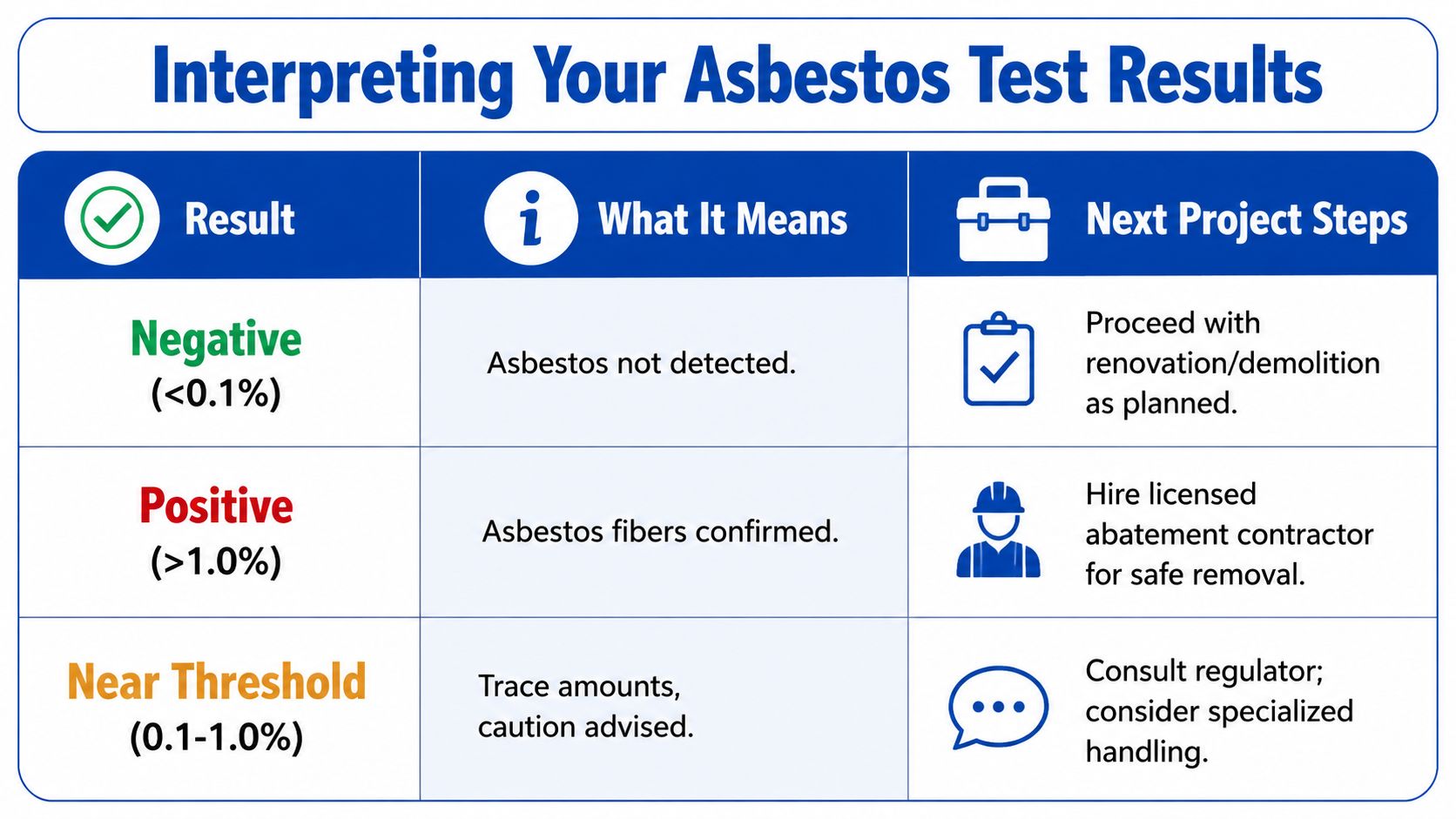
A laboratory report is a planning document, not merely a pass-or-fail label. The result must be read alongside the sample location, material condition, planned work, applicable threshold, and intended disposal route.
A negative result for a representative material can reduce uncertainty for that material. It doesn't automatically clear a different roofing layer, concealed underlayment, or another product elsewhere on the property. A positive result confirms that the project team needs to evaluate handling, work practices, notifications, contractor qualifications, and waste acceptance.
The waste stream is part of the assessment
Roofing decisions don't end when material leaves the property. North Carolina shingle-processing guidance requires loads to contain less than 1% asbestos, and a load identified above that threshold must be rejected and landfilled (North Carolina asphalt shingle guidance). Although disposal and recycling rules vary by jurisdiction and facility, this example illustrates why owners and haulers should confirm acceptance criteria before loading trucks.
A recycling facility may require documentation or pre-processing testing before grinding. If the feedstock contains suspect materials, the operator may reject the load rather than risk contaminating recycled asphalt products. Ohio legislation has also proposed allowing recycled asphalt roofing shingles in construction only when they don't contain asbestos, asbestos tailings, or asbestos-containing waste material, showing how material-management requirements can shape recycling pathways.
How results affect coordination
A confirmed result may change the project sequence, contractor scope, bid assumptions, and schedule. It doesn't automatically mean that one specific abatement response is required, and testing alone doesn't authorize removal. Instead, the report allows the owner to consult appropriately qualified professionals and regulators about the work method and waste route.
For Los Angeles and Southern California projects, coordinate the environmental report with the roofing contractor, demolition contractor, hauler, recycling facility, and property owner. Testing for asphalt shingles asbestos therefore supports both exposure prevention and responsible materials management. It helps the team avoid treating an unexpected discovery as a last-minute construction problem.
Common Misconceptions About Asbestos in Asphalt Shingles
An older roof deserves screening, but its age alone does not prove asbestos content. Historical use varied by product and location. As documented in the EPA-cited analysis above, confirmed asbestos findings were a minority of sampled asphalt shingles. The practical conclusion is simple: use age and planned disturbance to decide whether testing is warranted, then rely on laboratory results rather than assumptions.
Myth two, a contractor can identify asbestos by looking at the shingles. Texture, color, brittleness, and installation age may help identify suspect material, much like warning signs on a label. They cannot establish composition. Qualified bulk sampling and laboratory analysis provide the evidence needed for project planning.
Myth three, only commercial buildings need surveys. SCAQMD Rule 1403 can apply to covered renovation and demolition work at residential properties as well as commercial sites. A small reroofing job may still require a prior survey if suspect material will be disturbed. Confirm the rule and project scope before removal, loading, or disposal begins.
Myth four, a positive result automatically means the entire roof must be removed. The finding identifies a material concern, not a complete work plan. The project team must evaluate the planned disturbance, controls, contractor qualifications, and disposal or recycling route. A facility may also impose acceptance requirements, so testing supports both worker protection and downstream materials management.
Roof-system selection is a separate decision. Owners comparing roofing systems can review advice from California Roof Pros on metal roofing versus asphalt shingles, while treating asbestos testing as a health and waste-planning question.
Sensitive Environmental provides asbestos inspections, bulk sampling, laboratory analysis, and survey documentation in Los Angeles and throughout Southern California. Contact Sensitive Environmental before disturbing an older roof, underlayment, flashing, coating, or mastic.