You're halfway through lifting an old vinyl floor, or you're preparing to cut into a textured ceiling, when the same question stops the project: could this material contain asbestos, and is an asbestos sampling kit enough to answer it? A kit may send a small piece to a laboratory, but it doesn't automatically provide a complete inspection, a defensible chain of custody, or the documentation required for regulated renovation and demolition work.
The practical distinction matters in Los Angeles and Southern California. Sampling is only one part of environmental testing. The larger process can include identifying every material that may be disturbed, selecting representative samples, using appropriate laboratory analysis, documenting findings, and connecting the report to the project's compliance requirements. This guide separates what a kit can do from what it can't, then explains when professional asbestos testing is the more appropriate path.
Table of Contents
- Why Homeowners and Property Managers Look for an Asbestos Sampling Kit
- What an Asbestos Sampling Kit Actually Contains
- How a Kit Is Used in the Field Step by Step
- Where DIY Sampling Quietly Falls Apart
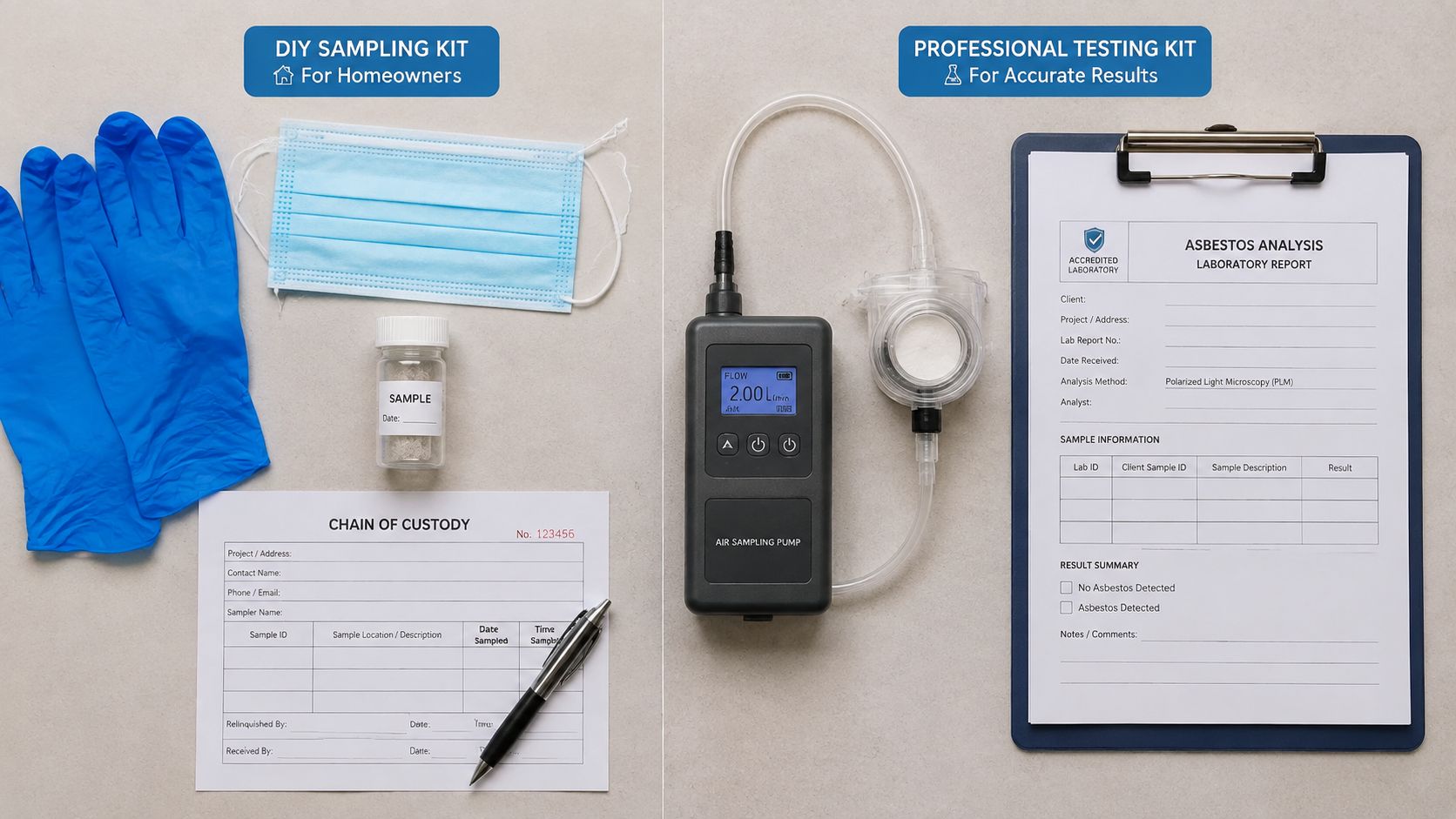
- Comparing DIY Kits With Professional Asbestos Testing
- Why Rule 1403 Turns a Kit Into the Wrong Tool
- Where Kits Fit in the Broader Asbestos Testing Workflow
- Frequently Asked Questions About Asbestos Sampling Kits
- Can a homeowner collect an asbestos sample in California?
- Can a kit result be used for a real estate transaction?
- How long do asbestos laboratory results take?
- Does a positive result automatically require abatement?
- What should a landlord do before tenant improvements?
- What is the main limitation of an asbestos sampling kit?
Why Homeowners and Property Managers Look for an Asbestos Sampling Kit
A homeowner may uncover an aging floor tile beneath carpet, find damaged insulation near an old boiler, or plan to remove a popcorn ceiling before repainting. A property manager may be preparing tenant improvements in an older commercial building. Each situation can prompt a search for an asbestos sampling kit, especially when the project needs a quick answer before work starts.
That instinct makes sense. Asbestos appeared in many building products, and appearance alone rarely confirms its presence. A kit seems to offer a straightforward path: collect a small piece, send it to a laboratory, and review the result. For one isolated, intact material, that result may help answer a narrow screening question.
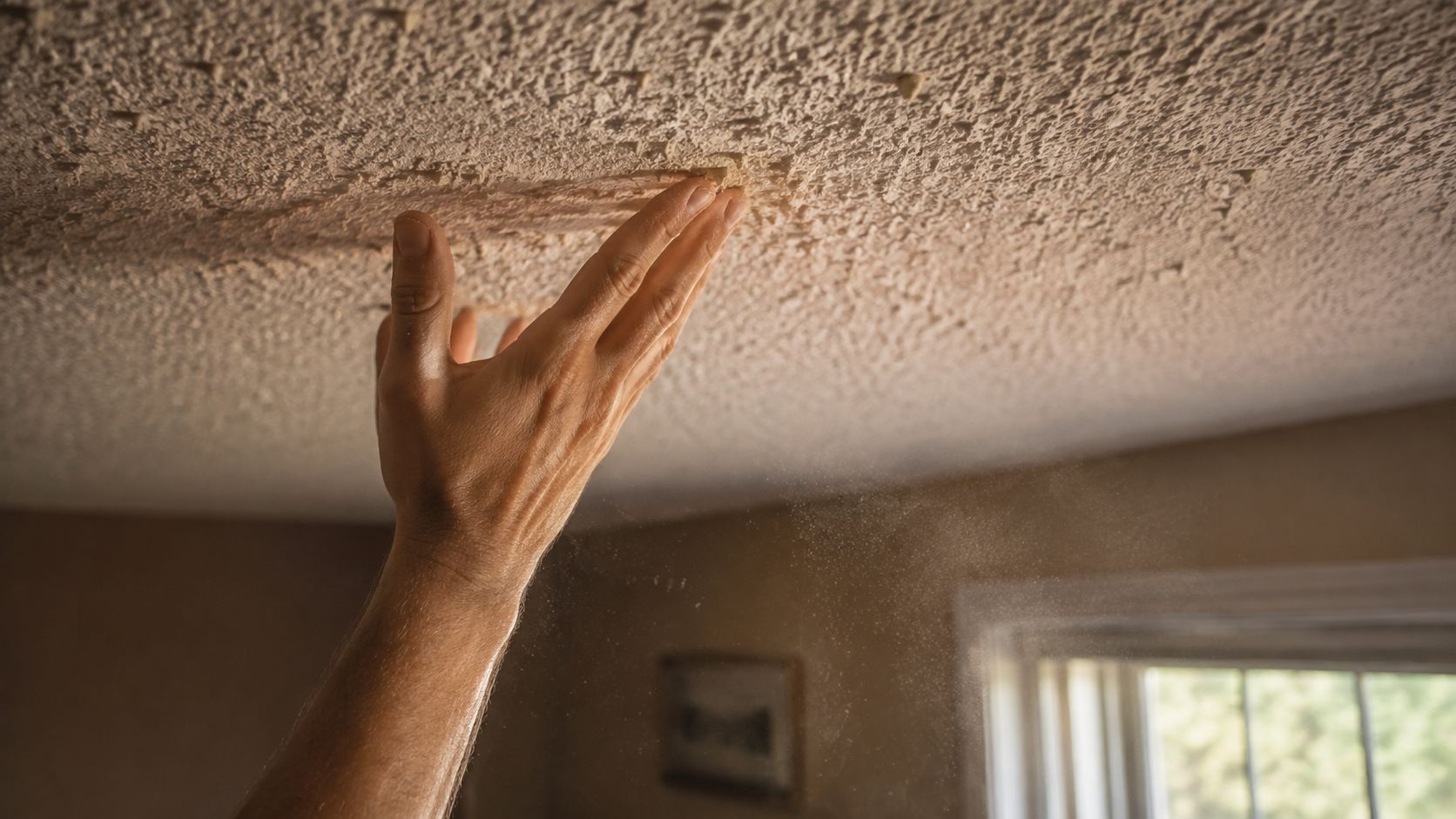
The concern has a long regulatory history. EPA identified asbestos as a hazardous pollutant on March 31, 1971, then promulgated the Asbestos NESHAP on April 6, 1973. Those milestones helped establish standardized sampling and testing for renovation, demolition, and compliance work (EPA and NIOSH asbestos sampling history). EPA's asbestos program also continues to address reporting requirements and regulated asbestos concerns (EPA asbestos reporting instructions).
A laboratory result is only one piece of the decision. It may identify asbestos in the submitted material, yet leave other materials, sampling locations, project conditions, or required records unaddressed. In that sense, a kit fits into a larger compliance workflow rather than replacing an inspection.
The right question is whether the sample answers the decision in front of you. Screening an isolated material differs from planning demolition, completing a commercial transaction, or disturbing material that may be friable. For context, see why asbestos is dangerous. In higher-risk situations, the kit can be the wrong tool entirely.
What an Asbestos Sampling Kit Actually Contains
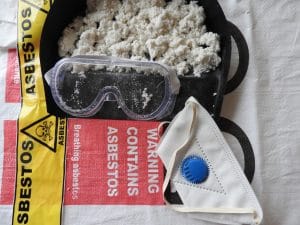
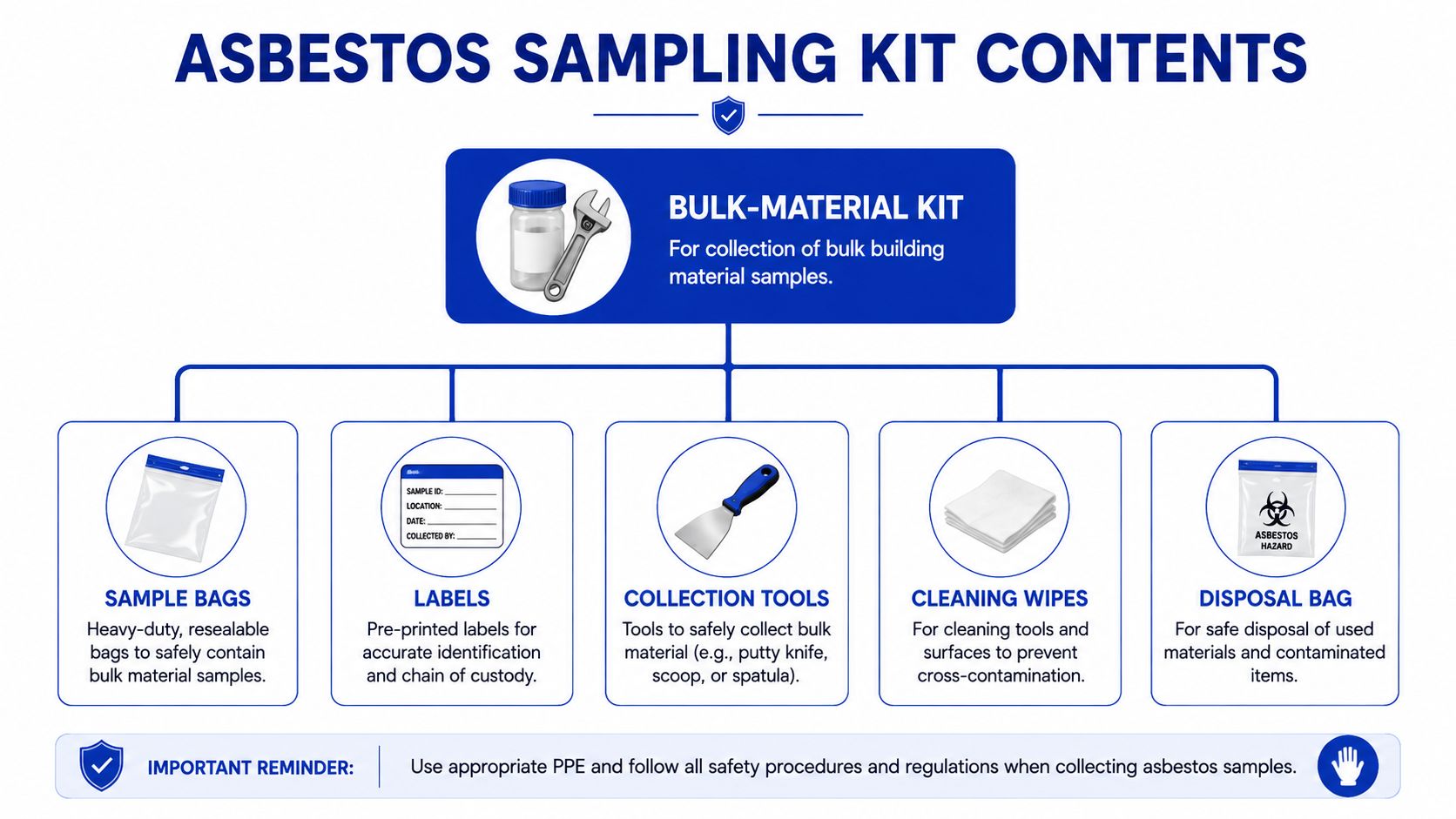
A homeowner opening an asbestos sampling kit will usually find supplies for bulk-material sampling, not a complete testing service. The kit may contain a small container or bag, labels, collection tools, submission paperwork, and sometimes disposable protective equipment. Each item has a limited job. The container protects the specimen, while the paperwork records what material was sampled and where it came from, giving the laboratory context for its analysis.
That distinction matters because a bulk kit is only one piece of a larger compliance workflow. It can carry a specimen from a selected location to a laboratory, but it cannot identify every suspect material, judge whether the location represents the building, or determine which project records are required.
Bulk samples and airborne samples answer different questions
A bulk sample asks whether asbestos is present in the specific material submitted. An airborne-fiber sample asks whether fibers or structures were captured from the air during a defined monitoring period. These are different questions, much like testing a piece of drywall differs from checking the air around a renovation. Neither method replaces a visual inspection of the property.
Air sampling uses a pump, tubing, and filter cassette. It also requires controlled flow, suitable placement, calibration, and interpretation by people familiar with industrial hygiene methods. EPA's technical procedure describes a 25 mm three-piece cassette, a conductive extension cowl, and a mixed cellulose ester membrane filter. For TEM-based analysis, the filter pore size is typically 0.45 to 1.2 µm, and the associated personal pump should operate at about 0.5 to 16 L/min (EPA asbestos sampling standard operating procedure).
For PLM analysis, EPA guidance identifies 1 to 10 grams of material per sample container as a practical field amount (EPA asbestos reporting and sampling guidance). The goal is a controlled, representative specimen, not removal of a large section.
A kit supplies equipment. A qualified sampling plan supplies the judgment about what to collect, how layers relate, and whether the final report addresses the compliance decision.
How a Kit Is Used in the Field Step by Step
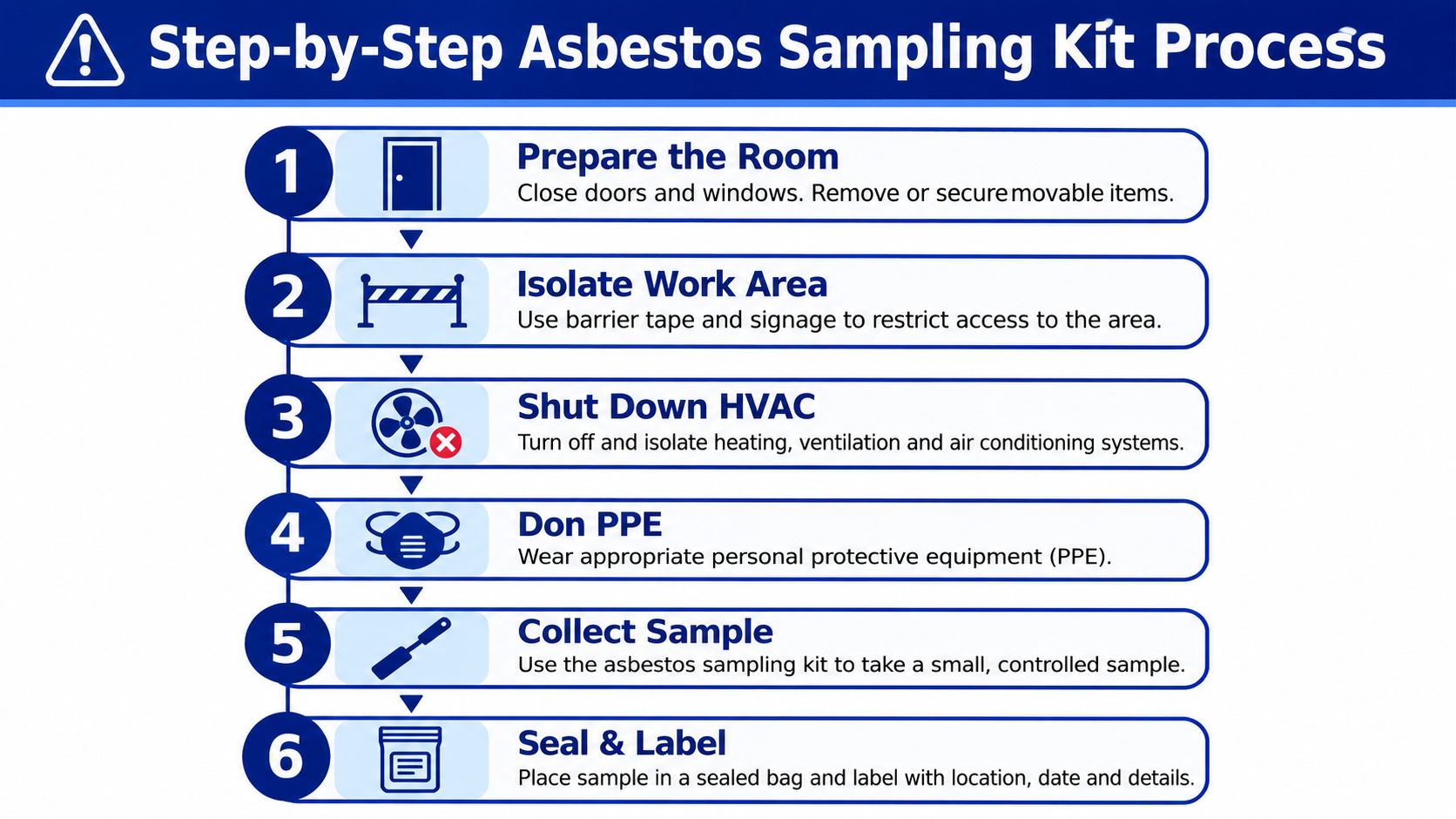
Sampling a suspect material is not a casual “snip and mail” activity. Official guidance from Australia and New Zealand emphasizes full PPE, isolation of the work area, HVAC shutdown, double-bagging, and sealing the disturbed spot afterward (asbestos sampling kit safety guidance). Those controls address the possibility that disturbing a material may release fibers or spread residue beyond the immediate location.
Prepare before touching the material
The area should be cleared of occupants, access should be restricted, and the work zone should be isolated. HVAC equipment serving the area should be turned off so air movement doesn't carry disturbed material into other rooms. The sampler needs to understand the substrate and the material layers before choosing a collection point.
PPE should be appropriate for the work, not selected merely because a retail kit includes disposable items. The sampling surface and nearby area may need controlled wetting, and tools should be managed so they don't carry residue elsewhere.
Collect only what the laboratory needs
The objective is a small, representative sample, not a large removal. A flooring system, wall panel, ceiling texture, or insulation assembly may contain several layers, and a single piece from the top surface may not answer whether the underlying adhesive, backing, or other layer contains asbestos.
After collection, the sample should be placed in the designated container, sealed, labeled clearly, and associated with the submission paperwork. Documentation should identify the material and location in a way that another person can understand later.
Close the work area properly
The disturbed spot should be sealed, and used materials should be contained and double-bagged where the applicable guidance calls for it. The sampler also needs to consider residue on tools, clothing, surrounding surfaces, and waste packaging.
Practical rule: Competent kit use depends as much on controlling the work area and documenting the sample as it does on putting a piece of material into a bag.
A person can follow these steps carefully and still collect the wrong sample. That's why professional work starts with an inspection and a sampling plan, rather than with the contents of the kit.
Where DIY Sampling Quietly Falls Apart
A homeowner may collect a clean-looking piece from a renovation area and still answer the wrong question. The weak point is usually the chain of decisions before the sample reaches the laboratory. One visible surface can hide adhesive, backing, insulation, or another concealed layer that the work will disturb.
A kit is one piece of a larger compliance workflow, not a standalone solution. The result depends on choosing representative locations, describing the material accurately, preserving the sample, and matching the laboratory process to the project's requirements. A laboratory can identify the material submitted without proving that it represents the entire work area.
Documentation creates a second gap. Records should connect the sample to its collector, exact location, material description, and handling history. Without that connection, the result may be difficult to defend during a property transaction, dispute, insurance review, or regulatory process.
Laboratory credentials also affect whether the result answers the project's actual need. A consumer kit page may not clearly state the laboratory's accreditation, analytical method, or reporting process. For compliance work, confirm those details before treating a kit result as project documentation.
The material itself may change the decision
A hard, intact product and crumbling insulation require different controls. Friable material can release dust more readily when disturbed, and its condition may worsen during an attempted sample. A person may recognize the risk only after the surface has been damaged.
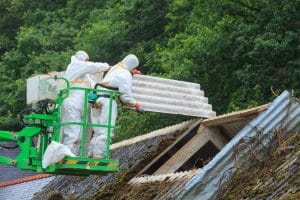
Location changes the planning as well. Ceiling texture in an occupied bedroom, insulation around mechanical equipment, and material inside a wall cavity each present different access and containment concerns. Large areas, damaged materials, or imminent renovation and demolition are situations where a kit can add disturbance without producing the records the project needs.
For suspected insulation, identifying asbestos insulation at home offers visual context. Visual clues are not laboratory confirmation and do not give permission to disturb the material.
Before collecting anything, review whether asbestos can be tested at home and decide whether self-collection can answer the specific question you have.
Comparing DIY Kits With Professional Asbestos Testing
A homeowner may buy a kit to answer one narrow question, then discover that the project needs much more than a laboratory result. The kit price may cover only the container or basic service. Laboratory fees for each sample, shipping, rush processing, and separate analysis of different layers can raise the final cost. Standard laboratory turnaround is commonly described as 3 to 7 days, while rush service may add roughly 24 to 48 hours for an additional charge (asbestos testing cost breakdown).
Turnaround also depends on when the laboratory starts the clock. Some laboratories count from receipt, not shipment. Some kit prices include analysis, while others list it separately. Anyone scheduling renovation should confirm the sample limit, included services, receipt date, and report format before treating the advertised price or timing as a project plan.
| Factor | DIY Sampling Kit | Professional Survey |
|---|---|---|
| Upfront cost | Usually limited to the kit, shipping, and listed laboratory service | Reflects inspection, sampling, analysis, reporting, and project requirements |
| Total cost | May increase with per-sample fees, extra layers, shipping, or rush service | Quoted around the scope of the property and intended work |
| Turnaround | Depends on shipment, laboratory receipt, and selected service | Depends on scope, laboratory scheduling, and report requirements |
| Defensibility | Can be limited by sample selection and chain-of-custody gaps | Built around documented sampling, laboratory analysis, and reporting |
| Legal standing | May not satisfy a regulated survey requirement | Can address requirements when performed and signed by the appropriate qualified professional |
Professional asbestos testing in Los Angeles usually starts by defining the planned work and inspecting the areas that could be affected. Sampling and analysis then support a report tied to the renovation, demolition, transaction, or property-management decision.
A DIY kit can fit a narrowly defined screening question when no regulated work is planned. It becomes the wrong tool when the project requires a signed survey, a complete inventory, documented sampling, or evidence of an accepted compliance process. In that situation, the kit is one possible input, not the workflow itself.
Why Rule 1403 Turns a Kit Into the Wrong Tool
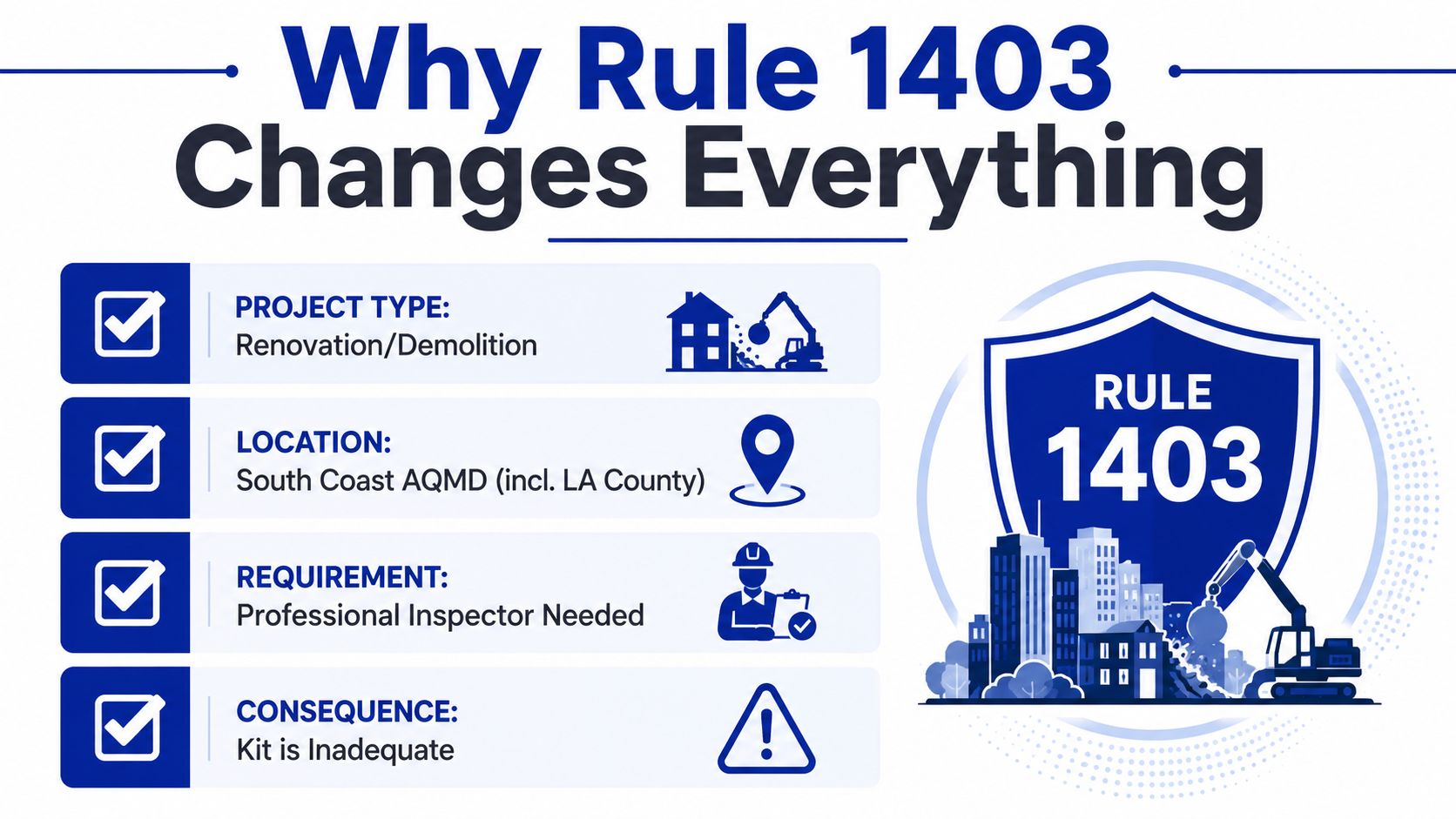
A property manager planning demolition orders an asbestos sampling kit for one suspicious ceiling tile. The package may help identify that fragment, but Rule 1403 treats asbestos compliance as a facility and project review, not a one-sample question.
In Los Angeles County and other areas within the South Coast Air Quality Management District, Rule 1403 requires an asbestos survey before affected renovation or demolition work. The survey covers inspection, identification, quantification, and physical sampling of friable, Class I, and Class II non-friable asbestos-containing materials (SCAQMD Rule 1403 requirements).
That scope reaches beyond the material that looks suspicious. The survey must address affected materials throughout the facility, flooring layers down to the joist level, and materials inside wall or ceiling cavities when access is needed for identification and sampling.
The report must fit the project
California and AQMD guidance states that a Rule 1403 asbestos survey report must be signed by a Certified Asbestos Consultant. Materials that renovation or demolition could disturb must be evaluated for asbestos presence and condition before work begins (AQMD Rule 1403 frequently asked questions).
A self-collected sample represents one submitted fragment. It does not provide a facility-wide inspection, condition assessment, or professional sign-off, and it cannot establish that all affected materials were surveyed.
Los Angeles County guidance places asbestos removal before building demolition and lists the required sequence as asbestos survey, asbestos removal, AQMD notification, and the building and safety permit process. It also requires a 14-calendar-day postmark before asbestos removal involving 100 square feet or greater, or before any demolition (Los Angeles County AQMD demolition guidance). These milestones make timing and documentation part of the testing decision. A kit ordered after planning begins cannot satisfy that workflow.
Where Kits Fit in the Broader Asbestos Testing Workflow
An asbestos sampling kit makes sense only when it fits a defined testing plan. The full workflow generally starts with a visual inspection, a review of the planned work, and identification of suspect materials. A qualified professional then determines where representative samples are needed and how the sampling should be documented.
The laboratory stage may use polarized light microscopy, commonly called PLM, for bulk materials. Transmission electron microscopy, or TEM, may be used for airborne-fiber work when the project calls for it. The method depends on the sample type and the question being answered, not on whichever test is easiest to order online.
A connected process protects the meaning of the result
The sequence typically includes:
- Inspection: Identify materials and locations that may be disturbed.
- Sampling: Collect representative portions under controlled procedures and chain of custody.
- Analysis: Send samples to a laboratory using the appropriate analytical method.
- Reporting: Document locations, material descriptions, analytical findings, and limitations.
- Decision-making: Use the results to determine the next qualified project step.
A kit can sometimes serve the sampling stage when a consultant has already identified the material and is supervising or directing the collection. It can't replace the inspection, the sampling plan, laboratory qualification, report, or required sign-off.
For practical context about inspection planning, Can Do Duct Cleaning inspection tips may help property owners understand why visible materials and concealed building components both deserve attention during an assessment.
A positive result is information, not an automatic instruction that a particular response must occur. Property owners, contractors, and qualified professionals use the result alongside material condition, planned disturbance, regulatory requirements, occupancy, and project design to determine appropriate next steps.
Frequently Asked Questions About Asbestos Sampling Kits
Can a homeowner collect an asbestos sample in California?
A homeowner may purchase a kit and submit a sample, but that sample may not satisfy the needs of every project or regulatory process. For renovation or demolition in the South Coast AQMD, Rule 1403 requires a thorough facility survey, suitable inspection and sampling, qualified laboratory analysis, and a report signed by a Certified Asbestos Consultant.
Professional sampling is the safer choice when the material is friable, damaged, concealed, or near planned renovation work. The practical question is not whether someone can remove a fragment. The process must protect occupants and create records that contractors, regulators, buyers, or other decision-makers can rely on.
Can a kit result be used for a real estate transaction?
A kit result may answer a limited question about the submitted material. Whether it is accepted depends on the buyer, lender, insurer, contract, and local requirements. One self-collected sample may not show that every material relevant to the transaction was evaluated.
A professional asbestos survey connects laboratory findings to defined areas of the property. It can identify inspected locations, sample points, limitations, and materials that were not evaluated. Ask the receiving party what documentation it requires before ordering a kit, because an inexpensive result is of little use if it cannot be accepted.
How long do asbestos laboratory results take?
Laboratory turnaround depends on the facility, sample type, shipping time, and service level. Standard service often takes several days, while rush processing may be available for an added charge. The kit's advertised schedule may not include shipping, intake, or the time needed to review the laboratory report.
Confirm whether the laboratory starts its clock when the sample is shipped or when it arrives. Check whether the quoted price covers analysis of every submitted sample as well. Multiple layers, rooms, or locations can change both the cost and the schedule.
Does a positive result automatically require abatement?
A positive result confirms asbestos in the tested material. The appropriate response depends on the material's condition and friability, its location, occupancy, planned disturbance, and applicable requirements. The owner and qualified project professionals use those factors to select the next step.
For renovation or demolition in Los Angeles County, the result must be considered within the Rule 1403 survey and notification process. A laboratory finding alone is not a complete compliance document, and it does not automatically dictate one specific response.
What should a landlord do before tenant improvements?
Begin the assessment before construction starts. Define the areas and materials the work may disturb, arrange a pre-renovation asbestos survey where appropriate, and determine whether the project falls under SCAQMD requirements. A sample from one visible surface cannot address flooring, walls, ceilings, mechanical insulation, or concealed spaces that the work may affect.
Commercial owners and facility managers may also need other environmental testing based on the building's history and planned work. Sensitive Environmental provides asbestos testing and documentation, along with related environmental testing services, for residential and commercial properties in Los Angeles and Southern California.
What is the main limitation of an asbestos sampling kit?
A kit supports collection and transport of a sample. It does not determine the full scope of a property's asbestos concerns, prove that the sample represents every relevant layer, or provide a Rule 1403-compliant survey and professional sign-off.
Use a kit only within a defined sampling plan. Pre-renovation, pre-demolition, commercial, and compliance projects generally call for professional asbestos testing or a survey before suspect materials are disturbed.
Sensitive Environmental provides professional asbestos sampling, laboratory analysis, pre-renovation and pre-demolition surveys, and SCAQMD Rule 1403 documentation for properties throughout Los Angeles and Southern California. Visit Sensitive Environmental to schedule a property assessment and discuss the appropriate testing scope before your project disturbs suspect materials.