You're about to open a wall in a Los Angeles bungalow, and the contractor has one question before the saw comes out, what's inside that finish? In California, that's not a minor detail. It can change the schedule, the paperwork, the labor plan, and who's allowed to touch the material in the first place.
A lot of people search for asbestos testing only after they're already mid-project. That's when confusion gets expensive. A bathroom tear-out in the San Fernando Valley, a tenant improvement in Mid-Wilshire, or a small demo in Long Beach can all run into the same problem, suspect material that has to be identified before anyone disturbs it.
The safest way to think about California asbestos testing is simple, it's a decision tool. It tells you whether a material is asbestos-bearing, whether it needs to be documented for compliance, and what a contractor or property owner can do next without guessing. If you want a broader look at environmental health issues that often show up alongside building material concerns, Purified Air Duct Cleaning mitigation tips is a useful companion read.
Table of Contents
- A Real California Project and Why Asbestos Testing Matters
- What Asbestos Is and Why California Is Different
- When California Law Requires or Expects Asbestos Testing
- Who Can Sample, Who Can Survey, and What Labs Actually Do
- What Happens During a Professional Asbestos Inspection
- Misconceptions That Get California Properties in Trouble
- Reading Asbestos Lab Results and Deciding Next Steps
- Practical FAQs and Getting Started with Sensitive Environmental
A Real California Project and Why Asbestos Testing Matters
A homeowner calls from the San Fernando Valley after getting ready to remove a bathroom wall in a 1960s bungalow. The contractor wants to start next week, but the wall finish might include old texture or backing materials, and nobody wants a stop-work surprise once dust is in the air. That's the reason people end up asking about asbestos testing, not because they're chasing paperwork, but because the project can't move responsibly until the material is identified.
The same thing happens in commercial work. A small office tenant improvement in Mid-Wilshire might look routine, then the crew opens a chase or ceiling cavity and finds suspect board, mastic, or pipe wrap. The project manager suddenly has to answer a practical question, do we need sampling before we keep going, or can we treat this as ordinary construction?
Practical rule: if you don't know what the material is, don't treat it like it's harmless just because the job is small.
California makes this more than a cautious habit. The state has its own rules for compliance testing, survey work, and material handling, so the answer isn't just “is it old?” It's also, “what's being disturbed, who's doing the work, and what documentation do you need if a district or inspector asks later?”
A good asbestos inspection turns that uncertainty into a clear project decision. It can support homeowners, general contractors, landlords, property managers, and facilities teams who need to know whether the job needs sampling, a formal survey, or a more detailed compliance path. If you're trying to keep your project moving and avoid last-minute confusion, this is the point where environmental testing saves time instead of costing it.
What Asbestos Is and Why California Is Different
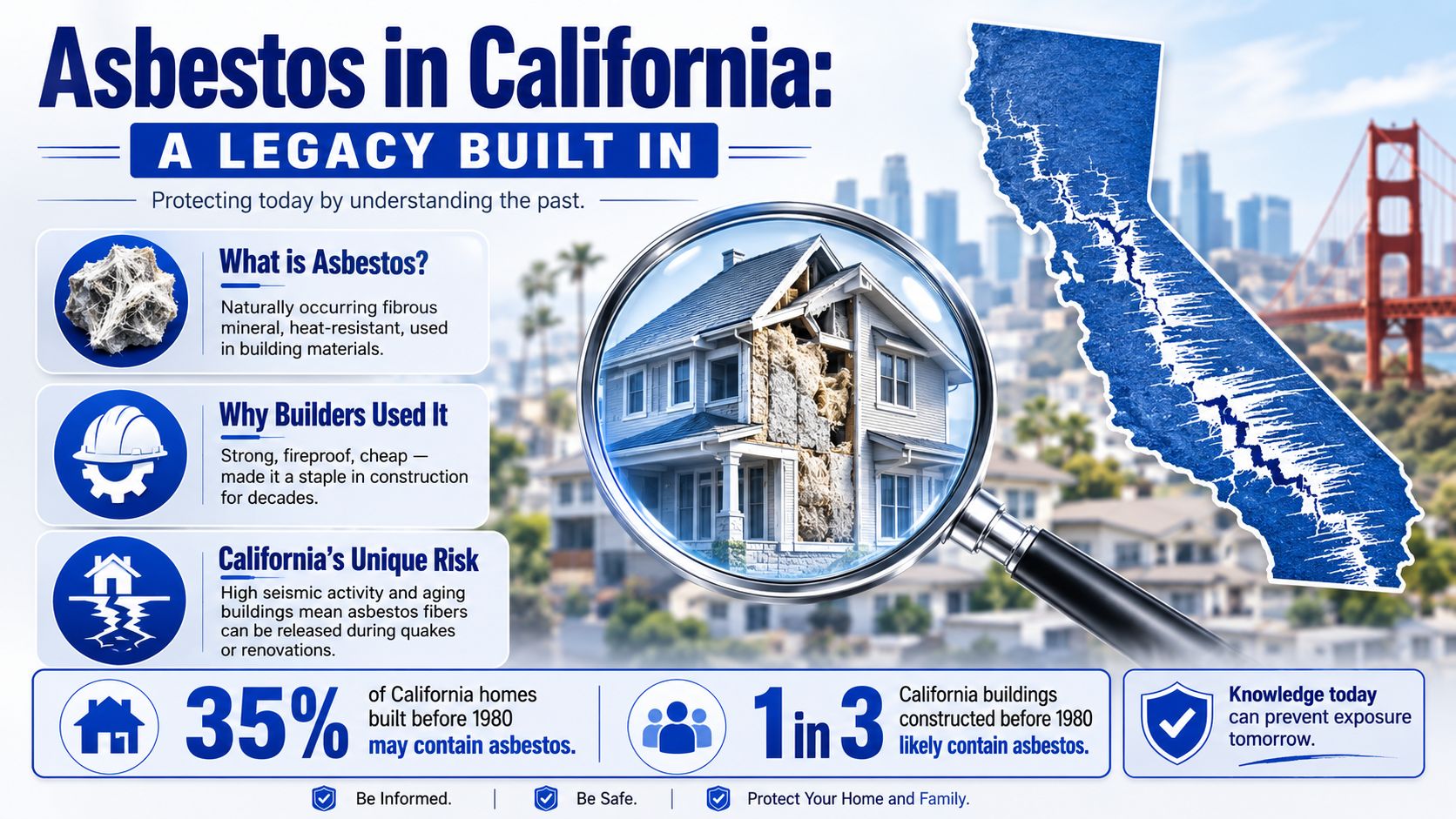
Asbestos is a group of mineral fibers that was widely used because it resists heat and adds durability. In buildings, it can show up in insulation, floor tile, ceiling texture, pipe wrap, siding, roofing products, and similar materials. The important part is not nostalgia about old construction. It's that asbestos only becomes a practical problem when fibers can be released into the air through disturbance, wear, or poor handling.
California has two asbestos realities
One reality is inside the building. That's the legacy product side, the stuff a homeowner, contractor, or facilities manager might find during renovation or demolition. The other reality is in the ground. California also has naturally occurring asbestos, which is why state-specific compliance testing has to account for aggregate, soil, and surfacing materials, not just interior finishes.
That geological difference matters. California public-health summaries identify at least 235 naturally occurring asbestos deposits, with 72 later becoming prospects and 25 becoming operational mines, and the same state also carries a substantial asbestos-related disease burden over time. Those facts are why a generic national asbestos checklist doesn't always fit a California project. The state has more than a building-material problem, it has a mineral source problem too. California asbestos deaths and deposit summary
California isn't just dealing with old construction. It's also dealing with asbestos in the landscape, which changes how soil, aggregate, and surfacing materials get tested.
That's why California's framework treats legacy products and mineral sources as separate but related concerns. A floor tile in a house and serpentine aggregate in a site-development project are not the same thing, but both can trigger testing decisions. If you keep those two universes straight, the rest of the rules make a lot more sense.
For a plain-language overview of the health side of asbestos exposure, this guide on why asbestos is dangerous is a good place to start.
When California Law Requires or Expects Asbestos Testing
California doesn't treat asbestos testing as a one-size-fits-all rule. The trigger is often the work you're planning, not just the building's age. That's why a small kitchen demo, a partial wall removal, or a roof-related job can still need a closer look if suspect material will be disturbed.
The South Coast rules are especially important for Los Angeles projects. SCAQMD materials note renovation triggers when asbestos-containing material is above 100 square feet, 100 linear feet, or 35 cubic feet, and facility surveys have to be completed before renovation or demolition. That's a practical threshold, not a theoretical one, because it helps decide when a project moves from ordinary construction into regulated asbestos work. The same district guidance also emphasizes that age alone isn't the whole story, and that suspect materials need to be assessed before disturbance. SCAQMD asbestos FAQs and thresholds
What that means on a real job
A homeowner pulling a popcorn ceiling doesn't get an automatic pass just because it's “only one room.” A contractor opening a wall cavity during a tenant improvement doesn't get to assume the hidden materials are benign. A developer planning a demolition doesn't want to discover late that the survey work was skipped. Those are all situations where testing is either legally expected, practically smart, or both.
For California construction work, asbestos exposure is regulated at an 8-hour TWA limit of 0.1 fiber per cubic centimeter of air (0.1 f/cc), and compliance air analysis has to follow the method in Appendix A or an equivalent method. That matters because the air-monitoring side of the process is tied to a numeric occupational benchmark, not a guess about whether the dust “looked bad.” California asbestos exposure limit and compliance method
Practical rule: if suspect material will be disturbed, age alone doesn't settle the question.
Real estate transactions and disclosure issues can also bring testing into the picture, especially when the buyer, seller, or lender wants documentation instead of assumptions. Sensitive Environmental also provides asbestos testing in Los Angeles, CA, including certified inspection and bulk material analysis for projects that need compliance records.
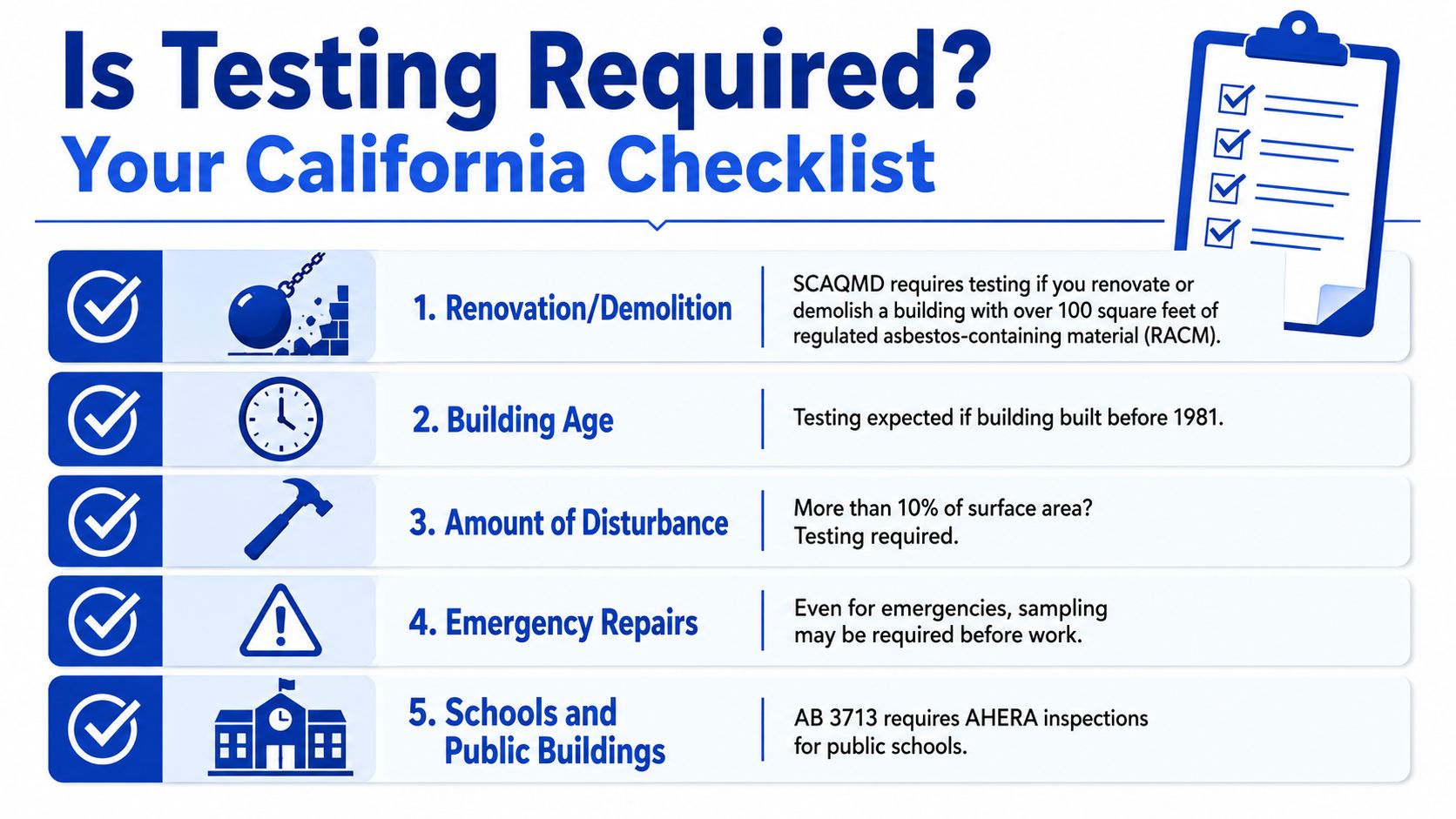
If you're trying to decide whether a project needs pre-renovation or pre-demolition asbestos testing, think in terms of disturbance, not just square footage or age. The wrong assumption at this stage can delay a permit, slow a contractor, or create a compliance problem after work has already started. For a related disclosure-focused overview, see the California asbestos real estate disclosure guide.
Who Can Sample, Who Can Survey, and What Labs Actually Do
A lot of California property owners get tripped up. A contractor might know how to demo a wall, but that doesn't mean the contractor is the right person to make an asbestos determination. California separates asbestos consulting from contracting work, and its resources point readers toward licensed or certified asbestos professionals for survey and compliance work rather than general construction judgment. California asbestos resources and role distinctions
The three roles people confuse most
An asbestos consultant manages the compliance picture, interprets the rules, and helps organize the inspection or survey. A certified inspector is the person who identifies suspect materials and takes bulk samples. A contractor handles abatement or removal work, but that's a different role from testing and survey documentation. The cheapest quote often blurs those lines, and that's where projects get into trouble.
Plain-English takeaway: the person who removes material is not automatically the person who can evaluate it for compliance.
Accredited laboratories do the analytical part. They receive the samples under chain-of-custody, test them using the right method for the material and question at hand, and return a report that can support regulatory or project decisions. In practice, that's where PLM bulk analysis comes in for many building materials, while other methods may be used for specific sample types or air questions. For California bulk compliance testing involving serpentine material, ARB Test Method 435 is the required method for compliance work, and it's meant for serpentine aggregate, soils, and related bulk materials. ARB Method 435 bulk compliance testing
The lab method matters because a result has to hold up outside the field. A sample that isn't collected properly, labeled properly, or matched to the right method can be hard to defend later, even if the material was real. That's why a formal inspection is about more than grabbing a chip and waiting for an email.
For readers who want to understand the line between professional sampling and a do-it-yourself approach, this explanation of at-home asbestos testing limits is useful context.
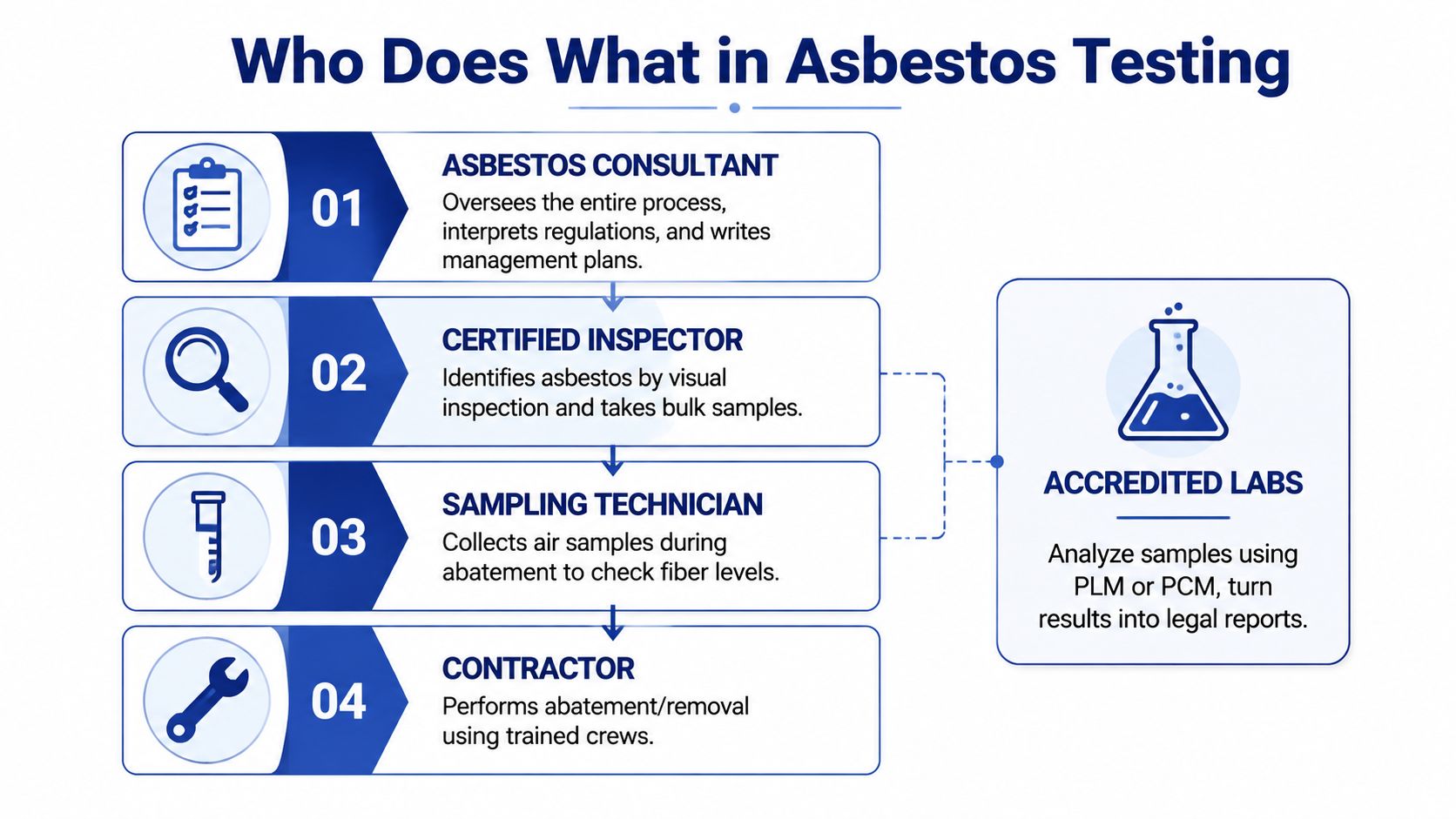
If you're comparing vendors, ask who collects the sample, what method the lab uses, and whether the report is structured for a regulator, buyer, or contractor. Those details tell you more than a low price ever will. For a broader industry example of how asbestos teams are presented in the market, Restore Heroes asbestos experts shows how service roles are often framed for property owners, though California projects still need California-specific compliance handling.
What Happens During a Professional Asbestos Inspection
A real inspection starts before anyone touches the building. The consultant or inspector reviews the project scope, looks at old records if they exist, and identifies the rooms, systems, or materials that could be affected. That planning step matters because the sampling plan should match the demolition or renovation plan, not just the building's age.
Walk-through, sampling, and lab submission
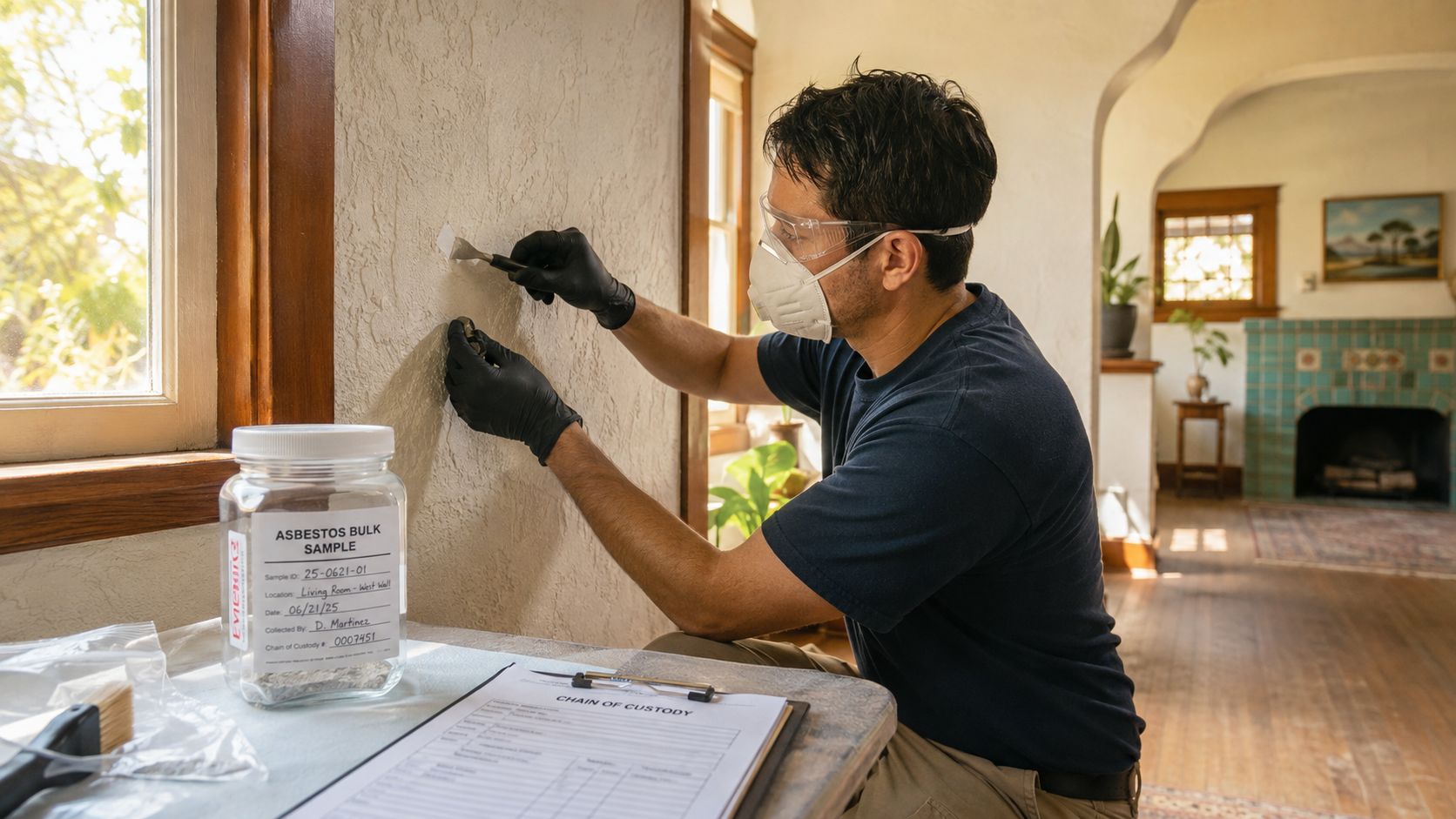
On site, the inspector walks the property and marks suspect materials by location and type. A bathroom finish, ceiling texture, pipe insulation, flooring, mastic, wall board, and exterior siding are all treated as separate candidates if they don't belong to the same homogeneous material area. That distinction is what keeps the inspection defensible, because one sample doesn't speak for every surface in the building.
Sampling is done with minimal disturbance, proper tools, labeled containers, and documented locations. The goal is to collect a representative sample from each material area that could be affected by the work. After that, the samples are shipped to the lab under chain-of-custody, so the report can connect the field observations to the lab result without any breaks in documentation.
What a complete report should include
A solid report isn't just a yes or no answer. It should list the suspect materials, show where the samples came from, identify the lab results, and explain what the findings mean for the project. It should also give enough detail that a contractor, property manager, or owner can use it for planning instead of calling the inspector back for missing information.
A practical proposal from an environmental consultant should make these items clear:
- Material inventory: what was observed and what was sampled.
- Sample locations: where each sample came from in the building.
- Laboratory method: what analysis was used and why.
- Conclusions: which materials contain asbestos and which do not.
- Next-step guidance: whether the result supports no further action, more sampling, restricted work, or a formal abatement plan.
Sensitive Environmental's role is to provide that kind of testing, inspection, sampling, and reporting, so owners and contractors can make informed decisions before work begins or after damage changes the picture.
Misconceptions That Get California Properties in Trouble
The biggest asbestos mistakes usually start with a shortcut. Someone assumes the building is too new, the job is too small, or the contractor can handle the sampling on the fly. Those assumptions are convenient, and they're also how projects end up behind schedule.
Myth and reality on the ground
A newer building isn't automatically clear. California properties can still contain asbestos in materials such as floor tile, drywall products, or roofing components, especially when the material is hidden inside a finish layer or was installed during a period when asbestos was still used. The question is what got installed, what will be disturbed, and whether the project scope reaches that material.
A small project can still trigger testing. The size of the project matters less than the amount and type of disturbance, which is why a tiny bathroom demo can create a bigger compliance issue than a large cosmetic project with no suspect materials involved. If the work will break open a wall, remove a ceiling, or strip a floor system, the question changes quickly.
A project doesn't become safe just because it's short or cheap.
Another misunderstanding is who can sample. General contractors are essential to the job, but sampling and survey work sit in a different lane. California's framework expects the right professional to identify the material and the lab to analyze it under the proper method, so the result can be used for compliance or decision-making.
A positive result also doesn't mean the same next step every time. Sometimes the answer is restricted work and documentation. Sometimes it's additional sampling to refine the scope. Sometimes it leads to removal planning, and sometimes the material is managed in place because the project doesn't disturb it. The report should help the owner and qualified professionals decide, not create panic.
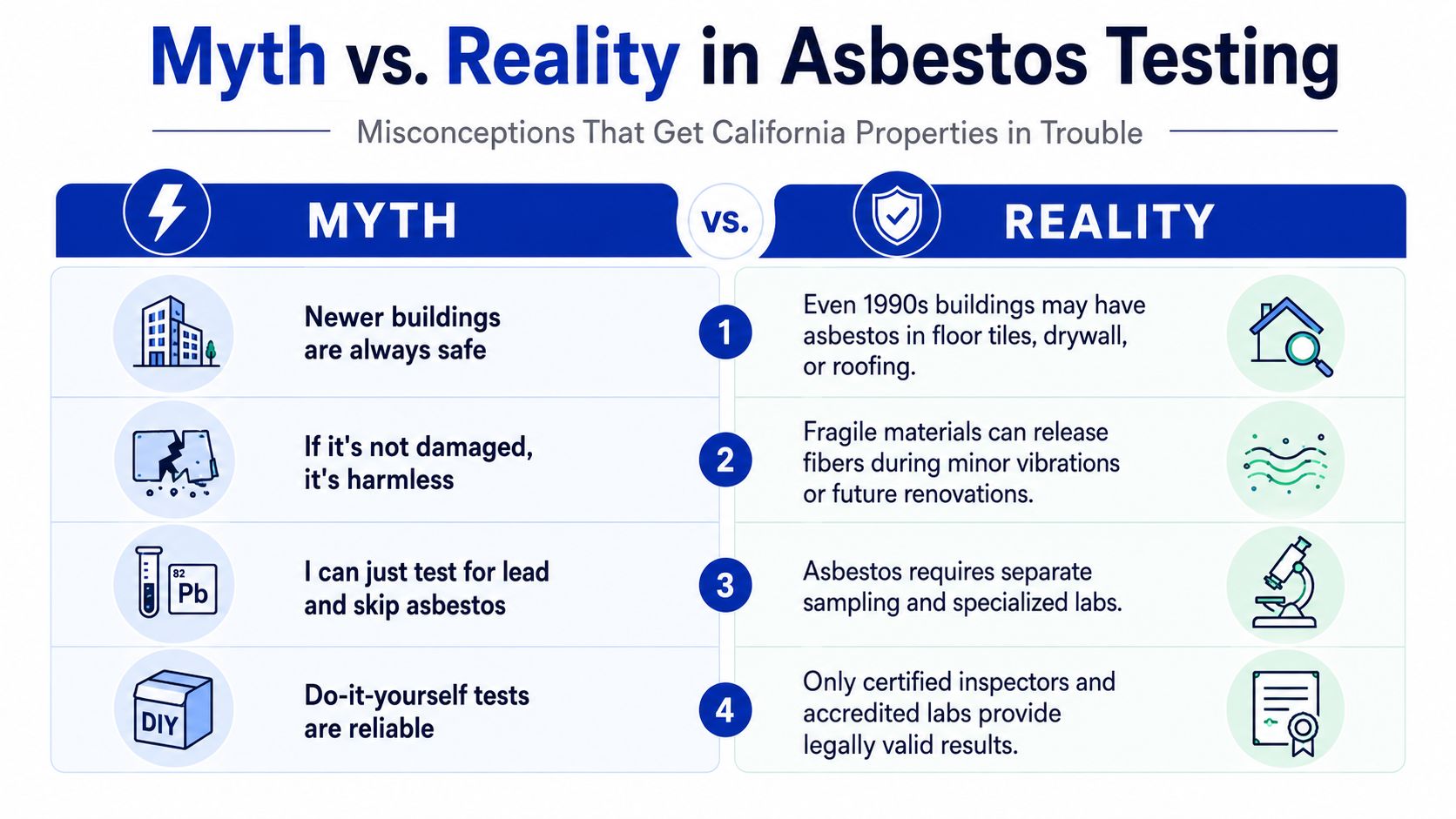
The goal of testing is information. Once you know what the material is, you can decide how to plan the work, protect the crew, and document the file properly. That's a much better outcome than discovering the problem after dust is already in the air.
Reading Asbestos Lab Results and Deciding Next Steps
A lab report can look intimidating the first time you open it, but the core ideas are straightforward. The result usually tells you whether asbestos was detected, what type of material was tested, and how much asbestos was found by weight. That matters because a positive result doesn't tell you everything by itself, it tells you what kind of decision the property owner or project team has to make next.
What the numbers and labels mean
For many bulk-material evaluations, the 1% threshold is the key dividing line used to define asbestos-containing material in common practice. A report may show none detected, which means the lab did not identify asbestos in the sample analyzed, or it may show not sampled, which means that material was never tested. Those are not the same thing, and confusing them can lead to bad project assumptions.
Detection limits also matter. A lab can only report what it was able to identify in the sample submitted under the method used. That's why sample location, material type, and analytical method all have to be read together instead of in isolation.
| Result in Report | Plain-English Meaning | Typical Next Step |
|---|---|---|
| None detected | The tested sample did not show asbestos under the method used | Proceed with the project based on the report, if no other suspect material is affected |
| Asbestos detected below the common 1% threshold | The material contains asbestos, but at a low level by weight | Review with a qualified professional and decide whether the material will be disturbed |
| Asbestos detected at or above the common 1% threshold | The material is asbestos-containing material for planning purposes | Coordinate compliance planning, work controls, or further project-specific testing |
| Not sampled | The material was not tested | Sample before relying on the material for demolition or renovation decisions |
Air results are different from bulk results. Bulk results answer what the material is, while air results answer what's happening in the breathing zone or after work. Soil or aggregate results answer a different question again, especially on California projects where disturbed material may come from the ground rather than a wall or floor.
The next step depends on the material, its condition, and the planned work. Sometimes that means no further action. Sometimes it means a management decision, a repair plan, additional sampling, or a clearance air test after disturbance. The report should help you and your project team choose the right lane, not force one answer for every situation.
Practical FAQs and Getting Started with Sensitive Environmental
How long does asbestos testing take? That depends on site access, the number of materials to sample, and lab turnaround, but the process usually starts with a site review and a targeted inspection rather than a blind guess. How much does it cost? There isn't one meaningful flat answer because the scope changes with the number of rooms, materials, and compliance needs.
Can a homeowner collect a sample themselves? That's where people often get into trouble. The better question is whether the sample will be legally and practically defensible, because California projects often need more than a jar of material and a lab receipt.
What should you choose, a small residential inspection or a regulated commercial survey? If the project affects multiple material types, a tenant improvement, a demolition, or a district-sensitive job, you want the survey to match the regulatory burden, not just the size of the space. That's where a professional inspection saves time and avoids rework.
If you need asbestos testing, a pre-renovation asbestos survey, or documentation for a Southern California project, Sensitive Environmental can help with inspection, sampling, and laboratory-based reporting for homeowners, contractors, property managers, and commercial teams.
If you're planning a renovation, demolition, or property transaction in Los Angeles or anywhere in Southern California, contact Sensitive Environmental for professional asbestos testing and inspection. We provide clear sampling, documented results, and practical reporting that helps you decide what to do next, without guessing or overreaching. Visit Sensitive Environmental to schedule a consultation.