The most common shortcut for judging an industrial hygiene monitoring report is to count its samples. That's the wrong test. A larger sample set can still create false confidence if no one can tell which tasks the samples represent, whether the method could measure the exposure of concern, or what the facility should do next.
A defensible report connects each result to a worker or area, task, sampling method, applicable exposure limit, and follow-up action. That traceable record helps contractors and facility managers make decisions about workplace exposures, process changes, and project planning. It also makes the report useful beyond the day the samples were collected.
Table of Contents
- Standard Structure of an Industrial Hygiene Monitoring Report
- Required Data Fields, Chain of Custody and Record Retention
- Sampling and Analytical Methods Behind the Numbers
- Comparing Results Against Exposure Limits
- California and Los Angeles Requirements for Monitoring Reports
- How Much Confidence a Monitoring Report Supports
- Controls and Follow-Up Monitoring After Results
- Confirm the Report Scope Before Sampling Begins
Standard Structure of an Industrial Hygiene Monitoring Report
An industrial hygiene monitoring report records an exposure assessment: who or what was measured, how the measurement was made, and what the result means against the applicable occupational limit. Consistent structure matters because exposure results may be reviewed years after the work took place. OSHA's historical exposure-sampling records, discussed in this article on OSHA's Chemical Exposure Health Data, show why durable identifiers and methods matter: a result has to remain traceable when memories, contractors and processes have changed. Preserve the sampling date, worker or area, contaminant, duration, analytical method, laboratory result, and limit so a future reviewer can interpret the measurement rather than reconstruct it from guesses.
Use the sections below as a review checklist. Each answers a different question, from the decision the survey supports to the action the facility should take after results arrive.
| Report section | What it must contain | Common gap |
|---|---|---|
| Cover and identification | Client, site address, report date, author and qualifications, project number | Author credentials or site address missing |
| Scope and purpose | Regulatory basis, decision the data will support, contaminants covered | Purpose never stated, so compliance status is unclear |
| Process and task description | Tasks, equipment, materials, shifts, existing controls | Tasks not described, so representativeness can't be judged |
| Exposure groups | Similar exposure group (SEG) definitions and the workers or areas assigned to each | One SEG combines unrelated jobs |
| Sampling strategy | Rationale, number of samples, personal versus area placement, timing | Strategy not explained or sample count unjustified |
| Methods and laboratory | Method identifiers, laboratory accreditation, quality control, detection limits | Method number omitted |
| Results | Sample-level results with units, durations, and applicable limits | Results without units, durations, or non-detect notes |
| Interpretation and conclusions | Comparison with exposure limits, uncertainty, exposure category | Pass or fail stated with no uncertainty |
| Recommendations | Controls, responsible party, deadline, verification monitoring | Generic advice such as “continue good practices” |
| Appendices | Chain of custody, lab certificates, calibration logs, field data sheets | Appendices missing or unsigned |
Read the report as a connected record
The cover identifies the project, but the scope and process description explain what the investigation was meant to answer and what work was taking place. The SEG definitions should group workers with genuinely comparable tasks and exposure conditions. A grinding crew and an office team should not be combined just because both work in the same building.
The methods and laboratory section should let a reviewer follow a sample from collection through analysis. A strong methods block names the method identifier, laboratory, accreditation, quality-control samples and detection limits; without that context, a low result may only show that the method could not see the exposure of concern. Results without units, sampling duration, detection-limit notes, or an applicable comparison value cannot support a meaningful conclusion. Likewise, “below limit” is not a complete interpretation if the report doesn't identify which limit it used or explain uncertainty.
Recommendations should be practical. “Improve ventilation” is less useful than identifying the control to evaluate, the person responsible, a completion deadline, and how the facility will verify the change. A report missing its scope, methods, or interpretation is difficult to defend in an inspection, claim, or lease dispute. More samples cannot rescue that gap when the results are not tied to a task, a worker group, a method and a follow-up action.
Required Data Fields, Chain of Custody and Record Retention
A report can hold dozens of results and still be indefensible. What matters is whether each result can be traced back to a task, a worker group, a documented method, and a custody trail that holds together. A laboratory concentration is only useful when it carries that context.
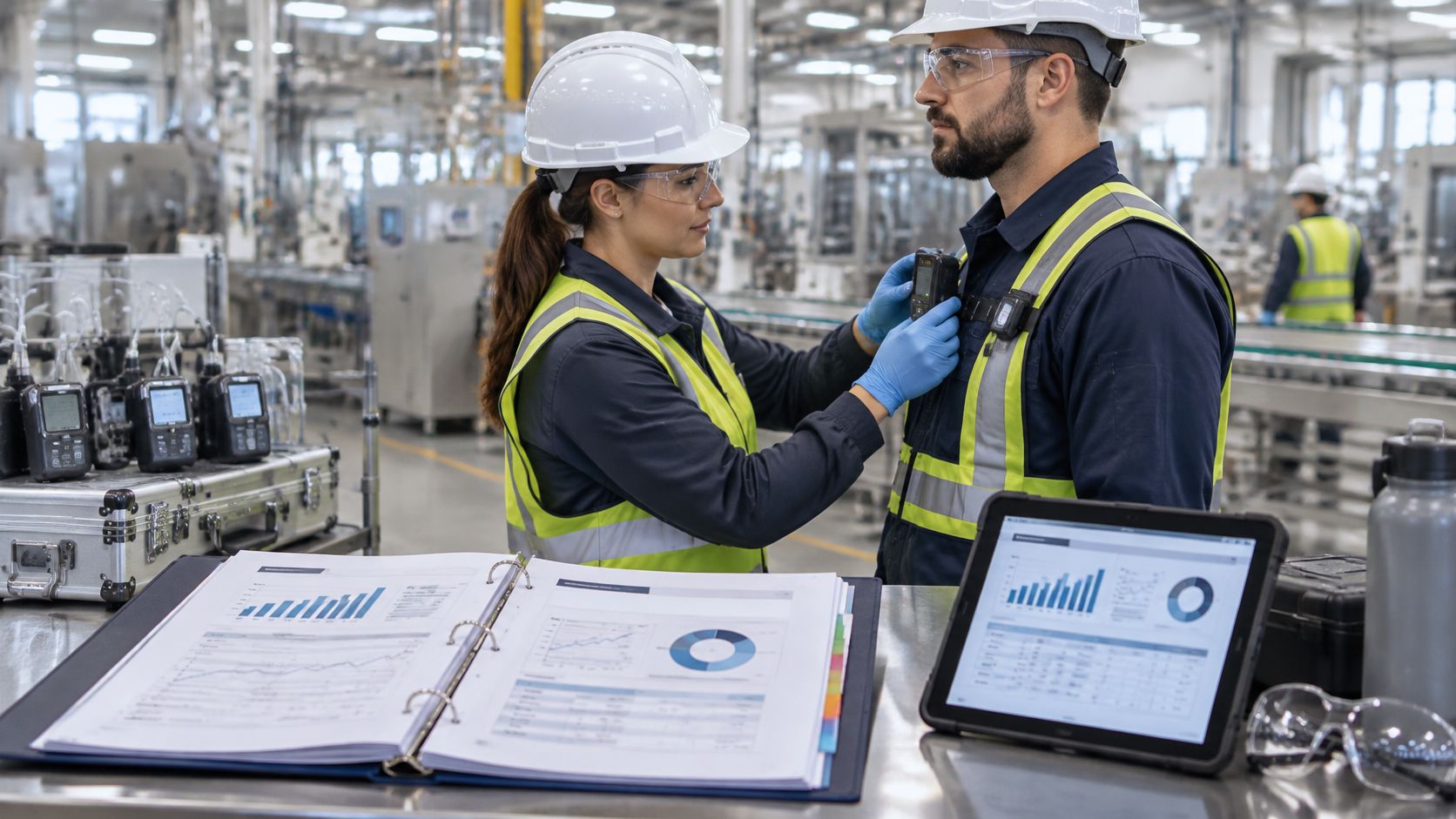
Start with a unique sample ID, the collection date and start and stop times, and whether the sample was personal breathing-zone, area, wipe, or bulk. Then identify the worker or area represented, the task underway, and the conditions that shaped exposure, including whether ventilation or local exhaust was operating.
The field record should also describe the sampling train: collection medium, flow rate, and calculated air volume where applicable. The medium must suit the analyte, and the flow record lets a reviewer check the volume behind the reported concentration.
Trace the sample from field to result
An entry might identify "Sample A-014," collected from a worker in the grinding crew during stainless-steel grinding with local exhaust running. The report should record the sampling times, media, method identifier, laboratory, result and units, and the detection and quantitation limits. It should also name the exposure limit used for comparison and point to the calibration and custody records.
Chain of custody documents who handled each sample, when it changed hands, and the condition in which the laboratory received it. The field sheets, calibration logs, laboratory certificate, and recommendation tracker should agree with the report body. If the sample ID changes between a field sheet and a lab certificate, the result's identity is in doubt.
| Data field | Example entry | Why it matters |
|---|---|---|
| Sample ID | A-014 | Links the result to field notes and custody records |
| Date and start/stop times | 2026-10-14, 07:00–15:00 | Establishes sampling duration and shift coverage |
| Sample type | Personal breathing-zone | Determines what the result describes |
| Worker or area (SEG) | Grinding crew, Bay 4 | Identifies who or where the result represents |
| Task and conditions | Grinding stainless steel, local exhaust running | Explains exposure determinants |
| Collection medium | Analyte-matched filter or sorbent tube | Must match the target analyte |
| Flow rate before and after | 2.0 L/min before and after sampling | Needed to calculate air volume and check pump drift |
| Air volume | 960 L over 480 minutes at 2.0 L/min | Denominator for the concentration result |
| Analyte and method ID | Respirable crystalline silica, method ID stated in report | Ties the result to a documented method |
| Laboratory and accreditation | Accredited laboratory, accreditation number | Shows the analysis is quality-controlled |
| Result with units and detection limit | Result in µg/m³, with detection limit stated | Lets reviewers judge whether a low result is meaningful |
| Exposure limit applied | OSHA PEL 50 µg/m³ (8-hour TWA) | Makes the comparison explicit |
| Calibration record | Pump calibrated before and after the shift | Confirms flow accuracy |
| Chain-of-custody reference | COC-014, with transfer signatures and times | Shows the sample was tracked and not misidentified |
Full-shift, short-term, direct-reading, area, wipe, and bulk sampling each answer a different question. Whichever type was used, a sound assessment records its rationale, its quality controls, its uncertainty, and whether more sampling is needed. A result stripped of that context can look reassuring while proving very little.
Retention is part of defensibility, not office housekeeping. Under OSHA's recordkeeping framework, qualifying employee exposure records, including personal, area, grab, and wipe sampling, generally must be preserved for at least 30 years, even when measured exposure is below an applicable action level or PEL, according to OSHA's interpretation of exposure-record retention. State the report's purpose and regulatory basis plainly, since obligations can differ by the type of record and the standard that applies.
The practical test is simple: pick any row in the results table and ask whether the report shows who it represents, how it was collected, and what happens next. If it cannot, adding more samples will not fix it.
Sampling and Analytical Methods Behind the Numbers
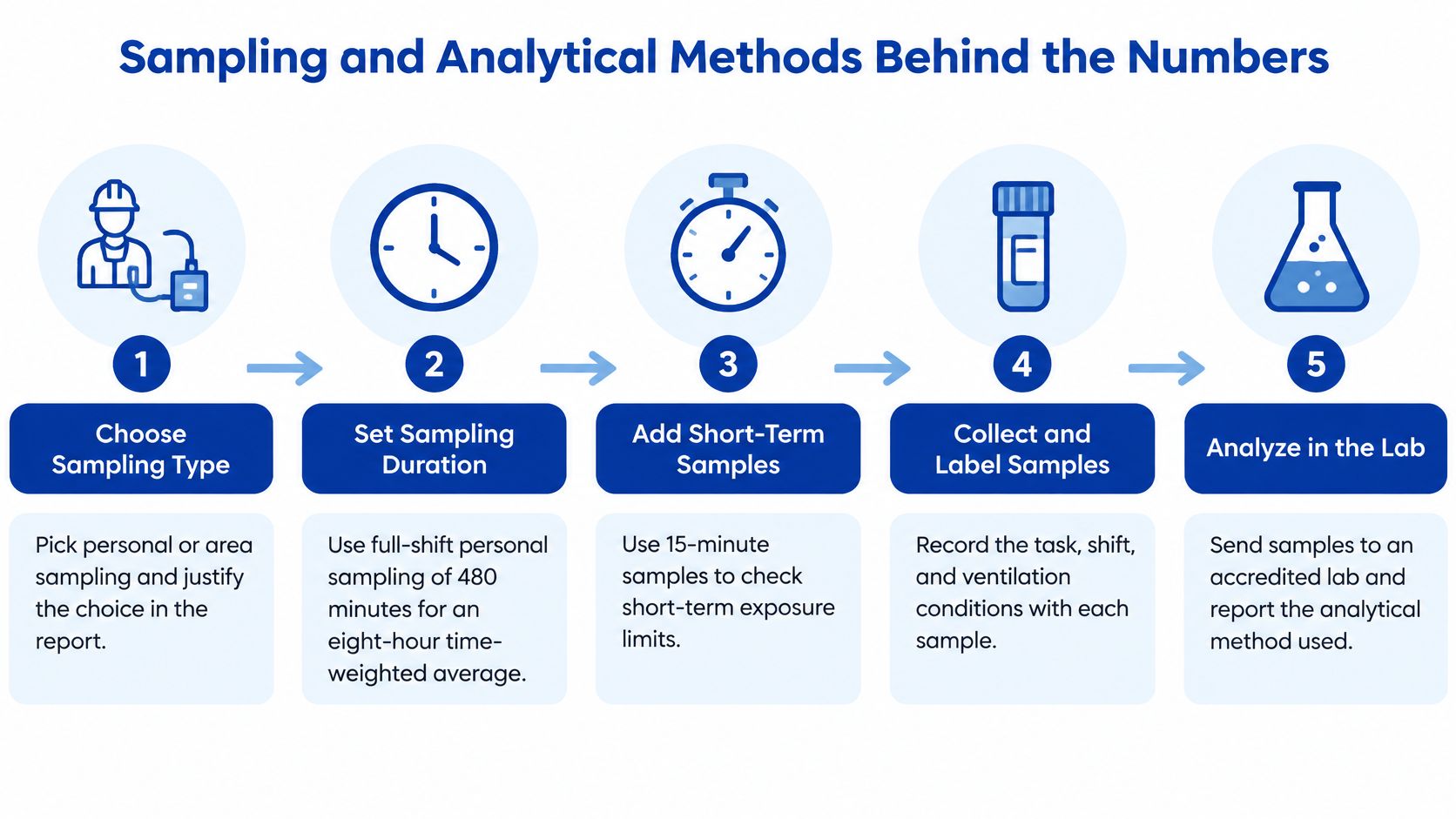
A monitoring report earns trust through method, not volume. Ten samples collected with the wrong duration, the wrong media, or an unvalidated method are worth less than three samples built to answer a specific question. The first thing a reviewer should check is whether each sample type was chosen for the decision it supports.
| Sampling method | Typical duration | Best used for | Main limitation |
|---|---|---|---|
| Full-shift personal sampling | Up to 900 minutes for TWA | Estimating an 8-hour time-weighted average for one worker | Describes one worker on one day |
| Short-term personal sampling | 15 minutes for STEL evaluation | Checking short-term exposure limits | Misses exposure outside the window |
| Ceiling or grab sampling | Seconds to a few minutes | Limits that must never be exceeded | A snapshot only |
| Area sampling | Full shift or task-specific | Locating sources and background levels | Doesn't equal a worker's breathing-zone exposure |
| Direct-reading instrument | Continuous, real time | Screening for peaks and hot spots | Usually needs confirmation by validated sampling |
| Wipe sampling | Single event | Surface contamination | Doesn't measure airborne exposure |
| Bulk sampling | Single material sample | Identifying material composition | Doesn't measure airborne exposure |
Two rows deserve attention. A stationary area result does not establish what a worker inhaled, so it cannot stand alone as an exposure determination. And a short-term sample timed to the wrong 15 minutes, taken during a quiet stretch instead of the peak task, will understate the exposure it was meant to capture.
The process should be traceable from sampling plan to collection, laboratory analysis, calculation, and report. For real-time screening, selecting and maintaining suitable equipment is its own task. A facilities team evaluating gas-monitor options can find workplace gas detectors, but a detector's reading should be treated according to its sensor, calibration, interference, and intended use.
Check whether the method can measure the exposure
The analytical method must work across the range the assessment is trying to interpret. NIOSH method-evaluation guidance recommends checking:
- Recovery across the expected range, from approximately 0.1 times the occupational exposure limit (OEL) through at least 2 times the OEL.
- Detection capability, with a method detection limit ideally no greater than one-tenth of the OEL.
- Sampler capacity, sufficient for loadings at least twice the OEL.
- Media stability, for at least one week, with longer-term testing extending to 28 days.
These validation criteria are set out in this NIOSH method-evaluation paper. The report should name the method and laboratory, state detection and reporting limits, describe quality assurance, and explain how nondetects were handled. A nondetect reported without a detection limit tells the reader nothing; the same result beside a limit well below the OEL is meaningful evidence.
Match the window to the question
Short-term, TWA, and ceiling assessments need different collection windows, so a duration that answers one question can be unsuitable for another. A ceiling grab taken mid-shift says nothing about the 8-hour average. A full-shift sample cannot show whether a 15-minute STEL was exceeded during a cleaning cycle.
Use direct-reading instruments to identify timing, peaks, and hot spots, not as a substitute for validated personal sampling when the decision requires a defensible exposure determination. For indoor environments where airborne contaminants are the concern, the scope can also include indoor air quality testing in Los Angeles. The method section should make clear what each sample type can establish, and what it cannot.
Comparing Results Against Exposure Limits
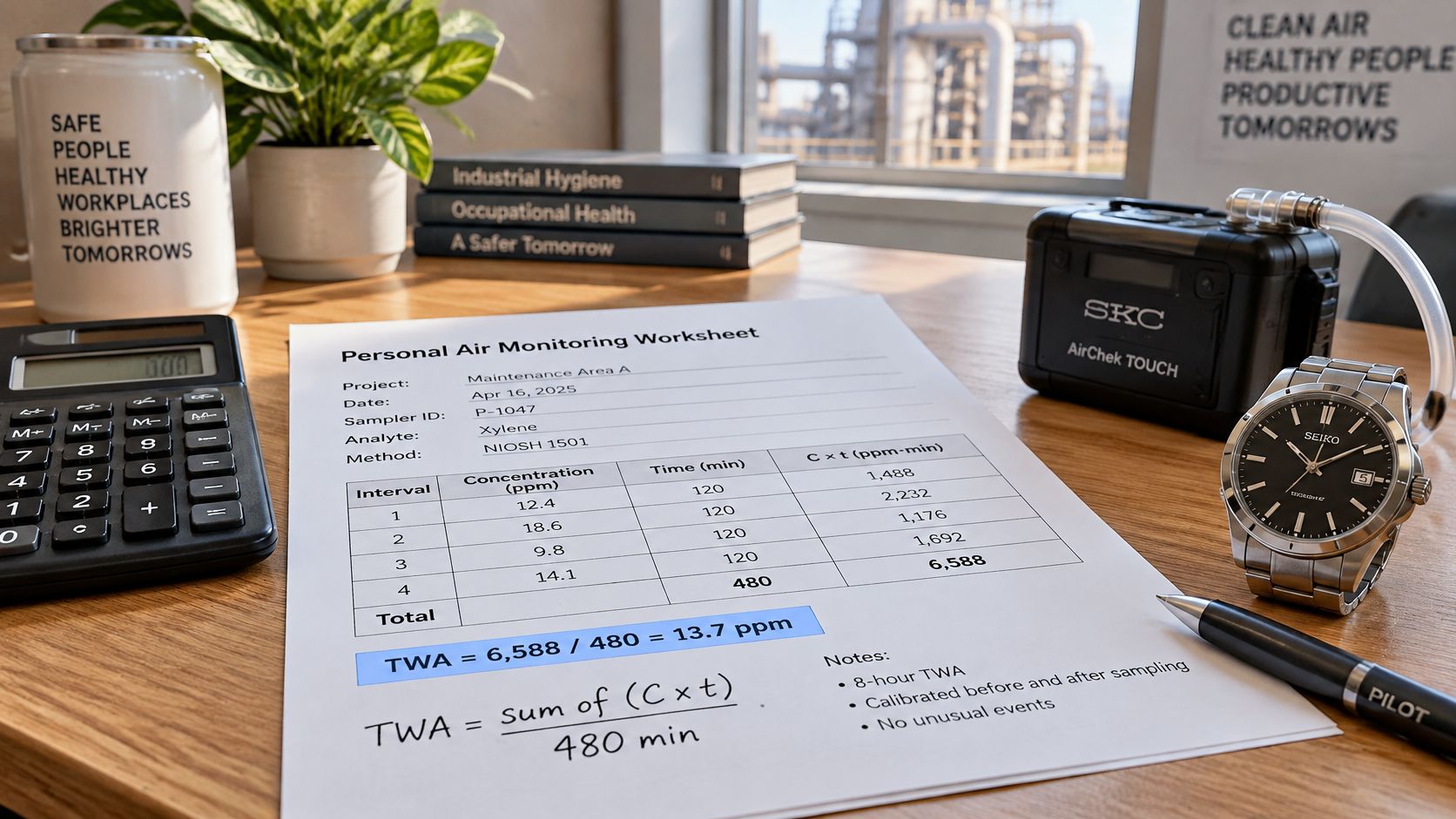
A time-weighted average (TWA) accounts for concentration over time. For example, exposure of 100 µg/m³ for 2 hours followed by 20 µg/m³ for 6 hours gives a shift average of 40 µg/m³: (100 × 2 + 20 × 6) ÷ 8. The calculation is meaningful only if the report states the work period used and compares the result with the correct limit for that contaminant and averaging period.
| Contaminant | OSHA PEL (8-hour TWA) | OSHA action level | Advisory reference |
|---|---|---|---|
| Respirable crystalline silica | 50 µg/m³ | 25 µg/m³ | ACGIH TLV 25 µg/m³; NIOSH REL 50 µg/m³ (10-hour TWA) |
| Inorganic lead, general industry | 50 µg/m³ | 30 µg/m³ | ACGIH TLV-TWA 50 µg/m³ |
| Benzene | 1 ppm TWA; 5 ppm STEL (15 minutes) | 0.5 ppm TWA | ACGIH TLV-TWA 0.5 ppm, confirmed human carcinogen |
| Formaldehyde | 0.75 ppm TWA; 2 ppm STEL | 0.5 ppm | ACGIH TLV 0.1 ppm TWA; 0.3 ppm STEL |
| Carbon monoxide | 50 ppm TWA | None set | ACGIH TLV-TWA 25 ppm |
Know what each limit means
The OSHA PEL is the enforceable limit under the applicable standard. An action level is a lower threshold that can trigger monitoring and, under some standards, medical surveillance or other duties. The report should identify the relevant standard rather than treating an action level and a PEL as interchangeable.
ACGIH TLVs and NIOSH RELs are advisory recommendations, not OSHA PELs. They can provide useful health-based context, but the report must label them accurately and explain why they're being used. For contractors working with silica-generating tasks, this dust safety guidance for civil contractors can provide context for dust-control planning, while the exposure report still needs to cite the standard and limit applicable to the work.
A result above an applicable PEL requires the facility to address its obligations under that standard. A result above only an advisory value calls for professional judgment, not an automatic conclusion that the law has been violated. Exposure limits can change, and standards may differ by contaminant and work setting, so a report should cite the controlling requirement and confirm that it applies to the sampled task.
California and Los Angeles Requirements for Monitoring Reports
A Los Angeles-area workplace can fall under California rules, federal rules, or both at once. Cal/OSHA administers state workplace safety standards under Title 8, and the report's regulatory-basis section should name the applicable state standard for each contaminant and state which limit governs the sampled work. That choice drives both the interpretation of results and the records the employer must keep. A report that cites the wrong jurisdiction's limit can look thorough while answering the wrong legal question.
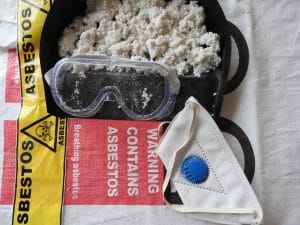
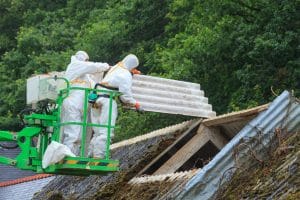
Asbestos surveys are a separate deliverable from an exposure-monitoring report. For renovation or demolition projects inside the South Coast Air Quality Management District, SCAQMD Rule 1403 requires an asbestos-containing-material survey before work begins. The survey must be performed by a Cal/OSHA-certified inspector or, where permitted, facility personnel holding an unexpired AHERA Building Inspector certificate from a Cal/OSHA-approved course. Rule 1403 carries limited exemptions that depend on project type and size, so the project team should confirm with SCAQMD whether any exemption applies before assuming one does. The written survey report identifies the materials that could be disturbed, their condition, and whether they are friable. A survey that lists materials without tying them to the planned disturbance produces the same false confidence as a monitoring report full of samples with no task or worker group attached.
Federal asbestos NESHAP rules separately require a thorough inspection before covered demolition or renovation begins. The inspection addresses the building or portion scheduled for work, including Category I and Category II non-friable asbestos-containing materials, and determines which notification, work-practice, handling, and disposal obligations apply, as described in this EPA overview of asbestos requirements. The survey therefore needs to connect scope, material locations, condition, and planned disturbance rather than report a result for one isolated sample. The EPA guidance on asbestos-containing materials and demolition describes that inspection context.
Notification timing shapes the schedule on covered projects. Covered renovations above the applicable threshold and demolitions generally require written notification 10 working days before work starts, while emergency renovations above the threshold and ordered demolitions require notification by the next working day, according to EPA's building-owner and manager information. Confirm the rule and project category before work is scheduled. For commercial properties in the region, this overview of asbestos management in Los Angeles commercial buildings separates survey documentation from the other responsibilities a project carries.
How Much Confidence a Monitoring Report Supports
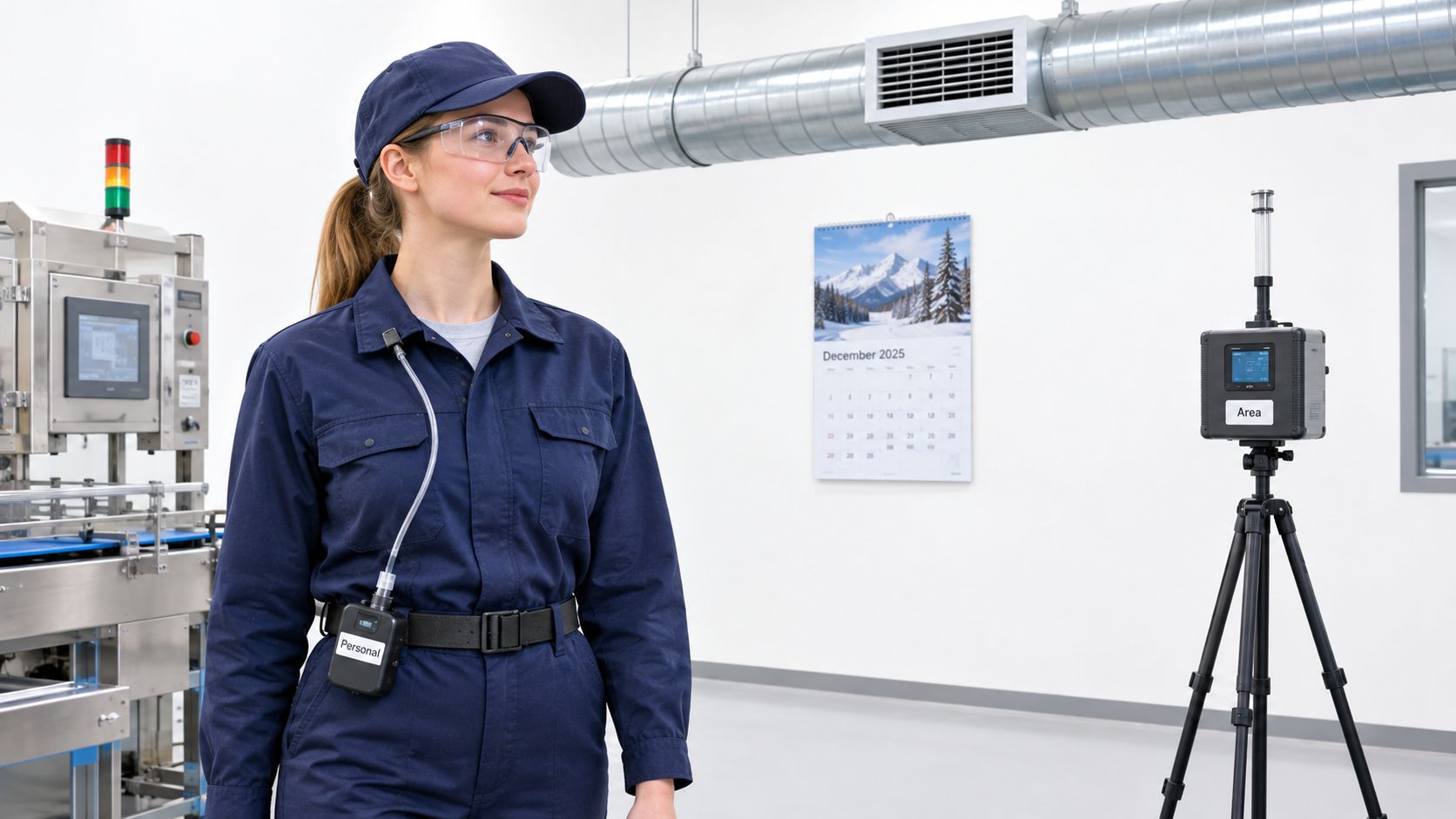
A polished report can still answer the wrong question. Representativeness depends on which tasks were sampled, production conditions, ventilation, work rate, season, shift, and whether the samples were personal or area-based. A report should explain why its sampling period reflects ordinary operations or a deliberately selected high-exposure condition.
The report should define each similar exposure group (SEG) and show that sampled workers performed the tasks that matter. If one sample comes from a stationary monitor near a process, it can help locate a source, but it can't automatically describe the breathing-zone exposure of every worker. Likewise, a large sample count doesn't fix a poor sampling plan. A smaller task-based survey may be more useful if it deliberately captures the work and controls that drive exposure.
Treat nondetects and gaps carefully
A “not detected” result doesn't prove exposure was below a health-based limit when the method's detection limit is higher than that limit. The report should state the detection limit, describe how nondetect values were handled, and call the conclusion inconclusive when the method can't answer the question. This is especially important when datasets include many results below detection limits or use inconsistent data-quality descriptions. Research on representativeness and exposure-data limitations makes the same point in this occupational risk-assessment analysis.
Reports should also identify known unknowns: contaminants that weren't measured, process byproducts, ultrafine particles, biological agents, and potential combined exposures. That disclosure doesn't mean every unmeasured hazard is present. It tells the reader where the report's conclusions stop and whether another assessment is warranted.
Use this quick confidence check before relying on a report:
- Groups defined: Are workers or areas assigned to SEGs based on comparable tasks and conditions?
- Tasks documented: Does the report explain what was happening during sampling and why it represents the decision being made?
- Method limits stated: Are the method, detection limits, and analytical limitations clear?
- Nondetects explained: Does the report say whether a nondetect can support the conclusion?
- Limitations disclosed: Are unmeasured hazards and uncertainties identified?
More samples don't necessarily mean stronger evidence. The report is only as useful as the connection between its samples and the work they're meant to represent.
Controls and Follow-Up Monitoring After Results
A result should lead to an action category, not just a verdict. Recommendations should consider controls in order of effectiveness: eliminate the source where feasible, substitute a less hazardous material or process, use engineering controls such as local exhaust ventilation, adjust work practices or scheduling, and use personal protective equipment as a final layer. The report should name who will act, when the work is due, and when the facility will verify the change.
| Result pattern | Typical recommendation | Follow-up monitoring |
|---|---|---|
| Full-shift result above the PEL | Engineering or work-practice controls; review the respiratory protection program | Resample the same task after controls, using the same method |
| Result between the action level and the PEL | Begin periodic exposure monitoring; address medical surveillance where the standard requires it | Repeat monitoring at the interval the standard specifies |
| Consistent results below the action level | Document results and maintain existing controls | Reassess when processes, materials, or staffing change |
| Nondetect where the detection limit exceeds one-tenth of the limit | Report as inconclusive, not as below the limit | Resample with a method of lower detection limit |
| Peak readings on a direct-reading instrument | Locate the source and review task conditions | Confirm peak periods with validated personal sampling |
| Single area sample used to judge a group | Add personal sampling for the similar exposure group | Use a baseline of at least three samples per group |
Verify that the control changed exposure
Follow-up monitoring should test the same task after a control changes, using a method suitable for the comparison. If the facility changes local exhaust, for example, the report should record the control configuration during resampling. That lets the reviewer distinguish a real change in exposure from a different task, shift, or operating condition.
Real-time sensors can identify peaks, hot spots, and changing conditions, especially in environments such as renovation, manufacturing, healthcare, and fire-residue work. But sensor alarms and time-series readings don't automatically establish regulatory compliance. Calibration issues, interference, and mixed exposures affect interpretation; validated personal sampling and laboratory analysis remain necessary for defensible exposure determinations. A useful report identifies unmeasured hazards and explains how sensor data inform, rather than replace, the sampling plan, as discussed in this review of emerging monitoring approaches.
Confirm the Report Scope Before Sampling Begins
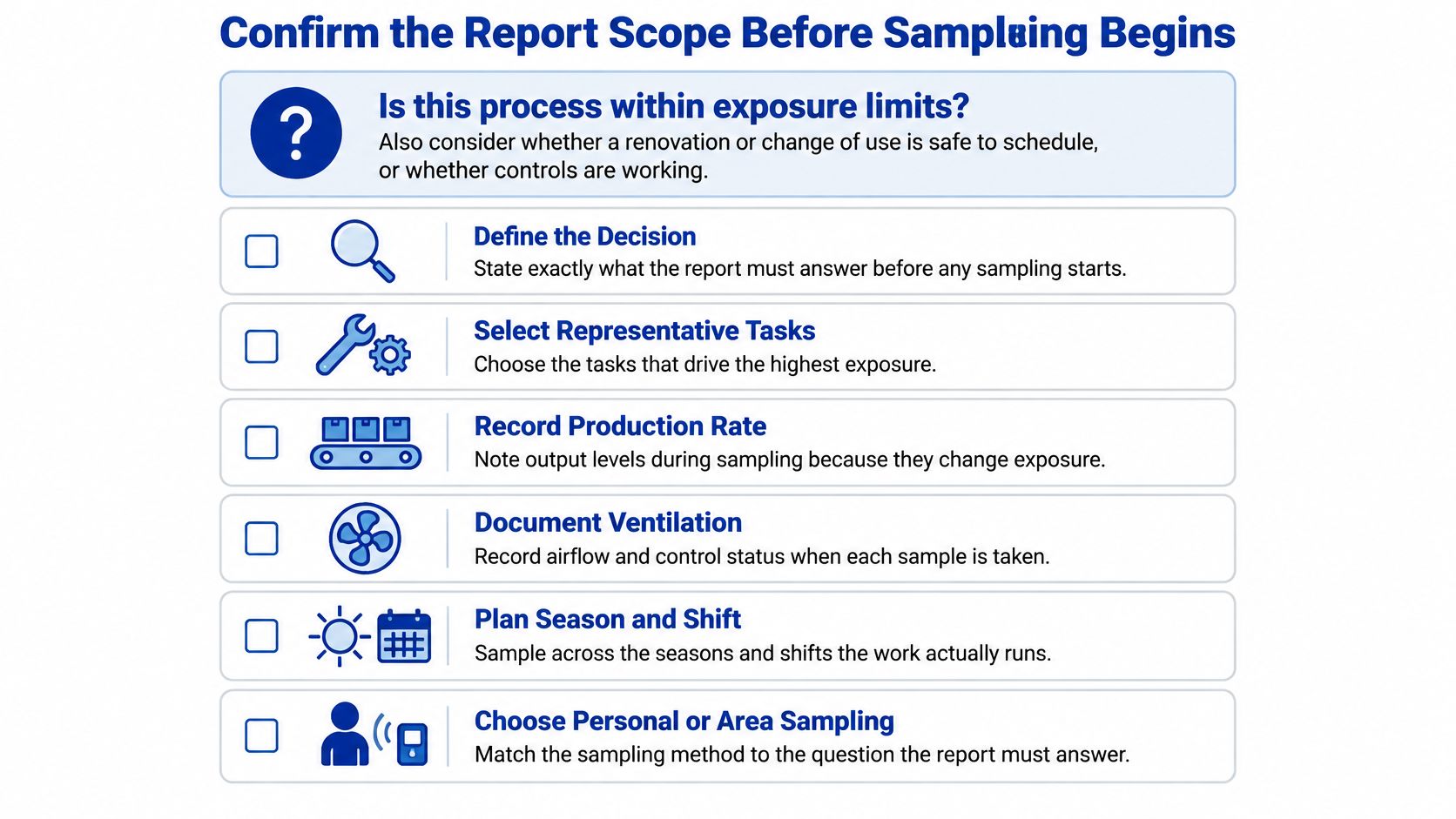
Start with the decision: What must the report answer? It may be whether a process meets an applicable exposure limit, whether a change of use or renovation can be scheduled, or whether a control has reduced exposure. If the decision isn't clear before sampling, the project can collect data that are technically correct but not useful.
Before fieldwork, confirm the following:
- Regulatory basis: Identify the standards and exposure limits that apply to the work.
- Tasks and workers: List the tasks and workers assigned to each similar exposure group.
- Contaminants: Name the hazards to be measured and the limits used to interpret them.
- Sampling plan: Specify personal and area sampling locations, timing, and sample numbers.
- Methods and laboratory: Confirm method identifiers, laboratory qualifications, and quality controls.
- Schedule: Set expectations for laboratory turnaround and report review.
- Action ownership: Name the person who will respond to recommendations and arrange verification monitoring.
Choose professional testing for decisions that need documentation
DIY colorimetric tubes and direct-reading meters can flag a possible concern or help locate a peak. They usually don't provide the calibrated, documented, laboratory-analyzed evidence needed for a compliance determination, insurance or lease discussion, or regulatory review. Professional testing pairs field observations and sampling with method selection, quality control, laboratory analysis, and a report that states the result's limits.
Sensitive Environmental provides industrial hygiene testing and assessments, along with commercial environmental sampling and reporting for facilities across Los Angeles and Southern California. For a project involving broader facility conditions, review its commercial environmental testing services in Los Angeles when defining the scope.
Contact Sensitive Environmental to scope an industrial hygiene assessment before a renovation, process change, or occupancy decision. Ask for a sample report structure that shows how worker groups, tasks, methods, limits, and follow-up actions will be documented, then visit Sensitive Environmental to discuss professional testing in Los Angeles and Southern California.