A musty odor appears after a plumbing leak. You're planning to open a wall in an older house. Or wildfire smoke has entered through windows and ventilation equipment, leaving ash and soot where you can't see them. In each situation, the temptation is to order a broad “home safety test” and hope the report explains everything.
That approach often wastes time. Environmental home testing works best when the test matches the property problem, the suspected contaminant, and the decision you need to make. A renovation may require an asbestos survey, while a water-damaged room may call for moisture mapping and targeted mold sampling. A post-fire investigation may need combustion byproduct, particulate, volatile organic compound, and heavy-metal analysis rather than a basic indoor air screen.
Table of Contents
- Diagnosing the Right Environmental Problem
- Core Testing Categories for Southern California Homes
- Arranging Professional Inspections and Site Preparation
- Field Sampling Methods and Regulatory Surveys
- Interpreting Laboratory Results and Planning Next Steps
- Common Questions About Home Environmental Diagnostics
Diagnosing the Right Environmental Problem
A homeowner usually starts with a symptom, not a laboratory question. The symptom might be a smell, dust, staining, irritation, or uncertainty about a building material. The first professional task is to separate the concern into the type of evidence needed.
Three questions require different tests
First, are conditions present that could support contamination? Moisture intrusion, poor ventilation, damaged materials, and construction disturbance can create conditions that deserve investigation. A visual assessment, moisture mapping, building history, and review of ventilation may answer much of this question before any sample is collected.
Second, are contaminants airborne or present on surfaces right now? Indoor air quality testing, particulate monitoring, VOC sampling, mold air sampling, and surface wipes address this question. A monitor may show changing humidity or particulate levels, but it generally can't identify whether a wall contains asbestos or whether a specific surface carries lead dust.
Third, does the property need documented material identification or compliance evidence? Pre-renovation asbestos testing, pre-demolition asbestos surveys, lead-based paint inspections, and environmental assessments for a transaction serve a different purpose. They must connect samples and observations to exact rooms, materials, surfaces, and planned work.
Radon illustrates why testing matters. Radon is odorless and invisible, so occupants can't identify high levels by sight or smell. The only way to know whether a home has high radon is to test, and U.S. agencies recommend testing all homes. The EPA action level is 4 pCi/L, the average indoor level is about 1.3 pCi/L, and nearly 1 in 15 U.S. homes is estimated to exceed the action level. Public-health sources estimate that radon causes about 15,000 to 22,000 lung cancer deaths annually in the United States and is the second leading cause of lung cancer after smoking. Short-term tests typically run 2 to 7 days, while long-term tests measure average concentration for more than 90 days. CDC radon testing guidance
Practical rule: A test should answer a property decision, not merely produce another number.
A property risk assessment can add useful context before you hire a specialist, particularly when you're reviewing an unfamiliar address or considering a purchase. The BatchData property risk assessment is one resource for organizing property-level risk information, but it doesn't replace physical inspection, representative sampling, or laboratory analysis.
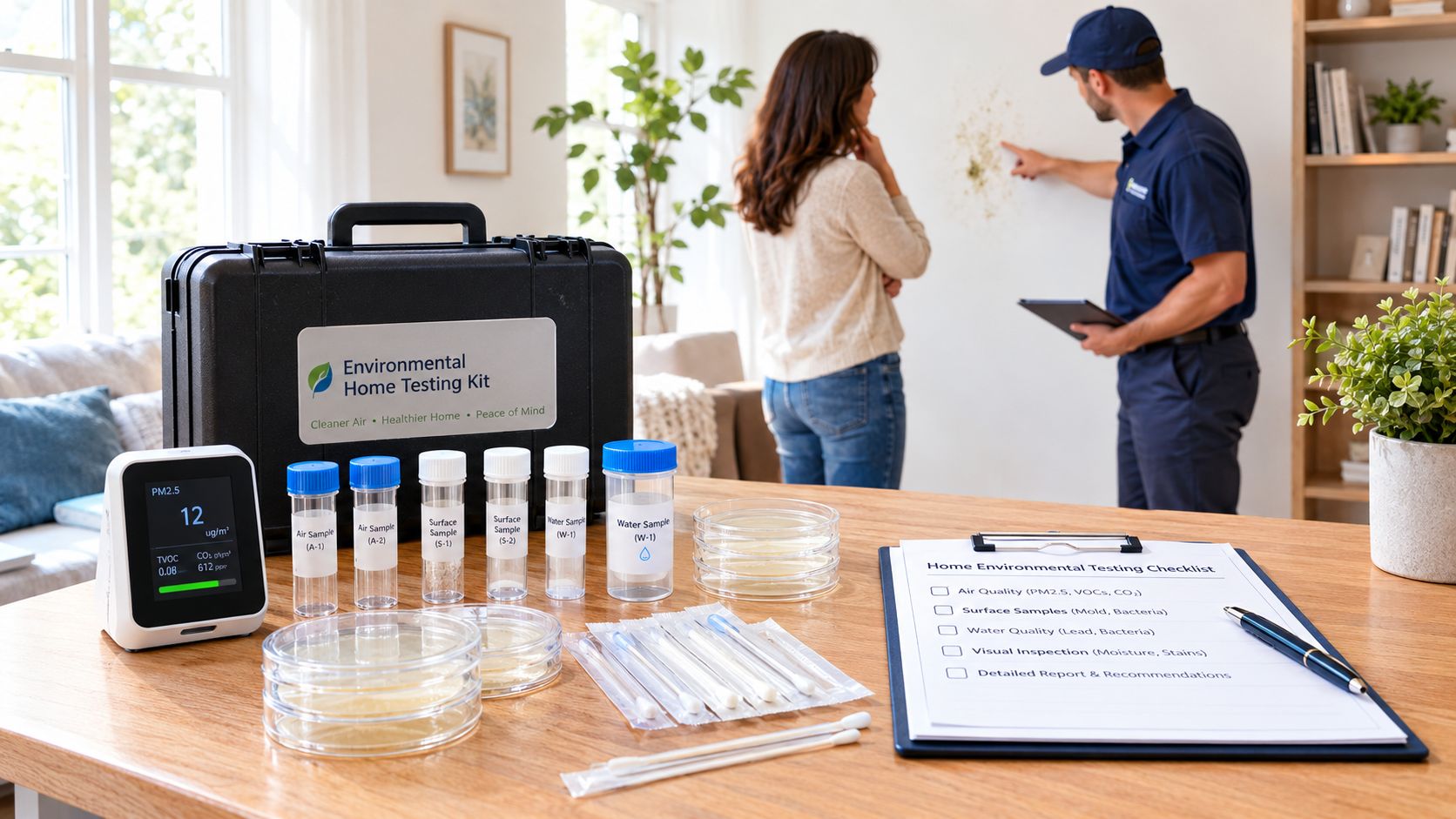
DIY mold kits demonstrate the same limitation. A petri dish may grow organisms from ordinary indoor dust without showing where moisture is entering, whether concealed materials are affected, or whether the result explains a building condition. Are home mold test kits reliable? A professional mold investigation instead connects visual findings, moisture readings, building conditions, and, when justified, laboratory samples.
The right starting point in Los Angeles County is therefore not “test everything.” It's to define whether you need a material survey, an air or surface measurement, a moisture investigation, or documentation for renovation, insurance, a transaction, or regulatory compliance.
Core Testing Categories for Southern California Homes
Southern California properties present overlapping testing decisions. Older homes may contain lead-based paint and asbestos-containing materials. Coastal properties may experience persistent moisture and ventilation concerns. A wildfire or interior fire introduces a different group of contaminants, including soot, ash, char, smoke residue, particulates, VOCs, and heavy metals.
Compare the event with the evidence
Lead and asbestos require material-focused investigation. The United States banned lead-based residential paint in 1978, and the EPA Lead Disclosure Rule took effect on September 6, 1996, requiring sellers and landlords to disclose known lead-based paint and hazards in most pre-1978 housing. Estimates cited in housing guidance report lead in 87% of homes built before 1940, 69% of homes built from 1940 to 1959, and 24% of homes built from 1960 to 1977. Housing safety information on lead and asbestos
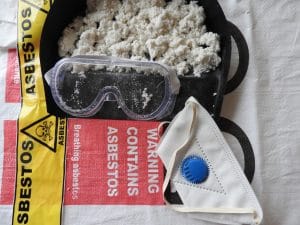
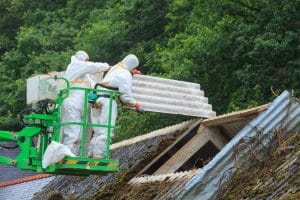
Asbestos requires similar caution, but a different regulatory history. The EPA's 1989 Asbestos Ban and Phase-Out Rule was largely overturned in 1991, so legacy materials can still require targeted inspection before renovation or demolition. Flooring, ceiling textures, insulation, roofing, wall systems, and other components shouldn't be disturbed based on appearance alone.
Mold testing has a different logic. Visible mold and obvious moisture often call for source identification and a visual assessment rather than a routine air sample. EPA guidance states that there are no federal mold-spore limits, so a result can't establish compliance with a federal standard. Sampling is more useful when it addresses a defined question, such as hidden contamination, cleanup effectiveness, or differences between indoor and outdoor conditions. EPA mold sampling guidance
Wildfire and fire investigations should also look beyond visible ash. Indoor post-fire assessment literature notes that wildfire smoke can deposit trace metals indoors as part of particulate matter. Reoccupation guidance supports evaluating particulates, VOCs, heavy metals, and mold, alongside combustion byproduct testing and inspection of ash, soot, char, and smoke residue. Wildfire smoke cleaning and indoor assessment review
| Property Event | Primary Test Required | Key Regulatory or Safety Trigger |
|---|---|---|
| Planned renovation or demolition | Asbestos inspection, sampling, and written survey | Pre-work identification of materials that may be disturbed |
| Older residential property transaction | Lead-based paint inspection or risk assessment | Pre-1978 housing and known lead hazards |
| Water intrusion or persistent musty conditions | Moisture assessment, visual mold inspection, and targeted mold sampling when justified | Hidden growth, damaged materials, or unresolved moisture |
| Wildfire smoke or interior fire | CBP, ash, soot, char, particulate, VOC, heavy-metal, and mold assessment | Reoccupation, insurance documentation, or suspected deposited contamination |
| Occupant concern about indoor air | IAQ testing for applicable pollutants, ventilation review, and humidity assessment | Symptoms, odors, poor circulation, or unexplained air-quality concerns |
| Commercial or industrial property concern | Industrial hygiene testing and environmental assessment | Worker exposure questions, project planning, or compliance documentation |
Indoor air quality testing can include airborne pollutants and irritants, ventilation and air-circulation evaluation, and laboratory analysis. A useful overview of commercial indoor air quality can help facility managers understand the broader category, but Southern California projects still need a site-specific sampling plan. Homeowners can also review how to test air quality in your home to distinguish monitor readings from professional diagnostic work.
The key distinction is characterization. An asbestos survey identifies which materials may be disturbed and whether they are friable or non-friable. A lead investigation identifies paint or dust hazards and their locations. A mold assessment evaluates moisture and source conditions rather than treating one spore count as a complete diagnosis. Post-fire testing identifies what settled indoors and what may remain airborne or embedded in building materials.
Arranging Professional Inspections and Site Preparation
The quality of a report depends on more than the laboratory. It also depends on the scope, the sampling plan, the field notes, and the way samples move from the property to the lab.
Select the firm for the decision ahead
Ask whether the consultant performs the relevant inspection and sampling directly, uses an independent laboratory where appropriate, and provides a written report that identifies sample locations and limitations. A credible proposal should state what will be inspected, what will be sampled, what the laboratory will analyze, and what the report will and won't conclude.
Independence matters. A testing company shouldn't make a contamination finding merely to sell removal or cleanup work. Environmental testing, inspection, and assessment should remain distinct from remediation, restoration, demolition, or abatement. That separation helps homeowners, contractors, insurers, and property managers evaluate results without a built-in financial incentive to expand the work.
For commercial environmental testing and industrial hygiene testing, ask for the project purpose in writing. A facility manager may need exposure characterization, while a developer may need documentation before construction. A landlord may need a defensible record for a tenant concern. The same building can require different sampling designs depending on the decision.
Prepare the property without compromising the evidence
Before the appointment:
- Provide access: Open attics, crawlspaces, mechanical rooms, roof areas, closets, and wall or ceiling locations identified in the scope.
- Secure occupants and pets: Keep people and animals away from sampling locations so they don't disturb dust, surfaces, or equipment.
- Share the building history: Tell the consultant about leaks, fires, renovations, prior reports, odors, HVAC changes, and areas that were recently cleaned.
- Avoid unnecessary cleaning: Strong cleaners, fragrances, solvents, and fresh coatings can interfere with some VOC or surface investigations.
- Preserve suspect materials: Don't scrape, sweep, drill, or remove a questionable material before it has been documented and sampled.
- Coordinate active work: Stop construction activity when the sampling plan requires undisturbed conditions, and tell the consultant what work is scheduled next.
The consultant should explain chain of custody for laboratory samples. That record typically connects the sample identification, collection location, date, collector, requested analysis, transfer, and laboratory receipt. For real estate, insurance, regulatory, and contractor decisions, clear labeling and location photographs can be as important as the analytical result itself.
Use the inspection appointment to ask what happens if the first result is inconclusive. A responsible consultant may recommend additional samples, outdoor controls, material-specific testing, or a revised scope. That isn't a failure. It reflects the fact that environmental conditions vary by room, surface, material, and time.

A written scope should also identify whether the work is residential, commercial, industrial, or construction-related. For a renovation, the consultant needs the planned disturbance areas, not just the current visible condition. For a fire investigation, the scope should identify affected rooms, HVAC pathways, ash and soot deposition, water damage, and materials that may have absorbed smoke.
A firm such as Sensitive Environmental's environmental testing services can coordinate professional inspections, sampling, laboratory analysis, and reporting for these property questions. The important selection criterion is a method that fits the hazard and produces documentation useful for the decision you're facing.
Field Sampling Methods and Regulatory Surveys
A professional investigation is physical work. The consultant may measure moisture in multiple materials, inspect concealed spaces, map affected areas, collect surface wipes, take air samples, or remove a carefully selected material sample for laboratory analysis.
Lead dust requires controlled sampling
For lead-dust testing, HUD and EPA field guidance recommends a durable 12" x 12" template or taped square. The consultant collects single-surface samples from locations such as floors, window sills, and window troughs, while avoiding contact with the sample area after the template is placed. HUD identifies minimum sample areas of about 0.1 square feet for some surfaces and about 1 square foot for floor samples to support adequate quantitation. HUD lead-based paint field sampling guidance
Single-surface sampling is valuable when the property owner needs to know exactly where contamination is located. Composite sampling can reduce the number of laboratory results, but it is less specific. If one composite sample contains dust from several rooms, a positive result may not identify the surface that requires attention.
Post-renovation clearance commonly uses thresholds of less than 5 µg/ft² for floors, less than 40 µg/ft² for interior window sills, and less than 100 µg/ft² for window troughs, as listed in EPA field guidance. The report should make clear whether those criteria apply to the project and how the samples were collected.
Asbestos surveys must precede disturbance
For a Los Angeles renovation or demolition, the consultant surveys affected facility components, identifies suspect materials, determines whether they are friable or non-friable, and collects physical samples where necessary. South Coast AQMD Rule 1403 requires an affected facility or its components to be thoroughly surveyed before demolition or renovation, including identification and quantification of friable asbestos and Class I and Class II non-friable asbestos-containing material. South Coast AQMD Rule 1403
The written survey must identify asbestos-containing material that will be disturbed and describe whether it is damaged or disturbed. South Coast AQMD guidance also addresses online notification for demolitions, renovations affecting asbestos-containing material, and cleanups involving damaged or disturbed material. Procedure 5 plans are required when asbestos-containing material has been damaged or disturbed, regardless of project size. South Coast AQMD Rule 1403 compliance advisory
A contractor shouldn't rely on a generic age-based assumption or a visual guess. The survey must correspond to the actual work area. If the scope changes, the survey may need to be reviewed again.
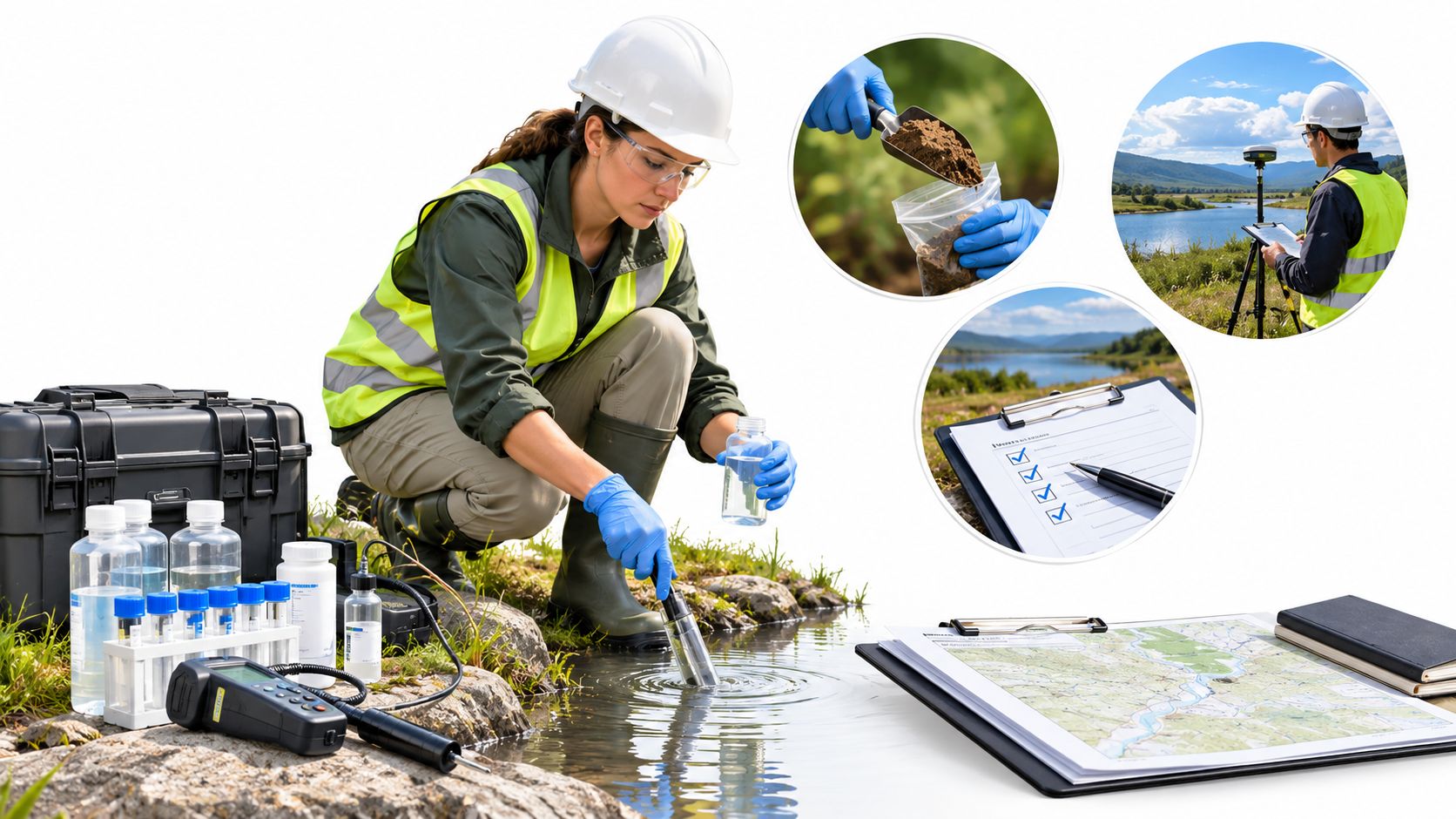
Mold investigations combine building observations with targeted sampling. A consultant may use moisture meters, thermal imaging, visual inspection, and air or surface samples when those samples answer a defined question. A single air cassette doesn't prove that a building is contaminated or uncontaminated. Indoor results need context, often including outdoor controls, room conditions, moisture history, and the location of any visible or concealed source.
Lead-based paint inspections may use X-ray fluorescence instruments or laboratory paint-chip analysis. HUD and EPA standards define lead-based paint as a coating containing lead at or above 1.0 mg/cm² or 0.5% by weight, also expressed as 5,000 µg/g, 5,000 mg/kg, or 5,000 ppm by weight. XRF readings must be compared with the performance characteristic sheet threshold for the specific device and substrate. Lead-based paint and XRF criteria
Interpreting Laboratory Results and Planning Next Steps
A laboratory report is evidence, not a project plan. The useful question isn't just whether a result is positive. It is where the material or contaminant was found, how the sample was collected, what comparison standard applies, and what decision the result supports.
Read results with their sampling context
For lead dust, compare each surface result with the applicable clearance criteria and note whether the sample represents a floor, sill, or trough. A result from a window trough shouldn't be interpreted as though it came from a floor. Sample location, area, condition, and project phase all affect the meaning.
For mold, review the indoor sample alongside outdoor controls and the building observations. EPA guidance does not provide federal mold-spore limits, so a lone indoor count doesn't establish that a property complies with a federal standard. Species or genera information may help characterize a source, but laboratory identification can't replace an evaluation of water intrusion, material damage, ventilation, and building history.
For asbestos, the report identifies whether a submitted material contains asbestos and may describe the type or percentage detected, depending on the laboratory method and scope. A positive result doesn't automatically mean that every material in the building requires removal or that a full teardown is necessary. It means the material must be considered in relation to the planned disturbance and applicable requirements.
Turn data into a controlled decision
A clear report can help a property owner:
- Define the work area: Use sample locations and inspection notes to distinguish affected materials from untested areas.
- Plan contractor questions: Give qualified contractors the same laboratory report and scope so proposals address comparable work.
- Support insurance documentation: Pair photographs, field notes, laboratory results, and the event timeline for fire or water-damage claims.
- Organize transaction disclosures: Share known environmental information with the appropriate real estate and legal professionals.
- Determine follow-up testing: Add samples only when the existing evidence leaves a specific question unanswered.
Testing doesn't guarantee that a property is free of every environmental hazard. It provides a defensible snapshot of the conditions investigated. Owners and qualified professionals then decide whether monitoring, repair of a moisture source, material management, specialized cleanup, further sampling, or regulatory notification is appropriate.
That distinction protects budgets as well as health decisions. Without a defined baseline, contractors may price broad and uncertain scopes. With location-specific data, the owner can ask for work that corresponds to the actual findings and verify conditions at the appropriate project stage.
Common Questions About Home Environmental Diagnostics
Are store-bought mold kits useful?
They can demonstrate that particles or organisms are present in a household environment, but they usually can't answer the important building questions. A petri dish doesn't locate hidden moisture, characterize the affected material, compare indoor conditions with outdoor air, or determine whether a visible condition is active.
A professional mold inspection may not require sampling when visible mold and the moisture source are already clear. Sampling becomes more useful when the consultant has a specific question, such as whether hidden areas are affected or whether post-work conditions are consistent with the intended scope.
Is a consumer air monitor enough?
A monitor can help track changes in humidity, carbon dioxide, particulate matter, VOCs, or temperature. It can't identify asbestos in a building material, confirm lead-based paint, document a regulatory asbestos survey, or establish the source of hidden mold.
Use a monitor for observation, not as a substitute for professional sampling. If readings change with ventilation or occupant activity, share that history with the consultant. It may help refine the sampling plan.
What does post-wildfire testing need to include?
Smoke isn't limited to visible ash. Fire and wildfire investigations may need surface and air evaluation for particulates, VOCs, heavy metals, soot, char, combustion byproducts, and smoke residue, with mold assessment where water damage or suppression activity created moisture concerns. The correct scope depends on the affected rooms, HVAC system, materials, and intended reoccupation or insurance decision.
How quickly will results arrive?
The schedule depends on the hazard, laboratory method, sample count, project access, and whether the report requires additional interpretation. Ask for the expected field date, laboratory turnaround, and report delivery date before scheduling. For a renovation, begin before materials are disturbed. For a sale or insurance claim, coordinate the environmental assessment with the transaction or claim timeline rather than waiting until the last inspection deadline.
Sensitive Environmental provides asbestos testing and surveys, lead testing, mold inspections and sampling, indoor air quality testing, commercial environmental assessments, industrial hygiene testing, and fire-related CBP testing for ash, soot, char, smoke residue, and heavy metals in Los Angeles and throughout Southern California. Visit Sensitive Environmental to discuss the exact environmental testing, inspection, or regulatory documentation your property requires.