EPA recognizes ASTM E1527-21 as the compliant standard for All Appropriate Inquiries. After February 13, 2024, E1527-21 is the only ASTM version that meets the federal safe harbor for a current Phase I ESA.
But does a compliant report eliminate environmental transaction risk? Not necessarily. A Phase I Environmental Site Assessment can follow the correct standard and still leave important questions about older records, adjoining properties, unavailable maps, or emerging contaminants. For buyers, lenders, developers, and property managers in Los Angeles and throughout Southern California, the critical skill isn't just ordering a report. It's understanding what the report establishes, what it doesn't establish, and when a documented uncertainty justifies additional environmental testing.
Table of Contents
- Which ASTM Standard Applies to Your Phase I Environmental Site Assessment
- ASTM E1527 Revision History and Key Milestones
- Comparing ASTM E1527-13 and E1527-21
- What a Phase I ESA Actually Examines
- Emerging Contaminants and Adjacent-Property Risks
- All Appropriate Inquiries and Federal Liability Protection
- Choosing Between ASTM Standards by Property Type
- Evaluating Report Quality and Data Gaps
- How ASTM Phase I ESA Workflows Connect to Environmental Testing
Which ASTM Standard Applies to Your Phase I Environmental Site Assessment
Which Phase I ESA standard controls a commercial property transaction today? For ordinary commercial and industrial real estate in the United States, the answer is ASTM E1527-21. The standard defines good commercial and customary practice for identifying potential contamination connected with hazardous substances or petroleum products, and EPA recognizes it as a way to satisfy federal All Appropriate Inquiries requirements under CERCLA. EPA's All Appropriate Inquiries fact sheet confirms that E1527-21 is consistent with the applicable final rule.
The date distinction matters. EPA approved E1527-21 on December 15, 2022, and the updated standard became effective on February 13, 2023. During a one-year transition, practitioners could continue using E1527-13, but that older version expired for this purpose on February 13, 2024. The regulatory transition analysis from Allen Matkins explains why the 2013 and 2021 versions were not left as permanently equivalent choices.
Why version selection belongs at the start
A Phase I ESA isn't merely a historical property summary. Buyers may use it as part of a strategy to preserve potential CERCLA liability protections, including the innocent landowner and bona fide prospective purchaser defenses. Lenders also need confidence that the environmental due diligence aligns with the current federal framework before they underwrite a property or accept it as collateral.
That means the version should be confirmed before the consultant begins records research, interviews, or the site visit. A report prepared under an expired version may contain useful information, but usefulness isn't the same as current regulatory qualification.
Practical rule: Ask the environmental professional to identify ASTM E1527-21 explicitly in the proposal and final report, then confirm that the assessment addresses the property's actual use and transaction purpose.
What this means for Southern California transactions
A former industrial parcel in Los Angeles, a mixed-use redevelopment site in Long Beach, or a commercial building near a legacy manufacturing corridor may have a complicated ownership and land-use history. The correct standard gives the assessment a consistent structure, but it doesn't make every property equally straightforward. Dense development can make adjoining-property history, off-site releases, and incomplete historical records especially important.
A current E1527-21 assessment is therefore the starting point for defensible due diligence, not a substitute for professional judgment. If the report identifies a recognized environmental condition or a material limitation, the transaction team still needs to decide whether more investigation, sampling, or legal review is appropriate.
ASTM E1527 Revision History and Key Milestones
ASTM E1527 has changed because environmental due diligence has changed. The first edition, E1527-93, was published in 1993 to define “good commercial and customary practice” for environmental site assessments. ASTM materials identify later revisions in 1994, 1997, 2000, 2005, 2013, and 2021, creating at least seven publication milestones over roughly 28 years. A presentation reviewing ASTM E1527's development connects that history with changing federal liability rules and market expectations.
The sequence is more than an administrative record. Each revision represents an effort to keep a private consensus standard aligned with how buyers, lenders, environmental professionals, and regulators evaluate potential contamination risk. The standard has had to remain practical enough for transactions while supporting the legal purpose of All Appropriate Inquiries.
A consensus standard with regulatory consequences
ASTM International isn't a federal regulatory agency. Its standard gains practical force because EPA recognizes the appropriate version for federal AAI purposes and because the commercial real estate market relies on a consistent methodology. That arrangement explains why version changes matter so much. A private technical standard can shape whether a buyer's due diligence supports a federal liability defense.
The 2021 revision was approved on November 1, 2021, after more than three years of collaboration by more than 150 industry professionals. ASTM's announcement of the revision describes the breadth of that development process. The result reflects technical consensus among people who work with environmental records, property transactions, site reconnaissance, liability questions, and reporting practices.
Why the timeline helps interpret today's reports
The history also explains why an older Phase I shouldn't be treated as interchangeable with a current one. A legacy report may have been appropriate when prepared, yet still lack the clarifications or documentation expectations associated with E1527-21. Older reports can help establish historical context, but they don't automatically answer whether current due diligence is complete.
For property owners and developers in Southern California, the practical lesson is simple. Review the report date and version before relying on prior environmental work. If the assessment predates the current baseline, an environmental professional should determine whether it can be updated or whether a new Phase I ESA is needed.
The revision history also gives buyers a useful way to evaluate professional judgment. A consultant who can explain what changed, why the change matters, and how the report handles uncertainty is better positioned to distinguish a routine limitation from a material transaction concern.
Comparing ASTM E1527-13 and E1527-21
The difference between E1527-13 and E1527-21 isn't just a label on the cover. The 2013 version had already been incorporated into federal All Appropriate Inquiries rules, but EPA later recognized E1527-21 and ended the period in which both versions could be treated as current. The 2021 update clarified key terms and site reconnaissance expectations and addressed emerging contaminants of potential future concern.
| Version | EPA Recognition | Phase-Out Date | Primary Use Case |
|---|---|---|---|
| ASTM E1527-13 | Previously incorporated into federal All Appropriate Inquiries requirements | February 13, 2024 | Legacy reports and assessments prepared during the transition period |
| ASTM E1527-21 | Current EPA-recognized standard for satisfying federal AAI requirements | Current baseline after February 13, 2024 | Commercial and industrial property transactions requiring current due diligence |
What changed in practical terms
E1527-21 places greater emphasis on clarifying terminology, documenting site reconnaissance, reviewing adjoining properties, and addressing emerging contaminants that may become relevant to future liability. It also makes the quality of the information package more consequential. A consultant must explain unavailable information and limitations rather than allowing a reader to assume that an unreviewed source was irrelevant.
The change affects more than environmental consultants. A lender reviewing a Phase I report may ask whether the report uses the current standard. A buyer may need to determine whether an older report still supports the intended liability strategy. A developer may need additional inquiry before acquiring a parcel with historical industrial use or nearby potential sources.
How to handle an older report
An E1527-13 report shouldn't be discarded automatically. It may contain historical research that remains useful, but its age, scope, and version need to be evaluated against the current transaction. The right response may be a new Phase I, an update where appropriate, or supplemental research. The decision depends on the property, the report, the transaction, and the unresolved questions.
Reports prepared after February 13, 2024 must follow E1527-21 to qualify for the federal safe harbor. That date gives transaction teams a clear screening point, but it doesn't eliminate professional review of older documents. A technically current report can still be weak if it contains unexplained gaps, while an older report can still provide valuable evidence as part of a broader investigation.
What a Phase I ESA Actually Examines
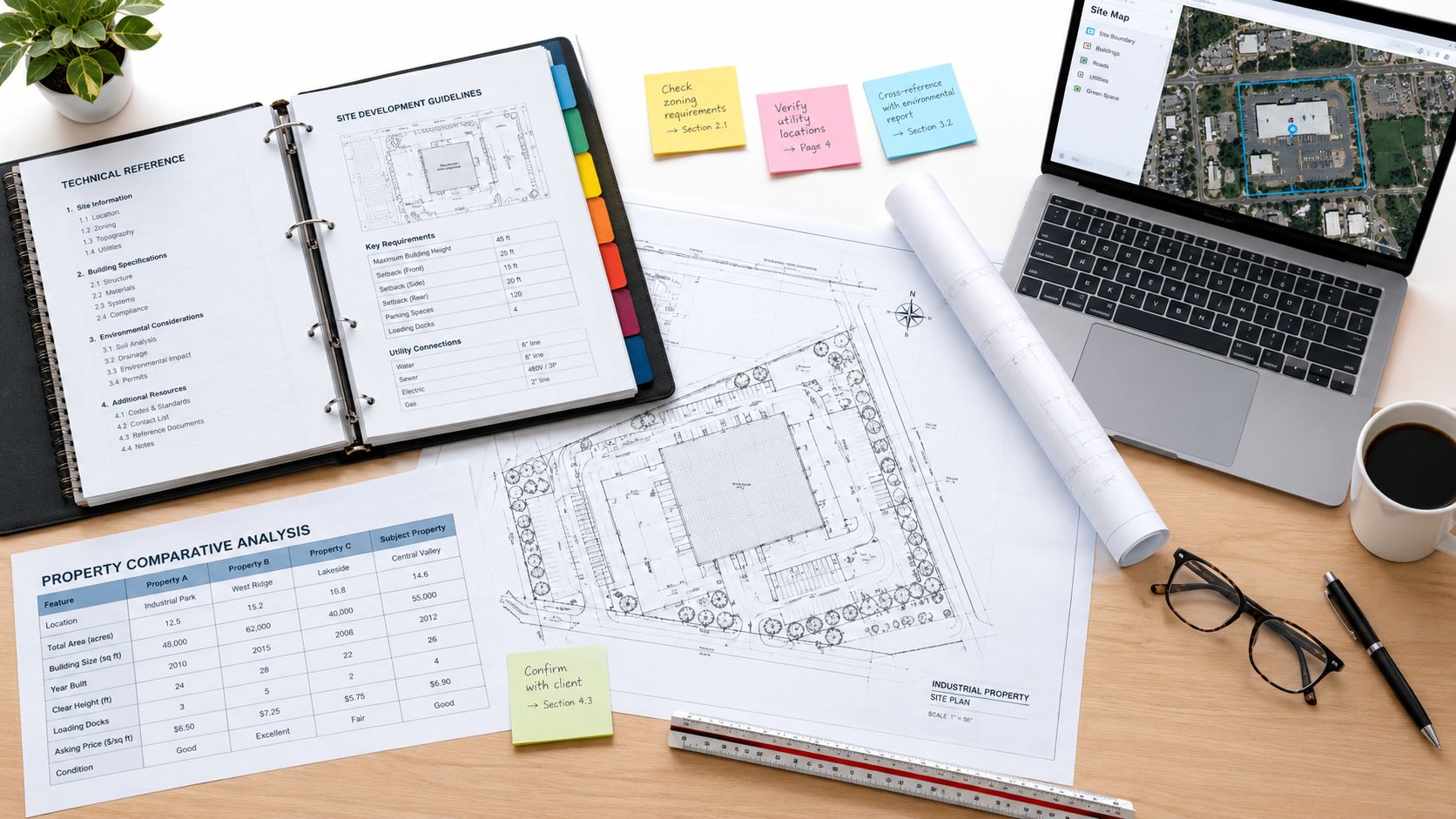
A Phase I ESA under ASTM E1527-21 is non-intrusive. It generally doesn't include soil, groundwater, indoor air, building-material, or other physical sampling. Instead, it uses records review, site reconnaissance, interviews, environmental lien searches, and government-record searches to identify whether a recognized environmental condition may be connected with the property. An overview of ASTM E1527-21 methodology describes this documentary and observational foundation.
That distinction prevents a common mistake. A Phase I can identify a former fueling operation, a historical industrial use, a possible release, or a concern on adjoining land, but it doesn't determine contaminant concentrations through laboratory analysis. When the available evidence indicates a need for physical characterization, separate environmental testing may be appropriate.
The four working components
A sound assessment normally brings together several evidence streams:
- Records review: Historical aerial photographs, Sanborn maps, city directories, land-use records, government databases, environmental liens, and other reasonably ascertainable sources help reconstruct past and present uses.
- Site reconnaissance: The environmental professional observes the subject property and relevant adjoining properties for visible indicators such as storage tanks, staining, stressed vegetation, unusual odors, or other conditions that may support a REC determination.
- Interviews: Present and past owners, operators, occupants, and appropriate government contacts may provide information that records don't show. A missing interview can become an important data gap.
- Evaluation and reporting: The consultant analyzes the evidence, identifies recognized environmental conditions, and documents limitations, sources, and conclusions.
The standard's objective is to identify a recognized environmental condition, including the presence or likely presence of hazardous substances or petroleum products resulting from a past, current, or threatened release. Reports may also distinguish historical, controlled, and other condition categories, but readers shouldn't treat the label alone as a complete risk decision.
Why the report's evidence package matters
A report can be technically compliant while still leaving a buyer with legitimate questions. A missing fire insurance map, unavailable Sanborn map, incomplete city directory history, or limited owner interview may not automatically change the conclusion. Its importance depends on what the missing source could have shown and whether other lines of evidence address the same question.
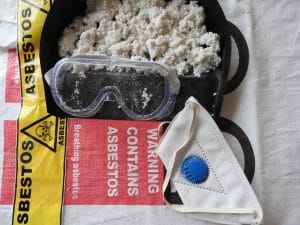
Phase I work should also be kept separate from building-specific testing. A commercial renovation, for example, may require a professional asbestos testing and survey service because asbestos-containing materials are a separate concern from the CERCLA-focused property history reviewed in a Phase I. Mold inspections, lead-based paint inspections, indoor air quality testing, and industrial hygiene assessments may likewise be appropriate, but they don't replace the Phase I process.
Emerging Contaminants and Adjacent-Property Risks
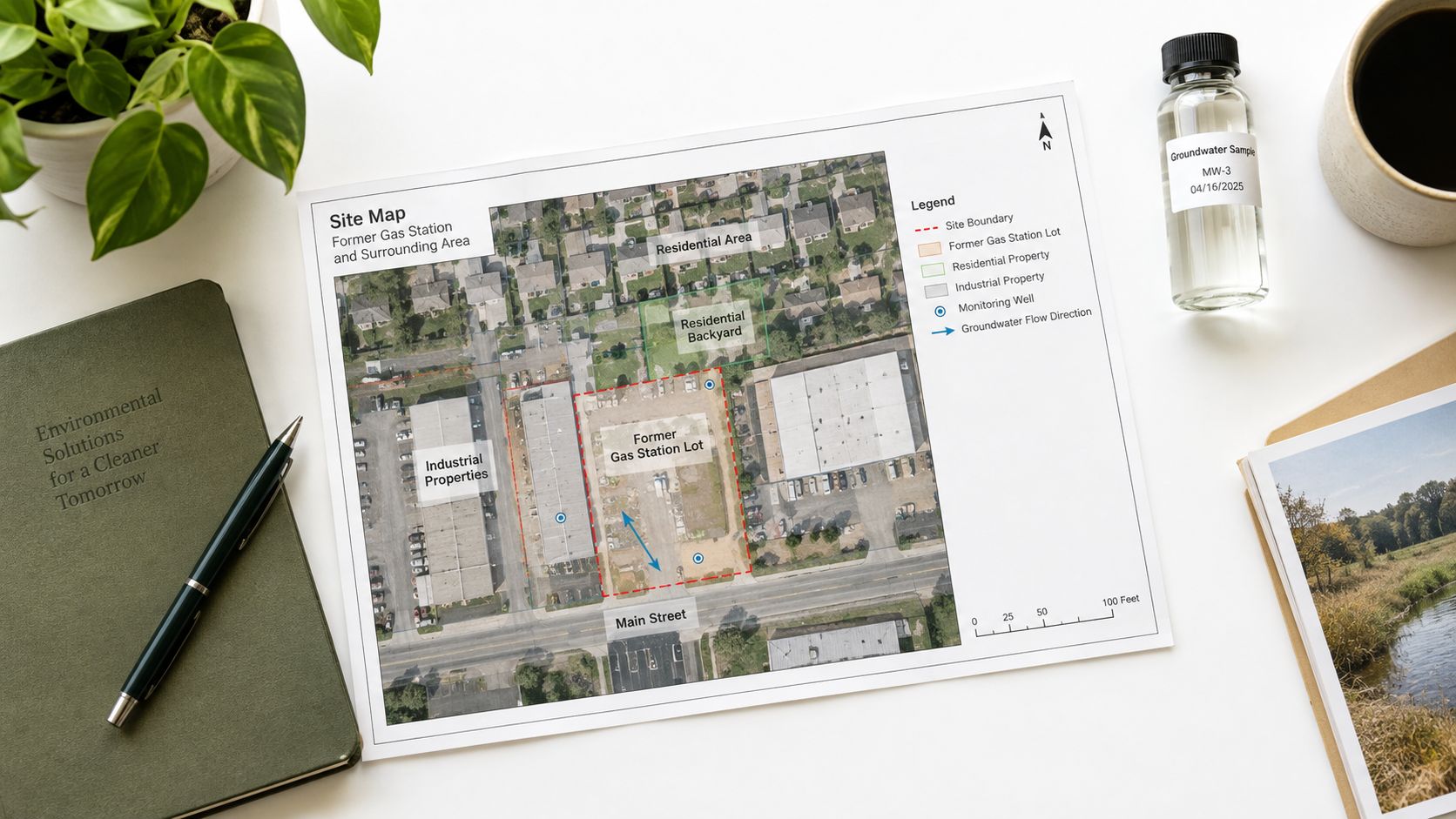
A property can appear uneventful when viewed alone and still warrant deeper review because of nearby land uses. E1527-21 strengthened attention to adjoining-property review and emerging contaminants of potential future concern, including questions that may not be resolved by a simple database search. In Southern California, dense land use and redevelopment pressure can place a proposed project close to former industrial, commercial, transportation, or waste-handling uses.
PFAS illustrates the interpretive challenge. A Phase I is not a universal contaminant sampling program, so its role is to identify relevant historical or current conditions and explain whether available evidence suggests additional inquiry. If nearby operations, drainage patterns, documented releases, or historical uses create a plausible concern, the report should make that reasoning visible instead of treating the subject parcel as an isolated point on a map.
The unanswered question behind data gaps
Recent commentary about ASTM task-group activity in March 2026 identifies data gaps, data failure, significant data gaps, lines of evidence, database listing write-ups, AI disclosures, and the relationships among RECs, HRECs, CRECs, and BERs as areas of attention. A discussion of current Phase I issues and task-group topics signals that the industry is still working toward clearer explanations of modern information sources and nuanced condition labels.
That development matters because technology can increase the amount of information available without automatically improving its meaning. A database hit may be distant, incomplete, or unrelated to the property. Conversely, an apparently minor adjoining use may deserve attention when the historical record, site setting, and current redevelopment plans point in the same direction.
A practical reading principle
Don't ask only whether the report is compliant. Ask whether the report explains the lines of evidence supporting its conclusions and whether it identifies what remains unknown. Technical compliance establishes a methodological baseline. It doesn't convert uncertainty into certainty when the risk signal originates off site, concerns an evolving contaminant, or depends on records that couldn't be obtained.
For property managers, lenders, and developers, that distinction affects the next decision. The appropriate response might be no further work, targeted records research, a legal review, or environmental sampling. The Phase I should give decision-makers enough explanation to choose among those paths deliberately.
All Appropriate Inquiries and Federal Liability Protection
The connection between ASTM E1527-21 and CERCLA is the reason version control matters. EPA recognizes E1527-21 as a compliant way to satisfy statutory All Appropriate Inquiries, which is part of the due diligence framework used by parties seeking protection from certain environmental liabilities. The assessment doesn't create immunity by itself, and it doesn't guarantee a particular legal outcome. It supplies a recognized process that can support a broader liability-defense strategy when the other requirements are also met.
EPA stated that it would no longer recognize E1527-13 and E1527-21 as equally current. Practitioners could use E1527-13 only during the transition period, which ended on February 13, 2024. The Holland & Knight analysis of EPA's recognition decision describes how that change altered the compliance picture for property transactions.
What recognition does and doesn't mean
A current standard is necessary for the federal safe harbor, but a version number isn't the entire defense. The assessment must address the required elements, use an appropriately qualified environmental professional, and document limitations candidly. A report that omits meaningful research or glosses over an unavailable interview may invite questions even if its cover identifies E1527-21.
The purchaser also has continuing responsibilities after acquisition. Environmental liability planning doesn't end when the report is delivered. The buyer's attorneys and environmental professionals should evaluate how the due diligence fits with the transaction structure, property operations, known conditions, and applicable legal requirements.
Liability perspective: A Phase I ESA is strongest when it gives the buyer a documented basis for asking better questions before closing, not when it simply produces a favorable-sounding conclusion.
Why lenders care about report quality
Lenders often treat environmental due diligence as part of collateral risk management. A report that identifies a potential release may affect underwriting, loan conditions, property value analysis, or the need for additional investigation. That doesn't mean a REC automatically prevents financing. It means the lender needs enough information to understand what the condition represents and whether unresolved uncertainty is material.
A buyer should use the same discipline. If the report identifies a condition involving a former industrial use, a nearby source, or incomplete records, the transaction team should decide who will investigate further, what testing is appropriate, and how the parties will allocate risk. Environmental consulting and any later cleanup or remediation decisions are separate steps. Information about broader property environmental challenges can help readers distinguish assessment from later project activities.
Choosing Between ASTM Standards by Property Type
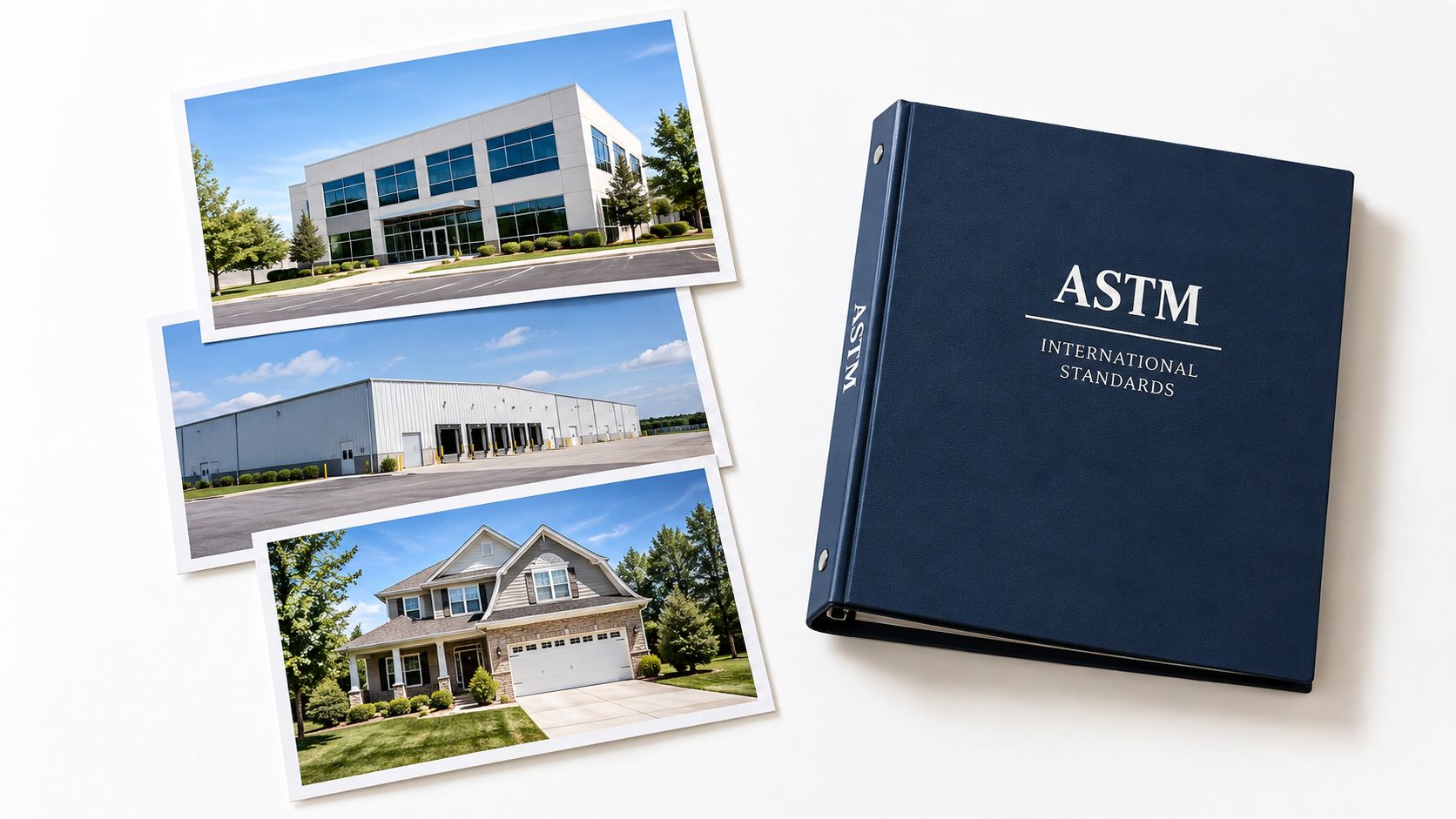
Property use is the practical decision point. ASTM E1527-21 is the core Phase I ESA standard for typical commercial and industrial parcels, including urban buildings, redevelopment sites, and operating facilities. ASTM E2247-23 is a separate standard designed for forestland or rural property, where large undeveloped areas and different use patterns can change how environmental conditions are investigated. ASTM's E1527-21 standard page distinguishes the commercial-property baseline from the separate rural-property framework.
A buyer shouldn't choose based only on whether the seller is an individual, company, or public entity. The land's actual use and environmental exposure profile matter more.
A simple property-use comparison
| Property setting | Likely assessment framework | Main reasoning |
|---|---|---|
| Urban commercial building | ASTM E1527-21 | Commercial history, adjoining uses, and transaction-related liability concerns |
| Industrial facility or redevelopment parcel | ASTM E1527-21 | Current and historical operations may create recognized environmental conditions |
| Large undeveloped rural tract | ASTM E2247-23 may be appropriate | Forestland or rural characteristics can require a framework tailored to that setting |
A mixed-use parcel needs professional judgment. The existence of residential units doesn't automatically make a property a residential Phase I candidate, and a vacant parcel isn't automatically rural. The assessment should reflect how the property has been used, how it is used now, and what the transaction requires.
For a Southern California developer acquiring land for a commercial project, selecting the wrong framework can create a mismatch between the report and the actual risk profile. Confirm the property type with the consultant, lender, and legal team before authorization. That early discussion can prevent a report from becoming an expensive document that doesn't answer the transaction's real questions.
Evaluating Report Quality and Data Gaps
A compliant Phase I ESA can still leave material uncertainty. The most useful review begins with the evidence, not the conclusion page. Buyers, lenders, and property managers should ask whether the historical research was thorough, whether adjoining properties were evaluated in context, and whether unavailable information was clearly identified.
A practical review sequence
Start with the historical sources. Check whether the report discusses relevant aerial photographs, Sanborn maps, city directories, fire insurance maps, government files, and prior environmental reports where those sources were reasonably ascertainable. A missing record isn't automatically a defect, but the report should explain the limitation and its possible significance.
Then review the site reconnaissance and interviews:
- Site observations: Do photographs and narrative address tanks, staining, storage areas, drainage features, unusual odors, stressed vegetation, and adjoining uses where relevant?
- Interview coverage: Did the consultant seek information from appropriate owners, operators, occupants, or officials, and does the report identify any unavailable participants?
- Historical continuity: Does the report connect past uses with current conditions, or does it list records without explaining their relevance?
- Condition reasoning: Does the consultant explain why evidence does or doesn't support a REC, HREC, CREC, BER, or another condition category?
When a gap changes the transaction
A missing city directory entry may be relatively minor if aerial photographs, regulatory files, interviews, and site observations provide consistent evidence. The same missing entry may matter more if the property sits in an older commercial corridor where a former dry cleaner, metalworking operation, fueling use, or other potentially contaminating activity is plausible.
The correct question isn't, “Does the report contain a data gap?” Most complex properties have some limitations. Ask instead, “Could this missing information change the environmental decision?” If the answer is yes, request supplemental research, a peer review, or targeted environmental testing before relying on the report.
Decision test: Treat a limitation as material when it prevents the transaction team from distinguishing between a documented low concern and an unresolved potential release.
How ASTM Phase I ESA Workflows Connect to Environmental Testing
Phase I work and environmental testing answer different questions. The Phase I uses records, interviews, site reconnaissance, and professional evaluation to identify potential environmental conditions. Sampling and laboratory analysis provide physical evidence when documentary research indicates that a release, building hazard, indoor air issue, or other concern needs characterization.
A typical escalation begins with a recognized environmental condition or unresolved data gap. Depending on the concern, the next service may involve soil, groundwater, vapor, or other media, with the sampling plan designed around the suspected source and the decision the results need to support. A positive result doesn't automatically dictate a particular cleanup or abatement action. It gives qualified professionals and decision-makers information for determining appropriate next steps.
Testing that may sit beside transaction due diligence
Environmental testing can also address issues outside the scope of a standard Phase I ESA:
- Phase II-style investigation: Targeted soil, groundwater, soil-gas, or other sampling may help characterize a suspected release.
- Asbestos surveys: Pre-renovation and pre-demolition surveys can identify suspect building materials before construction disturbs them. In Los Angeles-area projects, testing and documentation may also relate to SCAQMD Rule 1403, Procedure 5, Notices to Comply, and other applicable requirements.
- Indoor air quality testing: IAQ investigations may evaluate moisture-related conditions, VOCs, airborne contaminants, or other concerns when building occupants or project conditions warrant professional assessment.
- Fire and water-damage testing: Post-fire assessments may examine ash, soot, char, smoke residue, combustion byproducts, and heavy metals. Water-damage investigations may include mold inspections and sampling where conditions support that need.
- Lead and industrial hygiene testing: Lead-based paint inspections, lead testing, and workplace-focused industrial hygiene assessments can address building or occupational concerns outside the standard Phase I scope.
A consultant should define the purpose of each service before collecting samples. Professional environmental testing services can provide the inspection, sampling, laboratory analysis, and reporting needed when a Phase I identifies a question that documents alone can't resolve.
For a commercial buyer, developer, facility manager, contractor, or insurance professional in Los Angeles and Southern California, the best workflow is sequential but flexible. Confirm the correct ASTM standard, assess the report's evidence and limitations, identify the decision that remains unresolved, then order only the additional testing that can answer that question.
Sensitive Environmental provides Phase I-related environmental assessments, asbestos surveys, lead testing, mold inspections, indoor air quality testing, industrial hygiene assessments, and fire-residue testing for properties throughout Los Angeles and Southern California. If a transaction, renovation, redevelopment project, or property condition has raised environmental questions, visit Sensitive Environmental to discuss professional inspection and testing options.