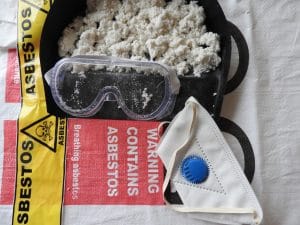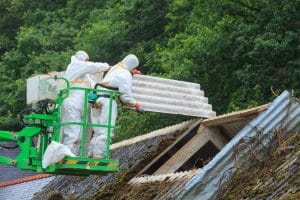

You're clearing out a kitchen in a Silver Lake duplex, or planning a partial demo on an older bungalow in Long Beach, and the contractor says they can't start until there's an asbestos survey. That's usually the moment people realize this isn't just paperwork. It's the first compliance step that tells everyone what's in the building, where it is, and whether work can move forward without creating a bigger problem.
In Los Angeles and the rest of Southern California, that survey sits inside a real decision chain. For renovation and demolition work in the South Coast Air Basin, a survey has to happen before work begins, and the report has to identify the asbestos-containing materials that could be disturbed, their condition, and their friability. If you're weighing a garage conversion, a kitchen remodel, or a JADU versus ADU project, compare JADU and ADU can help frame the scope, but the asbestos question still comes down to what building materials the work will touch.
A professional survey is different from a DIY kit. A visual guess or a mail-in sample doesn't tell you where suspect material exists across the property, how likely it is to be disturbed, or what documentation a permit office, contractor, or regulator may need. For a plain-language overview of why asbestos matters in the first place, see why asbestos is dangerous.
Table of Contents
- Why Los Angeles Properties Need an Asbestos Survey Before Work Begins
- The Three Survey Types a Qualified Company Performs
- What Happens During Bulk Sampling and Lab Analysis
- Certifications and Qualifications That Actually Matter in California
- Reading a Survey Report and Procedure 5 Documentation
- How Survey Results Drive the Next Decision
- Choosing the Right Asbestos Survey Company in Los Angeles
Why Los Angeles Properties Need an Asbestos Survey Before Work Begins
A homeowner calls after a contractor opens a bathroom wall and finds old insulation around a pipe chase. The crew wants to keep moving, but in Los Angeles that can be the exact point where the project pauses. Once suspect material is in play, the question isn't whether the wall looked fine from the hallway, it's whether the disturbed material contains asbestos and what the survey says should happen next.
The survey comes first because the building material decides the risk
The modern asbestos-survey industry tracks the tightening of U.S. exposure limits, from 12 fibers per cubic centimeter in 1971 to 0.1 f/cc in 1994, with multiple reductions in between. That regulatory shift explains why a survey can't be replaced by a quick visual walkthrough. Professional inspections identify suspect materials, sampling determines whether asbestos is present, and the documentation supports decisions about worker protection, renovation, demolition, and compliance (OSHA federal register revision history).
In the South Coast Air Basin, the rule is practical as much as legal. A survey has to be completed and documented before renovation or demolition, demolition has no exemption, and renovation is exempt only in limited circumstances for single-family residences. That means a project's square footage isn't a reliable compliance test by itself. The material, the building type, the jurisdiction, and the way the work will disturb concealed layers matter more than the brochure language on the remodel plan.
Practical rule: if a hammer, saw, or pry bar might reach hidden building material, assume the survey needs to happen before anyone starts cutting.
Small projects can still trigger serious questions
A bathroom update, a partial demo, or a single room gut can still uncover pipe wrap, mastic, texture coating, or other suspect materials. Los Angeles owners often think only large commercial jobs trigger asbestos rules, but project size alone doesn't tell you whether the work will disturb asbestos-containing material. That's why a pre-renovation asbestos survey is a decision step, not a formality.
For property owners, the point of hiring an asbestos survey company is to get a field-tested answer about the exact spaces affected by work. The survey maps materials to disturbance areas, which is more useful than a broad statement that says the building “contains asbestos somewhere.” If you want a deeper explanation of how that material identification works during a field visit, the asbestos testing service page shows the service scope in plain terms.
The Three Survey Types a Qualified Company Performs
A good asbestos survey company doesn't treat every project the same way. The survey type has to match the building activity, because the inspection that supports day-to-day management is not the same as the one used before tearing out finishes or demolishing a structure.
Management surveys fit occupied buildings
A management survey is for normal use, maintenance, and planned day-to-day work. It's the version you use when a building is still occupied and you need to know where suspect materials are so staff, tenants, and maintenance crews don't disturb them by accident. In practice, that means the inspector looks for likely asbestos-containing materials, documents where they are, and records their condition so the owner can manage them over time.
This is the survey that supports routine oversight, not intrusive tear-out. It helps a facilities manager decide whether a ceiling tile can stay in place, whether a pipe chase should be labeled, or whether a future repair needs a deeper inspection first.
Pre-renovation and pre-demolition surveys match the work
A pre-renovation survey is narrower and more targeted. The inspector focuses on the parts of the building that the planned work will disturb, which keeps the inspection aligned with the project scope. A pre-demolition survey is more aggressive and destructive, because demolition has no exemption and the whole structure may need to be investigated.
| Survey Type | Project Trigger | Typical Inspection Intensity |
|---|---|---|
| Management Survey | Ongoing occupancy, maintenance, general oversight | Focused on identifying and tracking suspect materials |
| Pre-Renovation Survey | Planned construction that may disturb concealed materials | Targeted to the work area and likely disturbance paths |
| Pre-Demolition Survey | Full or partial demolition of a structure | More intrusive, often destructive, because the building will be taken apart |
A pre-renovation survey can be more limited in scope than a pre-demolition survey, but that doesn't make it less important. It just means the inspector is matching the level of investigation to the amount of disturbance expected. For example, a kitchen remodel may need a different survey footprint than a full interior gut.
The UK's distinction between a management survey and a refurbishment or demolition survey follows the same logic, the survey scope has to match the activity that could disturb materials (HSE asbestos survey guidance). Los Angeles projects work the same way in practice, even if the legal language is different.
What Happens During Bulk Sampling and Lab Analysis
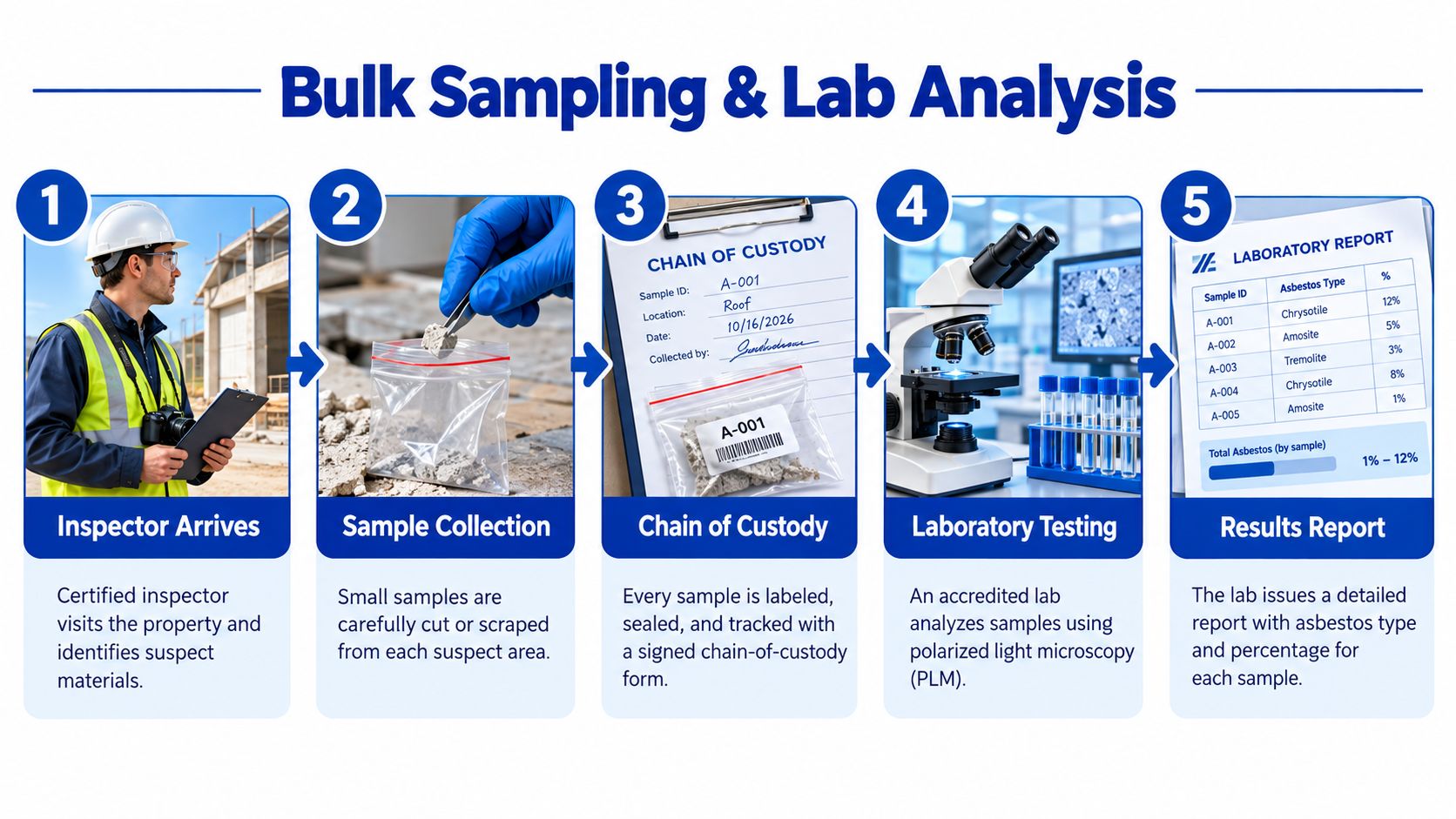
The part most clients worry about is the part they can see. A certified inspector shows up, opens a sample plan, and starts taking small pieces from suspect materials. That feels invasive the first time you watch it, but the point is to get defensible data from representative locations rather than guessing from a single surface spot.
The inspector starts by dividing the building into homogeneous areas
EPA guidance generally calls for at least three bulk samples from each homogeneous area of 1,000 square feet or less, with specified exceptions, and it also emphasizes distributing samples across the area instead of taking them from one spot. For friable miscellaneous materials that aren't assumed to contain asbestos, EPA states that at least two samples are required (EPA asbestos sampling FAQ).
That sounds technical, but the idea is simple. A ceiling texture, floor finish, or insulation run can look uniform while still varying in composition. If the inspector samples only one spot, the lab result may miss what's really there.
The lab doesn't just “look at it,” it uses PLM
After collection, the samples go to a qualified laboratory for Polarized Light Microscopy, or PLM. The chain-of-custody form matters here because each sample has to be labeled, sealed, and tracked from the moment it leaves the building to the moment the lab receives it. That paper trail is what makes the result useful in a permit file, contractor work plan, or compliance package.
A survey sample that isn't documented well can create a bigger headache than no sample at all, because the result may be hard to defend when a project manager or regulator asks where it came from.
What you'll actually see on site
Most clients see small disturbed spots, a clipboard, camera work, and careful labeling. The inspector may remove a tiny piece, seal the opening, and continue to the next suspect material. The process usually takes longer than people expect because each sample has to be tied to a specific location, material layer, and condition so the report can stand up later.
For a field-level overview of testing in the city, the asbestos testing in Los Angeles service page is a useful reference.
Certifications and Qualifications That Actually Matter in California
Anyone can say they do asbestos surveys. That doesn't mean they're qualified to produce a report a contractor, property owner, or regulator can rely on. In California and Los Angeles, the credentials matter because the survey has to support real compliance decisions, not marketing language.
The right person has to do the inspection work
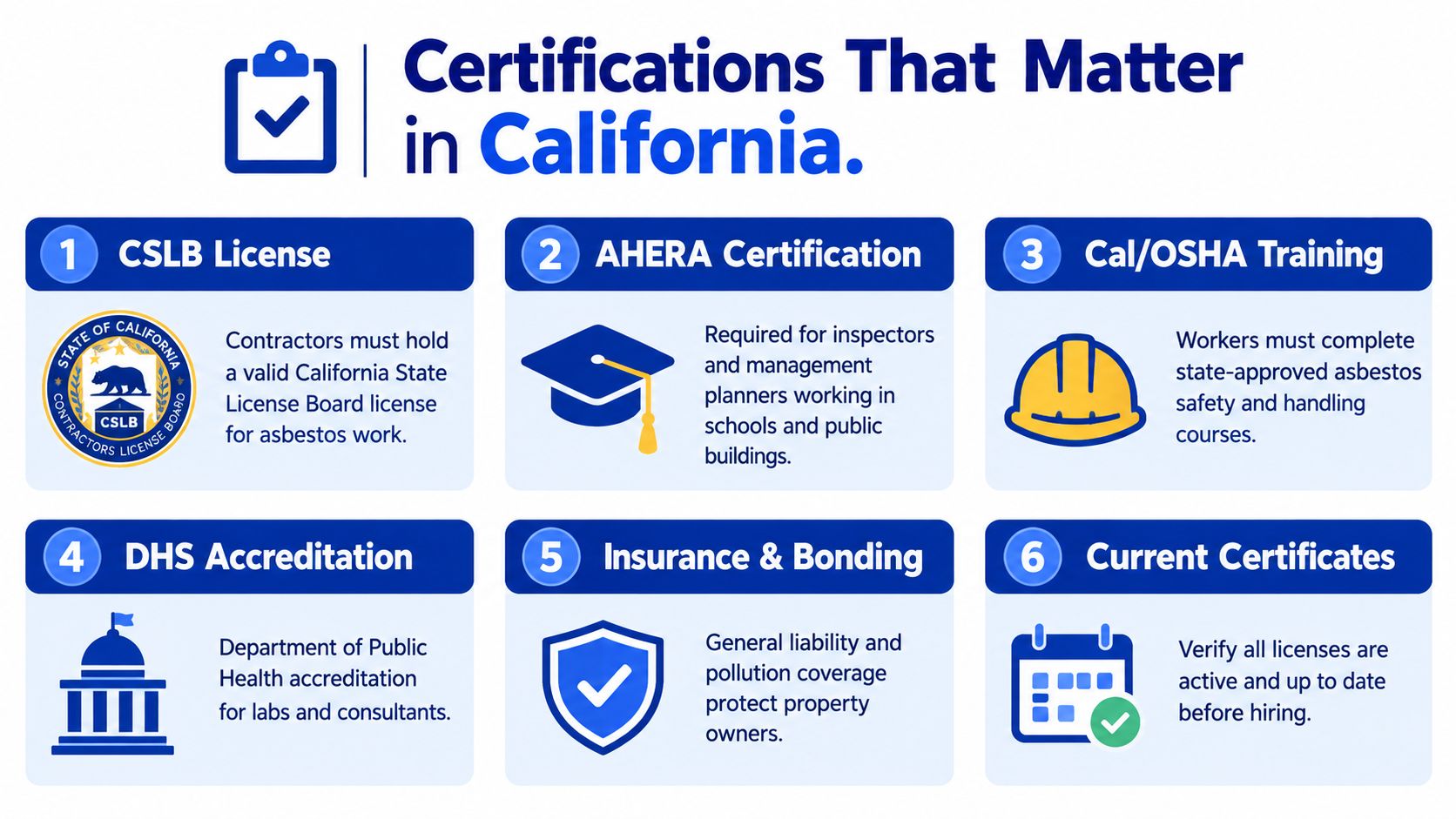
For the South Coast Air Basin, the survey must be performed by a Cal/OSHA-certified asbestos inspector or, where permitted, an employee with a current AHERA Building Inspector certificate from a Cal/OSHA-approved course. That matters because the survey isn't a casual walkthrough, it's a regulated inspection tied to work controls and documentation. A company that only talks about “experience” without naming the actual credential is leaving out the part that counts.
The lab and the paperwork are part of the qualification
The field inspector is only one piece. The laboratory has to be qualified to analyze bulk samples by PLM, and the chain-of-custody has to stay intact. If the lab report and the field notes don't line up, the survey loses a lot of its value.
A short verification checklist helps you screen providers
- Ask for the inspector credential: make sure the proposal names the person or role doing the inspection, not just the company brand.
- Confirm the lab method: PLM should be identified clearly for bulk asbestos samples.
- Check for current documents: licenses, certificates, and insurance should be active, not expired.
- Look for project fit: a pre-demolition survey should look different from a management survey.
- Watch for service boundaries: a testing firm should describe inspection and sampling, not abatement or removal.
A company such as Sensitive Environmental's license page can help you verify the kinds of credentials and service scope you should expect from a serious provider. The key is matching the credential to the job, not trusting a broad claim that sounds impressive but doesn't explain who is doing the work.
Reading a Survey Report and Procedure 5 Documentation
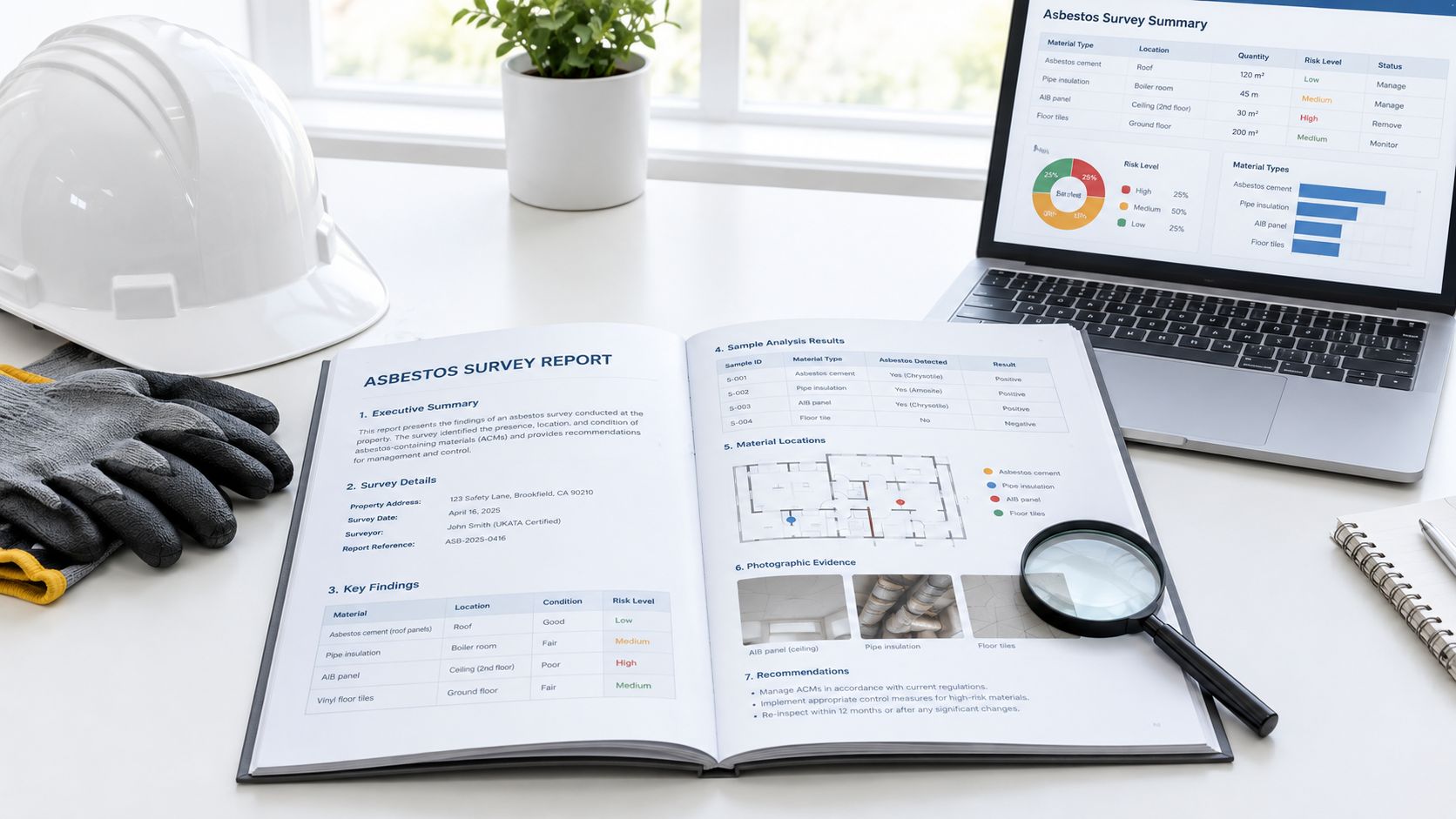
A strong survey report should read like a decision document, not a sales sheet. By the time it's finished, you should know what was inspected, what was sampled, what was found, and what parts of the building are affected if work starts.
The report should map materials to places
The report should identify the sampled materials, where they were found, their condition, and their friability. Those details matter because they tell a contractor whether a material is likely to break apart during work, or whether it can stay in place under normal conditions. A vague “no concerns noted” sentence doesn't do that job.
Under federal asbestos NESHAP, the common quantity thresholds are 260 linear feet, 160 square feet, or 35 cubic feet of regulated material, depending on the component type (EPA NESHAP threshold reference). Those measurements matter because the survey quantities feed directly into notification and emission-control requirements before work starts.
Procedure 5 turns survey findings into compliance documentation
Los Angeles-area projects can trigger the South Coast Air Quality Management District's Procedure 5 process when asbestos-containing material has been disturbed and cleanup is needed. The submission generally includes a Rule 1403 notification, a site survey with sampling and laboratory analysis, a cleanup plan describing the cause and extent of contamination, chain-of-custody records, laboratory reports, a site map, and available photographs (SCAQMD Procedure 5 guideline).
The cleanup plan itself should identify the material's condition, type, amount, and exact locations, plus the controls for migration, decontamination, and emission prevention. SCAQMD says those plans are ordinarily brief, no more than four pages, while the support file does the heavy lifting. That's why the survey report has to be organized and specific, because it becomes part of the compliance record.
How Survey Results Drive the Next Decision
A survey result is an input, not a verdict. That distinction matters because property owners sometimes hear “asbestos found” and assume the next step is automatically removal, when the answer depends on condition, location, project scope, and jurisdiction.
Negative findings can clear the path, but only with documentation
If the survey doesn't identify asbestos in the materials affected by the planned work, the project may move forward with the survey report on file. Contractors still need the documentation because they need to show why a specific scope was cleared. A negative result only solves the question that was asked.
Positive findings change the work plan
If the survey identifies asbestos-containing material in the disturbance area, the next steps might include a revised work plan, Rule 1403 notification, Procedure 5 documentation, or a different construction sequence. The report helps the owner, contractor, and consultant decide what can happen safely and legally before anyone starts opening walls or removing finishes.
A positive result does not automatically mean abatement is required. It means the team has to look at the material's condition, how the project will touch it, and what the local rules say about the next move.
That's where Los Angeles projects get tricky. A small bathroom remodel can expose concealed pipe insulation or old backing material, and that can trigger Procedure 5 documentation even when the project looked minor on paper. For a broader example of how roof-related asbestos work can drive cost and planning, the cost of asbestos roof removal overview shows why material type and scope matter before anyone starts work.
Choosing the Right Asbestos Survey Company in Los Angeles
Start with the proposal, not the pitch. A serious asbestos survey company should tell you who will inspect, what credential they hold, what the sampling plan covers, and how the report will support your permit, contractor, or compliance file.
Look for three things first. Credential fit, meaning the inspector qualification matches the job. Lab clarity, meaning PLM analysis and chain-of-custody are explained. Scope discipline, meaning the company is focused on testing and inspection, not on promising cleanup it doesn't perform.
For homeowners, landlords, contractors, and facility managers in Los Angeles and Southern California, that separation matters. A testing-only provider is more likely to give you a report that describes conditions plainly and leaves the next decision to the right people, which is exactly what you want before renovation or demolition starts.
Sensitive Environmental provides asbestos surveys, pre-renovation inspections, bulk sampling, laboratory analysis, and compliance reporting for Los Angeles and Southern California properties. If you need a clear, field-based asbestos survey before renovation, demolition, or a Rule 1403 project, visit Sensitive Environmental to schedule professional testing and inspection services.