You're halfway through updating a Los Angeles home when the ceiling becomes the problem. The dated popcorn texture needs to come down, a contractor asks whether it contains asbestos, and suddenly a cosmetic renovation requires a testing decision before anyone scrapes, drills, sands, or removes anything.
That pause is appropriate. Asbestos removal ceiling projects should begin with inspection and laboratory analysis, not removal techniques. A professional survey can identify suspect materials, document the work area, and provide the information needed to evaluate regulatory obligations and next steps. Sensitive Environmental provides asbestos testing, surveys, sampling, and environmental documentation for homes, commercial properties, and renovation projects throughout Los Angeles and Southern California.
Table of Contents
- Why Ceiling Materials Raise Asbestos Concerns
- Rules That Apply to Asbestos Removal Ceiling Projects
- How Professional Asbestos Testing Works Before Removal
- DIY Ceiling Removal Versus Professional Abatement
- Proving the Space Is Clear After Removal
- Your Next Step for Ceiling Asbestos in Los Angeles
Why Ceiling Materials Raise Asbestos Concerns
A homeowner in a 1970s Los Angeles house may see an ordinary textured ceiling. A contractor may see a material that needs identification before disturbance. Ceiling tiles, sprayed textures, and decorative coatings were used across older residential, commercial, institutional, and industrial buildings, and some legacy products may contain asbestos.
The important limitation is visual inspection. You can't confirm asbestos by looking at the color, pattern, texture, or apparent age of a ceiling. A smooth patch, popcorn finish, acoustic tile, or painted surface can conceal a suspect layer. Even the home's construction date only helps establish context. Renovations, repairs, product storage, and later additions can make the installation history less obvious.
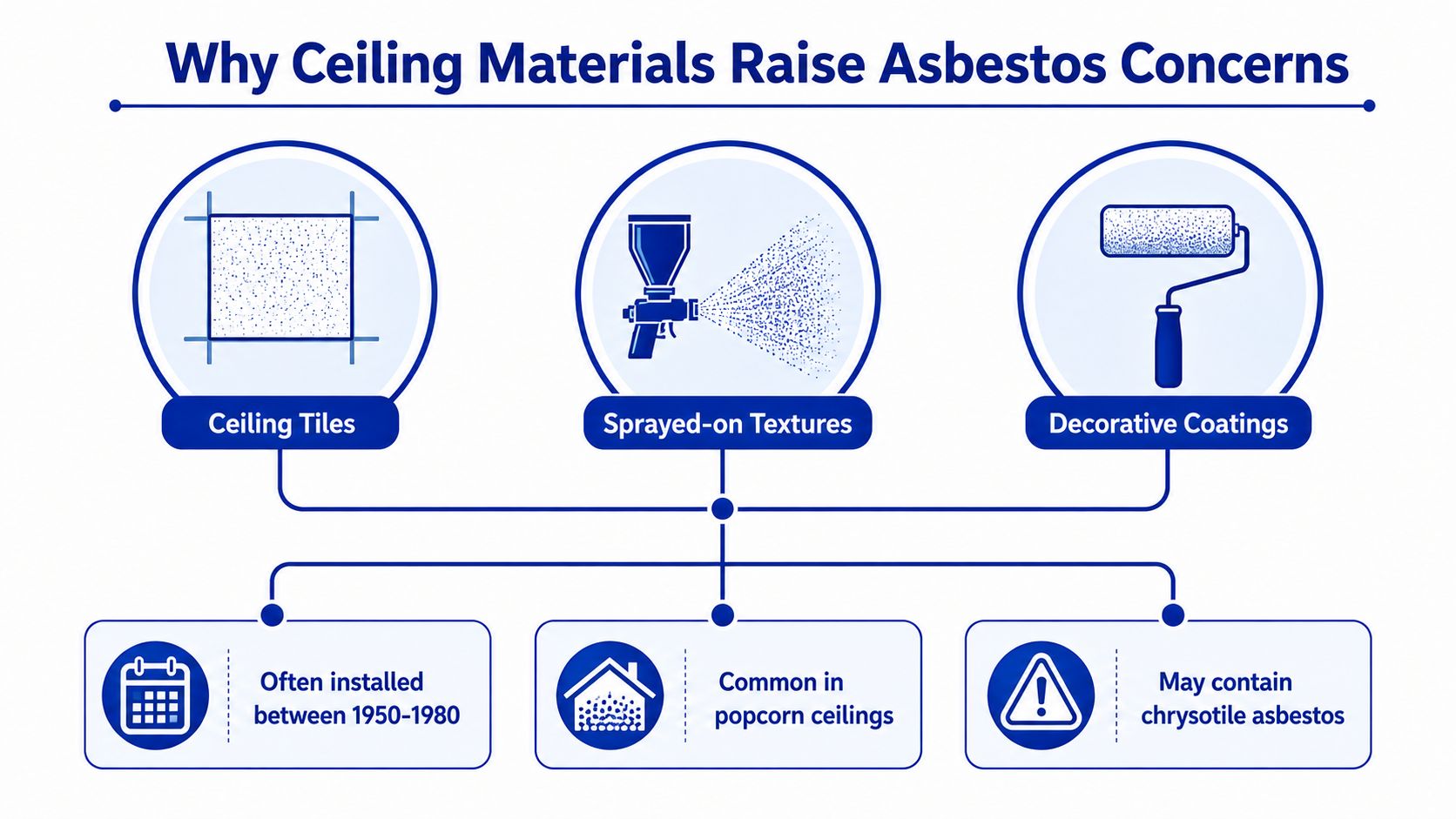
Common ceiling materials that need evaluation
Older ceilings can include several different material categories:
- Textured coatings: Sprayed or troweled decorative finishes, including popcorn-style textures, may be layered over plasterboard or another substrate.
- Ceiling tiles: Acoustic tiles can contain asbestos or be installed with asbestos-containing adhesives or backing materials.
- Insulating board: Asbestos insulating board is a different product from a thin decorative texture and may carry a different regulatory burden.
- Joint compounds and patches: A ceiling may contain suspect material in repairs even when the visible finish appears modern.
- Sprayed coatings: Applied coatings may be more friable than intact tiles, meaning they can release fibers more readily when damaged or disturbed.
The Environmental Protection Agency's asbestos laws and regulations notes that asbestos may still be present in legacy materials such as ceiling tiles, even though original manufacturing and installation practices have changed. The EPA also identifies disturbing and handling legacy asbestos materials as a public-health concern.
For broader context on older properties, this resource on pre-1978 home hazards explained can help homeowners understand why asbestos and lead questions often arise together during inspections. The hazards aren't interchangeable, however, and each requires its own inspection and sampling approach.
Practical rule: Treat an untested ceiling as suspect if planned work could disturb it.
A positive result doesn't automatically dictate one outcome. Some owners may choose to leave an intact material undisturbed, while others may consult qualified professionals about encapsulation, removal, or another project-specific option. The first decision is still the same: identify the material through appropriate sampling and laboratory analysis. Homeowners can learn more about the testing sequence in this guide to testing a popcorn ceiling for asbestos.
Rules That Apply to Asbestos Removal Ceiling Projects
A ceiling renovation can become a compliance matter as soon as planned work may disturb regulated asbestos-containing material. Under the federal asbestos NESHAP rule, renovation or demolition that disturbs at least 160 square feet of regulated material requires advance notification. If the material cannot be measured by area, the equivalent threshold is 35 cubic feet. The rule also calls for wet removal practices and leak-tight packaging of asbestos waste, as described in the EPA's asbestos regulations.
Those thresholds guide notification and work-practice decisions after the material has been identified and the disturbance scope is understood. They do not replace an inspection. Testing should come first, because a contractor cannot apply the correct requirements to a ceiling that has never been properly evaluated.
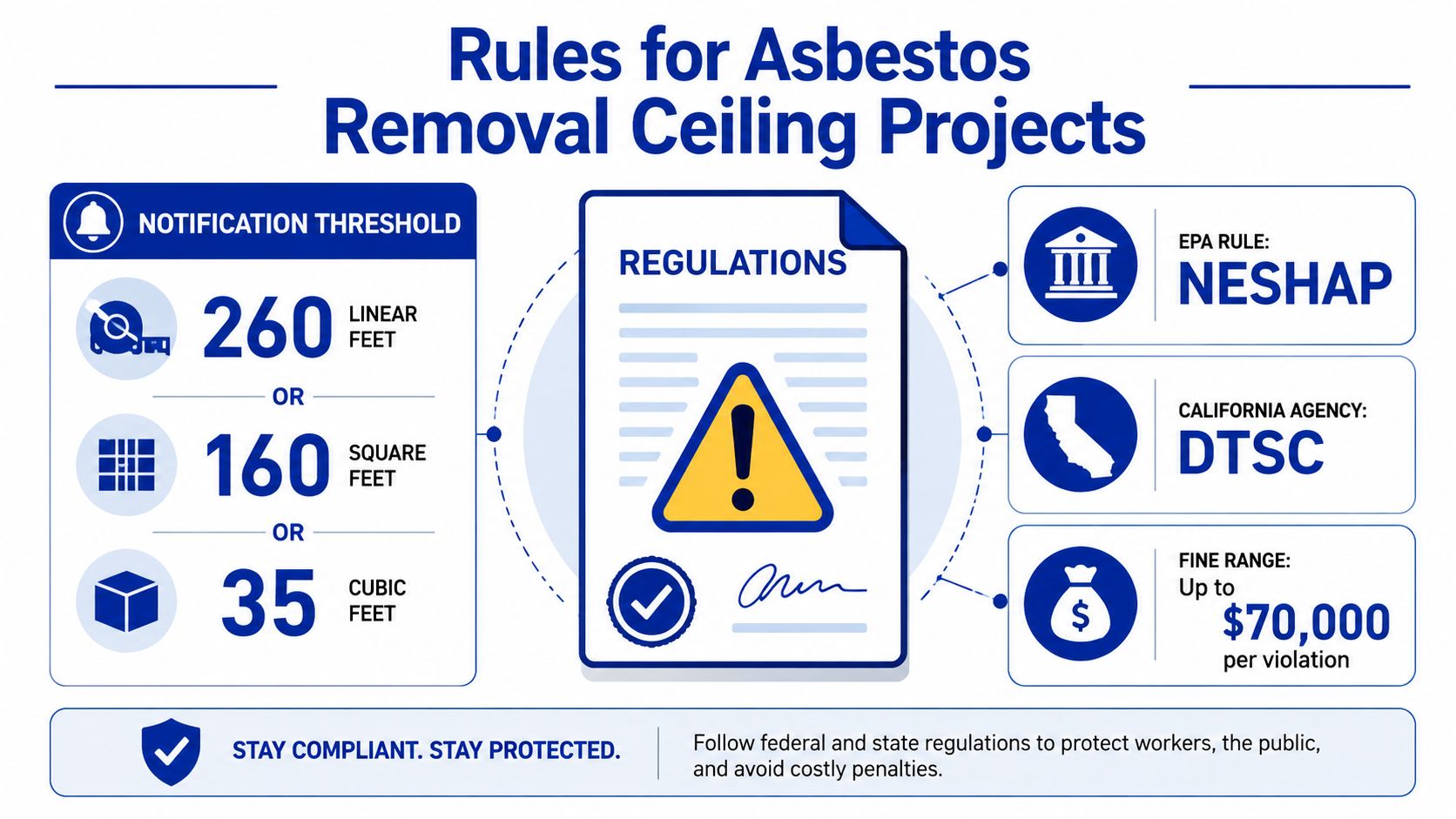
Why Los Angeles projects need a survey
In the South Coast Air Quality Management District, SCAQMD Rule 1403 requires an asbestos survey before demolition or renovation. The survey addresses inspection, identification, and quantification of friable and Class I or Class II nonfriable asbestos-containing material, with physical sampling where required. The SCAQMD Rule 1403 frequently asked questions explains why a suspect ceiling cannot be handled as ordinary construction debris.
The requirement can affect a homeowner planning a ceiling renovation, a contractor preparing a tenant improvement, a property manager arranging repairs, or a developer planning demolition. The exact obligation depends on the project, property, material, and jurisdiction. An environmental consultant should review those details instead of relying on a general rule of thumb.
Sampling and documentation are formal compliance steps
Rule 1403 requires sampling of suspected asbestos materials to follow 40 CFR Part 763.86. Laboratory analysis must use SCAQMD Method 300-91 or the polarized light microscopy method in Appendix A, Subpart F, 40 CFR Part 763, Section 1. Compliance analyses must be performed by laboratories accredited by NVLAP, as stated in the SCAQMD Rule 1403 document.
A casual sample, an unqualified laboratory, or an incomplete report may fail to document the project adequately. Skipping the survey does not remove the obligation. It can leave owners and contractors without the information needed to plan the work, notify the appropriate agency, or show that the ceiling was evaluated before removal began.
How Professional Asbestos Testing Works Before Removal
A ceiling renovation can begin with a simple plan, such as scraping texture, replacing tiles, opening the surface for mechanical work, or removing a room. The testing plan must follow that scope. An inspector examines the ceiling and adjoining materials that the work could disturb, because the visible finish may cover layers with different compositions.
Testing comes before any removal decision. It works like creating a map before changing a room: the survey shows which materials may be affected, where they are located, and which samples the laboratory must examine.
The survey and sampling sequence
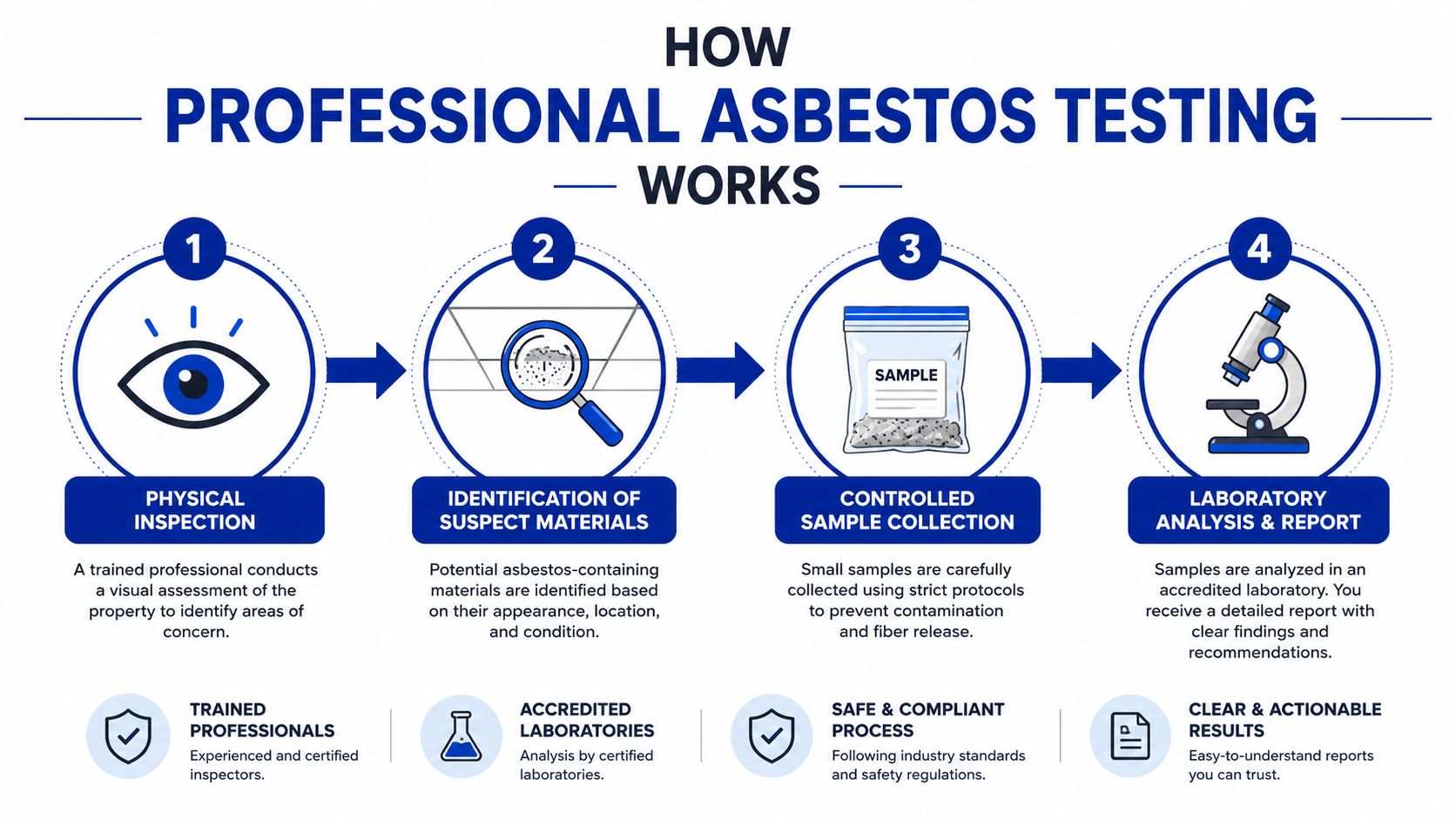
A typical professional process connects four activities:
- Physical inspection: The consultant examines accessible ceiling surfaces, tiles, textures, insulation, adhesives, patches, and other suspect materials. The inspection records their condition and considers the areas renovation or demolition may disturb.
- Identification and quantification: Suspect materials are grouped by appearance, composition, location, and use. The consultant documents where each material occurs and estimates the quantity relevant to the planned work.
- Controlled sample collection: Samples come from representative suspect materials through procedures designed to limit disturbance and preserve identity. Each sample is labeled and recorded so the laboratory can connect the result to the correct room and material.
- Laboratory analysis and reporting: A qualified laboratory examines each sample using the required analytical method. The report identifies the material sampled, the analytical result, its location, and project documentation needed for planning.
South Coast projects follow formal survey, sampling, laboratory, and documentation requirements. Those requirements include the applicable federal sampling provisions, analytical methods, and laboratory accreditation. The project scope determines which materials require evaluation and what records must accompany the work.
What the laboratory report tells you
A laboratory result answers a defined question about the submitted sample. It does not certify that every ceiling layer in a building is asbestos-free unless the survey scope and sampling plan support that conclusion. Read the report with the inspection narrative, sample locations, material descriptions, and project drawings or scope.
A chain of custody records each sample's transfer from collection through laboratory receipt and analysis. This creates traceability. A contractor, facility manager, school district, hospital, or real estate professional can then identify exactly which material produced a result and connect that finding to the work plan.
Sensitive Environmental offers asbestos testing and survey services in Los Angeles, including sampling and documentation for renovation and demolition planning. Property owners can review professional asbestos testing in Los Angeles for information about arranging that evaluation. Those also dealing with water damage may find mold testing and removal tips useful, although mold evaluation and asbestos analysis remain separate testing questions.
When a ceiling has already been disturbed
A ceiling scraped, broken, drilled, or demolished before testing may require a different assessment. Under SCAQMD guidance, Procedure 5 applies when asbestos has been disturbed and cleanup is needed. The Procedure 5 cleanup guideline identifies documentation that may include the completed Rule 1403 notification, site survey, cleanup plan describing the cause and extent of contamination, chain of custody, and laboratory analysis report.
Testing does not perform cleanup. It establishes what was found, where it was found, and which records qualified professionals may need to determine the next step. That information supports safer planning before removal and later verification after the work is complete.
DIY Ceiling Removal Versus Professional Abatement
A homeowner may look at a thin, dated ceiling and wonder whether scraping it away is a manageable weekend task. Before choosing tools or protective equipment, pause. Asbestos cannot be identified reliably by appearance, and disturbance can release fibers that are difficult to see and may travel through occupied rooms or building systems.
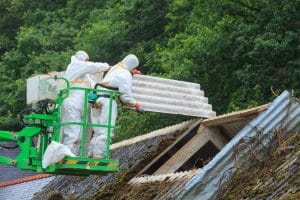
Professional abatement practices show why testing and planning come first. Guidance for ceiling tile work describes isolating the area, protecting lower surfaces with plastic sheeting, shutting down HVAC, dampening the material, lifting tiles carefully, cleaning surfaces, and double-wrapping waste in heavy-duty 200 µm plastic sheeting. It also addresses P1/P2 half-face respiratory protection and the use of full-face positive-pressure respirators where heavy dust or debris is expected. These procedures appear in Safe Work Australia's asbestos removal code of practice.
DIY attempt versus regulated work
| Factor | Uncontrolled DIY Removal | Professional Regulated Abatement |
|---|---|---|
| Material identification | May depend on appearance or an incomplete sample | Starts with a documented survey and suitable laboratory analysis |
| Work-area control | Household plastic and open doors may not stop migration | Uses planned containment, controlled access, and HVAC isolation |
| Air pressure | Usually no pressure monitoring | Containment may use negative pressure, with government guidance describing a benchmark of at least 12 Pa water gauge |
| Respiratory protection | Equipment may be selected or fitted incorrectly | Uses task-appropriate protection, including PAPR or better with P100 filters where required |
| Wet methods | Scraping may occur dry, or wetting may be inconsistent | Workers use amended-water saturation or continuous misting when saturation is not feasible |
| Waste handling | Debris may go into ordinary bags | Waste is packaged, labeled, transported, and managed under applicable requirements |
| Post-work evidence | Often lacks an independent clearance record | Testing and clearance documentation can support project closeout |
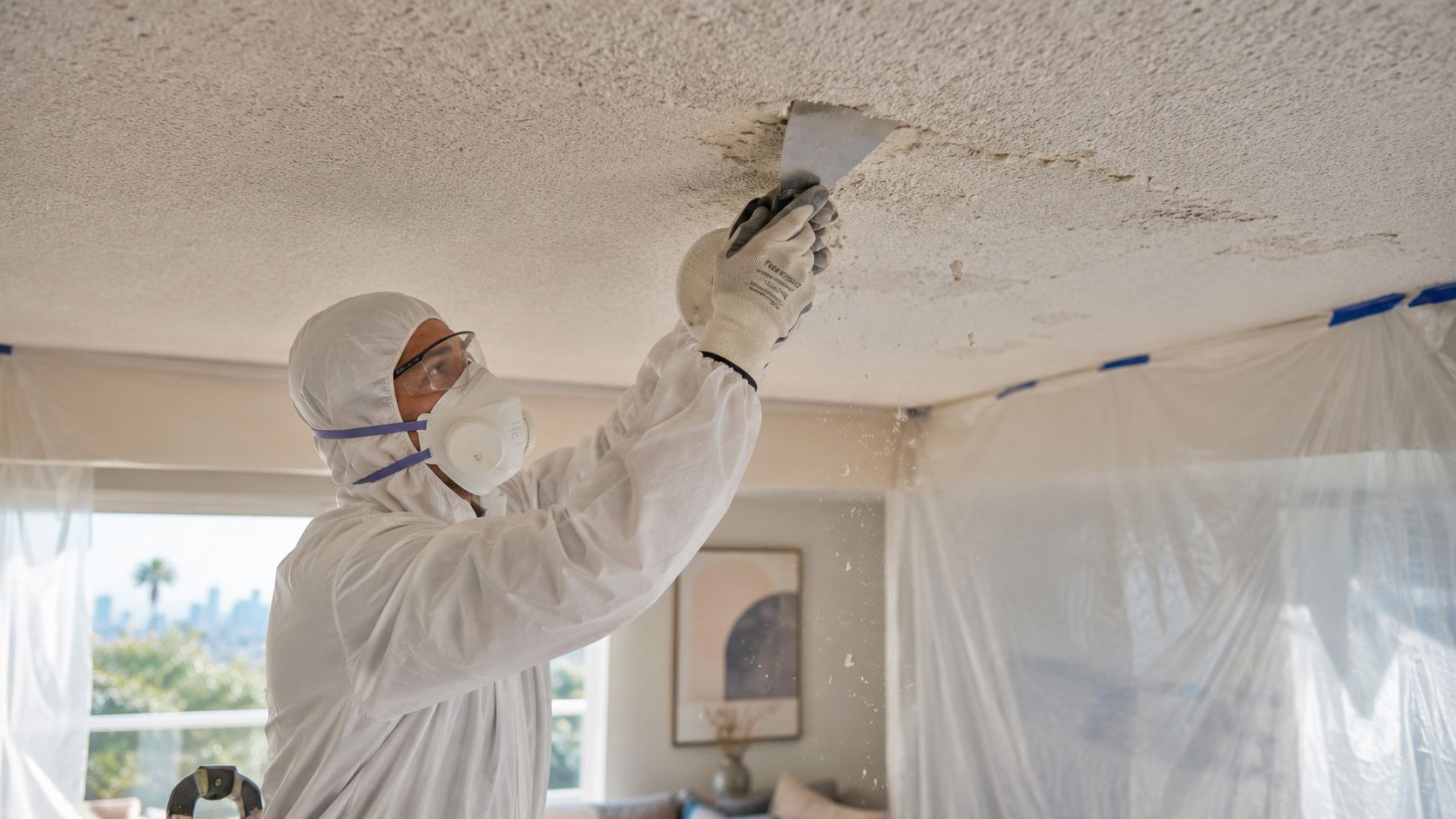
Ceiling texture removal guidance calls for full containment, disposable coveralls, PAPR or better with P100 filters, and saturation with amended water immediately before and during removal. The Alberta asbestos texture removal guidance also covers continuous misting when saturation is not feasible and a negative-pressure benchmark of at least 12 Pa water gauge.
A positive result isn't an automatic order to remove
A laboratory result confirms asbestos in the sampled material. It does not by itself determine that abatement is required or identify the right control method. The material's condition, friability, location, planned disturbance, occupancy, and applicable requirements all affect that decision.
Textured decorative coatings may follow a different regulatory pathway from asbestos insulating board or sprayed coatings. The HSE asbestos essentials guidance distinguishes lower-risk textured coating work from larger-scale removal involving designated areas, notification, medical surveillance, schools, hospitals, air monitoring, or clearance testing.
The safer sequence is practical: stop disturbing the ceiling, arrange professional testing if the material is uncharacterized, review the report with qualified project professionals, and document the decision. For a broader explanation, read our complete guide to safe asbestos removal. Sensitive Environmental provides testing, inspection, sampling, analysis, and reporting, rather than removal or abatement.
Proving the Space Is Clear After Removal
A ceiling can look clean while dust remains in hidden places. Post-removal verification provides evidence about airborne fiber control and remaining surface conditions. That evidence matters before tenants, students, patients, employees, or the public return to the space. Clearance is a documented check of defined conditions, not a visual impression.
Research on ceiling-tile removal detected airborne asbestos in all five sampled locations, with concentrations ranging from 0.008 to 0.117 f/cc. The findings appear in the published ceiling-tile removal research. Conditions differ between properties, but the results show why a small-looking ceiling project cannot be judged by appearance alone.
The same review reported personal breathing-zone samples above an occupational exposure limit in 11 of 14 investigated remediation cases. For project managers, the practical lesson is clear: containment and worker protection can fail under real working conditions. Records should verify how controls performed instead of assuming that removal went as planned.
What clearance verification may include
A qualified professional can match the post-work assessment to the project scope and applicable requirements. The process may include:
- Visual inspection: Checking ceilings, ledges, floors, equipment, and containment areas for visible residue relevant to the clearance criteria.
- Air monitoring: Collecting air samples during or after controlled work to assess airborne fiber conditions.
- Surface or dust assessment: Taking project-appropriate samples when settled contamination is a concern.
- Laboratory analysis: Sending samples to a qualified laboratory with documented chain-of-custody procedures.
- Written reporting: Recording locations, methods, results, limitations, and how the testing relates to the completed work.
Independent monitoring may provide useful assurance in schools, hospitals, commercial buildings, and multi-unit properties, where an incomplete closeout can affect many occupants. Current guidance treats reassurance air monitoring as optional, so owners must base that choice on the project and the people using the space. Additional testing may make sense when occupancy is sensitive, the work was extensive, containment history is uncertain, or stakeholders need independent evidence.
A clean-looking ceiling is an observation. A documented clearance assessment is evidence tied to defined sampling and inspection methods.
For Los Angeles property managers, facility teams, and contractors, the report can support turnover, tenant communication, project records, and regulatory documentation. It cannot establish that a property is entirely risk-free. It can show what was inspected, what was sampled, which methods were used, and what the laboratory found.
Your Next Step for Ceiling Asbestos in Los Angeles
If you're planning to scrape, remove, drill into, or demolish a suspect ceiling, don't begin with a removal quote. Begin with a pre-renovation or pre-demolition asbestos survey that identifies affected materials, documents their locations, and determines whether sampling and laboratory analysis are needed.
Homeowners should arrange testing before a ceiling renovation. Landlords and property managers should evaluate aging ceiling tiles and textures before tenant improvements or maintenance work. General contractors, developers, schools, hospitals, and facility managers should address survey documentation early enough to plan for SCAQMD Rule 1403, federal notification requirements, or a Procedure 5 assessment where disturbance has already occurred.
The same principle applies when fire, water, or construction damage creates additional concerns. Sensitive Environmental also provides mold testing, lead testing, indoor air quality testing, commercial environmental testing, industrial hygiene assessments, and fire-related testing for ash, soot, char, smoke residue, combustion byproducts, and heavy metals when those conditions affect the property.
Schedule asbestos testing or a ceiling survey with Sensitive Environmental before work begins, and discuss post-work clearance verification when the project or occupancy warrants it. The company serves Los Angeles, Los Angeles County, and Southern California with professional inspection, sampling, laboratory analysis, and clear environmental reporting.
Contact Sensitive Environmental to schedule asbestos testing or a pre-renovation asbestos survey for a ceiling in Los Angeles or Southern California. Their environmental testing team can document suspect materials, coordinate appropriate laboratory analysis, and help you understand the information needed before removal decisions or post-work verification.