A respirator is a device worn over the nose and mouth or the head that reduces how much airborne hazard a person breathes in, and it works only against the contaminants it's matched to.
You may be preparing to renovate a Los Angeles rental, inspecting water damage, or deciding whether workers can enter a smoke-affected building. Before buying a mask, you need to know what's in the material, residue, or air. Environmental testing supplies the information that respirator selection starts with.
Table of Contents
- What a Respirator Protects You From
- Respirator Types Compared Side by Side
- Where Respirators Are Used in Practice
- Book Testing Before You Choose Respiratory Protection
- How to Choose and Fit the Right Respirator
- Regulations That Apply to Contractors and Property Managers
What a Respirator Protects You From
A worker sanding an unknown surface may see dust, but appearance alone cannot identify what is in it. A respirator protects only against the airborne hazard it is designed for, and only within its approved limitations. Its filters, cartridges, or air supply must match the hazard.
OSHA's respiratory-protection guidance describes airborne hazards such as dusts, fumes, mists, gases, vapors, smoke, sprays, and biological agents. These behave differently. A particle filter can capture certain airborne particles, while gases and vapors require suitable cartridges. The right choice depends on what testing identifies, not on how substantial a mask looks.
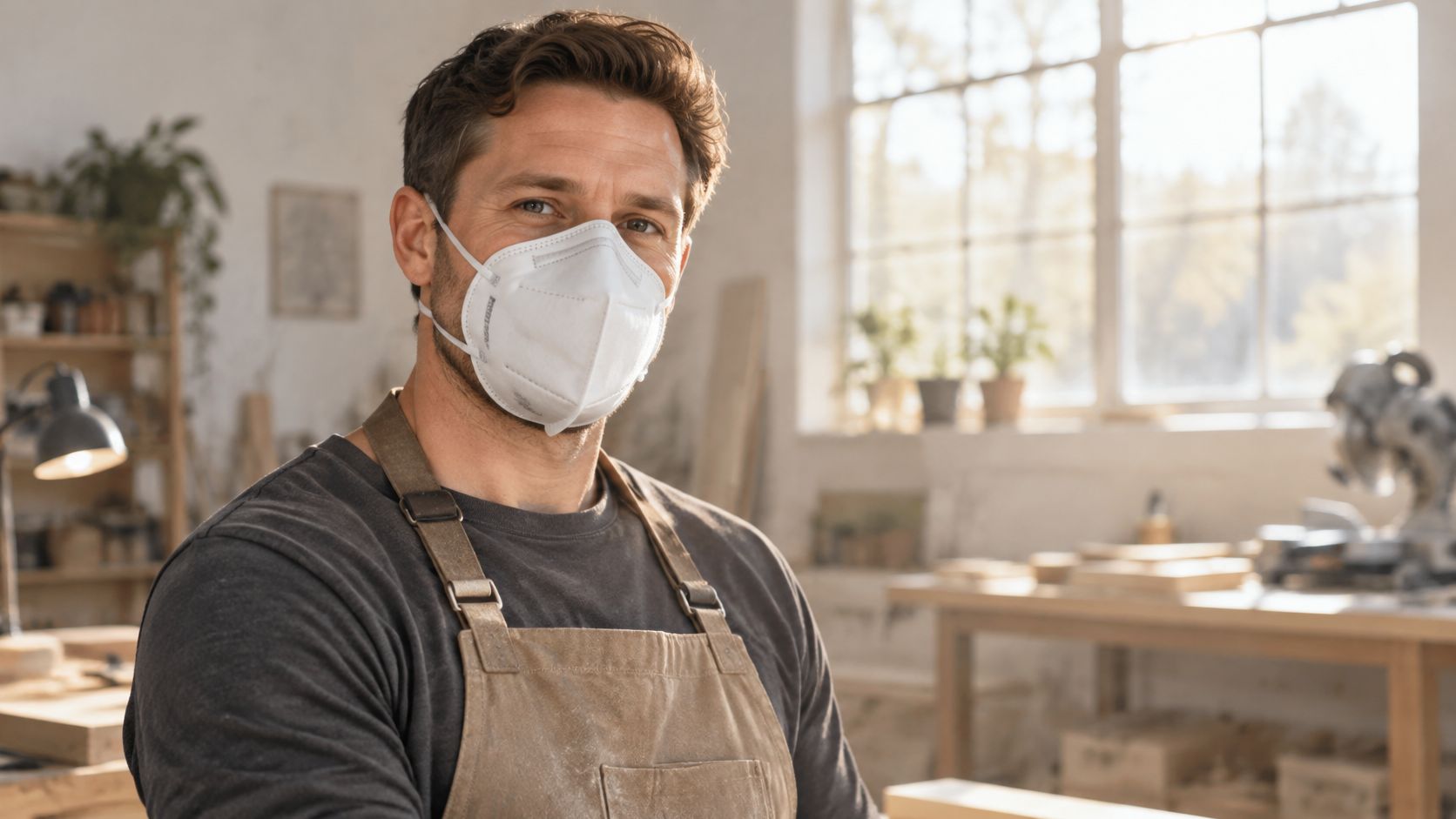
Two ways to provide breathing protection
- Air-purifying respirators filter surrounding air through filters, cartridges, or canisters. They cannot supply oxygen.
- Atmosphere-supplying respirators provide breathing air from a separate source. Appropriate supplied-air equipment is needed in oxygen-deficient or immediately dangerous atmospheres.
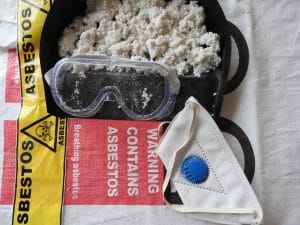
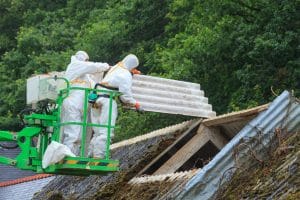
For property owners, identifying suspect material and measuring airborne exposure are different tasks. Learning why asbestos is dangerous helps explain why material sampling should come before disturbance. A disposable dust mask is not suitable protection for asbestos work.
Respirators are one layer of protection alongside elimination, substitution, enclosure, and local exhaust ventilation. They do not stop dust spreading through a building or remove contamination at its source. Advice on safe mould treatment for landlords does not replace an assessment when the contamination is uncertain.
The same principle applies across settings. Construction crews may encounter silica and asbestos fibers, firefighters may face smoke and low-oxygen air, and healthcare personnel may encounter infectious aerosols. Each hazard calls for a suitable assessment and protection matched to what is present.
Before choosing a respirator, ask: What hazard is present, and at what concentration?
Respirator Types Compared Side by Side
Two respirators can use similarly efficient filters yet provide different protection. The difference comes from the facepiece seal and the complete equipment setup. Filter efficiency and overall wearer protection are different measures: a high-efficiency filter cannot make up for air leaking around a tight-fitting facepiece.
Under specified test conditions, NIOSH identifies minimum filtration efficiencies of 95% for N95, 99% for N99, and 99.97% for N100 filters. These ratings describe particle filtration. They do not indicate protection against gases or vapors.
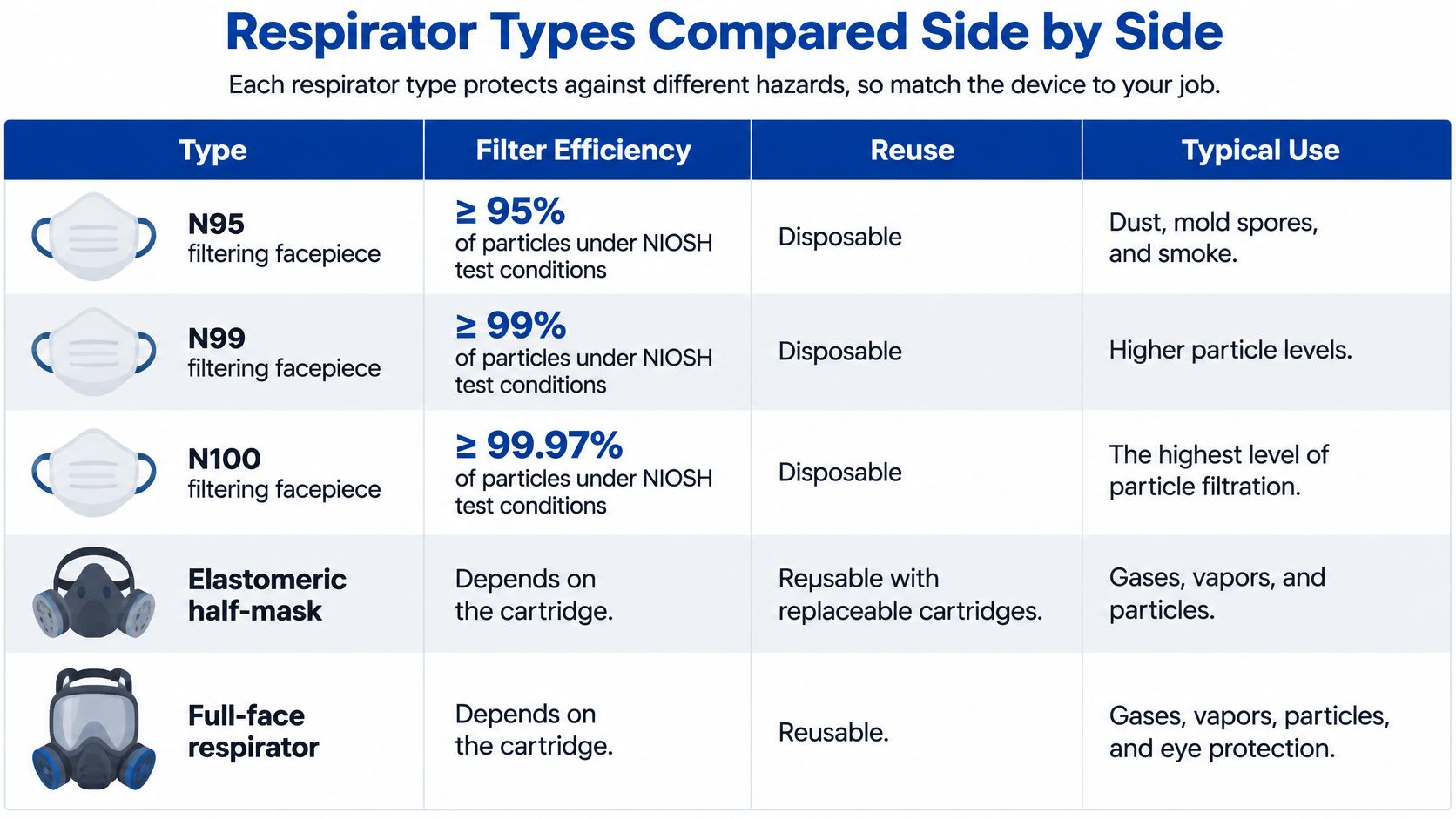
Respirator types by hazard, protection level and fit-test need
The assigned protection factors in the table apply within a properly implemented respiratory-protection program. The hazard must be identified first, then the respirator and its approved attachments matched to it.
| Respirator type | Hazards addressed | Assigned protection factor | Fit test needed | Typical setting |
|---|---|---|---|---|
| Disposable N95 filtering facepiece | Dust, fine silica and smoke particles, not gases or vapors | 10 | Yes, tight-fitting | Assessed light-dust tasks and smoke particulates |
| Elastomeric half-facepiece | Particles with P100 filters; gases and vapors with matched cartridges | 10 | Yes | Renovation dust, lead dust and assessed chemical work |
| Full-facepiece air-purifying respirator | Matched particles, gases and vapors, plus eye protection | 50 | Yes | Higher assessed concentrations or eye-irritating contaminants |
| PAPR with tight-fitting facepiece | Particles and approved gases or vapors through a battery-powered blower | 50 for half facepiece; 1,000 for full facepiece | Yes | Extended tasks and higher assessed concentrations |
| PAPR with loose-fitting hood or helmet | Particles and approved gases or vapors through a battery-powered blower | 25 | No, loose-fitting | Workers who can't achieve a tight facial seal |
These protection factors are OSHA assigned protection factors for the listed respirator configurations. The tight-fitting PAPR value depends on whether its facepiece is a half or full facepiece, as shown in OSHA's respiratory-protection standard.
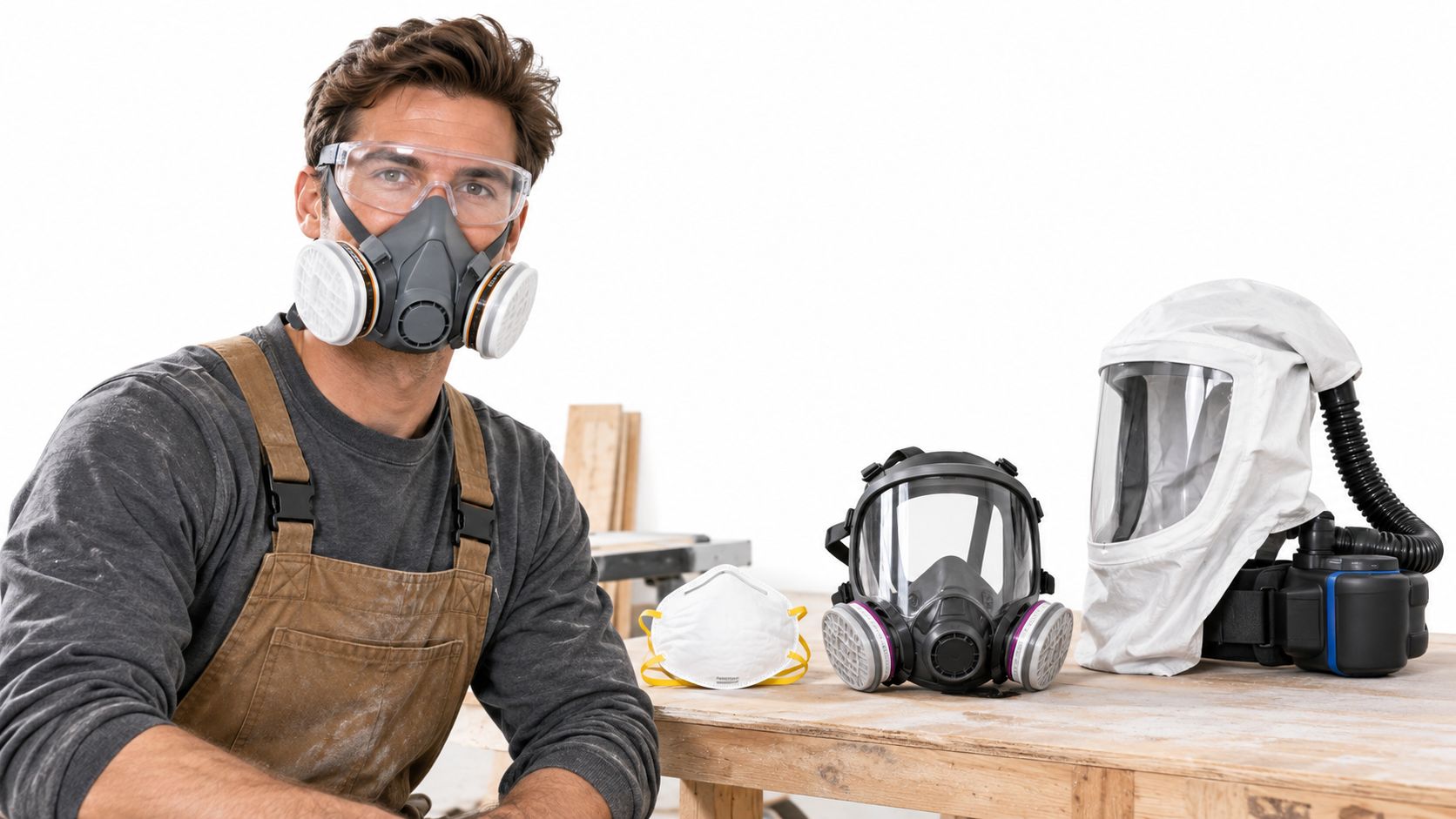
A disposable filtering facepiece is lightweight and has no replaceable chemical cartridges. Moving from N95 to N99 or N100 increases tested particle-filtration efficiency; it does not make the respirator suitable for solvent vapor.
An elastomeric half-facepiece has a reusable body and replaceable attachments. P100 filters address particles, while chemical cartridges must match the identified substance. If testing identifies both particles and vapors, the selected attachments must address both.
A full-facepiece covers the eyes as well as the nose and mouth. Its higher assigned protection factor applies only when fit testing, approved attachments, and use conditions are appropriate.
Where powered equipment fits
A powered air-purifying respirator, or PAPR, uses a battery-powered blower to move air through its filtration system. Tight-fitting versions require fit testing. Loose-fitting hoods or helmets do not rely on a facial seal, so suitable models may be considered when facial hair prevents a tight fit.
Selection verdict: An N95 may suit assessed tasks involving appropriate particles, but not asbestos work. An elastomeric respirator may suit repeated dust exposure or identified chemical hazards. A suitable PAPR may be considered for extended tasks or when a tight seal cannot be achieved. These air-purifying respirators do not supply oxygen.
Where Respirators Are Used in Practice
The question “what is a respirator used for?” becomes more useful when tied to an actual property and task. The setting suggests what to investigate, but it doesn't establish the exposure.
Common settings, hazards and the testing that informs the respirator choice
| Setting | Typical airborne hazards | Respirator usually considered | Testing that informs the choice |
|---|---|---|---|
| Renovation of an older home | Lead dust and possibly asbestos fibers | Half-facepiece or PAPR with P100 filters, selected for exposure | Lead and asbestos testing before disturbance |
| Post-fire cleanup | Ash, soot, char, smoke residue, VOCs and heavy metals | Matched particulate and gas/vapor protection where assessment supports it | Fire residue and combustion byproduct testing |
| Water-damaged building | Mold spores and microbial contamination | N95 or half-facepiece appropriate to disturbance and program | Mold sampling and indoor air quality testing |
| Commercial demolition | Asbestos, silica and lead | Equipment meeting all identified hazards; supplied air where required | Pre-demolition asbestos survey and task-specific exposure assessment |
| Industrial facility | Solvent and chemical vapors | Chemical-specific cartridges or supplied air | Industrial hygiene sampling |
Older-home renovation: Say a contractor plans to sand painted trim. Lead-based paint inspection identifies the material concern, while exposure monitoring evaluates what workers breathe during the task. OSHA's hurricane-response guidance identifies a lead action level of 0.03 milligrams per cubic meter and a permissible exposure limit of 0.05 milligrams per cubic meter; workers performing certain tasks require presumptive protection until an exposure assessment establishes their exposure.
Post-fire property: In a Southern California smoke-affected building, the assessment may need to distinguish settled combustion residue from airborne particles and chemical vapors. Ash and soot testing, heavy-metals analysis, and targeted VOC sampling answer different questions.
Water-damaged building: Mold sampling may be appropriate when the extent or nature of contamination is uncertain. OSHA's mold guidance emphasizes medical clearance, training, fit testing, and worksite-specific procedures, with more protective equipment potentially necessary if asbestos or lead is discovered. Eagle Restoration's discussion of preventing spore spread during cleanup offers related context, but containment practices don't identify every contaminant present.
Commercial demolition: A survey identifies suspect asbestos-containing materials before disturbance. Separate assessment may be necessary for lead-coated surfaces and dust-generating tasks.
Industrial facility: Solvent vapor requires identification of the chemical and its airborne concentration. Industrial hygiene sampling informs whether an approved cartridge system is suitable or supplied air is necessary.
Practical rule: A building's appearance can guide an inspection, but it can't establish a worker's airborne exposure.
Book Testing Before You Choose Respiratory Protection
A DIY kit may provide limited information about a submitted sample. It doesn't automatically provide a representative building survey, task-based exposure assessment, or defensible compliance record. Laboratory analysis can identify contaminants in properly collected samples, but sample location, collection method, and interpretation determine what the result means.
Professional assessment starts with a walkthrough and a sampling plan. An inspector reviews the planned work, suspect materials, water or fire damage, and potential pathways for contamination. The plan should distinguish questions about materials from questions about airborne exposure.
What professional sampling measures
- Bulk material sampling investigates whether suspect flooring, insulation, coatings, or other building materials contain the contaminant of concern.
- Personal air sampling collects air in a worker's breathing zone during a defined task.
- Surface or dust sampling evaluates selected residues where contamination has settled.
- Targeted indoor air sampling investigates specific airborne concerns rather than treating every odor or symptom as the same problem.
For asbestos air sampling, OSHA's technical guidance specifies a 25-millimeter mixed-cellulose-ester filter and a calibrated pump operating at 0.5 to 5 liters per minute. Those method details illustrate why collecting “some air” isn't enough: the sampling equipment and procedure must support the intended analysis.
Laboratory results can identify the tested contaminant and its concentration in the sampled medium. Appropriate air results can support comparison with occupational exposure limits. A positive material result doesn't, by itself, establish the concentration workers will breathe or mean removal is automatically required.
When an assessment belongs in the project plan
Consider testing before renovation or demolition, after fire or water damage, during property-purchase due diligence, or when occupants report persistent indoor-air concerns. Symptoms alone don't identify a contaminant or establish its source.
For commercial projects, understanding why asbestos testing matters before renovation in Los Angeles helps avoid planning around building age alone. South Coast Air Quality Management District requirements call for asbestos testing before renovation regardless of building age.
At Sensitive Environmental, our asbestos testing includes identification of asbestos-containing materials, certified sampling and laboratory analysis, pre-renovation and pre-demolition inspections, and regulatory compliance testing. Our field agents and employees complete certification programs identified as OSHA 1910.120 HAZWOPER, OSHA 1910.130 Bloodborne Pathogens, OSHA 1910.1001 Asbestos, OSHA 1910.1025 Lead, OSHA 1910.134 Respiratory Protection, and CALOSHA 8 CCR 5199 Aerosol Transmissible Diseases/Pathogens.
The hazard, not the job title, determines the respiratory-protection decision.
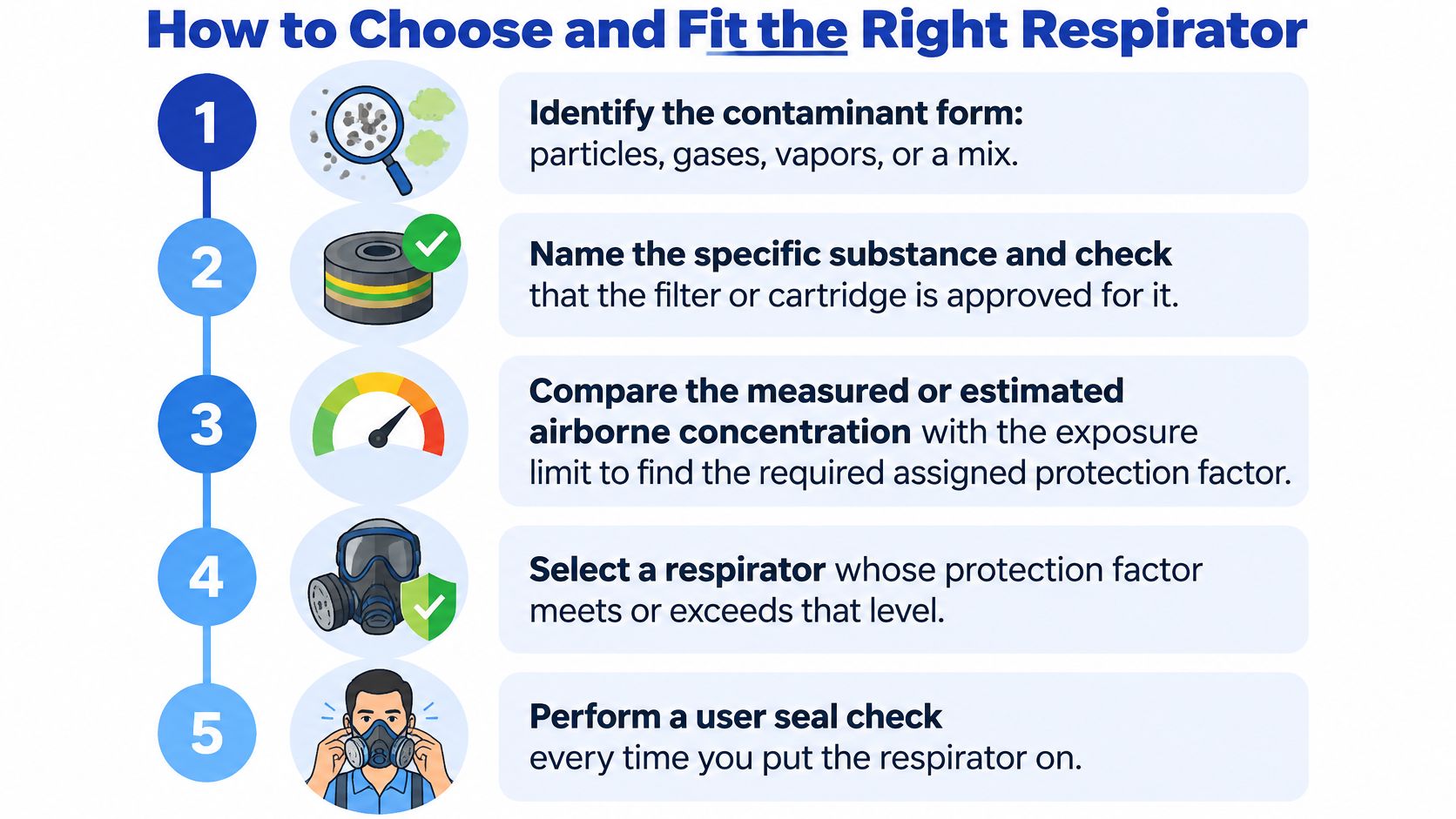
How to Choose and Fit the Right Respirator
- Identify the contaminant's form. Determine whether the assessment indicates particles, gases, vapors, or a mixture. A visible dust cloud doesn't rule out an invisible vapor hazard.
- Identify the substance. Match the filter or cartridge approval to the actual contaminant, not a broad description such as chemical smell.
- Evaluate airborne concentration. Use representative monitoring or defensible exposure estimates and the relevant occupational limit.
- Assess the atmosphere. An unknown or oxygen-deficient environment isn't a place to experiment with air-purifying equipment. Entry requires qualified assessment and appropriate atmosphere-supplying protection and procedures.
- Select adequate protection. The program administrator compares the exposure ratio with the equipment's assigned protection factor and checks substance-specific restrictions.
- Check wearer compatibility. Facial hair must not cross a tight-fitting sealing surface. Eyewear and other protective equipment must not disturb the seal.
- Perform a user seal check. Follow the manufacturer's procedure whenever you put the respirator on.
- Complete the required fit test. A seal check doesn't replace a formal fit test for a tight-fitting model.
NIOSH's respirator guidance distinguishes air-purifying equipment from atmosphere-supplying equipment and emphasizes matching protection to the hazard. For Los Angeles property assessments, that means mold spores, asbestos fibers, soot, and chemical vapors must not be treated as one interchangeable exposure.
Mistakes that undermine a suitable selection
- Using an N95 for gases: Particle filtration doesn't establish chemical-vapor protection.
- Wearing a tight-fitting mask over a beard: Tightening the straps won't reliably correct interference at the seal.
- Keeping exhausted cartridges: Follow the established change schedule or approved service-life indicator rather than waiting to smell a chemical.
- Choosing by guesswork: A hardware-store description can't replace representative sampling.
A respirator selected for one contaminant can be unsuitable for another. Reassess the selection whenever the task, materials, chemical products, or exposure conditions change.
A passing fit test answers whether that facepiece fits that wearer. It doesn't answer whether the cartridge matches the hazard.
Regulations That Apply to Contractors and Property Managers
A respirator purchase isn't a respiratory-protection program. Employers need a written program covering hazard assessment, medical evaluation, selection, training, fit testing, cleaning, maintenance, and proper use.
OSHA's respiratory-protection standard, 29 CFR 1910.134, requires tight-fitting respirators to be fit-tested before initial use, when the make, model, style, or size changes, and at least annually. It also defines assigned protection factors: an APF of 10 represents an expected inside-facepiece concentration of approximately one-tenth the outside concentration when the required program is implemented correctly.
California operates its own workplace-safety requirements, including the respiratory-protection standard in Title 8, Section 5144. Los Angeles County contractors should confirm applicable state and substance-specific requirements rather than relying solely on a general federal checklist.
Key respirator and exposure thresholds for LA-area work
OSHA's asbestos respiratory-protection appendix describes the asbestos exposure values, equipment restrictions, and fit-testing protocol summarized below. Lead values are the occupational thresholds identified in OSHA's hurricane-response guidance.
| Requirement | Threshold or rule | Who it applies to |
|---|---|---|
| OSHA asbestos permissible exposure limit | 0.1 fiber per cubic centimeter, 8-hour average | Employers and workers in asbestos work |
| HEPA air-purifying respirator for asbestos | Acceptable up to 1.0 fiber per cubic centimeter under the stated protocol | Asbestos operations within stated limits |
| Disposable dust masks for asbestos | Not acceptable | Asbestos work |
| Asbestos respirator fit-test interval | First assignment and every six months under the appendix protocol | Workers covered by that protocol |
| General tight-fitting fit-test interval | Before first use, relevant facepiece changes, and at least annually | Employers under the respiratory-protection standard |
| Quantitative fit-test passing factor | 100 for half-facepiece; 500 for full-facepiece | Quantitative fit testing |
| Lead action level | 0.03 mg per cubic meter | Workers during lead tasks |
| Lead permissible exposure limit | 0.05 mg per cubic meter | Workers during lead tasks |
These are worker-protection criteria, not residential clearance standards or guarantees about occupant conditions. Confirm project-specific applicability, including the controlling asbestos standard and fit-testing requirements, with the regulating agency and qualified counsel.
Documents property managers should request
South Coast AQMD Rule 1403 addresses asbestos in renovation and demolition across much of Los Angeles County. Survey findings and required documentation belong in project planning before disturbance.
- Survey documentation: Confirm that the inspection covers the planned work area and suspect materials.
- Exposure assessment: Request the sampling results or objective information supporting respirator selection.
- Program and worker records: Verify the written program and applicable medical-clearance, training, and fit-test documentation.
An organized asbestos-management approach for Los Angeles commercial buildings helps owners keep these records connected to the project rather than treating each as a separate administrative task.
Sensitive Environmental provides professional inspections, appropriate sampling, laboratory analysis, and clear reporting to support documented environmental decisions. Before renovation or demolition in Los Angeles County or Southern California, visit Sensitive Environmental to schedule a pre-renovation or pre-demolition asbestos survey, SCAQMD Rule 1403 testing, or a lead inspection so your project's respiratory-protection decisions rest on identified hazards rather than assumptions.