Air sampling is often sold as the proof that a building has a mold problem. But a sample can miss hidden growth, and a positive result can't tell you by itself whether a property is safe, unsafe, or in need of a particular response. Useful mold testing starts with a different question: what decision do you need the test to inform?
A moisture-focused inspection may be enough when growth is visible or a leak is obvious. When the source is uncertain, contamination may be hidden, or you need a documented comparison after work, targeted sampling can add useful evidence. The right mold testing services pair inspection and moisture investigation with samples chosen to answer a defined question.
Table of Contents
- Four Mold Testing Types and What Each One Answers
- When Mold Testing Fits Water Damage, Real Estate and Renovation
- How Sampling and Lab Analysis Work, Step by Step
- Reading Lab Results Without Overreacting
- Clearance Testing After Cleanup and What It Verifies
- Los Angeles and Southern California Requirements That Shape Testing
- Mold Testing Costs and What Clients Can Expect
- Mold Testing Questions Property Owners Ask
- Book a Mold Testing Consultation Before Work Begins
Four Mold Testing Types and What Each One Answers
Mold testing samples air, surfaces, or building materials to answer a specific question. It works best as a targeted investigation of moisture and suspected contamination, not as a universal pass-or-fail check. The U.S. Environmental Protection Agency's mold guidance says sampling is usually unnecessary when visible mold is already present, and there are no federal limits for mold or airborne spores that would let a lab certify a building's compliance with a mold standard.
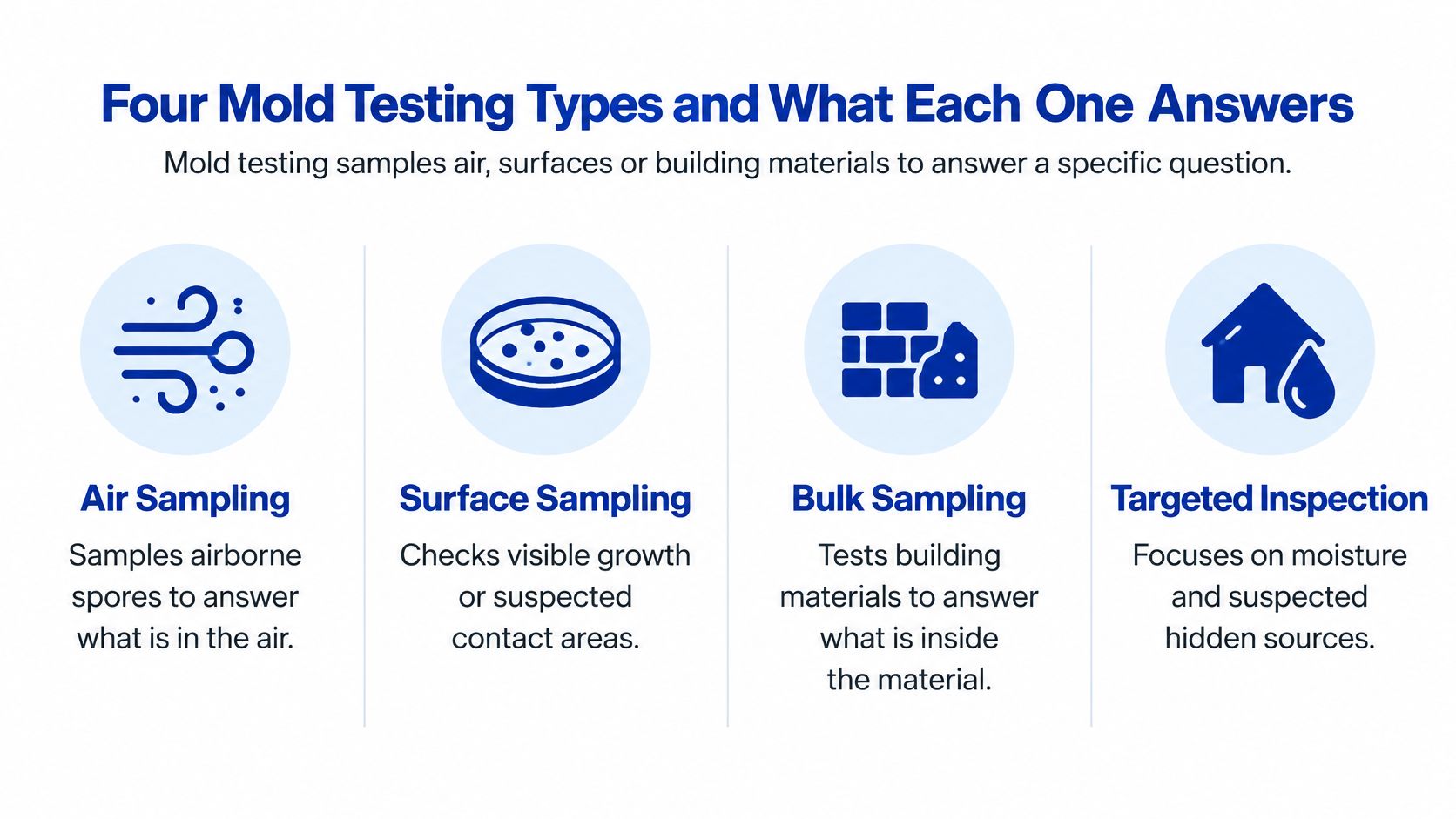
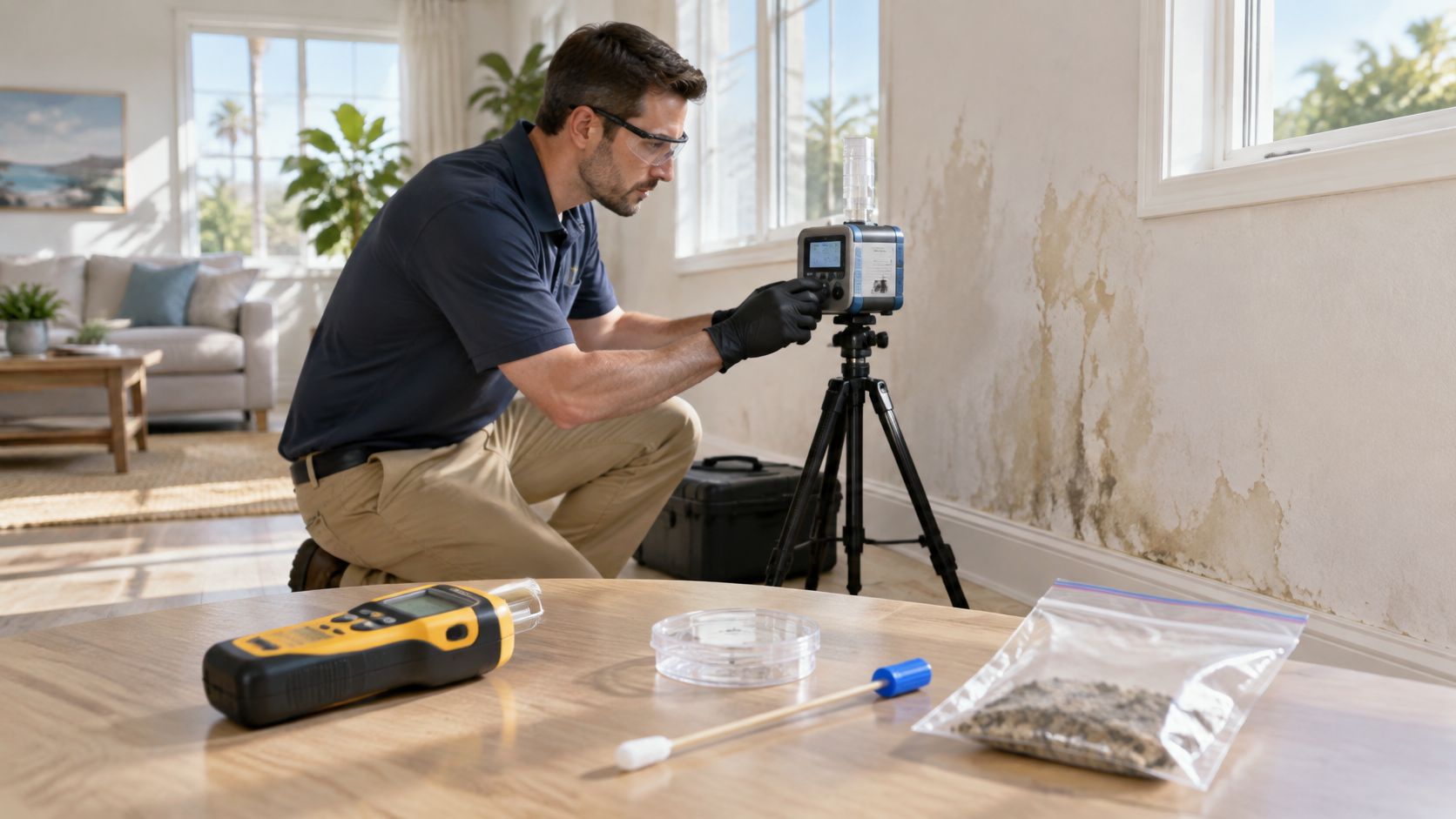
Air sampling collects airborne spores and fragments from a room over a set period, commonly with a cassette or spore trap. A professional may compare a room sample with an outdoor reference to investigate whether indoor air differs from outdoor conditions. For example, if a musty odor comes from a room with no visible growth, an air sample may help assess whether airborne material differs from the outdoor background. It remains a snapshot, not a full inventory of the building.
Surface sampling uses a tape lift or swab on one suspect area. It can help identify material growing on a specific surface, such as a discolored patch on the back of a cabinet. The result represents that spot, not the whole room.
Bulk sampling involves taking a small piece of material, such as drywall, insulation, or carpet padding, for laboratory examination. It can help determine whether growth is within the material. The trade-off is that collection removes a piece from the property.
Clearance sampling is used after cleanup to help document conditions. Depending on the question, it may involve air or surface samples, with results interpreted alongside a baseline and outdoor reference. Sampling should follow a clear plan and be interpreted by professionals who understand the building and the laboratory method.
| Test type | What it collects | Best used for | Main limitation |
|---|---|---|---|
| Air sample | Spores and fragments from room air over a set sampling time | Comparing indoor air with an outdoor reference or checking spaces connected to the HVAC system | One snapshot; levels shift with occupant activity, airflow, and humidity |
| Surface sample | Tape lift or swab from one visible or suspect surface | Identifying what is growing on a specific material | Reflects only the spot that was sampled |
| Bulk sample | Small piece of building material, such as drywall, insulation, or carpet padding | Confirming growth inside a material and helping locate a source | Requires removing a small piece of material from the property |
| Clearance sample | Air, surface, or visual verification after cleanup is complete | Documenting conditions after work, compared with baseline and outdoor air | Only as useful as the inspection and moisture checks around it |
Mold testing can help identify hidden growth, airborne spores, moisture intrusion issues, and the type and concentration of mold present. The practical value comes from matching the test to the decision, not ordering every sample type by default. If you're considering a consumer kit, learn what home mold test kits can and can't tell you.
When Mold Testing Fits Water Damage, Real Estate and Renovation
Mold testing is useful when a result can change a property decision. Extra samples may add cost without clarifying what to inspect, document, or do next. The CDC and NIOSH guidance on mold testing and remediation does not recommend routine air sampling to assess health risk. Visual signs, musty odors, moisture readings, and water intrusion are more useful starting points.
| Scenario | Starting point | Add sampling when | Why it matters |
|---|---|---|---|
| Recent leak or flood | Moisture mapping and visual inspection | Growth may be concealed behind materials, or odors persist after drying | Shows where water traveled and which areas need closer assessment |
| Pre-purchase or pre-lease | Visual and moisture inspection | A buyer or tenant needs a documented baseline before occupancy | Records conditions at the point of transfer |
| Renovation or tenant turnover | Inspect areas planned for opening or disturbance | Growth may be inside wall cavities or ductwork | Helps define the project scope before work starts |
| Insurance claim or dispute | Documented inspection with moisture readings | Independent samples are needed to support the file | Adds evidence to the record, rather than offering a single verdict |
| Musty odor with no visible growth | Moisture and HVAC review | The inspection has not located the source | Directs further investigation before laboratory analysis |
After a leak or appliance failure, moisture mapping systematically evaluates and maps moisture levels across a property. It can show where water traveled and which materials warrant closer inspection. Sampling is most useful when the inspection points to a hidden reservoir or documentation is needed for an insurance file. For practical steps on checking for mold after water damage, consider the likely water path and affected materials, not just the visible area.
For a sale or lease, an inspection can document conditions at the point of transfer. Before renovation or tenant turnover, focus on materials that will be opened or disturbed, especially when a water history or persistent odor raises concern about concealed growth. For HOAs and property managers, planned maintenance can help identify leaks and dampness before they become larger building concerns. The guidance on improving community appeal with regular maintenance also applies to maintaining shared spaces.
A musty odor without visible growth usually warrants a moisture and HVAC review before sampling. Testing becomes decision-useful when you need to determine whether contamination extends beyond a visible area, whether an HVAC system may be affected, whether a hidden reservoir is plausible, or whether conditions need verification after work. Choose the environmental testing and inspection approach that fits the question before collection begins.
How Sampling and Lab Analysis Work, Step by Step
A lab result is only useful when the report connects it to a place, a condition, and a question. A sample labeled “living room” without notes about moisture, visible conditions, airflow, or nearby materials can be difficult to interpret. A sound process establishes that context before the first sample is collected.
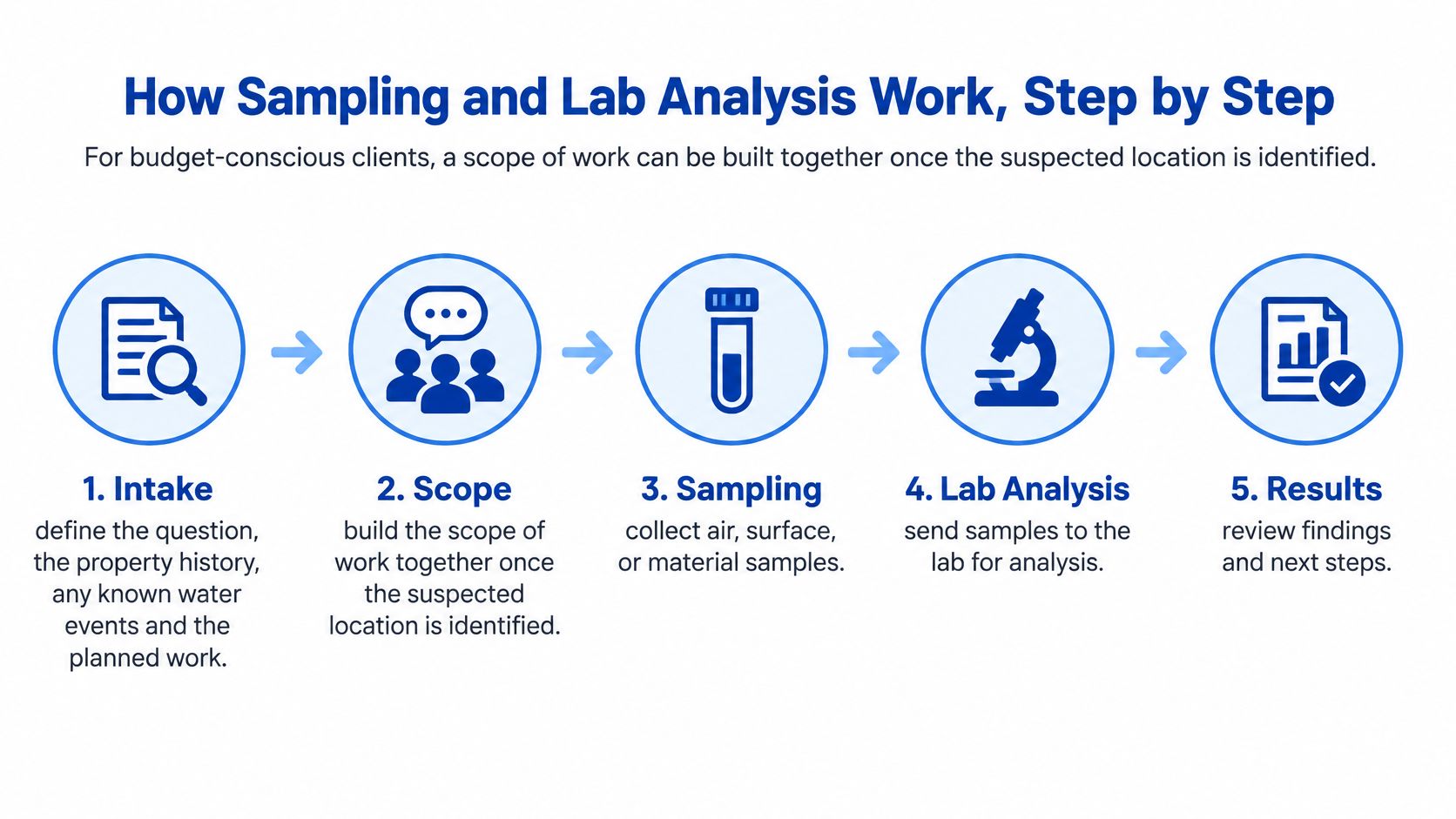
Intake. Define the question, property history, known water events, and planned work. This helps distinguish a request to investigate a persistent odor from one seeking documentation before a renovation or insurance discussion.
Walk-through. Inspect the property and take moisture readings to locate likely reservoirs, including roof or plumbing leaks, crawl spaces, and HVAC components. The inspection helps direct sampling toward areas that could explain the observed conditions instead of relying on a room's air sample alone.
Sampling plan. Set the locations, sample types, number of samples, outdoor reference, collection duration, and pump flow rate before collection. A plan makes the purpose of each sample clear and gives the lab and report reader the context needed to interpret results.
Collection. Use calibrated pumps and appropriate cassettes for air samples, tape lifts or swabs for surfaces, and sealed, labeled containers for bulk material. Field blanks and chain-of-custody records help document handling from collection through laboratory receipt.
Laboratory analysis. The lab may identify and count spores by direct microscopy, use culture when the question calls for assessing organisms that grow under the selected conditions, or apply DNA-based methods for specific organisms. The method should fit the question, and the sampling and analysis plan should follow relevant professional guidance.
Report. A useful report includes photographs, moisture findings, sample locations, laboratory results, comparison points, interpretation, and next steps. Sensitive Environmental can work with customers on a budget to develop a scope of work together when the location of the suspected mold is known at the start.
Practical rule: Agree on what each sample is meant to answer before collection. If the reason for a sample is unclear, it may not belong in the plan.
Laboratory findings should be read alongside the inspection, not as a substitute for it. Professionals designing and interpreting sampling can use methods recommended by industrial hygiene organizations, while stating the limits of the selected method and the comparison being made.
Reading Lab Results Without Overreacting
A negative sample doesn't prove a building is mold-free, and a positive result doesn't by itself prove illness or a legally actionable exposure. A lab report is a set of measurements, not a verdict. The EPA's guide to mold, moisture, and your home explains that there are no federal health-based limits for airborne mold, spores, or colony-forming units. An indoor result therefore can't certify that a building is safe or predict illness.
Terms you may see in a report
An air report may show spore counts per cubic meter, which describe the number of particles identified in the volume of air sampled. It may also identify genera, a broad taxonomic grouping of molds. An indoor-to-outdoor comparison looks at the types and levels found indoors relative to an outdoor reference, but it must be considered alongside the inspection and conditions at collection.
Direct microscopy examines particles collected in the sample, including spores that may not be viable. Culture attempts to grow organisms under the lab's chosen conditions, so it answers a different question and may not detect organisms that don't grow in those conditions. Neither result is a health-risk threshold.
| Result pattern | What it may indicate | Question to ask next |
|---|---|---|
| Indoor spore types match outdoor types at similar levels | Indoor air is consistent with the outdoor background | Is growth still suspected in a hidden or visible location? |
| Indoor levels clearly exceed outdoor levels with the same types | Possible indoor source or a disturbed reservoir | Where is moisture entering, and which materials are affected? |
| Indoor types are absent outdoors and linked to wet materials | Indoor growth is likely present | Which surfaces or bulk materials need sampling? |
| Surface sample positive while air sample is negative | Local growth may be real but poorly dispersed at the time of sampling | Does the surface match the visual findings and moisture map? |
| Air sample negative while musty odor persists | The snapshot may have missed an intermittent release | Were conditions representative during sampling? |
Airborne concentrations can shift with occupant activity, HVAC operation, humidity, disturbance of reservoirs, and sample duration. A brief sample can therefore miss an intermittent release. A positive result also doesn't automatically mean that remediation is required; it gives the property owner and qualified professionals information for deciding what to investigate or do next.
A useful report doesn't end the conversation. It helps identify where to look next.
Clearance Testing After Cleanup and What It Verifies
Clearance testing checks whether the affected area is ready for occupancy after remediation. It verifies conditions at the time of inspection, not a guarantee that mold will never return. A pre-work inspection or sampling plan can provide a useful baseline, but post-work findings still need to be interpreted alongside visible conditions and moisture readings.
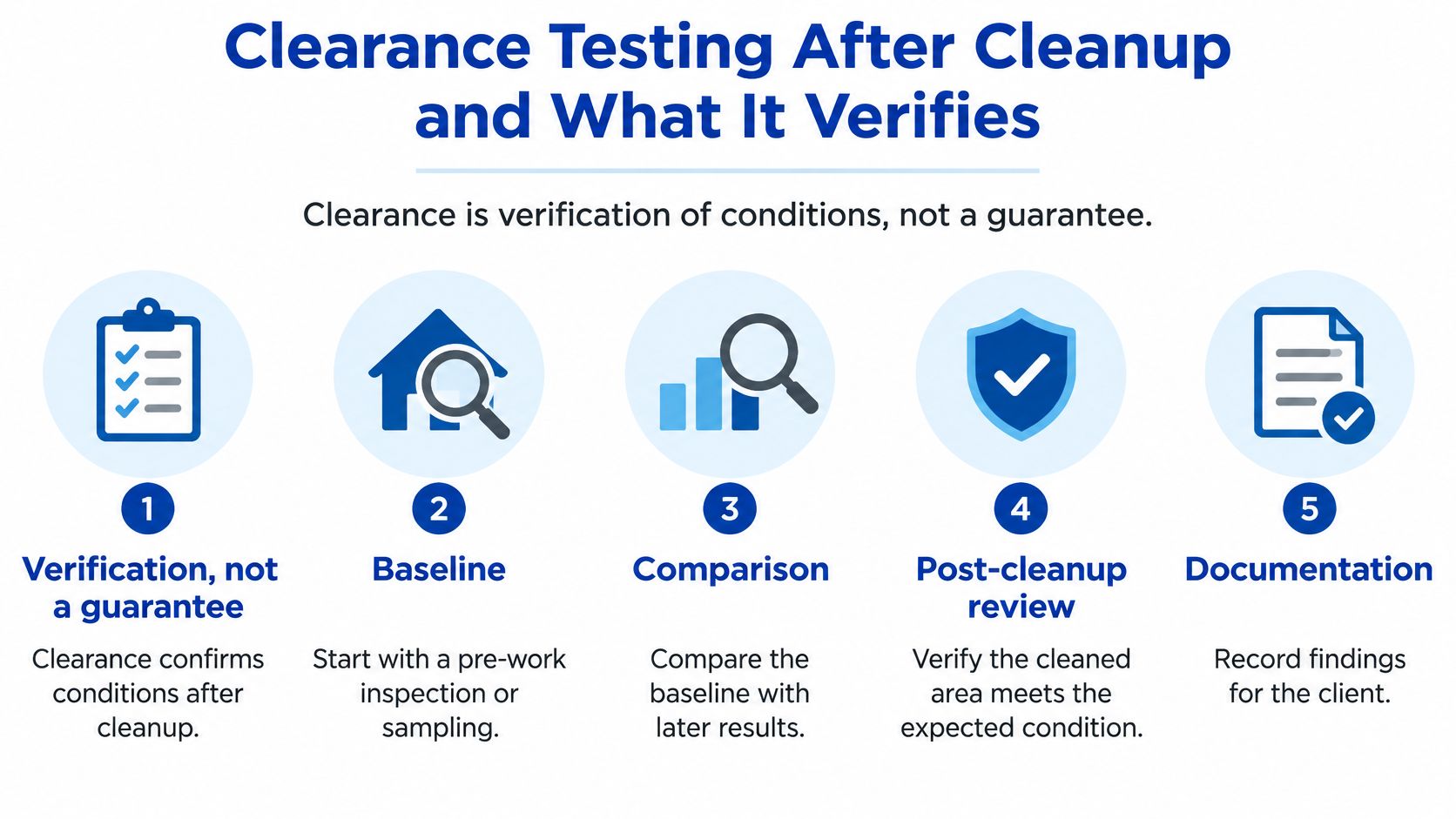
Begin by reviewing the contractor's records of materials removed or cleaned. Confirm that the moisture source has been addressed and affected materials have dried, using moisture readings rather than appearance alone. Then inspect for visible growth, mold-related odors, and incomplete containment cleanup. If these checks reveal unresolved moisture or visible growth, a negative air sample should not be treated as proof that cleanup succeeded.
Air or surface sampling can add evidence when it addresses a specific question. Compare results with the baseline and an outdoor reference when those comparisons fit the project's purpose. The EPA says visual and sensory inspection can be more effective than bioaerosol sampling alone for judging cleanup. A sample is a snapshot, so it cannot override contrary findings from the inspection.
The scope may grow after walls are opened and previously hidden materials become accessible. Sensitive Environmental says this is common, so property owners and project teams should allow for additional inspection if newly exposed areas raise questions. Guidance on coordinating mold remediation and verification can help clarify how testing fits into the work process.
Sensitive Environmental provides mold testing, documentation, and mold remediation, so property owners can choose whether the same firm or an independent inspector handles post-work verification. Mold clearance confirms whether contamination has been addressed and the affected area is safe for occupancy. The inspection, sampling, laboratory analysis, and report should give owners and qualified professionals findings they can use to decide whether further work is needed.
Los Angeles and Southern California Requirements That Shape Testing
Mold testing does not usually produce a regulatory pass or fail because there is no federal numeric limit for airborne mold. Visible mold is often identified through inspection. Sampling is more useful when the findings need documentation or when a specific uncertainty needs an answer, rather than as a substitute for inspecting the property.
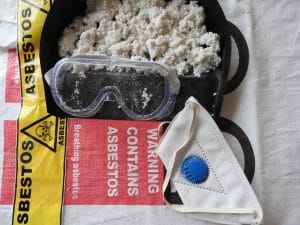
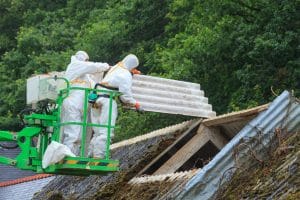
Renovation and demolition can raise a separate compliance issue: asbestos. Under South Coast AQMD Rule 1403, a facility must be surveyed for asbestos before demolition or renovation. The survey includes onsite inspection, identification, and quantification of friable asbestos-containing material and Class I and Class II non-friable material, with physical sampling where required. The rule generally requires notification to SCAQMD at least 10 working days before work, except for emergency activities.
For renovation, an onsite survey is generally required before work begins. A limited exception applies to a single-unit residential structure when less than 100 square feet of asbestos-containing material will be removed or stripped. Demolition has no comparable exception. If asbestos-containing material is damaged or disturbed, a Procedure 5 cleanup plan must be submitted, and abatement cannot begin until SCAQMD approves it in writing, according to the district's compliance advisory.
When planned mold work may disturb suspect materials in an older building, asbestos testing can affect the project sequence. Allow time for the survey, any necessary sampling, and regulatory scheduling. Sensitive Environmental provides asbestos testing and documentation for applicable Rule 1403 requirements, including Procedure 5 protocols. Confirm current requirements with SCAQMD and the local authority having jurisdiction before work starts, since rules and project conditions can change.
Mold Testing Costs and What Clients Can Expect
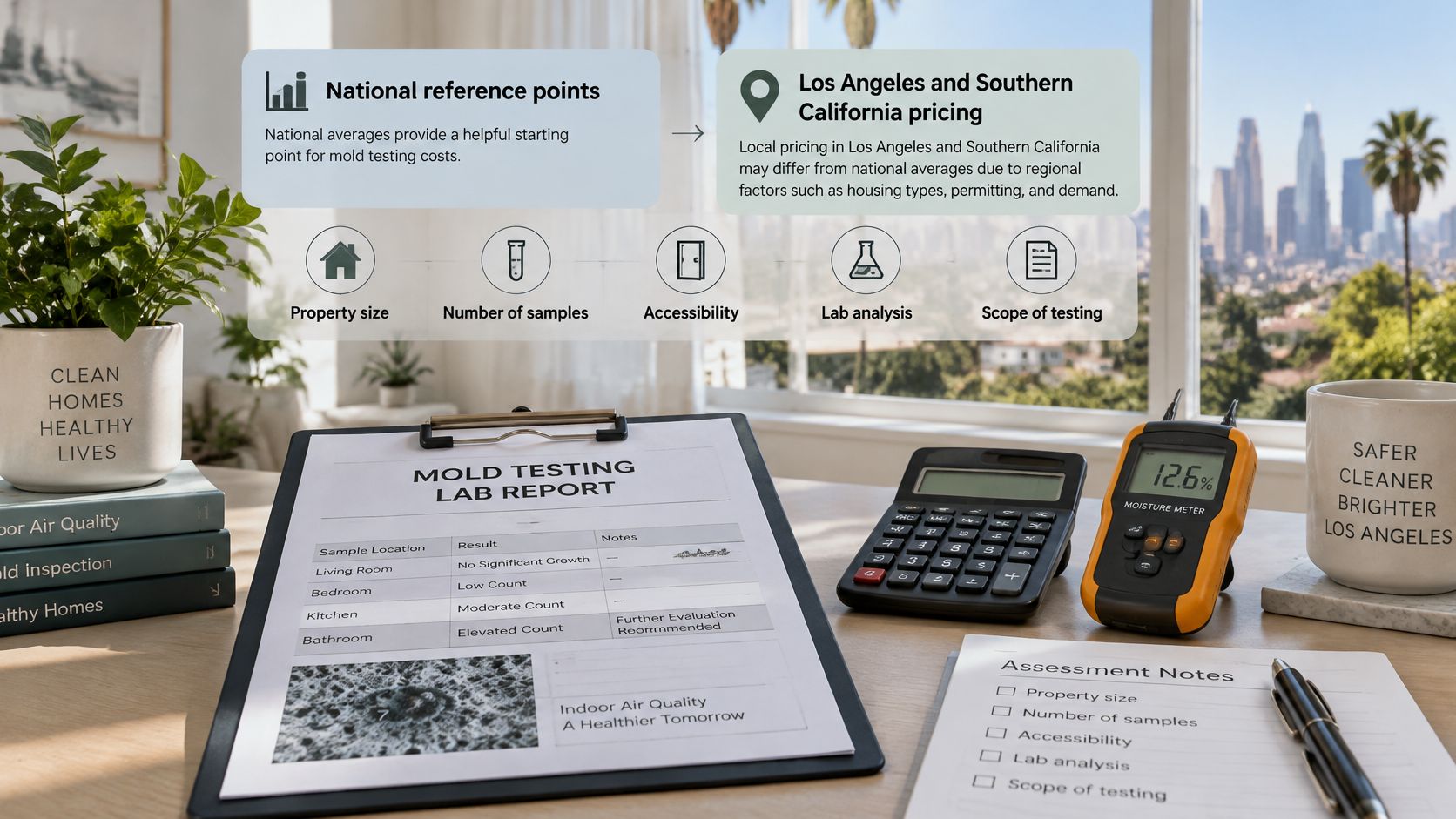
Published national estimates provide a starting point, not a local quote. A 2025 Thumbtack cost report put the national average price for a mold inspection at approximately $552 to $2,229. A 2025 Redfin analysis reported that homeowners typically spend $300 to $1,000, with a national average of about $680.
| Source | Reported price reference | Year |
|---|---|---|
| Thumbtack cost report | About $552 to $2,229, national average price | 2025 |
| Redfin analysis | Typically $300 to $1,000, national average about $680 | 2025 |
Prices in Los Angeles and Southern California can differ from national references. Property size, number of samples, laboratory method, access, and the need for bulk sampling or wall openings can all affect a quote. Ask for a line-item estimate that separates the inspection, sample collection, laboratory analysis, and written report. If opening a wall may be needed, clarify how any added scope will be priced.
A DIY kit usually provides a result without the property context needed to guide a decision. It may lack a professional sampling design, indoor and outdoor comparison, chain-of-custody documentation, or interpretation that connects findings to moisture conditions. A professional service can combine inspection, moisture mapping, targeted samples, lab analysis, and a report that explains what the results can and can't show.
Sensitive Environmental handles inquiries about mold, asbestos, lead, fire damage, and water damage. Customers can request a free consultation by selecting the relevant problem type, and the company brings over 30 years of experience to asbestos, lead, and mold projects. The consultation is an opportunity to describe the concern and discuss an appropriate scope, not a promise about what testing will find.
Mold Testing Questions Property Owners Ask
Do I need a test if I can already see mold?
Usually not just to identify that mold is present. The next priority is to locate the moisture source and decide whether sampling would answer a separate question, such as whether growth extends beyond the visible area.
Can a DIY kit replace a professional test?
No. A kit generally lacks the inspection context, planned sample locations, outdoor reference, chain of custody, and interpretation needed to connect a result to a building condition.
Does a positive result mean remediation is required?
Not automatically. Results inform the next decision for the property owner and qualified professionals; they don't prescribe a response on their own.
Does a negative result mean a home is safe?
No. One sample can miss an intermittent release, and there's no federal health-based limit against which a test can declare a property safe.
Do I need asbestos testing as well?
If renovation or demolition could disturb building materials, coordinate an asbestos survey before work begins. SCAQMD Rule 1403 sets survey and notification requirements for applicable projects.
Is testing useful before buying a home?
It can be. A pre-purchase inspection can document moisture and visible conditions before occupancy, giving the buyer a clearer basis for a property decision.
Book a Mold Testing Consultation Before Work Begins
A consultation helps determine whether testing is needed, which sample type fits the question, and what should happen next. Before contacting an environmental testing professional, gather:
- Water history: When the leak, flood, or other water event occurred.
- Affected areas: Where odors, staining, or suspected growth appear.
- Records: Photos, previous inspection reports, and any related documentation.
- Project details: The building's age and any renovation, repair, or other work planned.
Sensitive Environmental offers a free, no-obligation consultation for environmental testing or an existing mold, asbestos, or lead concern. You can discuss the question, likely test types, the expected sequence from inspection to report, and a possible scope of work. For overlapping concerns, the intake form also accepts consultation requests about fire damage and water damage.
Call 310-387-5404 or request an appointment online to schedule a mold testing inspection in Los Angeles or elsewhere in Southern California. The aim is accurate information and clear documentation to help the property owner and qualified professionals decide the next step.
Contact Sensitive Environmental to discuss a moisture-focused mold inspection, targeted sampling, or laboratory analysis for your Los Angeles or Southern California property. Visit Sensitive Environmental to request a consultation before repairs, a transaction, or renovation begins.