Most homeowners pay roughly $300 to $616 for a standard indoor air quality assessment, with reported averages clustered around $435 to $443. A broader scope, such as multiple rooms, several pollutant groups, or advanced laboratory analysis, can move the indoor air quality testing cost to $1,200 or more.
That range matters because an IAQ quote isn't a fixed product. It's a project built from inspection time, sample locations, contaminant selection, laboratory methods, turnaround requirements, and report depth. A low quote may be appropriate for one suspected issue in one room. It may also omit the samples or documentation you need.
For homeowners, landlords, facility managers, contractors, and developers in Los Angeles and Southern California, the right question isn't, “What does air testing cost?” It's, “What scope will produce useful, defensible information for this property and this decision?”
Table of Contents
- What Most Homeowners and Property Managers Actually Pay in 2026
- Common Indoor Air Quality Tests and What They Measure
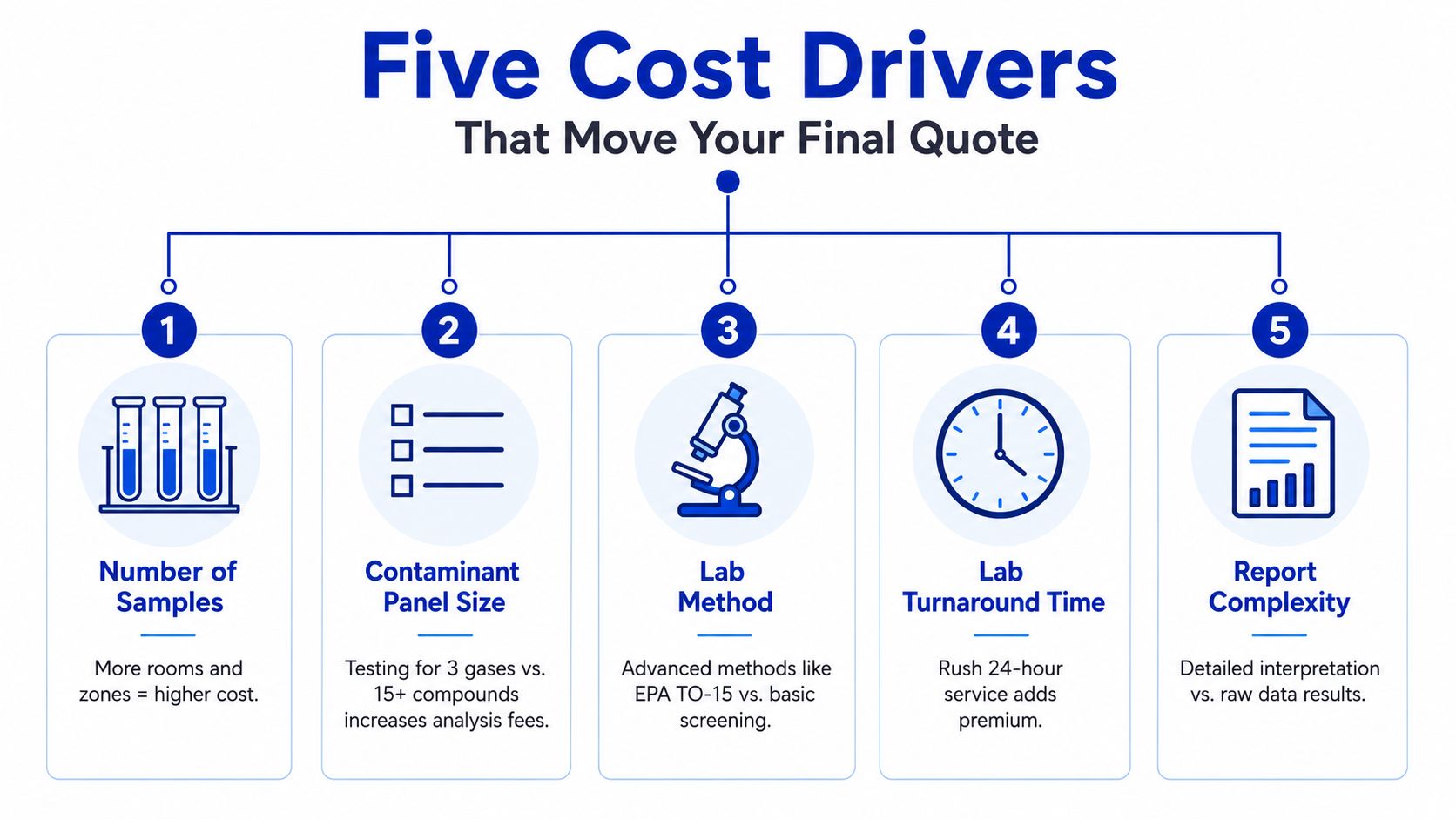
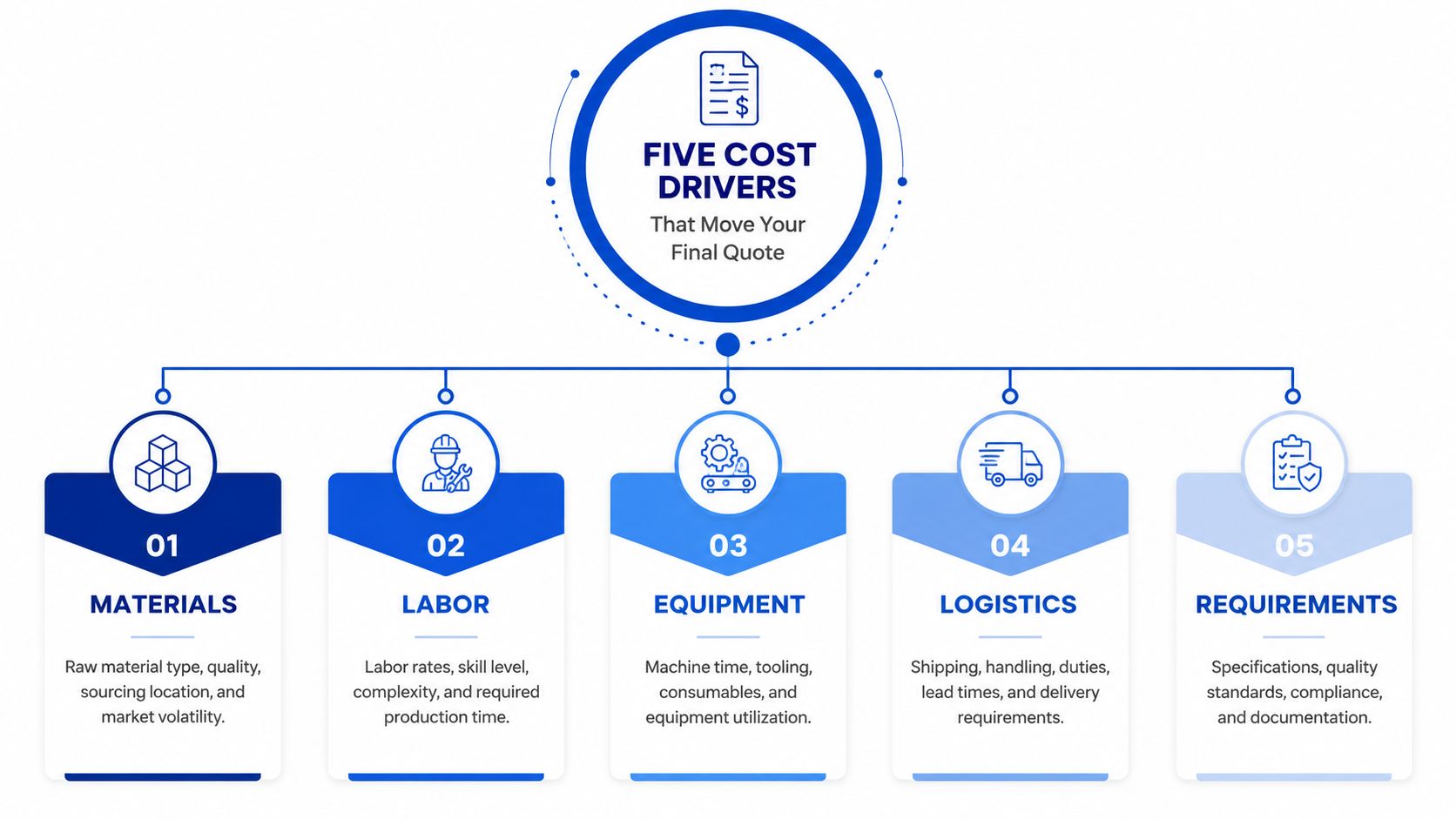
- Five Cost Drivers That Move Your Final Quote
- Typical Price Tiers From a Spot Check to a Commercial Assessment
- How Sample Count and Property Size Shape a Real Quote
- When Professional Testing Beats a DIY Monitor
- How to Scope Your Project and Avoid Surprise Add-Ons
- Smart Next Steps for Los Angeles and Southern California Properties
What Most Homeowners and Property Managers Actually Pay in 2026
Published consumer-service benchmarks are useful for checking whether a proposal is in the right range, but they are not a substitute for defining the work. Angi's 2026 indoor air quality testing guide reports an average of $437, with most homeowners paying $292 to $584 for a standard assessment. HomeAdvisor's cost guidance reports an average of $443, with a typical range of $303 to $616. Thumbtack's national pricing data places the average around $435, with a broader range of roughly $266 to $712.
These benchmarks usually describe an initial professional visit, an on-site inspection, selected samples, and a report. They do not price a remediation program, repeated monitoring, or every possible contaminant panel.
| Source | Typical Range | Reported Average | What It Usually Covers |
|---|---|---|---|
| Angi | $292 to $584 | $437 | Standard residential assessment, sampling, and report |
| HomeAdvisor | $303 to $616 | $443 | Professional inspection and testing with project-based scope |
| Thumbtack | Roughly $266 to $712 | About $435 | Service pricing that varies with property and test requirements |
The meaningful price difference comes from scope. Room count, sample locations, selected analytes, laboratory method, and report depth can move a quote well beyond a basic visit. Compare those line items before comparing totals. A low bid may cover one room and one method, while a higher bid may include multiple rooms, an outdoor control, several contaminant groups, and laboratory interpretation.
Southern California properties often need a more specific plan. A Los Angeles building may involve wildfire smoke intrusion, an older HVAC system, water damage, renovation dust, or musty odors. Coastal properties in Long Beach, Santa Monica, and Ventura may call for a different inspection focus than a dry Inland Empire property. Older housing in Pasadena or Los Angeles can also raise asbestos or lead questions. Those hazards require separate environmental testing and should not be assumed to fall inside a basic IAQ package.
Practical rule: Use the mid-$400s as a reference point for a standard visit. Require the proposal to state room count, sample locations, analytes, laboratory method, and deliverables before accepting the price.
Common Indoor Air Quality Tests and What They Measure
A professional consultant should start with the complaint or project trigger, then choose a test that can answer it. Musty odor, renovation dust, wildfire residue, chemical off-gassing, combustion concerns, and a tenant complaint require different scopes. The right indoor air quality test is defined by the decision you need the result to support.
Match the test to the concern
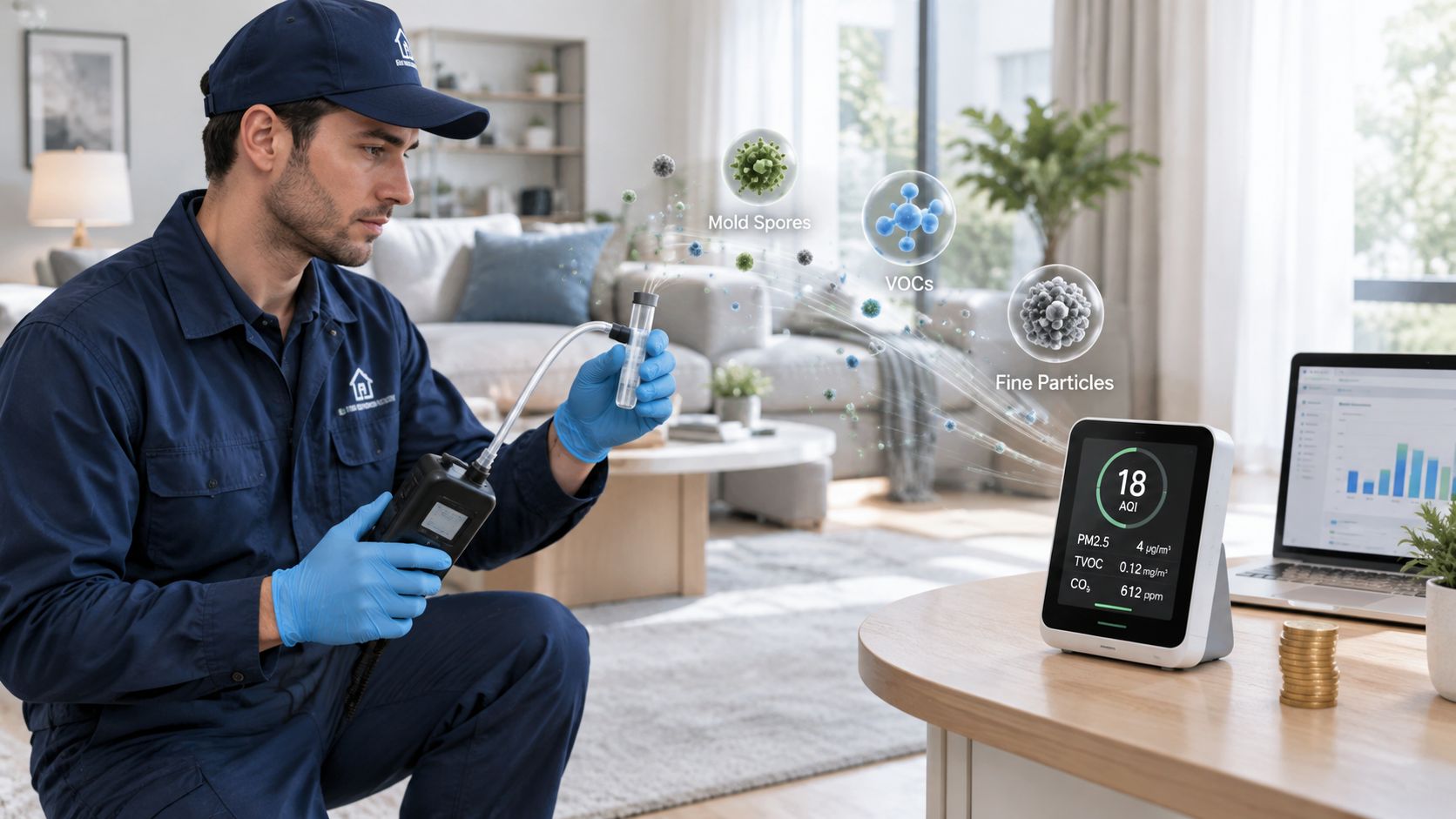
- Mold spore air sampling draws air through a spore-trap cassette for comparison between indoor areas and an outdoor control. A surface swab can characterize visible or suspected growth. Confirm the sample count and whether the laboratory supplies raw results or interpreted reporting.
- VOC testing uses equipment such as a canister or sorbent tube to identify volatile chemicals. It fits concerns following renovation, new flooring, cabinet installation, or persistent chemical odors. Formaldehyde may be ordered as a separate analyte, so do not assume a general VOC panel includes it.
- Particulate matter testing measures airborne particles such as PM2.5 or PM10 with direct-reading instruments or specialized sampling. Use it for smoke intrusion, combustion byproducts, dust, and ventilation complaints.
- Carbon monoxide and radon address separate hazards. A direct-reading instrument commonly measures carbon monoxide, while radon requires a dedicated device or collection method. A radon line item cannot answer a carbon monoxide question.
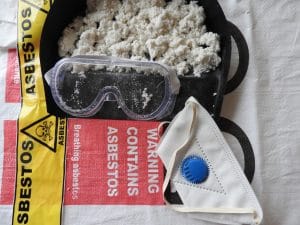
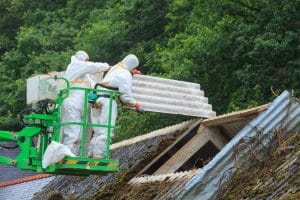
- Asbestos fibers, lead dust, bacteria, and endotoxins need issue-specific planning. Asbestos and lead testing often relate to renovation, demolition, deteriorated materials, or settled dust. For microbial and endotoxin testing, require a clear explanation of what the method can and cannot establish.
The laboratory method affects turnaround and the final report. Some direct-reading measurements are available during the visit, while laboratory samples require processing and formal results. Ask whether the deliverables include sample locations, methods, laboratory documentation, chain-of-custody records, and interpretation.
For plain-language background on ventilation, filtration, humidity, and indoor air quality, a heating and cooling resource can clarify the building systems that shape an environmental testing plan. It does not replace issue-specific sampling when documented results are required.
Five Cost Drivers That Move Your Final Quote
Two consultants can inspect the same address and produce very different prices without either quote being wrong. The difference usually comes from scope.
Samples come first
Each additional room, HVAC zone, or outdoor comparison point adds technician time, equipment handling, documentation, and potentially a laboratory charge. A one-room complaint needs a narrower plan than a multi-zone office assessment.
The contaminant panel changes the bill
Mold, formaldehyde, radon, VOCs, particles, carbon monoxide, asbestos, and lead aren't interchangeable tests. Air Allergen's published pricing examples list mold spore-trap air samples at about $69 per sample, direct-analysis swabs at about $69, formaldehyde at about $150, radon at about $49, and VOC analysis using a full EPA compendium at about $936. These are examples of how the analytical method can dominate the project total.
Method selection has consequences
A screening instrument, a spore-trap cassette, a canister, a sorbent tube, and an accredited laboratory method produce different kinds of evidence. The proposal should name the method rather than using a vague phrase such as “complete air quality testing.” For construction or green-building documentation, the consultant must align the method and sampling plan with the applicable requirement.
Property conditions affect field labor
Square footage, occupancy, ceiling access, mechanical rooms, multiple floors, and restricted areas all affect mobilization. A facility manager may need testing during operating conditions, while a vacant property may require a different sampling schedule.
Reporting determines the value of the result
A one-page summary and a detailed report with photographs, sample maps, laboratory certificates, chain-of-custody records, limitations, and interpretation aren't equivalent deliverables. Air Allergen also lists full-day inspections and reports at about $800, illustrating how field and reporting time can become a major line item.
Read the cheapest quote carefully. It may reflect fewer samples, a narrower panel, a basic screening method, or a report that won't satisfy a buyer, insurer, regulator, or dispute-resolution process.
Rush service, travel, and repeat mobilization can add cost, but you should ask for those charges before authorizing work. A clear proposal makes the difference visible.
Typical Price Tiers From a Spot Check to a Commercial Assessment
The following tiers help you place a quote in context. Sample counts vary by building and complaint, so the listed counts are qualitative planning descriptions rather than fixed requirements.
| Tier | Typical Price Range | Sample Count | Typical Deliverable |
|---|---|---|---|
| Single-room spot check | $150 to $300 | Limited, focused sampling | Basic findings and selected results |
| Standard residential panel | $303 to $616 | Several samples tied to the complaint | Written report with laboratory results where applicable |
| Comprehensive residential assessment | $700 to $1,200 | Multiple rooms or contaminant groups | Expanded report, laboratory documentation, and interpretation |
| Commercial or large-property assessment | $2,000 to $5,000+ | Multi-zone sampling and building-system review | Formal assessment package for planning, documentation, or compliance |
These ranges are summarized in published IAQ inspection pricing guidance. They describe different scopes, not four competing prices for the same service.
A spot check makes sense when one room has one clearly defined concern and you don't need formal documentation. A standard residential assessment fits a broader home complaint. A detailed panel may be appropriate after water damage, renovation, smoke intrusion, or suspected chemical contamination. Commercial testing usually involves multiple zones, operating conditions, tenant coordination, and a report that supports project decisions.
Choose the tier by the decision you need to make. Real estate, tenant disputes, insurance documentation, construction planning, and regulatory interactions usually require more than a casual screening.
How Sample Count and Property Size Shape a Real Quote
Consider a 1,800-square-foot single-family home with a suspected mold concern in one bedroom. A reasonable discussion might involve two indoor air samples, one outdoor control, and an optional surface swab, but the consultant should decide the final locations after inspecting the property. The cost reflects the visit, equipment setup, three laboratory samples if ordered, any swab analysis, and report preparation.
The important point is that the home's total square footage doesn't automatically determine every sample. The affected room, adjacent areas, HVAC relationship, visible conditions, and outdoor comparison point matter more than a generic whole-house package.
Now consider a 12,000-square-foot office suite with baseline VOC, carbon dioxide, and formaldehyde questions across four zones. The consultant must account for zone selection, occupied conditions, ventilation patterns, sampling equipment, laboratory handling for applicable analytes, coordination with the facility manager, and a report that maps results to locations.
That commercial project has a different cost structure because the building requires more planning and more defensible documentation. A project team should also distinguish direct-reading data from laboratory analysis. Continuous or real-time instruments can answer some questions during the visit, while VOC and formaldehyde samples may require laboratory processing.
A proposal for commercial work should spell out the zones and deliverables. Sensitive Environmental's commercial environmental testing services in Los Angeles can be evaluated alongside other qualified providers by comparing the proposed locations, methods, laboratory credentials, and report scope.
Adding a needed panel during the first mobilization is often more efficient than discovering the omission later and paying for another site visit. Don't add every possible analyte blindly. Do identify all decision-critical questions before the technician arrives.
When Professional Testing Beats a DIY Monitor
Consumer devices are useful, but they answer a narrower question. A monitor can show trends in PM2.5, carbon dioxide, temperature, humidity, or selected VOC signals. A mail-in kit may provide a limited laboratory result. Neither automatically creates a documented environmental assessment.
Professional testing adds site judgment. A qualified consultant evaluates rooms, HVAC operation, moisture indicators, occupancy, likely sources, and the relationship between sampling locations. The consultant can select a method, document conditions, maintain chain of custody where applicable, and explain what the laboratory result means in context.
| Factor | DIY Monitor or Mailer Kit | Professional IAQ Testing |
|---|---|---|
| Primary use | Early screening and trend observation | Decision-specific assessment |
| Sampling | User-selected or device-driven | Consultant-selected locations and conditions |
| Results | Dashboard, device reading, or limited laboratory output | Documented results tied to methods and locations |
| Chain of custody | Generally unavailable or limited | Available when the project requires it |
| Documentation | Usually unsuitable for formal disputes | Can support real estate, insurance, compliance, or project records |
| Interpretation | User interprets signals | Consultant explains limitations and next steps |
DIY tools are reasonable when you're trying to determine whether a persistent pattern deserves professional attention. They aren't a substitute for lab-backed testing when the result may affect a transaction, tenant dispute, insurance claim, school or workplace documentation, or post-work evaluation.
A monitor can report higher particles. It can't identify whether those particles came from wildfire smoke, construction dust, a malfunctioning appliance, or another source. A professional assessment may not answer every question either, but it gives you a structured sampling plan and a report that people outside your household can evaluate.
Homeowners who want a plain-language starting point can review how to test for air quality in your home before deciding whether to request a formal assessment.
How to Scope Your Project and Avoid Surprise Add-Ons
Start with the trigger, not the catalog. A chronic odor, tenant complaint, real estate transaction, post-work review, wildfire smoke concern, renovation, or water event points toward a different testing plan.
Build the first-call file
Give the consultant enough information to size the work correctly:
- Property profile: Record approximate square footage, room count, number of floors, HVAC zones, occupancy, and access restrictions.
- Trigger and timeline: State when the odor, visible condition, complaint, renovation, leak, or smoke event began.
- Prior work: Identify recent construction, painting, flooring, cabinet installation, cleaning, restoration, or other changes.
- Known materials: Flag older building materials, deteriorated paint, suspect insulation, or renovation areas that may require separate asbestos or lead testing.
- Documentation need: Explain whether the report is for personal decision-making, escrow, insurance, a tenant matter, a contractor, or regulatory communication.
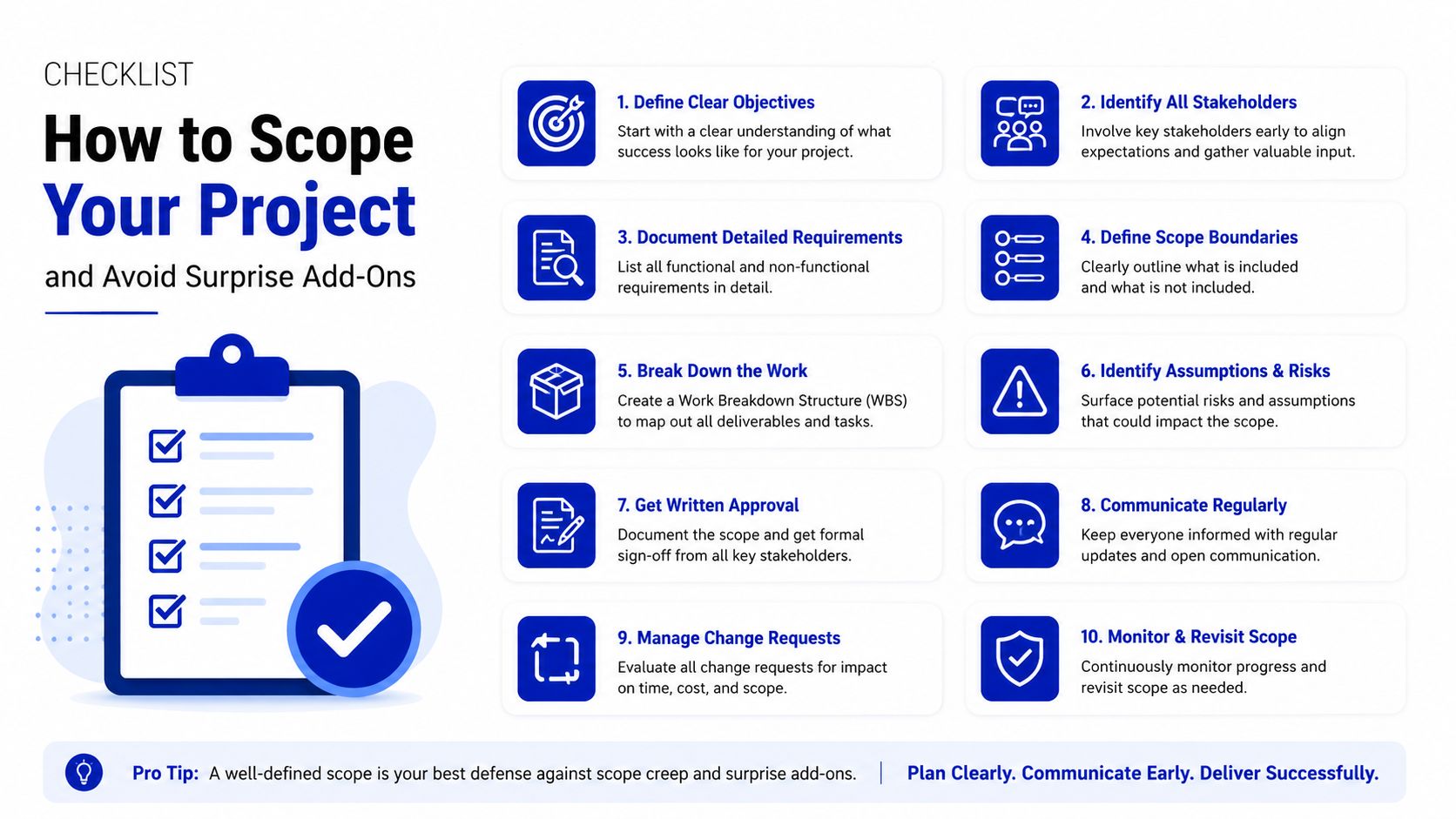
Ask each bidder to identify the laboratory method for every analyte. For mold, ask whether the proposal uses spore-trap air sampling, surface sampling, culture, or another method. For VOCs, ask whether the lab method matches the compounds of concern. For a renovation or demolition project, don't assume a general IAQ panel addresses asbestos or lead.
Request written confirmation of sample locations, turnaround time, laboratory documentation, report inclusions, travel charges, rush fees, and revisit terms. If a Certified Industrial Hygienist will sign or review the report, ask that the proposal say so.
Unlimited revisits and broad language deserve scrutiny. A fixed-fee scope letter is better. It should state what the consultant will inspect, what will be sampled, which methods apply, what the laboratory will provide, and what happens if site conditions require a change order.
Smart Next Steps for Los Angeles and Southern California Properties
A useful IAQ report connects each result to its sample location, laboratory method, building condition, and the decision it must support. That standard matters for escrow, tenant concerns, insurance documentation, renovation planning, or communication with Cal/OSHA and the South Coast Air Quality Management District.
Regulated renovation and demolition often require work beyond an indoor air spot check. Older properties in Pasadena, Long Beach, Echo Park, and nearby Los Angeles communities may need separate asbestos or lead evaluation before materials are disturbed. SCAQMD Rule 1403, Procedure 5, Notices to Comply, and pre-renovation or pre-demolition surveys can create documentation requirements that a basic IAQ panel will not meet.
Regional conditions should shape the sampling plan. Coastal humidity and marine-layer conditions can support moisture-related concerns on the western side of the region. Wildfire smoke intrusion can shift attention toward particulate matter and combustion byproducts. Properties in the Inland Empire, Ventura County, and coastal Los Angeles may need different priorities based on the building, event history, and intended use.
Use national pricing only as a rough reference. A residential assessment may sit near the earlier benchmark of $437, while broader professional testing can reach $300 to $1,200 when the scope adds samples, pollutants, or square footage. Match each price band to the actual decision: a small spot check may fit one room and a narrow contaminant panel, while a commercial assessment may require multiple locations, specialized laboratory methods, and formal reporting. A low quote is not a bargain if it omits the analyte, sample location, or deliverable you need.
For general information about building-related air concerns outside Southern California, property owners can review indoor air quality services Phoenix. Los Angeles clients should request a written plan before mobilization, including locations, methods, turnaround, laboratory records, and report contents. Indoor air quality testing in Los Angeles is one professional resource to evaluate for inspection, sampling, laboratory analysis, and reporting.
Start with a scoping walkthrough, not a generic price list. The quote should match the property, contaminant concern, sample count, laboratory method, and decision in front of you.
Sensitive Environmental provides indoor air quality testing, mold and VOC sampling, environmental assessments, industrial hygiene testing, and laboratory-backed reporting for residential and commercial properties throughout Los Angeles and Southern California. Visit Sensitive Environmental to request a project-specific proposal identifying the sampling locations, methods, turnaround, and documentation your property requires.