You're under contract on a building in Los Angeles, the lender wants environmental due diligence, and everybody keeps using the phrase Phase I ESA like it answers every environmental question on the property. It doesn't. A proper environmental assessment phase 1 is a documentary investigation, not a sampling event, and that difference matters when you're trying to understand liability, project timing, and what still needs separate testing before closing or construction.
Buyers, sellers, property managers, and contractors often treat a Phase I like a checkbox. In practice, it's the first screen for environmental risk, and the findings can change how a deal is priced, financed, or structured. If the property has a complicated use history, or if the building itself raises concerns about asbestos, lead, mold, or indoor air quality, the Phase I is only one piece of the picture.
Table of Contents
- What a Phase I Environmental Site Assessment Actually Is
- The Five Core Elements of ASTM E1527-21
- How a Phase I ESA Works From Start to Finish
- Understanding REC, HREC, and CREC Findings
- What a Phase I ESA Does Not Cover
- Cost, Timeline, and the 180-Day Shelf Life
- Common Questions About Phase I Environmental Assessments
What a Phase I Environmental Site Assessment Actually Is
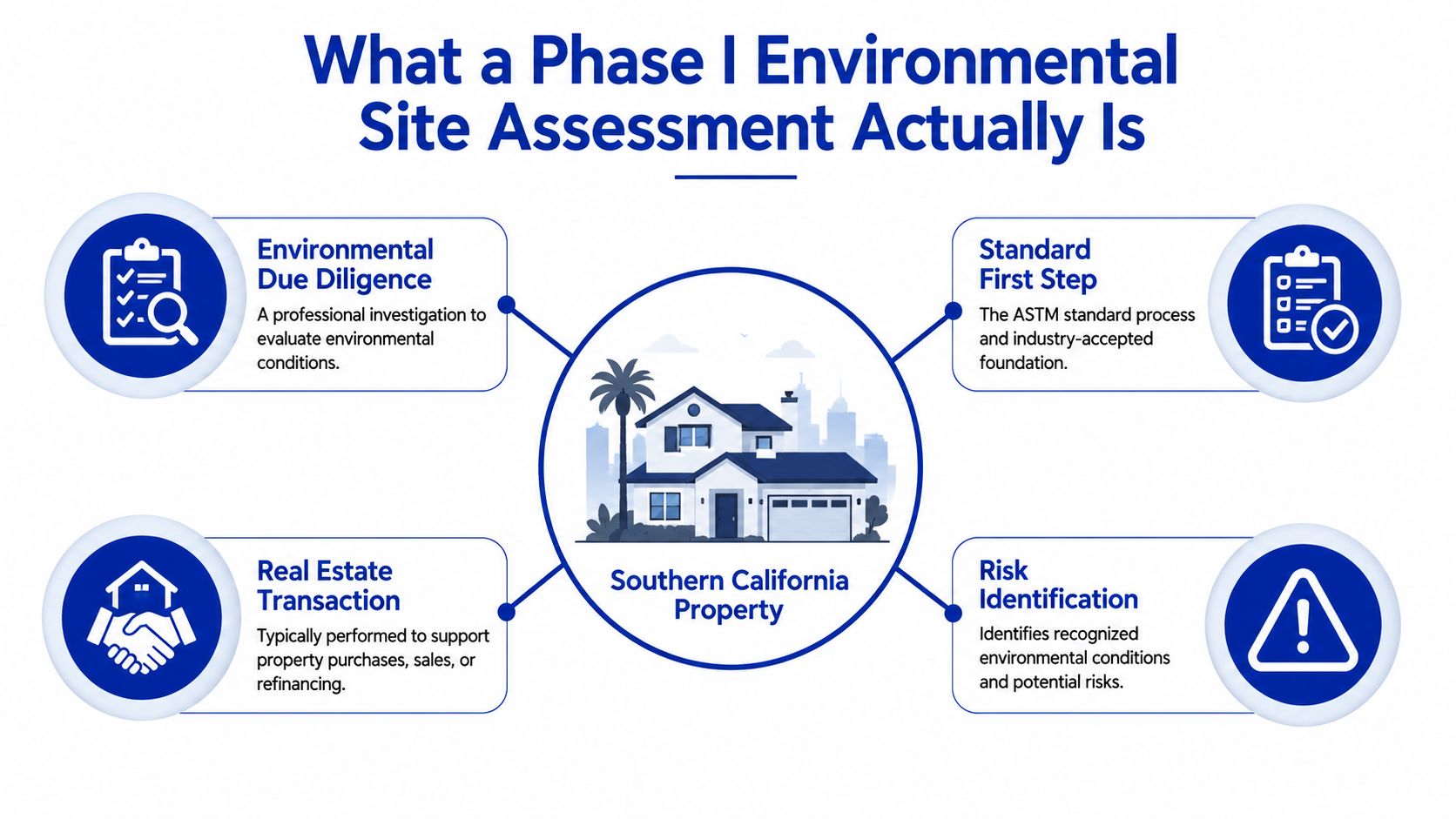
A first-time buyer in Southern California usually asks the same question the moment escrow gets serious, do I need an environmental report, or is this just lender paperwork? The answer is that a Phase I Environmental Site Assessment is the standard first step in environmental due diligence for real estate transactions, and its job is to identify Recognized Environmental Conditions, or RECs by reviewing historical and regulatory records, conducting site reconnaissance, and interviewing owners or occupants, as described in EPA guidance on brownfield assessment and Phase I use cases (EPA brownfield assessment guidance).
What it is doing, in plain English
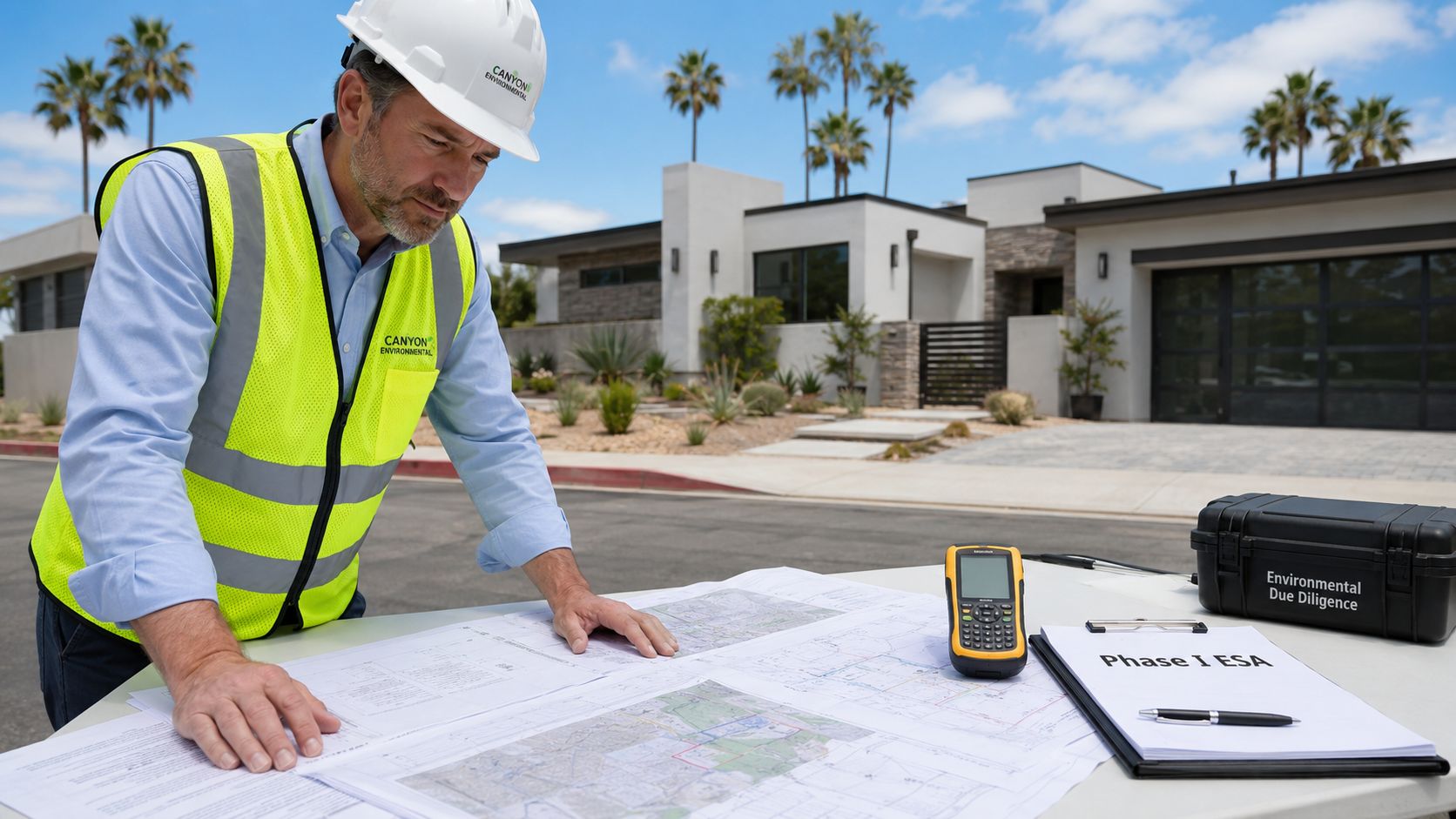
Think of the report as a documentary investigation into whether past or present conditions on the property suggest a release, or likely release, of hazardous substances or petroleum products. Under ASTM-related practice, the assessment is non-invasive, so it leans on records review, site reconnaissance, and interviews instead of sampling soil or groundwater (ASTM E1527-21 overview).
That's why Phase I reports get commissioned before purchase, financing, development, or other major transactions. The user is usually a buyer, lender, seller, or developer who needs a clear answer about whether there are signs that merit a deeper look. A clean-looking parcel in Pasadena, Glendale, or Long Beach can still have a use history that deserves review.
Practical rule: If the question is, “Is there evidence of potential environmental liability?”, a Phase I is the right first step. If the question is, “How much contamination is in the soil?”, it's not.
What it is not
A Phase I does not include soil, groundwater, or building-material sampling under ASTM E1527-21 (ASTM E1527-21 overview). That matters because buyers sometimes assume a “Phase I passed” result means every environmental risk has been tested. It hasn't.
The report can identify a property feature, a prior use, or a file record that suggests a possible issue. Then the next step may be a Phase II investigation, or a separate specialty inspection depending on what the property is and what the transaction requires.
For property owners in Los Angeles County, that distinction saves time and avoids expensive misunderstandings. A warehouse conversion in Vernon, a multifamily purchase in Koreatown, or a retail acquisition in the South Bay can all need a Phase I first, but the report only answers the due diligence question it was designed to answer. For a broader overview of available testing and inspection services, see Sensitive Environmental environmental testing services.
The Five Core Elements of ASTM E1527-21
ASTM E1527-21 makes the process more structured than many people expect. It isn't just a quick site walk. The standard is built around documentary and observational work, and that's what gives the final report enough weight to support real estate decisions, lending review, and liability analysis (ASTM E1527-21 overview).
The pieces that shape the report
The first element is the user's responsibilities. The buyer, lender, or another user has to provide known information about the property, past uses, and any specialized knowledge that may affect the review. If a tenant has occupied part of the building for years, that knowledge matters.
The second element is physical setting resources. That means looking at the property's surroundings, geography, and visible context. In Southern California, that can include adjacent industrial uses, older commercial corridors, or site conditions that shape how releases might move.
The third and fourth elements are the government records review and historical records review. The work gets really documentary. An assessor may check regulatory files, maps, aerials, city records, and historical use documents. For a long-held Los Angeles parcel, historical Sanborn fire insurance maps can help show what the site used to be. Regulatory databases, including state cleanup records, can also matter.
The fifth element is site reconnaissance, plus interviews with owner, operator, or occupant personnel. That means an environmental professional walks the property, observes the interior and exterior, and asks informed people what they know. If a building in Downtown Los Angeles has a stained utility room, a closed-off former machine area, or old maintenance records, those details can become important.
Why the method stays non-invasive
The standard is meant to identify RECs, not measure contamination concentrations. That's why the process is documentary and observational, not laboratory-based (ASTM E1527-21 overview). It's also why a Phase I is so useful in a transaction, it can be completed without interrupting use, drilling, or disturbing the property.
A good Phase I does not just say “no issue found.” It shows how the assessor got there, which records were reviewed, what was observed, and where uncertainty still remains.
For technical users, that structure is the point. It makes the report repeatable, reviewable, and easier for lenders or counsel to evaluate. It also keeps the review focused on recognized environmental conditions rather than turning it into a general building inspection or compliance audit.
How a Phase I ESA Works From Start to Finish
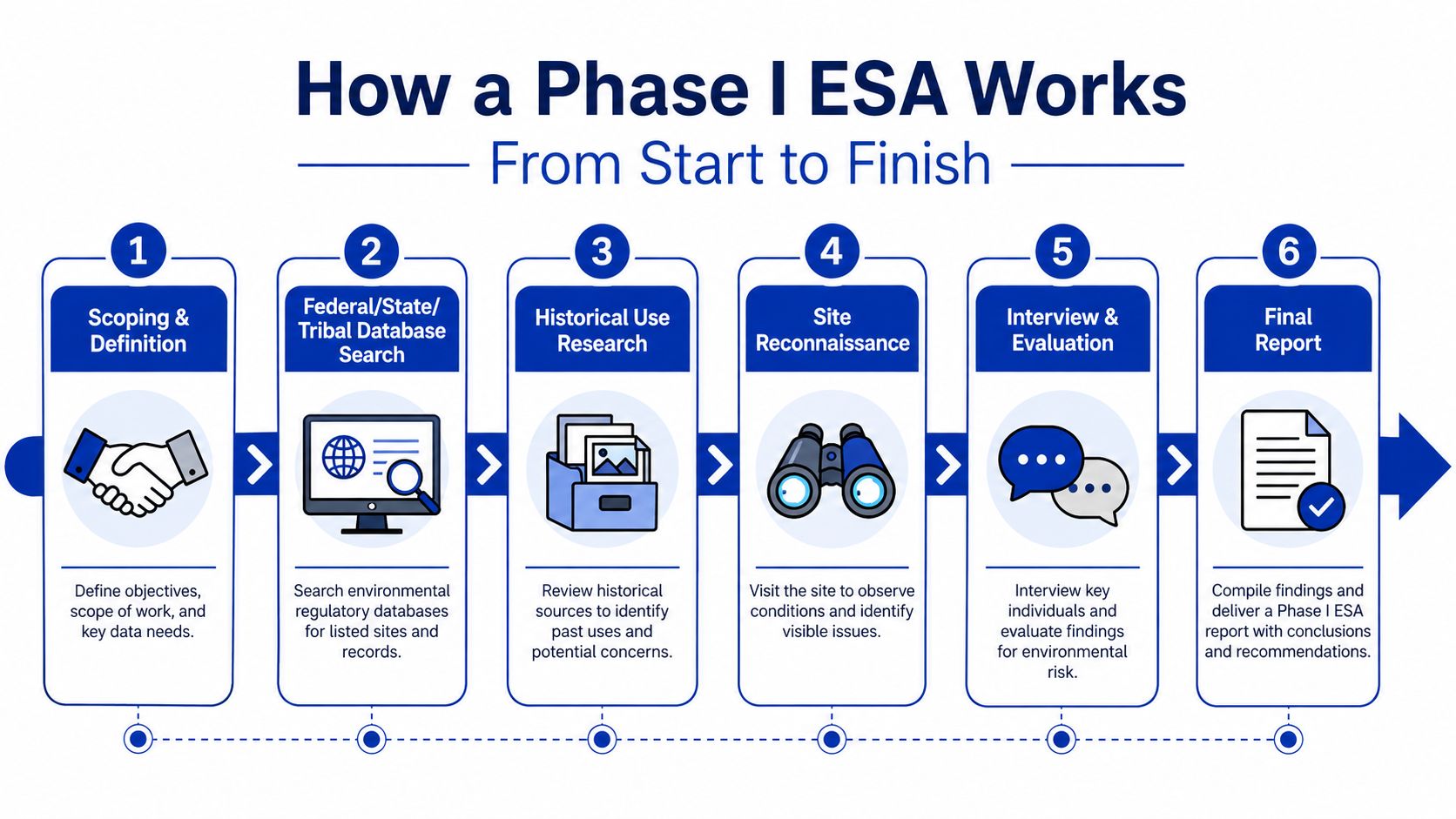
A Phase I usually begins before anyone steps onto the property. The consultant defines the parcel, gathers user-supplied information, and starts the records search, almost like assembling a documentary file before the first scene is filmed. For many projects, the process takes roughly 2 to 4 weeks to complete, though sites with layered histories or incomplete records can take longer (industry timing and cost overview).
From records to field observations
The workflow usually begins with scoping and definition, which sets the property boundary and identifies the intended user. That step gives the assessor the frame for the file, so the review stays tied to the right parcel and the right transaction.
Then comes the federal, state, and tribal database search, which looks for regulatory activity tied to the site or nearby properties. For a buyer in Los Angeles, that can mean checking whether a neighboring parcel, an old release file, or a listed cleanup case could affect the property's risk picture.
Next is historical use research. A former dry cleaner in Pasadena, for example, may look ordinary today, but older directory listings, city records, or historical maps might show a different prior use. That history matters because it can change how the property is viewed under environmental due diligence.
After that comes site reconnaissance, the on-the-ground walk-through. The consultant inspects the exterior and, when allowed, the interior too. They look for signs of current or past use that could point to a release or likely release, such as old fill areas, storage zones, stained surfaces, or equipment space that no longer matches the building's present use.
Interviews and the written evaluation
The next stage is the interview process. The assessor speaks with owners, operators, or occupants who can confirm how the property has been used and whether there have been spills, storage areas, maintenance issues, or other relevant events. Those conversations often fill in the gaps that records cannot explain on their own.
The final step is the written evaluation. A solid report includes data gaps, findings, conclusions, recommendations, and supporting documentation, which aligns with public checklist guidance and HUD reporting expectations (ASEI checklist guidance, HUD Phase I reporting slides).
Practical rule: If the site visit and records search do not match, the discrepancy matters. The report should explain it clearly, not hide it.
A good Phase I works like a case file. The records show what was there, the walk-through shows what is there now, and the report ties those facts to an environmental conclusion a lender or buyer can rely on. That same document is also what keeps the review focused on the right subject, documentary evidence of recognized environmental conditions, rather than indoor air, asbestos, lead, or mold testing that Los Angeles property owners often assume is included when they first hear the term Phase I.
Understanding REC, HREC, and CREC Findings
A Phase I becomes useful when it sorts a property's history into the right category. The report is not just a folder of records, it is a documented environmental judgment that can affect how a lender, buyer, or seller treats risk. In the executive summary, the labels REC, HREC, and CREC are often the point where the deal stops being abstract and starts becoming concrete (Washington State DOT Phase I guidance).
What each classification means
A REC, or Recognized Environmental Condition, points to a current or past condition that suggests a release or likely release of hazardous substances or petroleum products. That does not automatically mean the property is beyond use or that contamination has been proven, but it does mean the issue should be treated as a real environmental concern.
An HREC, or Historical Recognized Environmental Condition, refers to a past release that has been addressed to the satisfaction of the applicable regulatory authority. The important part is the regulatory closure, because the problem existed before, and the file should show how the agency accepted the resolution.
A CREC, or Controlled Recognized Environmental Condition, is a past release that remains subject to institutional or engineering controls. In plain terms, the condition is still part of the property's story, even if it is managed through restrictions, monitoring, or other controls. The ASTM definition framework for these terms is set out in ASTM E1527-21.
How buyers and lenders use the labels
These classifications help determine whether the file is a routine close, a qualified close, or a stop-and-review situation. A REC often sends a buyer back for more information, and sometimes into a Phase II investigation if the cause and extent of the issue need to be characterized more precisely. An HREC or CREC may still matter, but the report's conclusion usually gives the parties a clearer way to measure the risk.
| Finding Type | What It Means | Typical Next Step |
|---|---|---|
| REC | Current or past condition suggests a possible release | Consider further investigation, often a Phase II if needed |
| HREC | Past release was addressed to the agency's satisfaction | Review documentation, then decide whether the issue affects the deal |
| CREC | Condition is controlled but still subject to restrictions | Confirm controls, then evaluate lender or buyer requirements |
The most useful part of a Phase I is the classification, because it turns a long record search into a decision point. A buyer can tell the difference between a condition that may still create liability and one that has been closed in the regulatory file. That difference matters in a transaction, especially when the report has to support a financing decision, a purchase decision, or both.
For projects that also involve building-related concerns, a Phase I classification does not replace specialty testing. If an older property raises questions about disturbed materials, a separate asbestos review may still be needed, such as Los Angeles asbestos testing services.
What a Phase I ESA Does Not Cover
A clean Phase I can feel like a green light, especially to a first-time buyer in Los Angeles who is trying to keep a deal on track. That is not how the standard works. Under ASTM E1527-21, the report is a documentary investigation of recognized environmental conditions tied to hazardous substances and petroleum products, and the ASTM E1527-21 overview makes that narrower scope clear.
The gap that catches people off guard
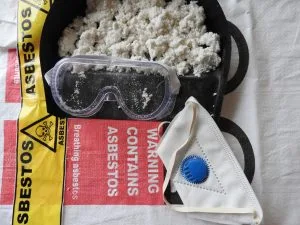
The part that surprises many owners is what sits outside that scope. Asbestos, lead-based paint, mold, radon, and vapor intrusion are generally outside the core work of a Phase I ESA. EPA guidance explains that broader environmental due diligence can also look at building-related concerns such as asbestos, mold, radon, wetlands, vapor intrusion, and lead-based paint, but those issues usually require separate inspection or specialty testing (EPA revitalization ready guide).
That matters in older Southern California properties. A 1960s commercial building in Hollywood may need asbestos and lead testing before tenant improvements. A Long Beach home with visible mold after water damage may need a dedicated mold inspection and air sampling. A Phase I that comes back clean will not answer those building-level questions.
Why the separation matters in real projects
The split is straightforward once you see it. A Phase I looks for signs of environmental liability tied to property use and historical records. Specialty testing looks for specific materials, contaminants, or indoor air issues inside the building or on its surfaces.
A buyer can receive a “clean” Phase I and still have a serious renovation or health question left unresolved.
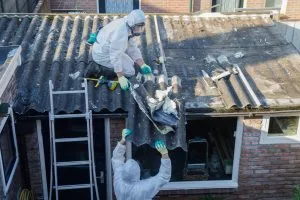
That is where confusion often shows up during deals. The lender may be satisfied with the Phase I, while the contractor still needs asbestos documentation before demolition. Or the seller may assume due diligence is finished, while the property manager is still dealing with mold complaints or indoor air quality concerns. Those are different questions, and they call for different tools.
For properties that already need building-related testing, the next step may be a separate inspection or sampling program rather than a broader Phase I. In more complex Los Angeles transactions, the environmental assessment often sits alongside other building-condition work, and that is normal. If the property also involves cleanup, fire residue, or contamination issues, see Sensitive Environmental environmental remediation services in Los Angeles for the kind of documentation and testing coordination that often comes up around those projects.
Cost, Timeline, and the 180-Day Shelf Life
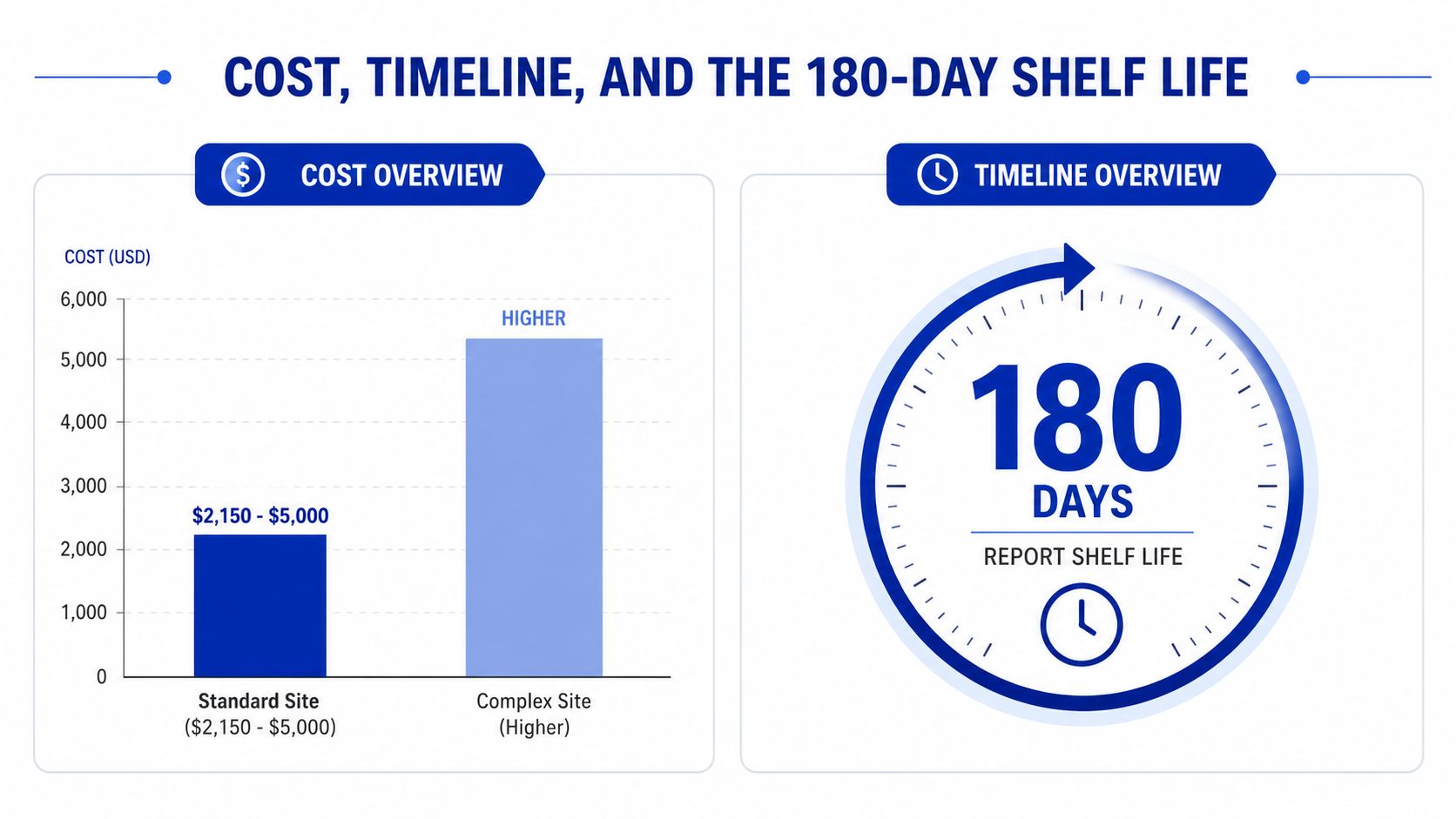
A buyer usually wants three answers before closing, how long the work takes, what it costs, and how current the report must be. For a typical Phase I ESA, industry sources say the work usually takes about 2 to 4 weeks and commonly costs about $2,150 to $5,000, with more complex sites exceeding that range (industry timing and cost overview).
What drives the price
A straightforward property with a clear paper trail usually falls within that common range. A more complicated site can cost more because the reviewer has to pull a wider record set, compare more historical uses, and document more of the decision trail behind the findings. One industry source says average Phase I costs increased by about 11% between 2018 and 2023, reflecting inflation and the expanded documentation expectations tied to ASTM E1527-21 (industry timing and cost overview).
That shift does not mean every report now lands at the same price. It means the old idea of a fast environmental checkbox does not match how the work is performed.
Why timing matters in escrow
EPA guidance and ASTM-related practice treat the report as time-sensitive, and many users rely on it only if it stays within 180 days of the transaction or applicable lender or AAI requirement (EPA brownfield assessment guidance). If the report gets stale, it may need an update or a new assessment before the lender or buyer can rely on it.
Practical rule: If escrow slips, check the report date early. A stale Phase I can become a transaction problem even when the property itself has not changed.
That is why the Phase I should be scheduled with the closing calendar in mind. A report that comes in too early can age out before funding. A report that comes in too late can slow underwriting. Buyers in Los Angeles often feel that pressure during fast-moving commercial deals, especially when the site history is not simple.
Common Questions About Phase I Environmental Assessments
Is a Phase I ESA required by law?
Usually no, but lenders, purchasers, and investors often require one as part of due diligence. It's commonly tied to financing decisions and liability protection.
What happens if a REC is found?
A REC doesn't kill a deal by itself. It usually means the buyer, lender, or seller needs to decide whether more information is needed, often through a Phase II or another specialty inspection.
Who orders the report, the buyer or the property owner?
Either one can, depending on the transaction structure. In practice, the party relying on the report usually wants clear scope, clear credentials, and a report that fits the closing timeline.
Does a Phase I replace asbestos, lead, mold, or IAQ testing?
No. Those are separate questions, and a clean Phase I doesn't answer them. If the building history suggests material hazards or indoor air concerns, specialty testing may still be needed.
If you're buying, selling, managing, or improving property in Los Angeles or anywhere in Southern California, contact Sensitive Environmental to scope a Phase I ESA review and coordinate any complementary testing your property history calls for, including asbestos surveys, mold inspections, or indoor air quality assessments.
Sensitive Environmental can help you determine whether a Phase I Environmental Site Assessment is the right first step for your property and whether separate asbestos, mold, lead, or indoor air testing should follow. If you need clear documentation for a transaction, renovation, or property management decision in Los Angeles or Southern California, visit Sensitive Environmental to schedule professional environmental testing and inspection services.